Vocabulary development Easy Science Worksheets
3 filtered results
Difficulty Level
Grade
Age
-
From - To
Subject
Activity
Standards
Enhance your child's vocabulary with our engaging Easy Science Worksheets! Specifically designed to foster critical language skills through fun scientific themes, these worksheets provide young learners with an opportunity to discover new words while exploring the fascinating world of science. Each worksheet features age-appropriate activities, including word puzzles, matching games, and fill-in-the-blank exercises, which encourage active participation and comprehension. Perfect for home or classroom use, these resources are tailored to make vocabulary building enjoyable. Give your kids the tools they need to excel in communication and understanding with our interactive science vocabulary worksheets today!
Favorites
With answer key
Interactive
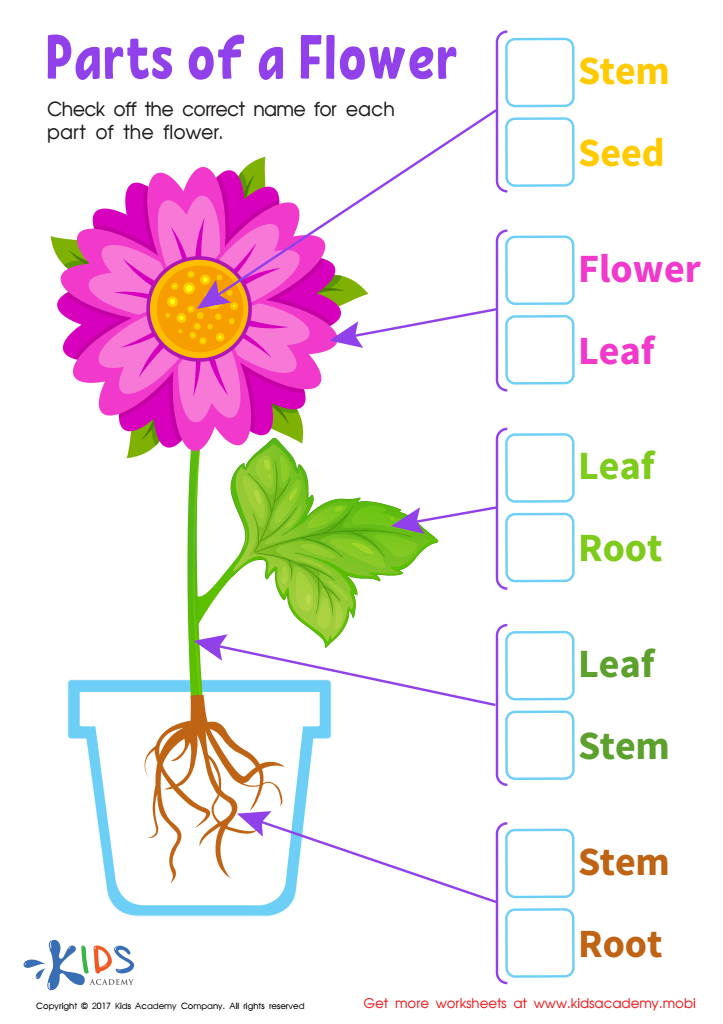
Parts Flower Printable
Introduce your child to life science with this vivid parts of a flower worksheet! They'll learn basic flower structures while building biology vocabulary and discovering plants are living creatures too! Perfect for budding little scientists!
 Assign to My Students
Parts Flower Printable
Worksheet
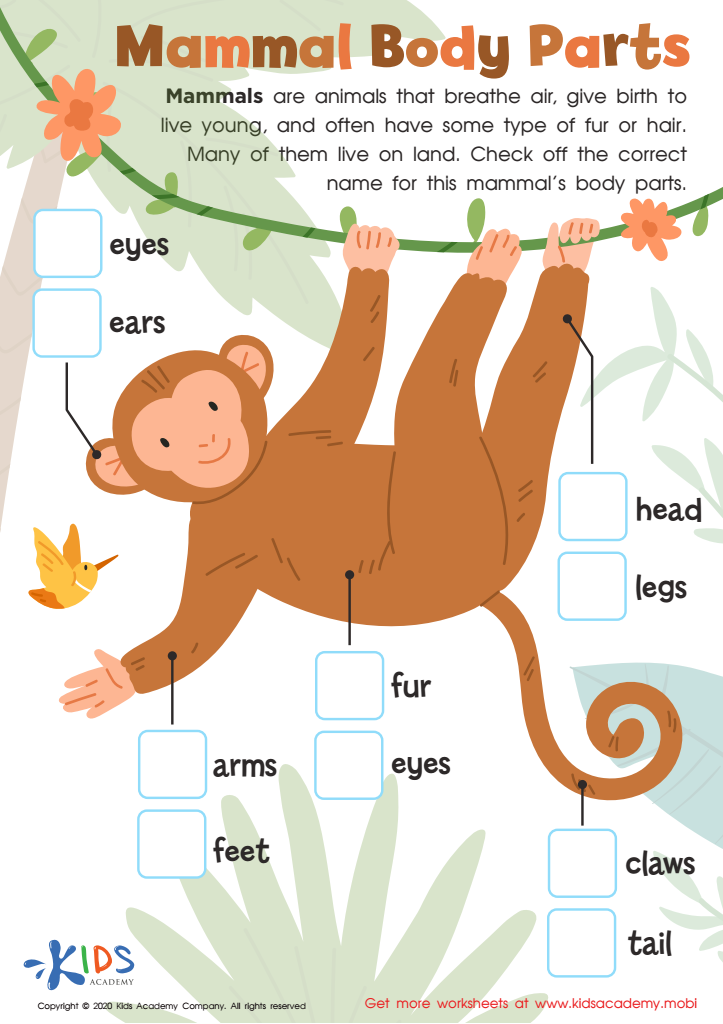
Mammal Body Parts Worksheet
Help your little scientist identify a mammal's body parts with this cute and colorful worksheet. It includes fur, arms, legs, tails, and more! Read the passage to learn what makes an animal a mammal, then have them check off the boxes to identify parts of the monkey. It's a fun way to learn about animals in the animal kingdom!
Mammal Body Parts Worksheet
Worksheet
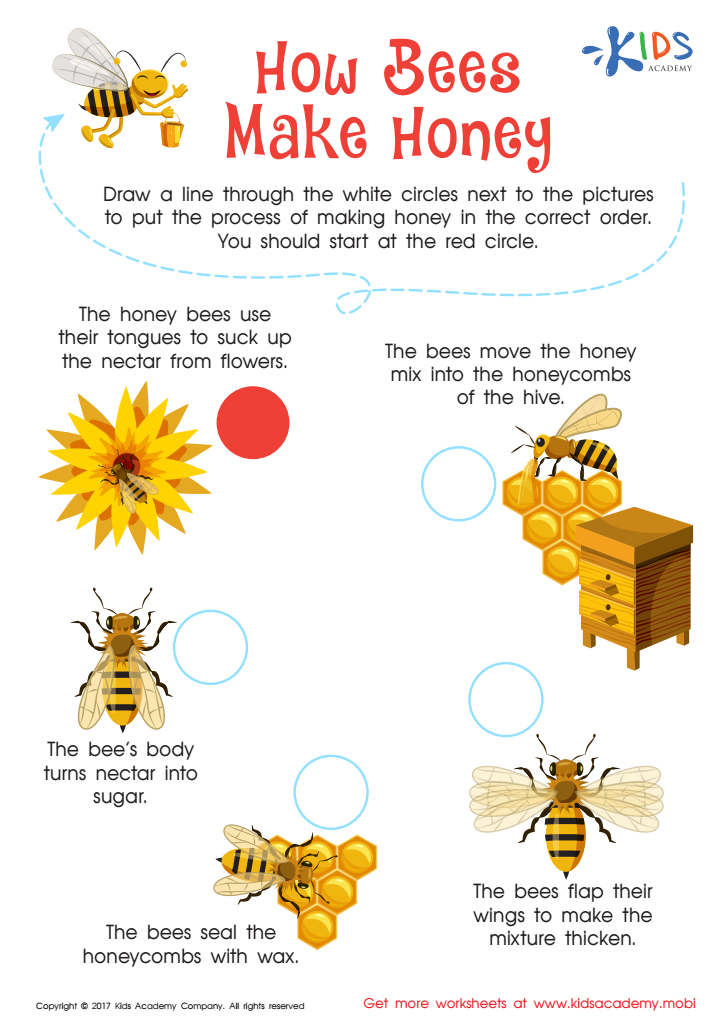
Honey Bee Worksheet
Kids learn about life science and the process of making honey with this sweet honeybee worksheet for 3rd grade. They identify the steps bees take and put the cycle in order, developing knowledge and appreciation for honeybees!
Honey Bee Worksheet
Worksheet
Join Kids Academy for Free
Who is primarily going to use this learning content?








Vocabulary development is crucial for children, especially in their early grades, as it forms the foundation for effective communication and language skills. A strong vocabulary allows children to express themselves clearly, understand classroom instructions, and engage in discussions. When parents and teachers prioritize vocabulary development, they equip children with the tools necessary for academic success and personal growth.
In the realm of science education, rich vocabulary enhances comprehension of concepts, processes, and terms that are critical for understanding science topics. As students encounter new vocabulary related to scientific principles, they begin to make connections, enhancing their ability to analyze and critique information. This deepen understanding fosters curiosity and encourages critical thinking.
Additionally, a robust vocabulary supports reading comprehension. When children can decipher complex texts, they are better equipped to absorb information and apply it in real-world scenarios. For parents and teachers, integrating vocabulary-building activities—like reading together, engaging in discussions, and using science-related games—can be both enjoyable and impactful.
Ultimately, caring about vocabulary development is an investment in a child's future, promoting not only academic achievement but also effective communication, critical reasoning, and confidence when sharing ideas and concepts in any context.