Welcome to our Data Interpretation Easy Grade 2 Worksheets page! Designed to make learning fun and engaging for second graders, these worksheets help young learners develop essential data interpretation skills. With colorful visuals and relatable scenarios, students practice reading charts, graphs, and pictograms while sharpening their critical thinking abilities. Each worksheet is thoughtfully crafted to reinforce understanding of fundamental concepts in a simple, enjoyable manner. Perfect for classroom activities or at-home practice, these resources empower children to analyze information effectively, fostering confidence in their math skills. Explore our collection today and inspire your child's love for learning through data interpretation!

Check out this FREE Grade 2 "Data interpretation" Trial Lesson!

Picture Graphs Word Problems

Favorites
With answer key
Interactive
  • Grade 2
  • Data interpretation
  • Easy
Fruit Math: Picture Graphs Worksheet

Fruit Math: Picture Graphs Worksheet

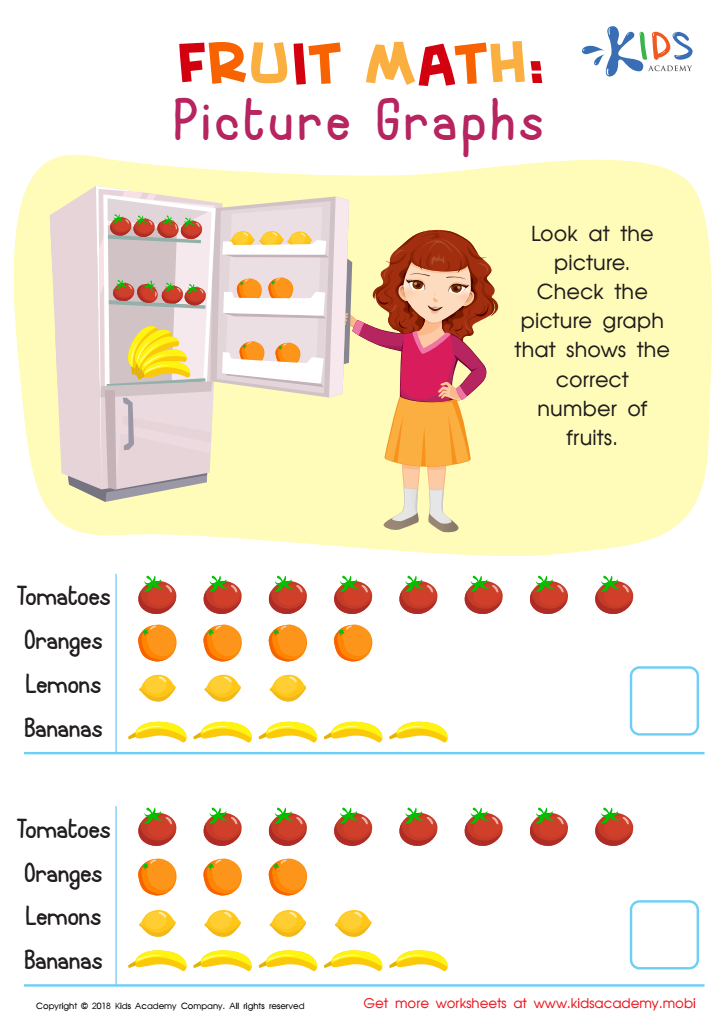
Help your child learn to draw graphs by having them look at pictures. Ask them to identify a graph that accurately portrays the data and have them explain why. This will prepare them to easily draw more complex graphs in the future. For example, have them look at the picture with the number of fruits in the colorful worksheet and explain why the graph is accurate.
Fruit Math: Picture Graphs Worksheet
Worksheet
Students Line Plot Worksheet

Students Line Plot Worksheet

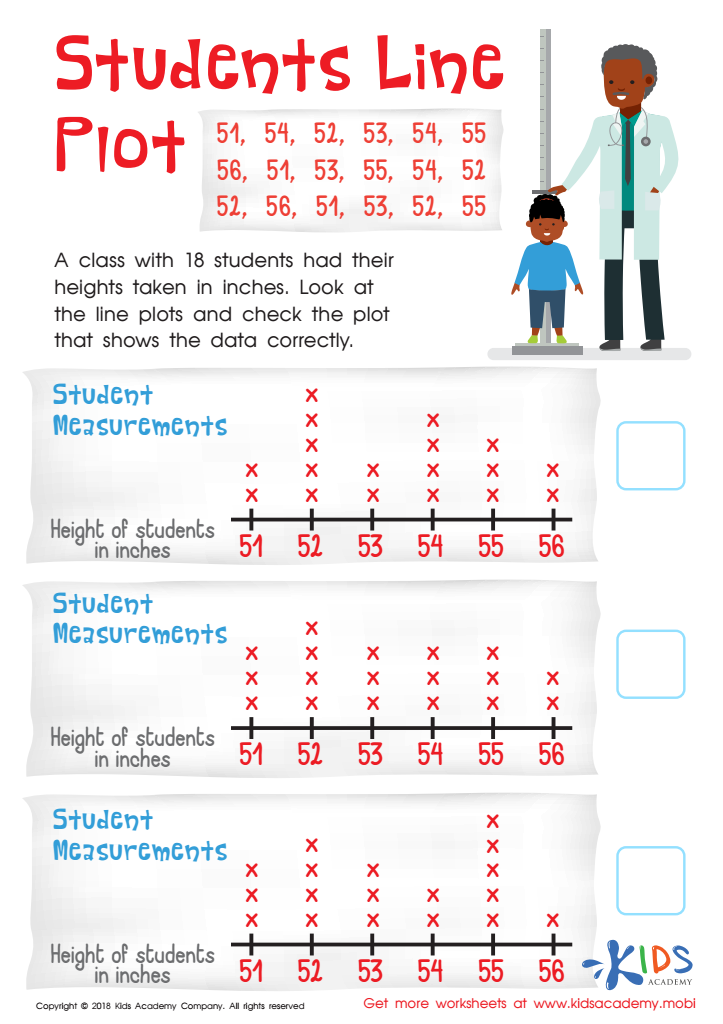
Help your students learn to draw a line plot correctly by giving real examples. In this exercise, they must check the data of a class of 18 students' heights (in inches). Have them compare two line plots and figure out which one is correct.
Students Line Plot Worksheet
Worksheet
Dog Math: Line Plots Worksheet

Dog Math: Line Plots Worksheet

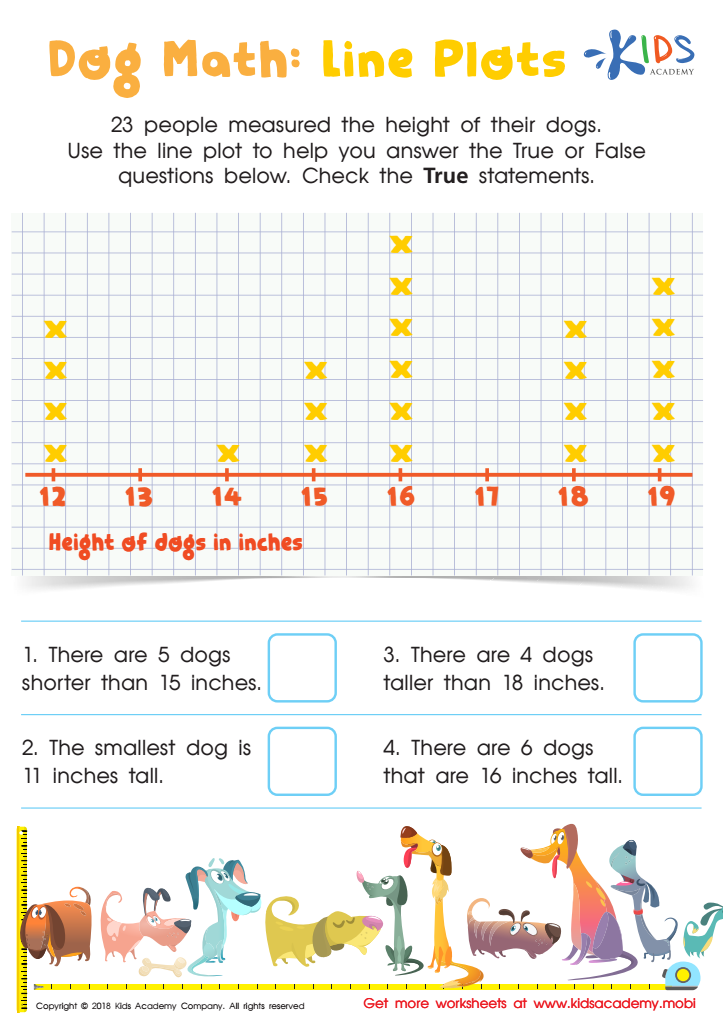
Do your kids love dogs? If you have family pets, your kids may be excited to do this worksheet. It involves a line plot and True/False questions about 23 people measuring their dogs' heights. Assist your kids in verifying the statements that are True.
Dog Math: Line Plots Worksheet
Worksheet
Coffeehouse Survey: Picture Graph Word Problems Worksheet

Coffeehouse Survey: Picture Graph Word Problems Worksheet

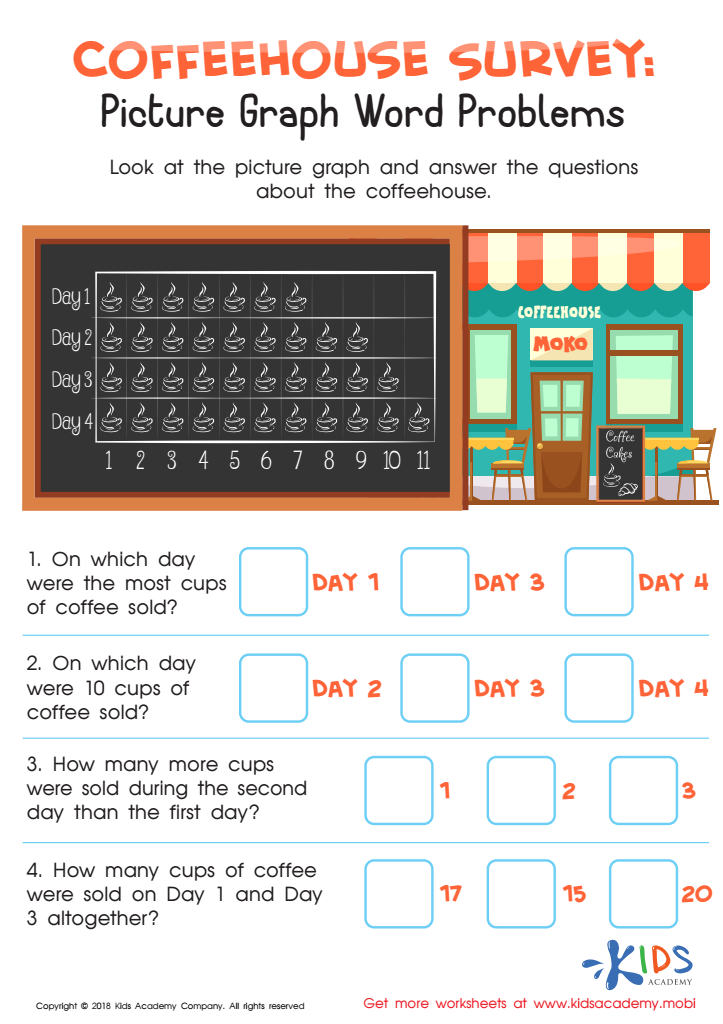
This coffeehouse survey helps children interpret pictures and answer questions. Your child will look at a picture graph displaying daily coffee cup sales from Day 1 to Day 4. Aid them in answering questions on the number of cups sold and which day had the most sales.
Coffeehouse Survey: Picture Graph Word Problems Worksheet
Worksheet
Pencil Math: Line Plots Worksheet

Pencil Math: Line Plots Worksheet

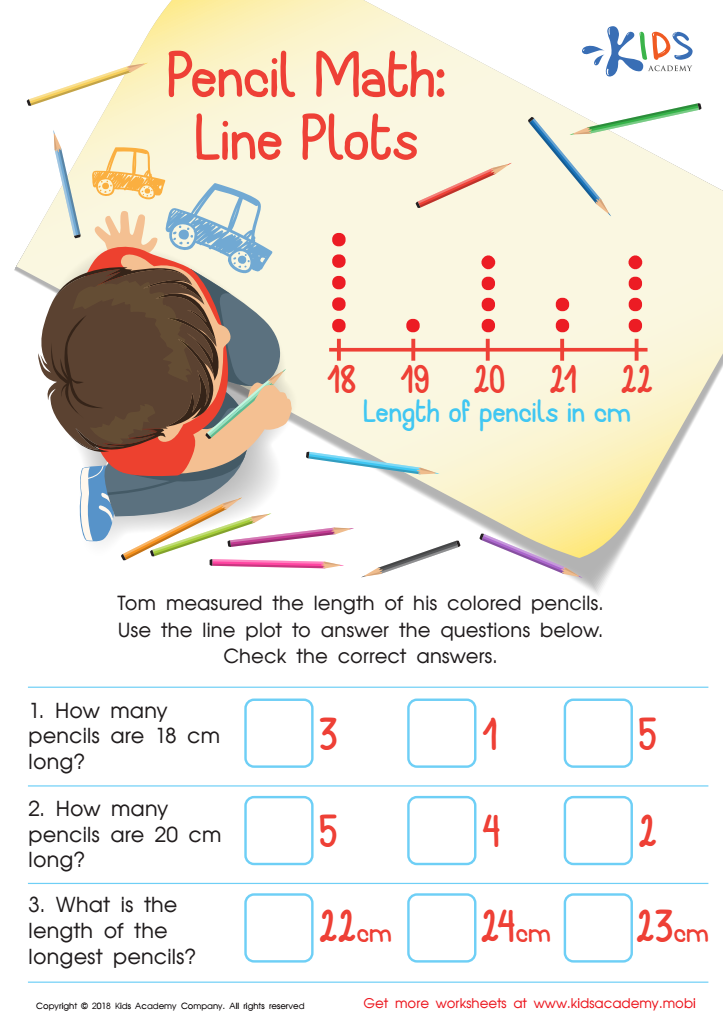
Your child will meet Tom in this worksheet, helping him find the length of his colored pencils. Tom has written the lengths in cm, and the line plot will help your kids answer the questions. Check the correct answers for each, including how many pencils are of a certain length. The line plot makes it easy to find the answers.
Pencil Math: Line Plots Worksheet
Worksheet
Pet Survey Worksheet

Pet Survey Worksheet

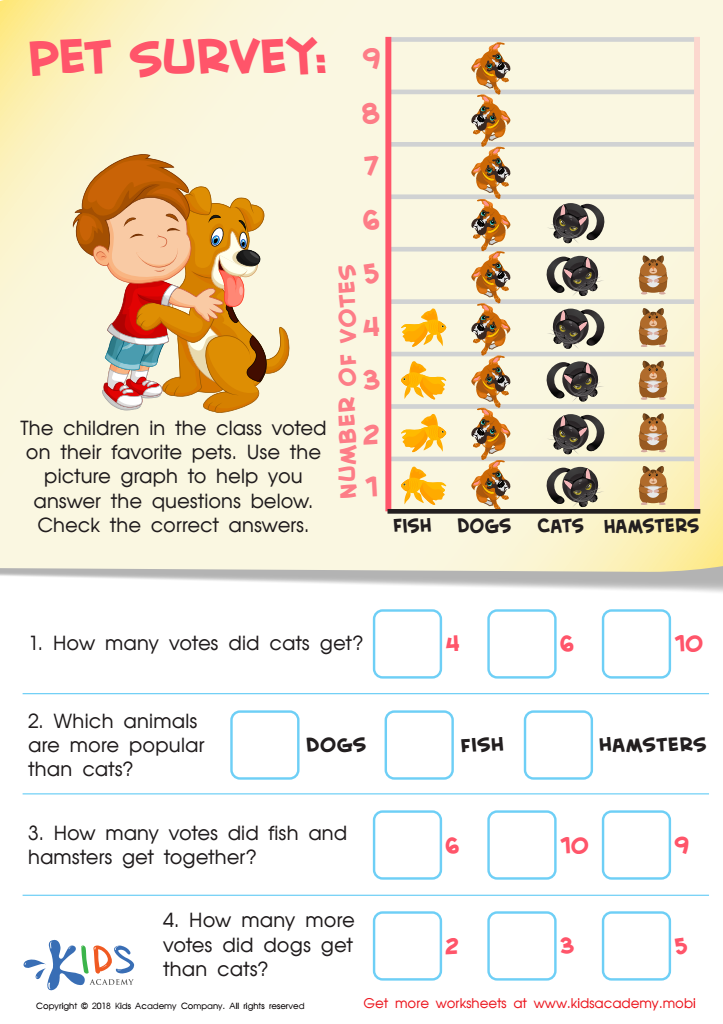
Do you have a furry family member? If the answer is yes and your kids love animals, they'll enjoy this worksheet. The picture graph shows the children's votes for their favorite pet - fish, dog, cat and hamster. Ask your child to use the graph to answer the questions. Guide them to check the right answer.
Pet Survey Worksheet
Worksheet
Farm Math: Line Plots Worksheet


Farm Math: Line Plots Worksheet

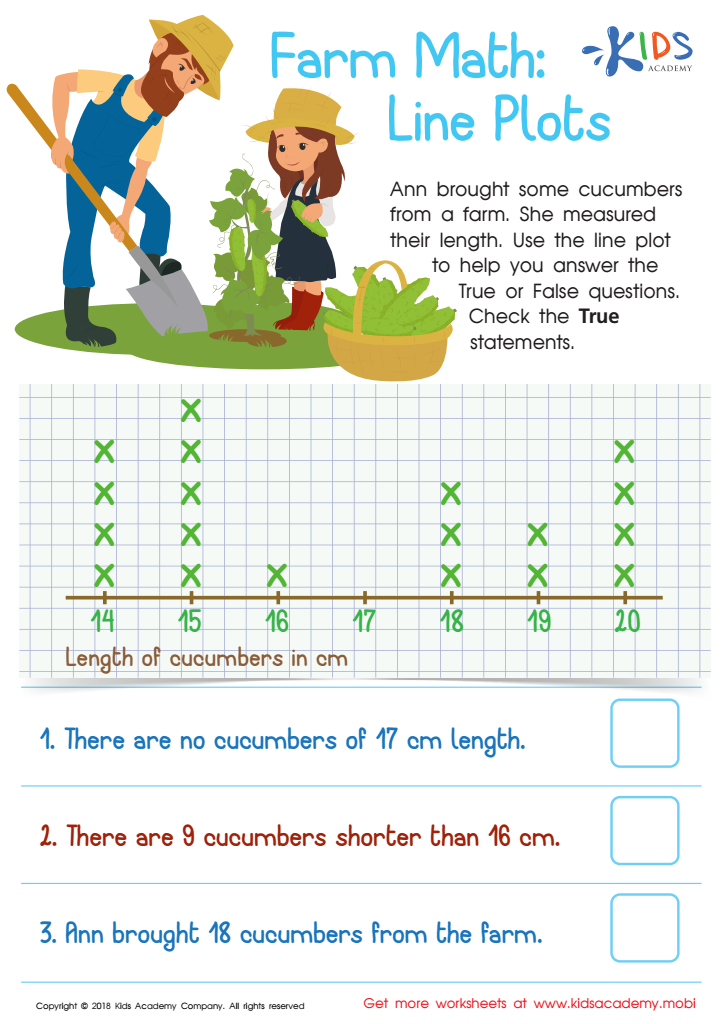
Ann brought cucumbers from a farm and measured their length. She drew a line plot for your students to use to answer True/False questions about the number and length of the cucumbers. Ask your students to check only the True statements. (80 words)
Farm Math: Line Plots Worksheet

Worksheet


Data interpretation is a crucial skill for second graders that parents and teachers should prioritize. Understanding data helps children make sense of the world around them. From gathering information through charts to interpreting simple graphs, these skills empower young learners to analyze everyday situations, such as sports statistics or survey results in class.

Fostering data interpretation skills also encourages critical thinking and problem-solving. As children practice organizing and interpreting information, they learn to draw conclusions, make predictions, and support their ideas with evidence. This process promotes cognitive development and enhances their ability to communicate effectively.

Moreover, data interpretation lays the foundation for future math skills. Concepts discovered in early grades—like sorting, counting, and comparing—introduce essential mathematical reasoning that becomes increasingly complex in higher grades. Parents and teachers can make learning engaging by incorporating activities, such as using real-life data collection through family surveys or school projects, thus making math relevant.

Additionally, these skills instill a sense of curiosity and empower students to express their opinions based on observed facts. By valuing data interpretation, caregivers set children on a path toward informed decision-making and lifelong learning.