Visual Learning Easy Grade 2 Addition and Subtraction Word Problems Worksheets
3 filtered results
-
From - To
Boost your child's math skills with our "Visual Learning Easy Grade 2 Addition and Subtraction Word Problems Worksheets." Perfectly designed for second graders, these engaging and colorful worksheets utilize visual learning techniques to simplify complex math problems. By incorporating illustrations and visual aids, our worksheets help children grasp concepts more quickly and retain information longer. Ideal for both classroom and home use, these tools enhance problem-solving abilities and build confidence in young learners. Start making math fun and accessible with our specially crafted visual learning resources for second grade addition and subtraction word problems!
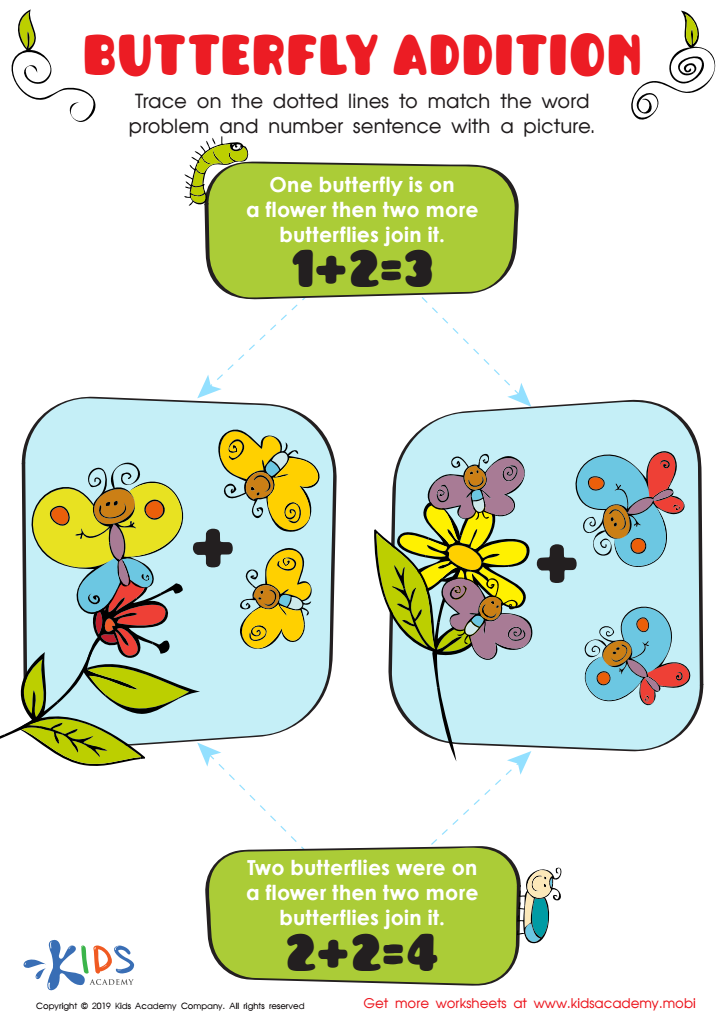
Butterfly Addition Worksheet
 Assign to My Students
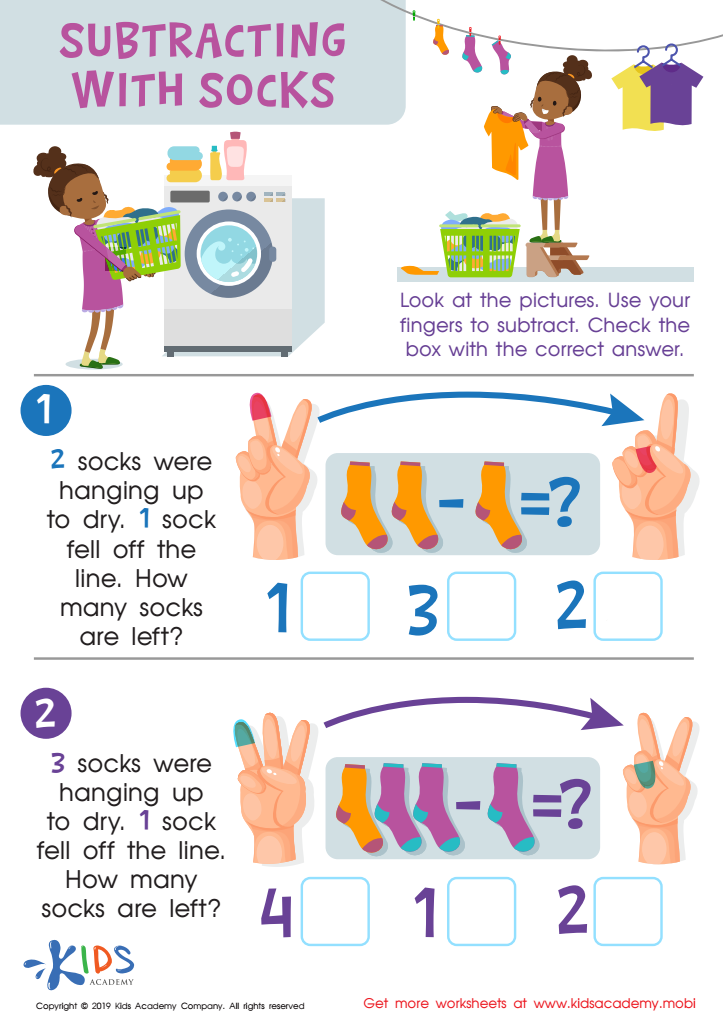
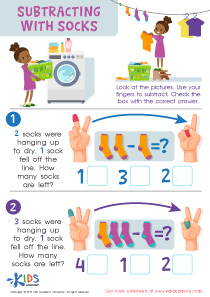
Subtracting Socks Worksheet
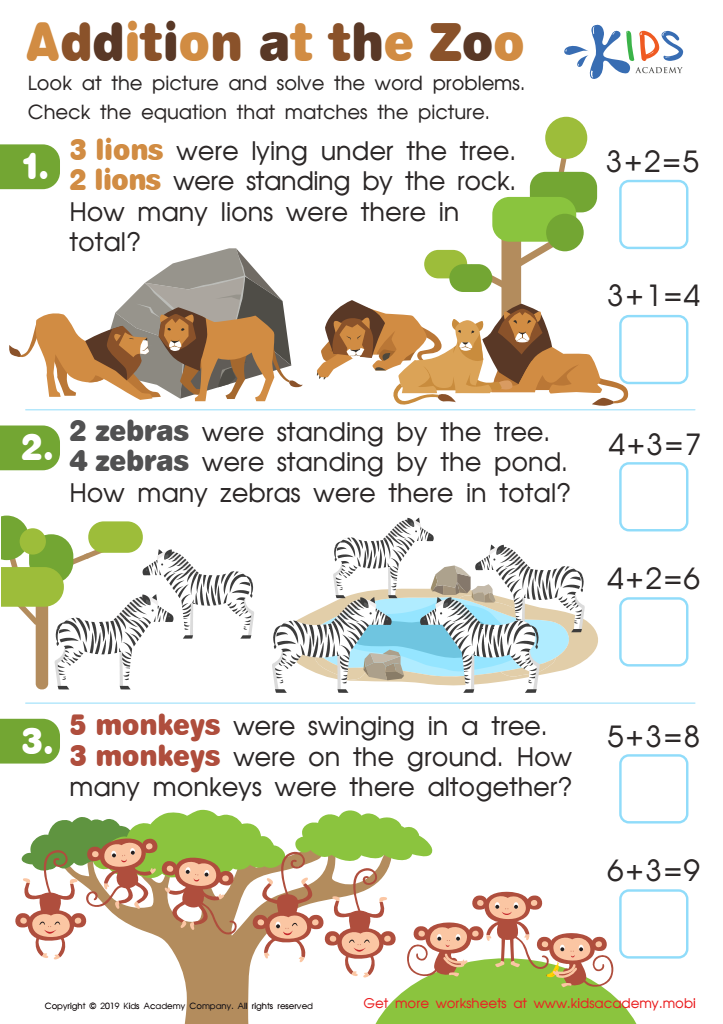
Addition at the Zoo Worksheet








Visual Learning Easy Grade 2 Addition and Subtraction Word Problems are crucial for young learners' foundational math skills. Parents and teachers should care about utilizing these tools because they effectively bridge the gap between abstract mathematical concepts and tangible understanding. At this stage, children are developing cognitive abilities to interpret numbers and solve problems; visual aids make these processes more intuitive and engaging.
Visual aids, such as picture clues or real-life scenarios, help students better comprehend and retain mathematical concepts. For instance, seeing objects grouped together or taken away enables children to visually process addition and subtraction, reinforcing the mechanics behind the operations. This concreteness helps reduce frustration and builds confidence, encouraging a positive attitude towards math.
Additionally, these tools cater to diverse learning styles and needs. Visual learners, in particular, benefit from pictorial representations of problems, grasping concepts quicker than they might from text alone. For students who may struggle with numbers or have learning difficulties, visual word problems offer an alternative approach that can make math more accessible.
Involving these visual tools early on sets a strong mathematical foundation, promoting critical thinking, problem-solving skills, and an appreciation for math. This foundational understanding is essential for tackling more complex mathematical challenges in the future, making visual learning a vital part of early education.