Understanding fractions Easy Grade 2 Fractions of Shapes Worksheets
11 filtered results
-
From - To
Enhance your child's understanding of fractions with our Easy Grade 2 Fractions of Shapes Worksheets! Designed to make learning engaging and enjoyable, these worksheets help students visualize and comprehend fractions by exploring various shapes. This resource promotes critical skills such as identifying parts of a whole, representing fractions visually, and recognizing equivalent fractions. Each worksheet varies in difficulty, ensuring a tailored learning experience that aligns with your child's pace. Perfect for classroom activities or at-home practice, these worksheets provide a solid foundation in fractions, setting your child up for future math success. Explore our interactive activities to boost confidence in math today!
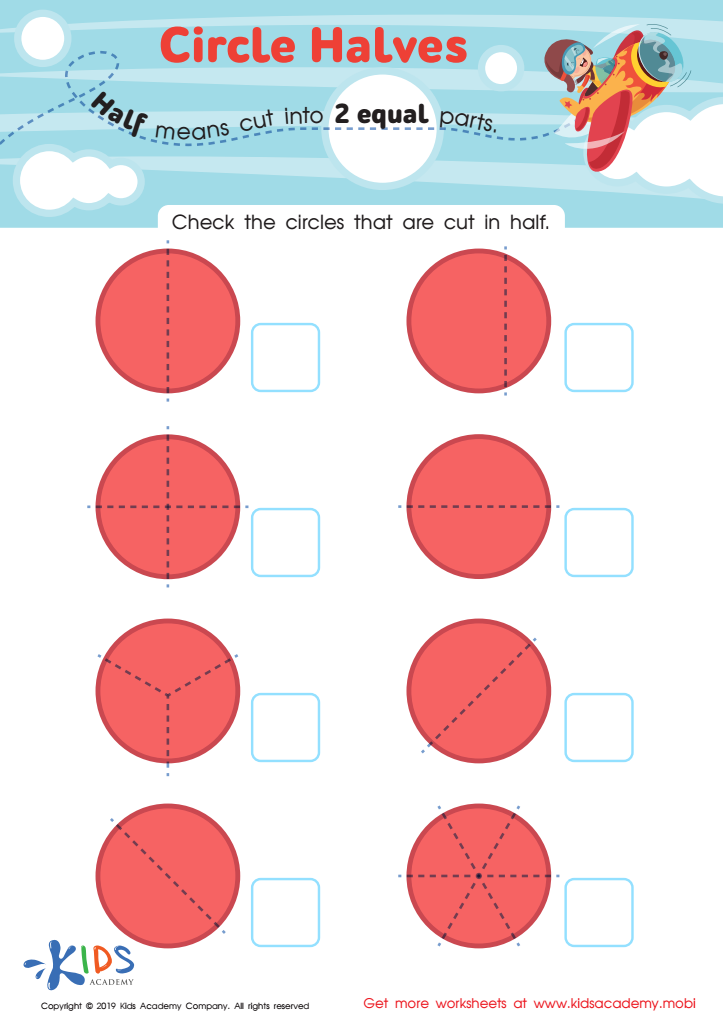
Circle Halves Worksheet
 Assign to My Students
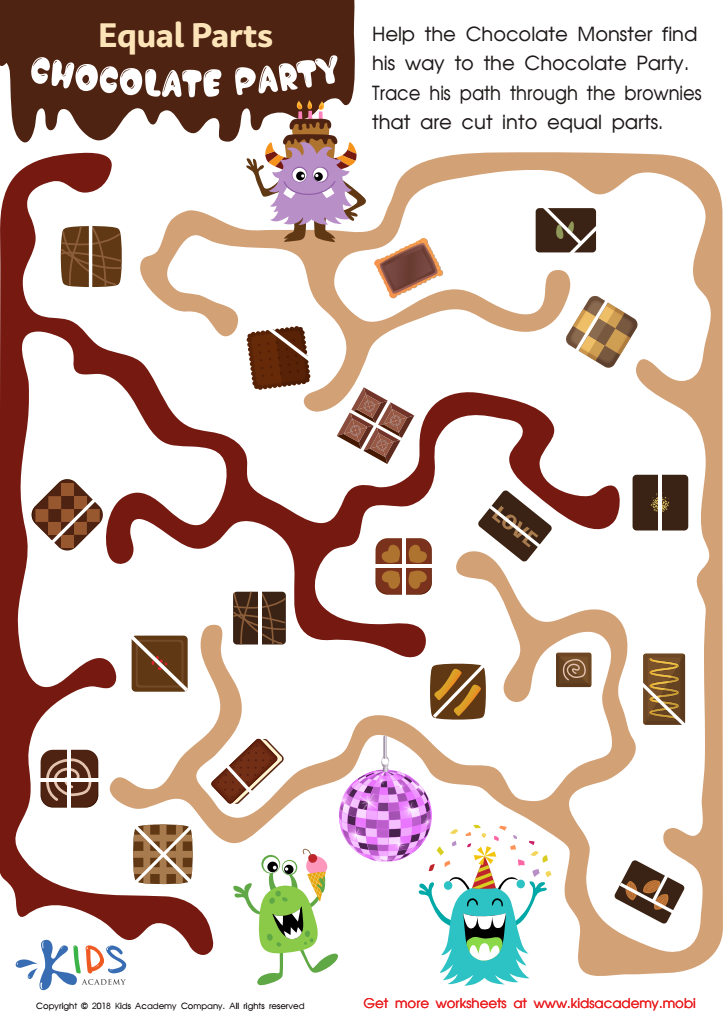
Equal Parts: Chocolate Party Worksheet
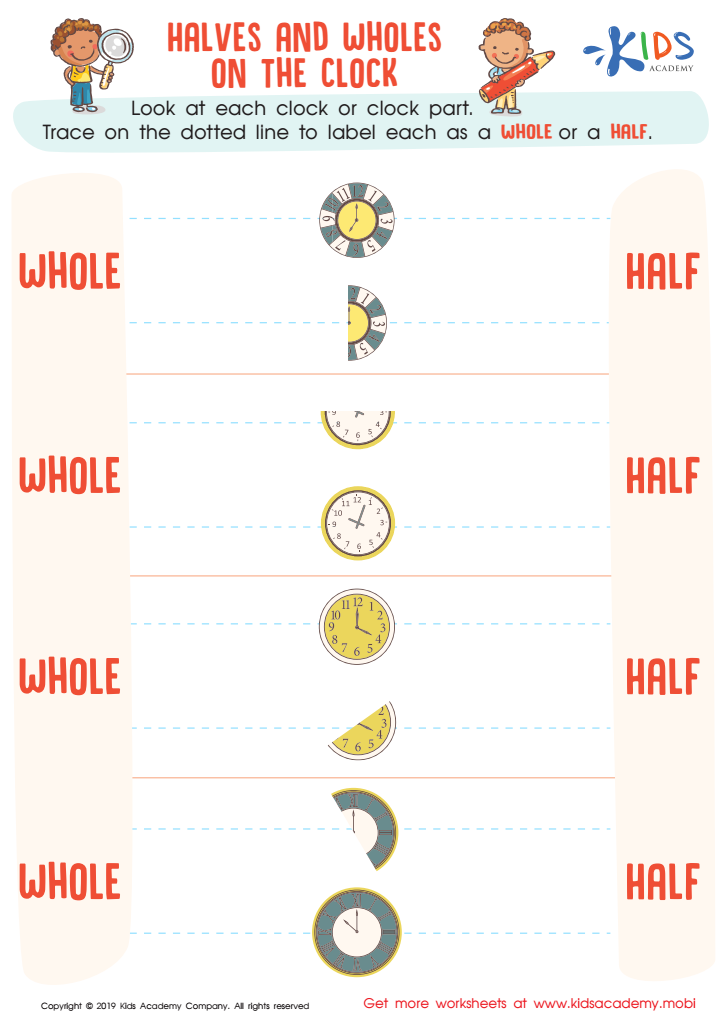
Halves and Wholes on the Clock Worksheet
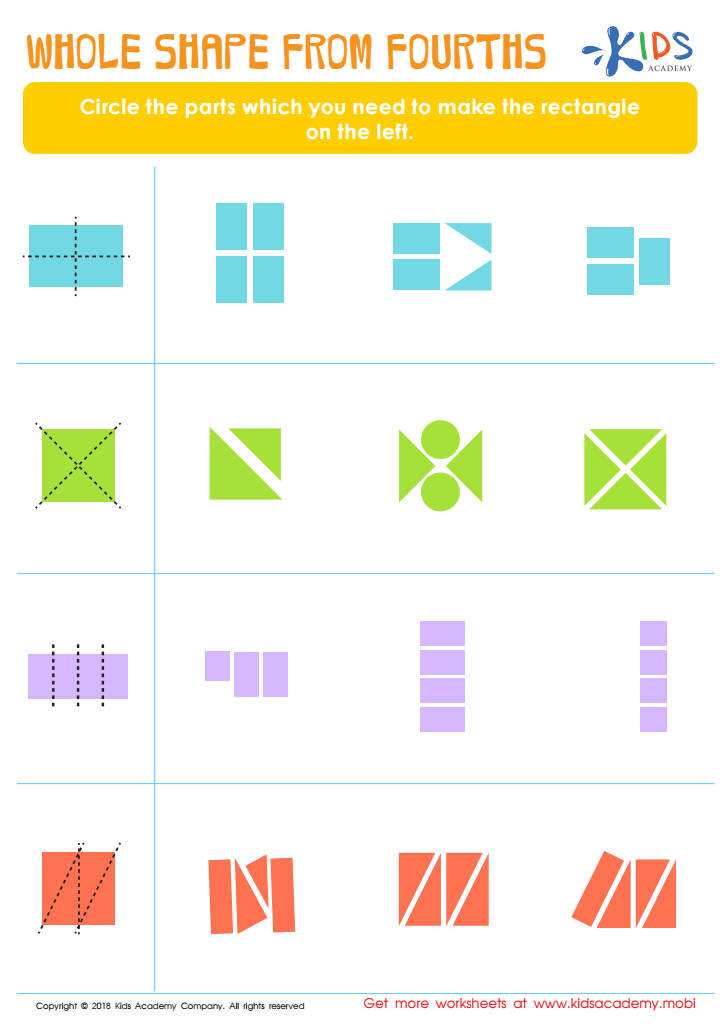
Whole Shape from Fourths Worksheet
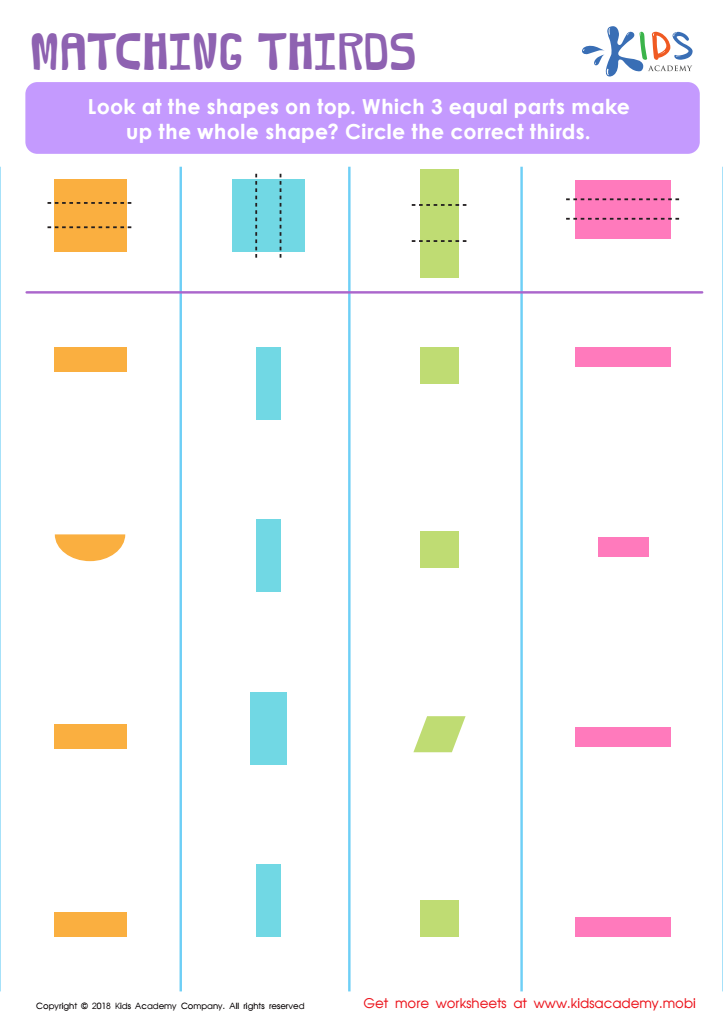
Matching Thirds Worksheet
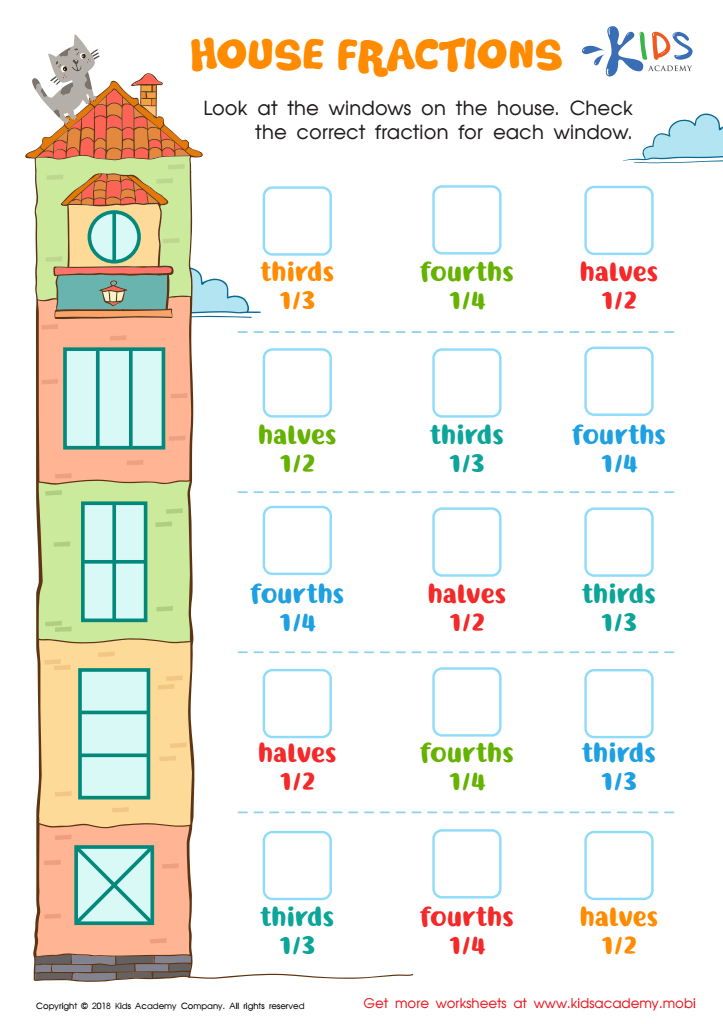
House Fractions Worksheet
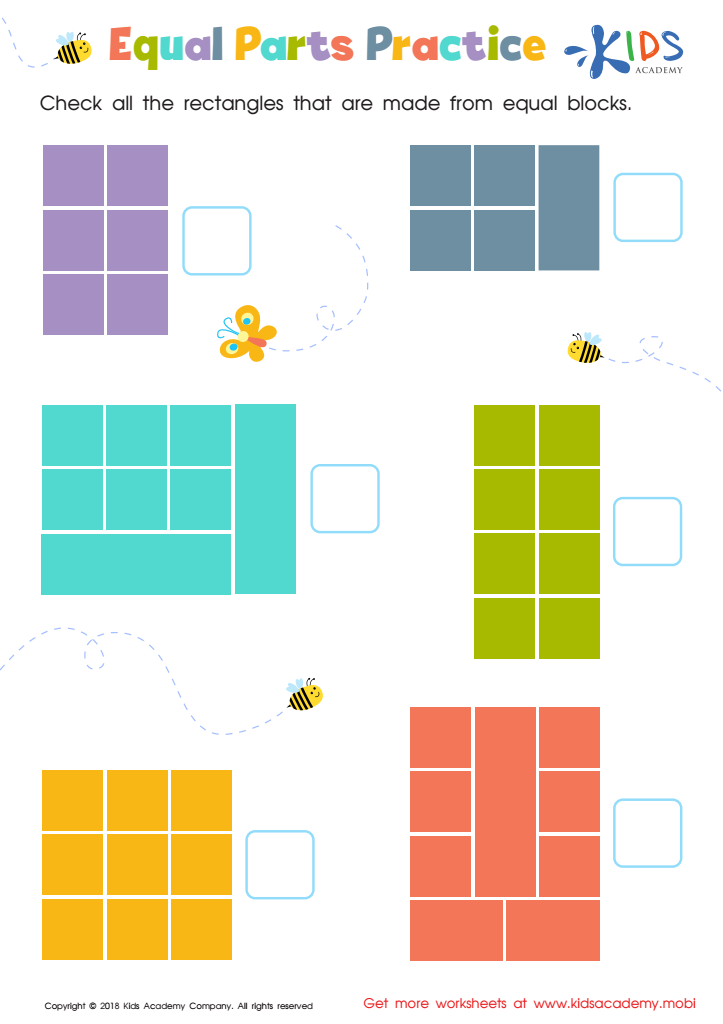
Equal Parts Practice Worksheet
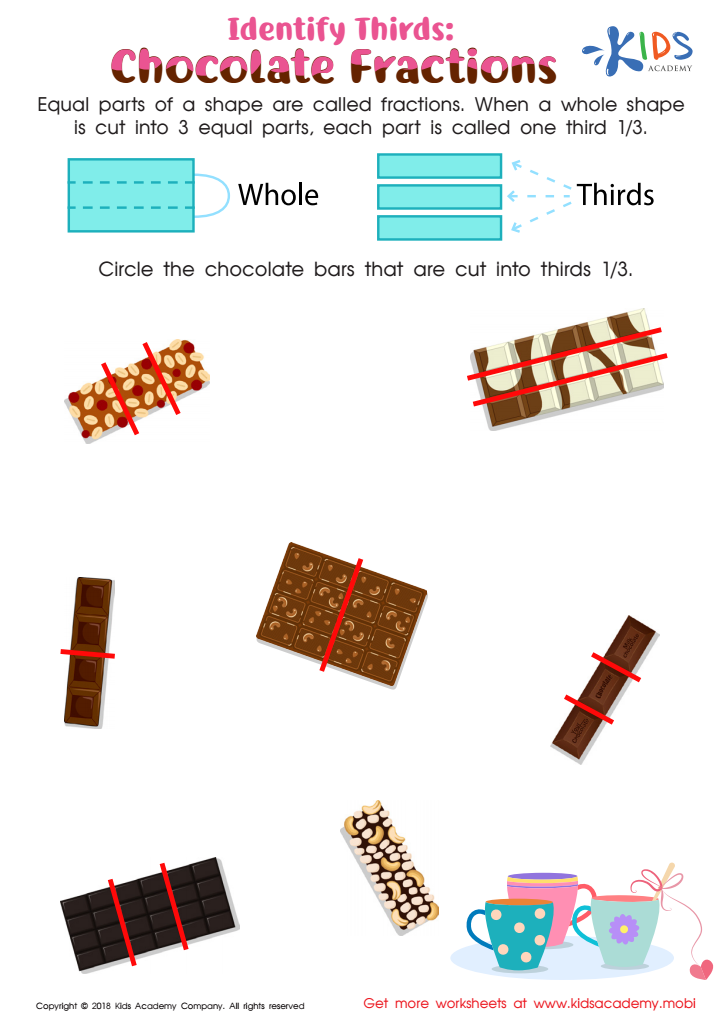
Identify Thirds: Chocolate Fractions Worksheet
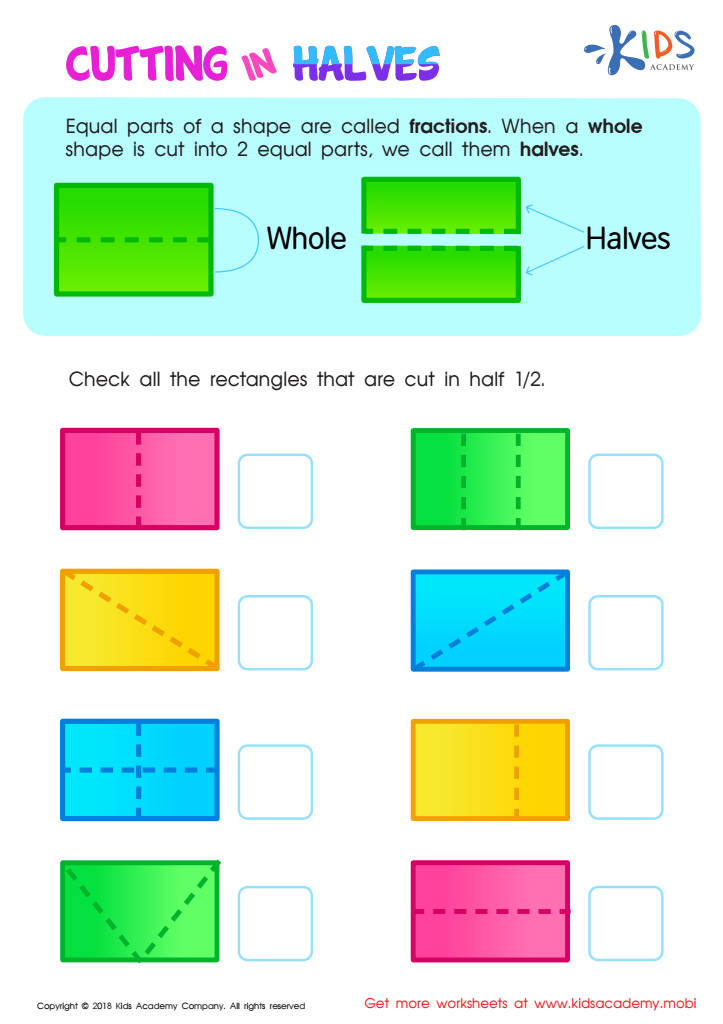
Cutting in Halves Worksheet
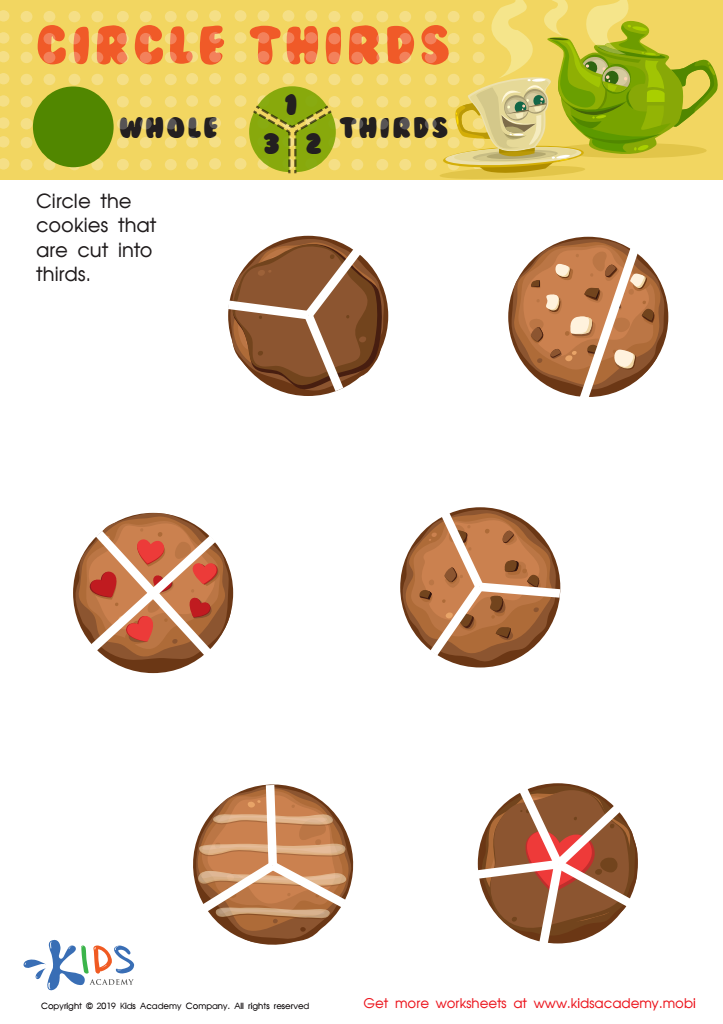
Circle Thirds Worksheet
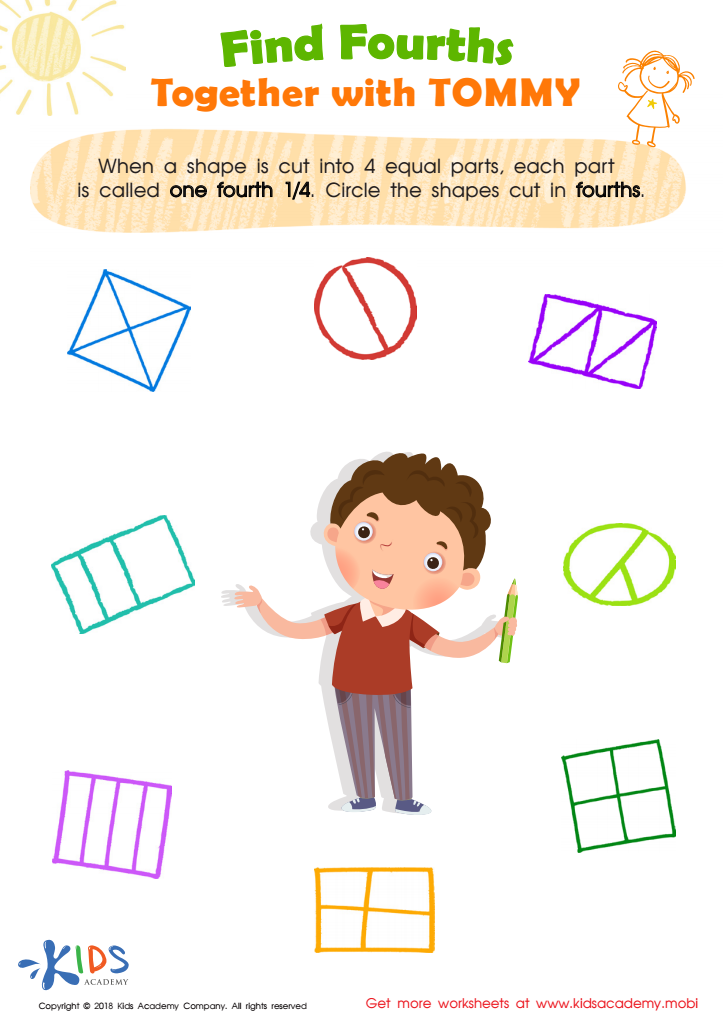
Find Fourths Together with Tommy Worksheet





Understanding fractions in Grade 2 is crucial for both parents and teachers as it lays the groundwork for future mathematical concepts and real-world applications. At this early stage, students are introduced to the fundamental idea of fractions as parts of a whole, often represented through shapes like circles and rectangles. This visual and tangible approach helps them grasp the concept easily, showing that fractions exist in everyday life—like slicing a pizza or sharing a chocolate bar.
When parents and teachers emphasize understanding fractions, they foster critical thinking and problem-solving skills. Recognizing fractions enhances a child’s ability to comprehend more complex mathematical concepts in later grades, such as division or ratio. Furthermore, mastering fractions helps build number sense that is important for everyday tasks, like cooking or shopping.
For teachers, incorporating fun and engaging fraction activities can spark student curiosity and motivation. Parents can reinforce this learning at home through games and real-life examples. Overall, fostering an understanding of fractions in Grade 2 not only empowers students academically but also equips them with practical life skills, paving the way for a positive attitude towards math and learning in general. Thus, everyone involved in a child’s education should prioritize this key area of learning.