Counting practice Easy Grade 2 Math Worksheets
6 filtered results
Difficulty Level
Grade
Age
-
From - To
Subject
Activity
Standards
Welcome to our "Counting Practice Easy Grade 2 Math Worksheets" page! Designed specifically for second graders, these worksheets make counting fun and engaging. Students will practice essential skills like number recognition, counting sequences, and basic arithmetic through a variety of interactive exercises. Our worksheets include colorful illustrations and easy-to-follow instructions, perfect for boosting confidence and reinforcing math fundamentals. Whether in the classroom or at home, these resources are ideal for helping young learners develop a solid understanding of numbers. Explore our selection today to support your child's journey toward mathematical success!
Favorites
With answer key
Interactive
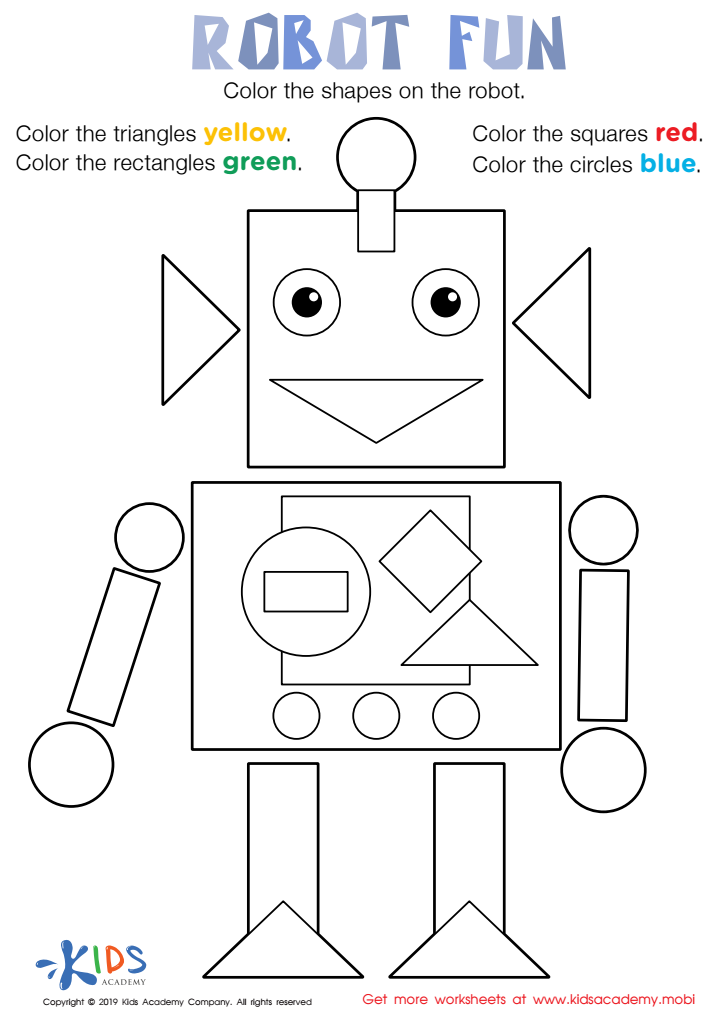
Robot Fun Worksheet
Help your child learn about basic shapes with this fun robot worksheet! Kids practice identifying circles, squares, rectangles and triangles, then color each shape according to directions. Make math practice enjoyable with this coloring page that teaches all four basic shapes - it's an important math skill!
Download (PDF)
 Assign to My Students
Assign to My Students
Robot Fun Worksheet
Worksheet
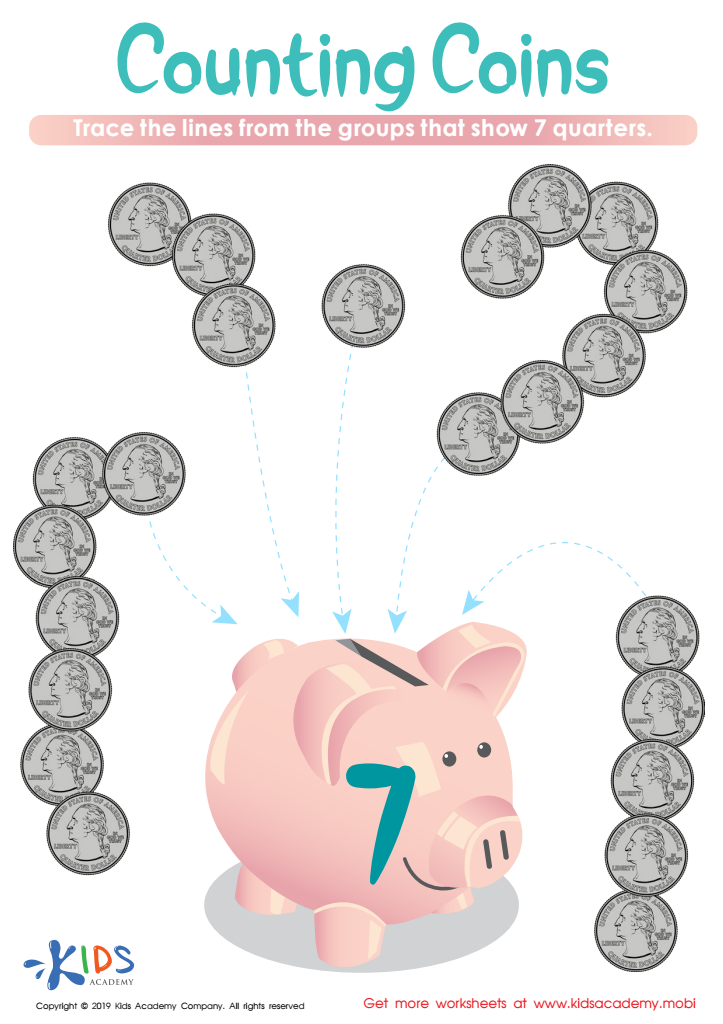
Counting Coins Worksheet
Help your students overcome their fear or aversion of counting and learning numbers with this fun worksheet! It features colorful pictures with four groups of coins. Ask the students to count each group, then trace the lines to the piggy bank. Show them it's easy to count and learn numbers!
Counting Coins Worksheet
Worksheet
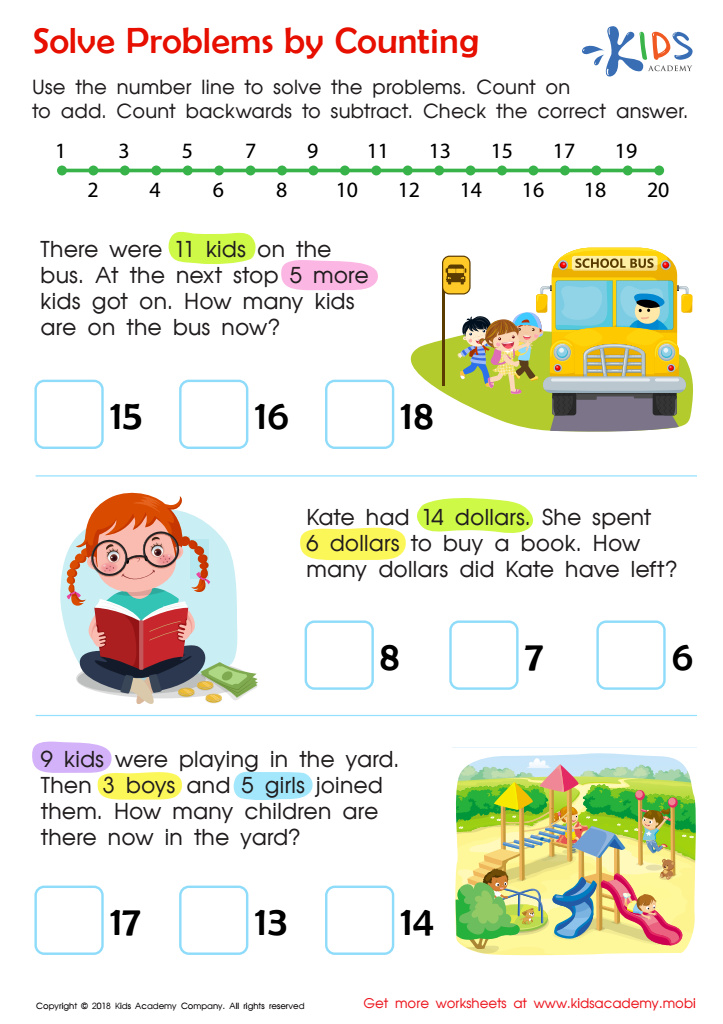
Solve Problems by Counting Worksheet
Download this free colorful worksheet and give your young math student practice with a number line. Counting on or back, they will learn to solve basic addition and subtraction word problems with ease. Ultimately, it will help them develop automaticity for later efficiency with addition and subtraction.
Solve Problems by Counting Worksheet
Worksheet
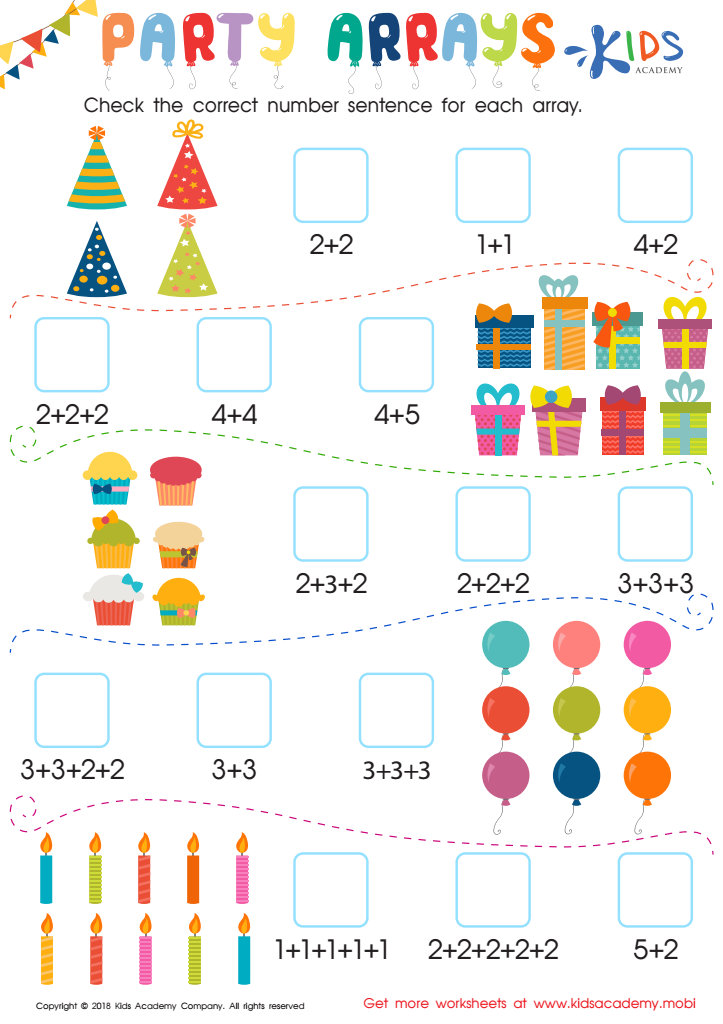
Party Arrays Worksheet
Help your child count the objects in each of the five arrays, then check the correct number sentence for each. This exercise will test their math skills and understanding of number sentences. Guide them to select the appropriate boxes.
Party Arrays Worksheet
Worksheet
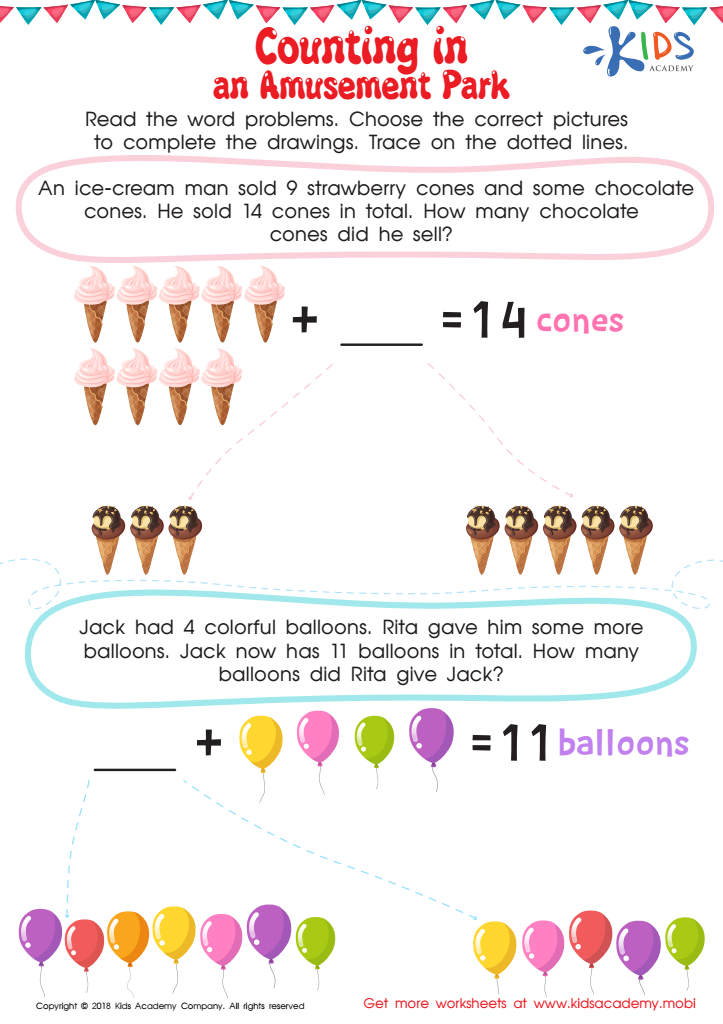
Counting in an Amusement Park Worksheet
Love amusement parks? This colorful worksheet is sure to delight your child as they solve basic addition problems with missing addends. Picture representations help them solve the math equations, while traceable lines help them accurately complete the drawings. No roller coaster ride here, but still loads of fun!
Counting in an Amusement Park Worksheet
Worksheet
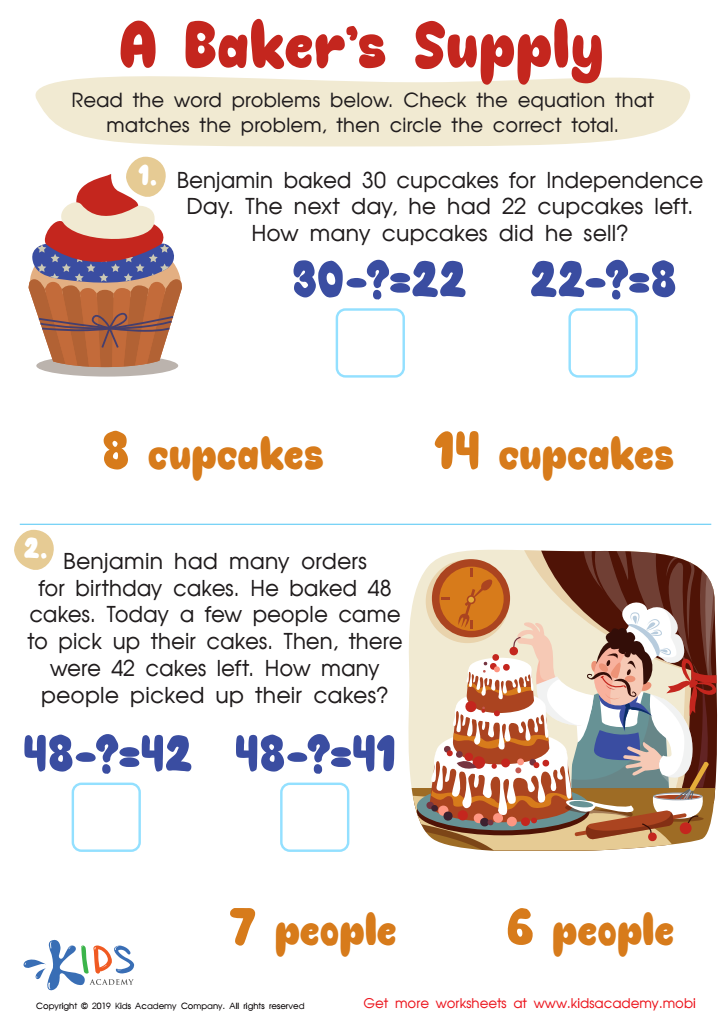
A Baker's Supply Worksheet
A visit to the baker's shop is thrilling! Your kids will love it! From scrumptious goodies to the mouthwatering aroma, it's a magical experience. Ask your kids what they're most eager to see and do. Now, read the word problems in this worksheet to them. Help them choose the correct answer for each problem and circle the correct total.
A Baker's Supply Worksheet
Worksheet
Join Kids Academy for Free
Who is primarily going to use this learning content?








Counting practice is a fundamental building block for young learners, particularly in Grade 2, where students refine their mathematical skills. Parents and teachers should care about this practice because it lays the foundation for more complex mathematical concepts, such as addition, subtraction, and even multiplication. By honing counting skills, children develop number sense, understanding how numbers relate to one another and how they can be manipulated.
Moreover, counting practice enhances children's cognitive abilities and concentration, fostering patience and problem-solving skills. Engaging in regular counting activities cultivates confidence as students grasp these foundational concepts, which are essential for academic success. Understanding numbers also translates into real-world applications—shopping, time-telling, and budgeting—making math relevant and practical.
Additionally, early counting proficiency has been linked to better performance in standardized tests and overall academic achievement. Encouraging counting practice at home or in the classroom therefore not only prepares children for standardized assessments but also inspires a lifelong love for math. By prioritizing counting in early education, parents and teachers play a critical role in shaping not just competent mathematicians, but also independent and confident learners.