Basic Math Skills Easy Grade 2 Subtraction Worksheets
4 filtered results
-
From - To
Discover our "Basic Math Skills Easy Grade 2 Subtraction Worksheets," designed to make learning subtraction fun and effective for second graders. These printable worksheets are perfect for enhancing essential subtraction skills, helping kids practice and master basic concepts. With engaging exercises and clear instructions, children will build their confidence in solving subtraction problems. Ideal for parents and teachers looking to support young learners, our worksheets provide a solid foundation in math. Make learning enjoyable and straightforward with our expertly crafted, easy-to-follow subtraction activities tailored specifically for your child’s success!
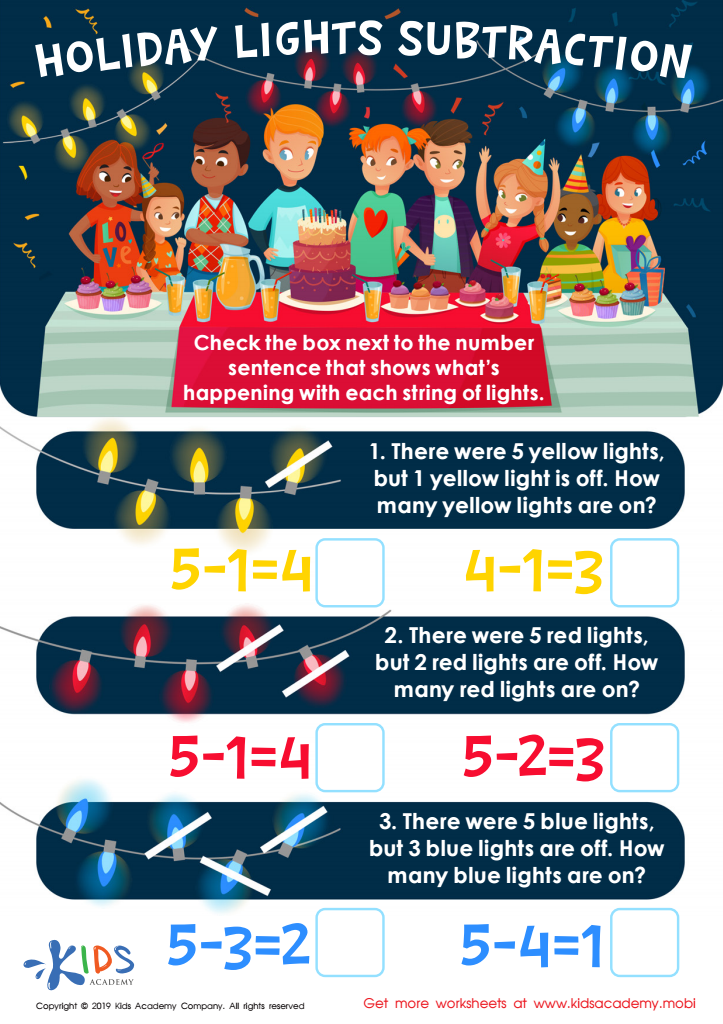
Holiday Lights Subtraction Worksheet
 Assign to My Students
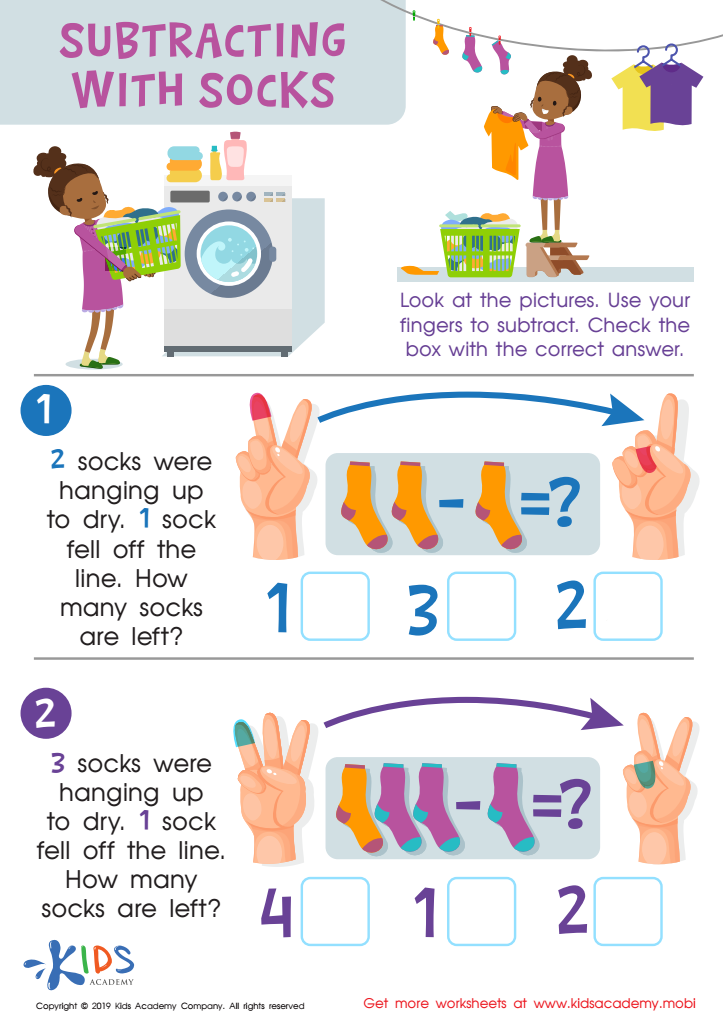
Subtracting Socks Worksheet
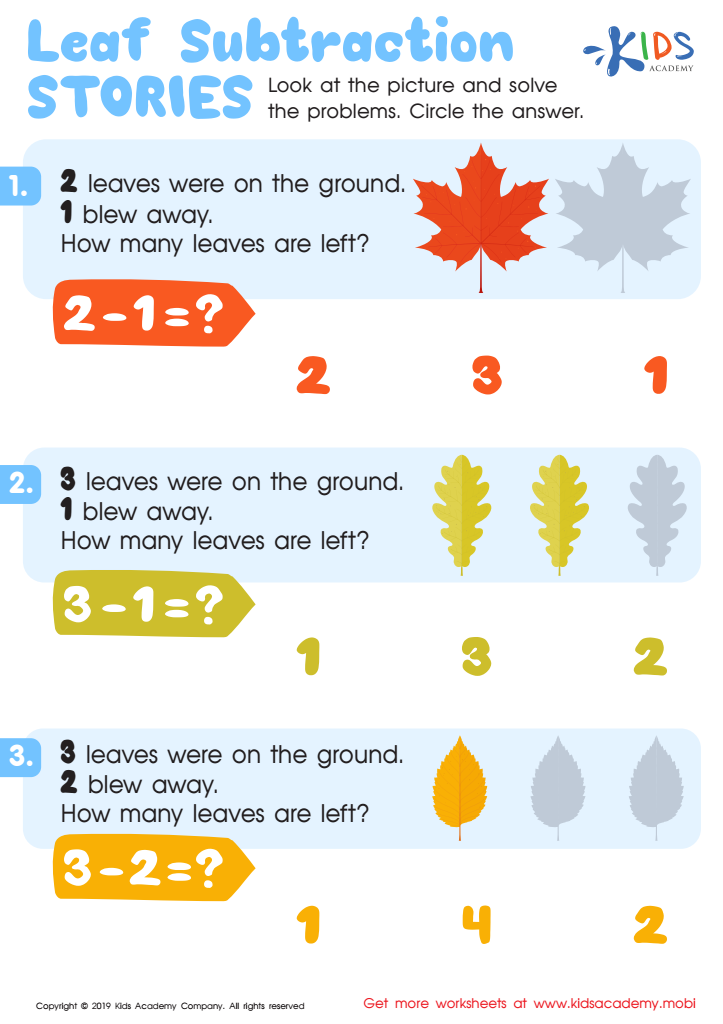
Leaf Subtraction Stories Worksheet
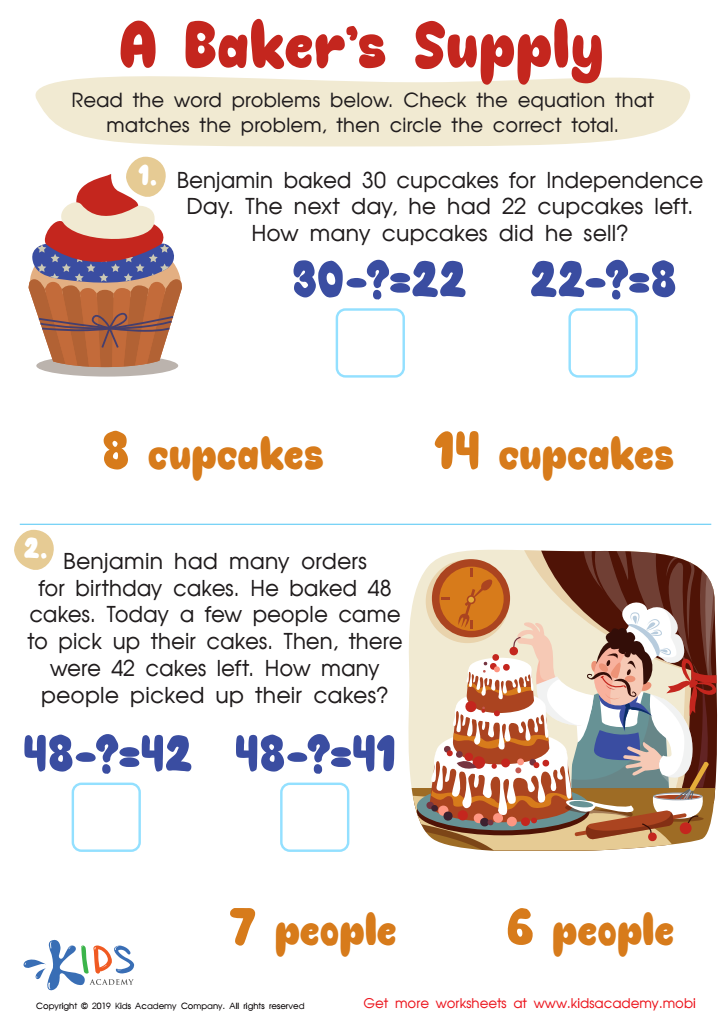
A Baker's Supply Worksheet








Basic math skills, particularly subtraction for second graders, form a crucial foundation for a child's educational journey. For parents and teachers, caring about and focusing on these skills is essential for numerous reasons. Firstly, subtraction is a fundamental mathematical operation that children encounter daily, from understanding money to time management. Mastery of basic subtraction in grade 2 equips children with the confidence to tackle more advanced math concepts later on, thereby fostering a positive attitude towards learning.
Moreover, proficiency in subtraction enhances problem-solving and logical thinking. Children learn to compare quantities, understand differences, and engage in critical thinking, all of which are vital skills beyond the realm of mathematics. A strong foundation in subtraction can bolster a child's performance across other subjects, including science and reading, as it promotes analytical and cognitive abilities.
For parents and teachers, supporting children in learning subtraction through engaging activities, games, and practice can make learning enjoyable and effective. Building these skills early helps prevent future learning gaps, setting students on a path to academic success. Ultimately, investing time in a child's basic math skills boosts their overall confidence, academic performance, and lifelong learning habits.