Critical thinking development Grade 1 Chess Worksheets
5 filtered results
-
From - To
Enhance your first grader's critical thinking skills with our engaging chess worksheets! Designed to introduce young learners to the strategic world of chess, these worksheets encourage problem-solving, pattern recognition, and analytical thinking. Each activity is tailored to promote cognitive growth while making learning fun. Through puzzles, guided chess problems, and interactive games, children will develop essential skills such as focus, creativity, and decision-making. Our Critical Thinking Development worksheets provide a stimulating foundation for future academic success, all centered around the timeless game of chess. Explore our collection today and watch your child’s analytical abilities flourish!
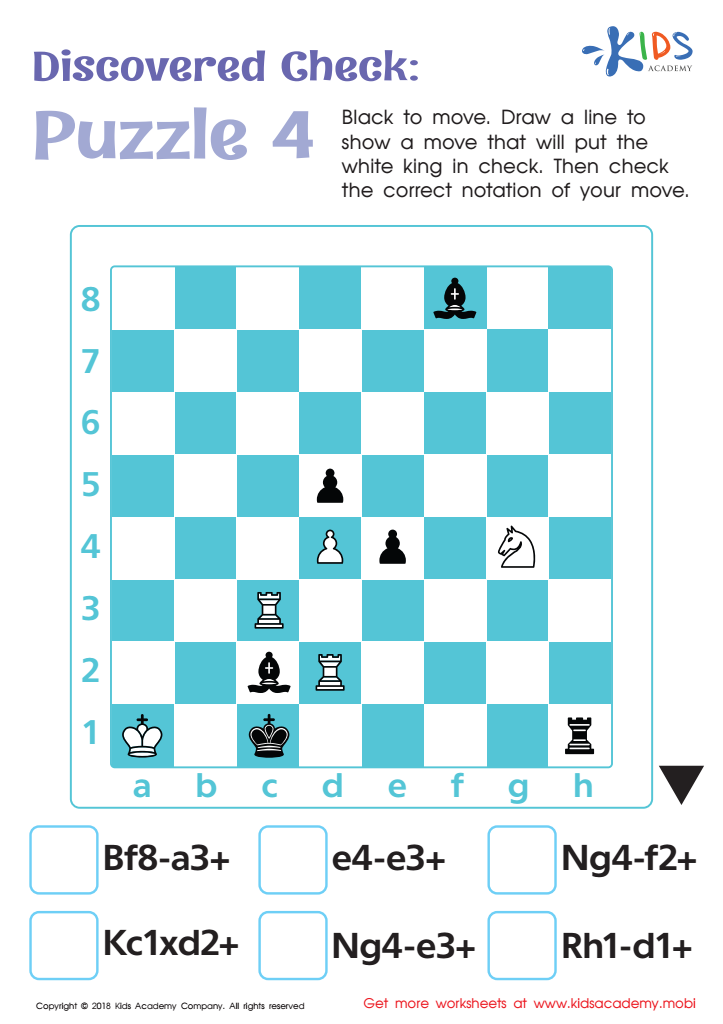
Discovered Check: Puzzle 4 Worksheet
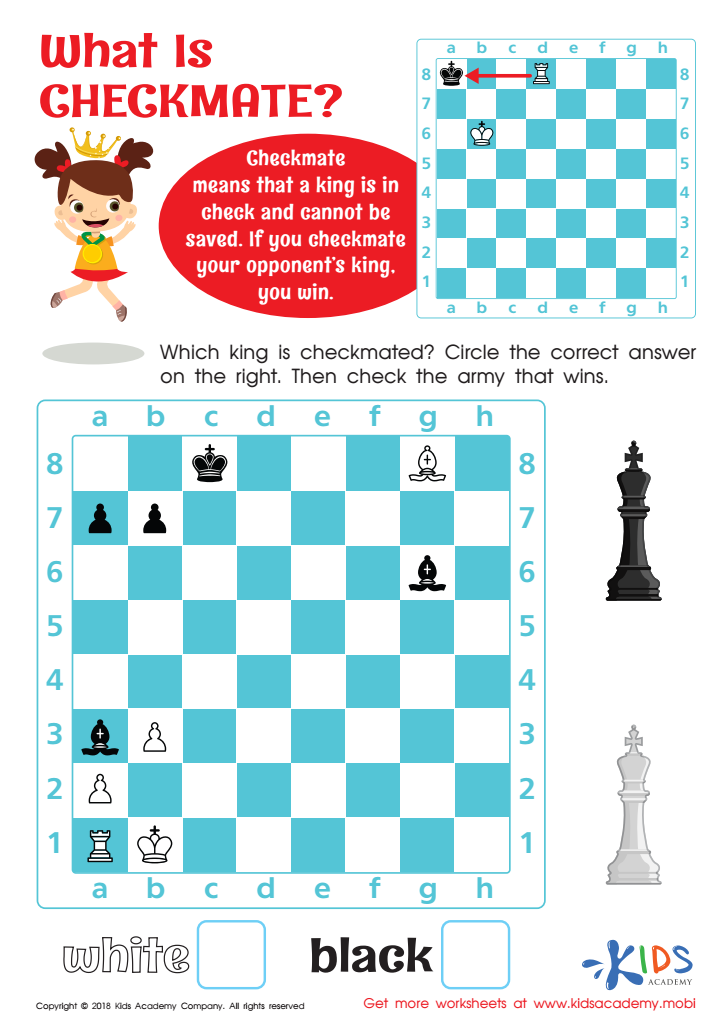
What is Checkmate? Worksheet
 Assign to My Students
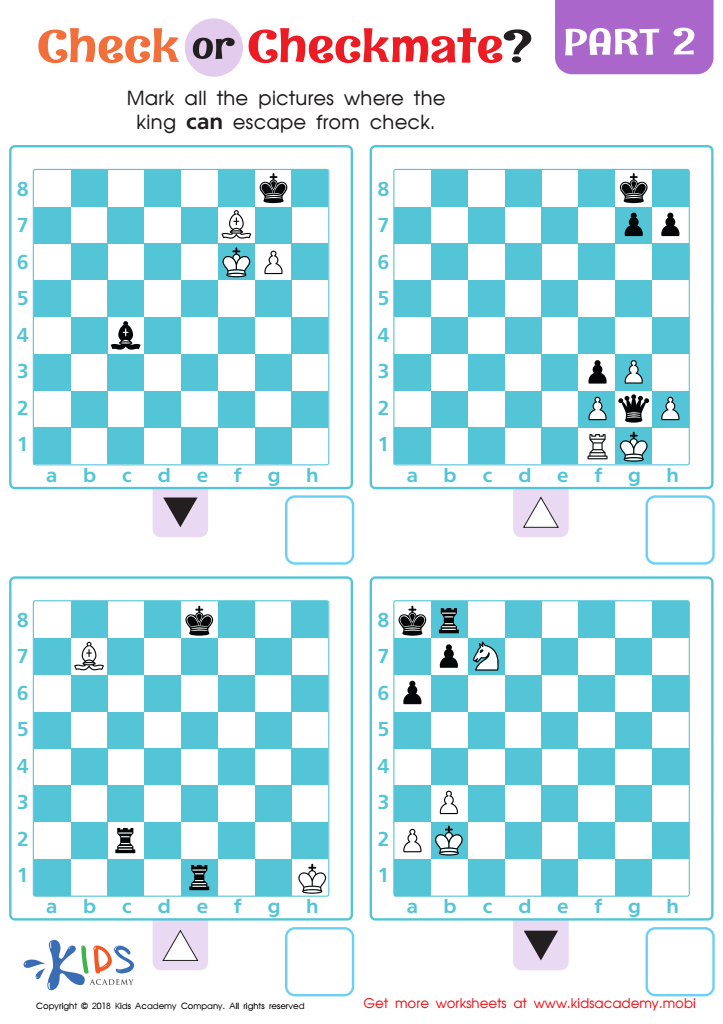
Check or Checkmate: Part 2 Worksheet
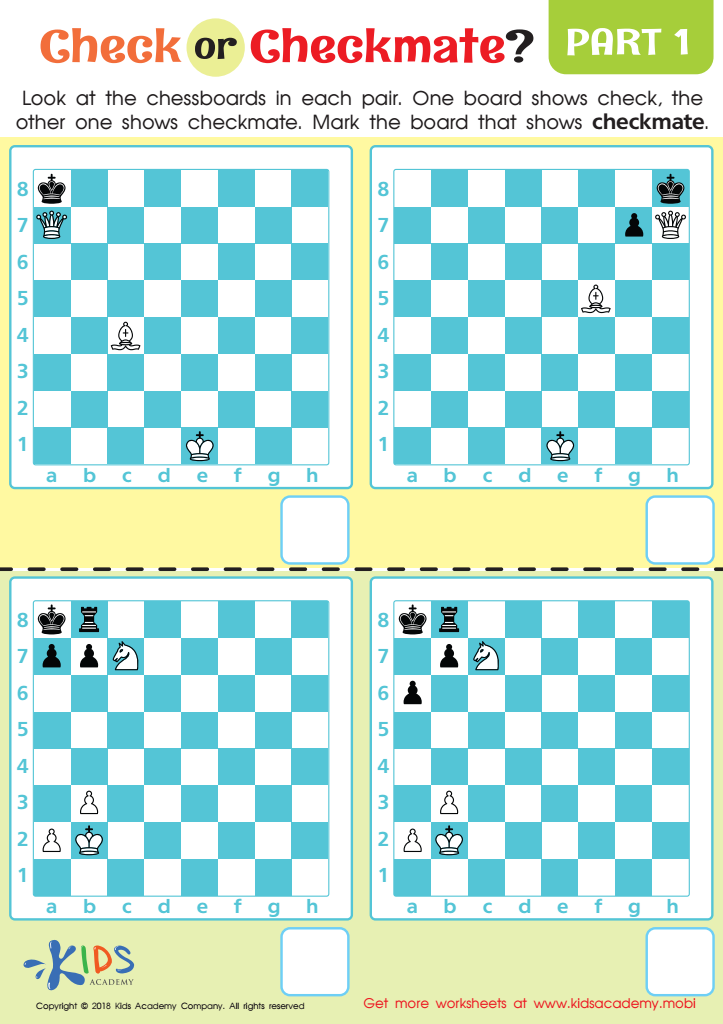
Check or Checkmate: Part 1 Worksheet
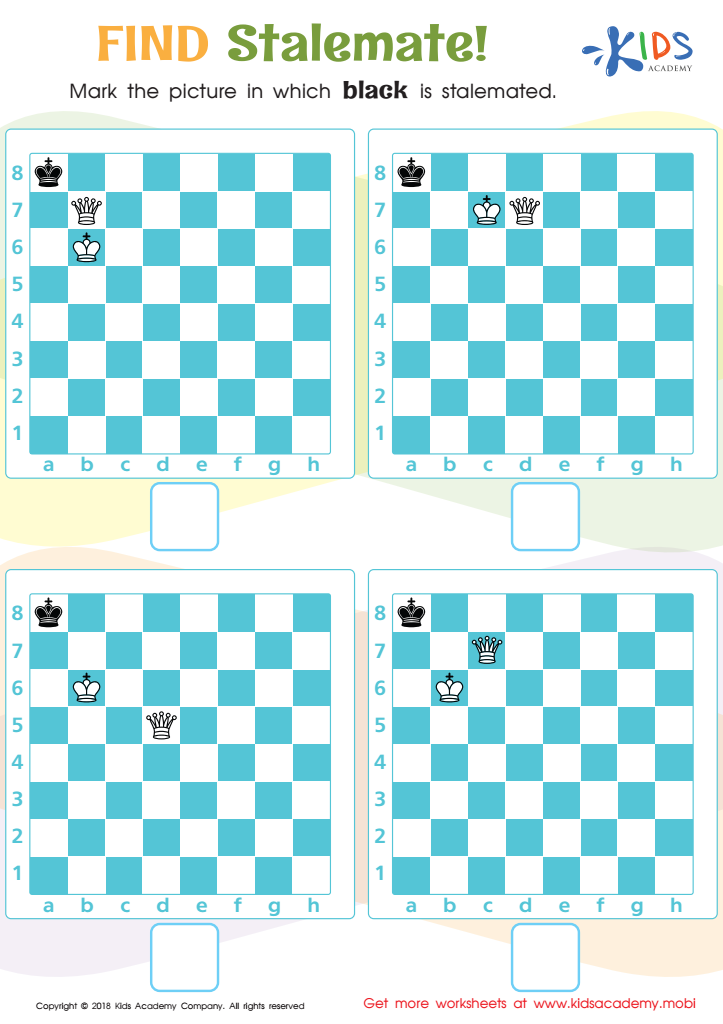
Find Stalemate! Worksheet






Critical thinking development is crucial in early childhood education, and incorporating activities like chess in Grade 1 can significantly enhance cognitive skills. Chess encourages children to analyze situations, make strategic decisions, and foresee potential outcomes—a skill set that is vital for academic success and overall problem-solving abilities.
Parents and teachers should care about fostering critical thinking because it transcends traditional rote learning. By engaging in a complex game like chess, children learn to evaluate their options, consider consequences, and develop patience. These skills build a strong foundation for later learning in subjects such as math and science, where analytical thinking is essential.
Moreover, chess promotes social skills among peers, fostering collaborative learning and improving emotional intelligence. As children discuss strategies and share insights, they learn the value of teamwork and respectful communication.
At this young age, nurturing critical thinking through chess helps establish a mindset of curiosity and resilience. Children begin to approach challenges with a growth mindset, knowing that mistakes are opportunities for learning. Ultimately, fostering critical thinking in Grade 1 not only prepares children for future academic endeavors but also equips them with essential life skills that will serve them well beyond the classroom.