Critical thinking enhancement Grade 1 Chess Worksheets
4 filtered results
-
From - To
Our Grade 1 Chess Worksheets are designed to enhance critical thinking in young minds. These engaging activities introduce first graders to the fundamentals of chess while developing problem-solving skills and strategic thinking. Each worksheet challenges students to think ahead, plan moves, and anticipate their opponent’s strategy. Perfect for classroom use or at-home practice, these worksheets provide a fun, interactive way to strengthen cognitive abilities. Help your child or student grow their critical thinking skills and build a strong foundation for success, both in chess and beyond, with our thoughtfully crafted chess worksheets for first graders.
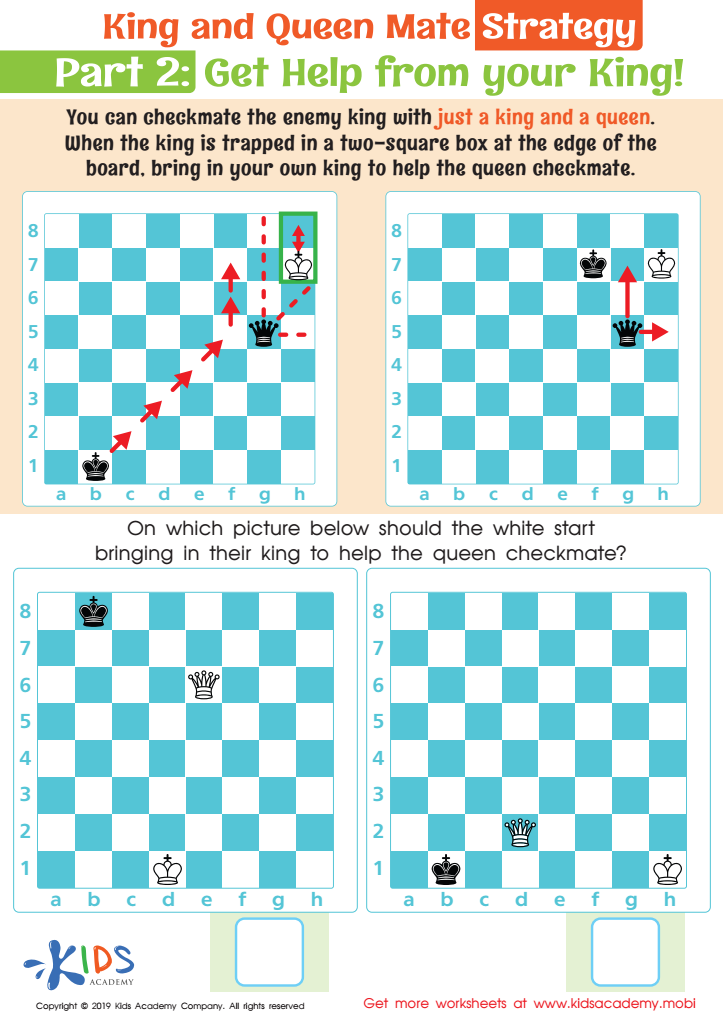
King and Queen Mate Strategy: Part 2 Worksheet
 Assign to My Students
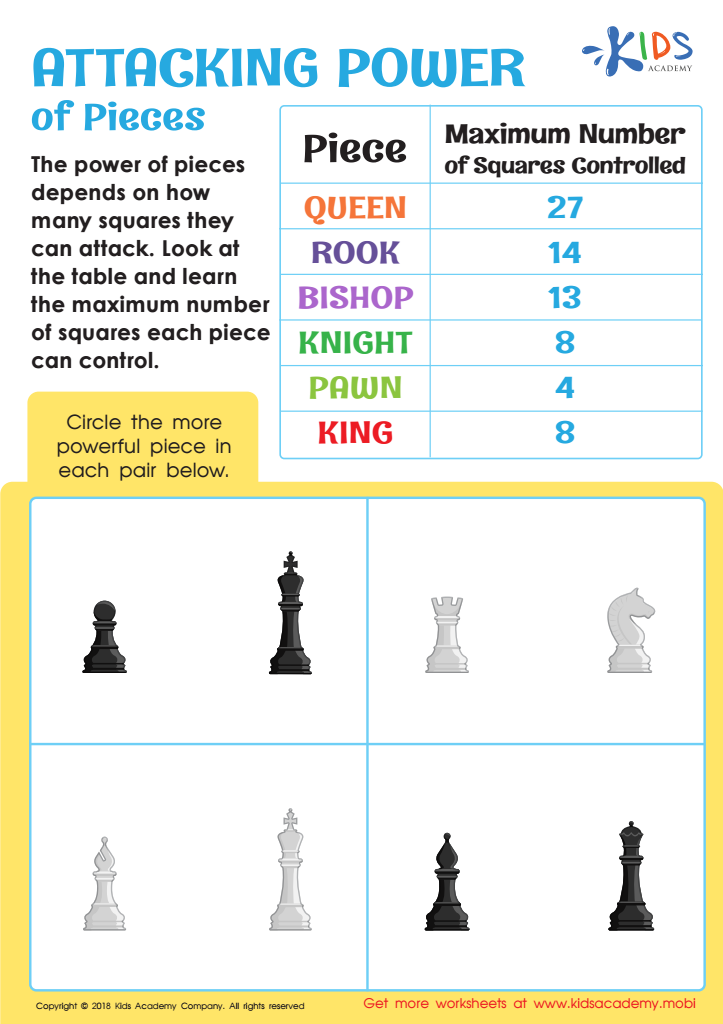
Attacking Power of Chess Pieces Worksheet
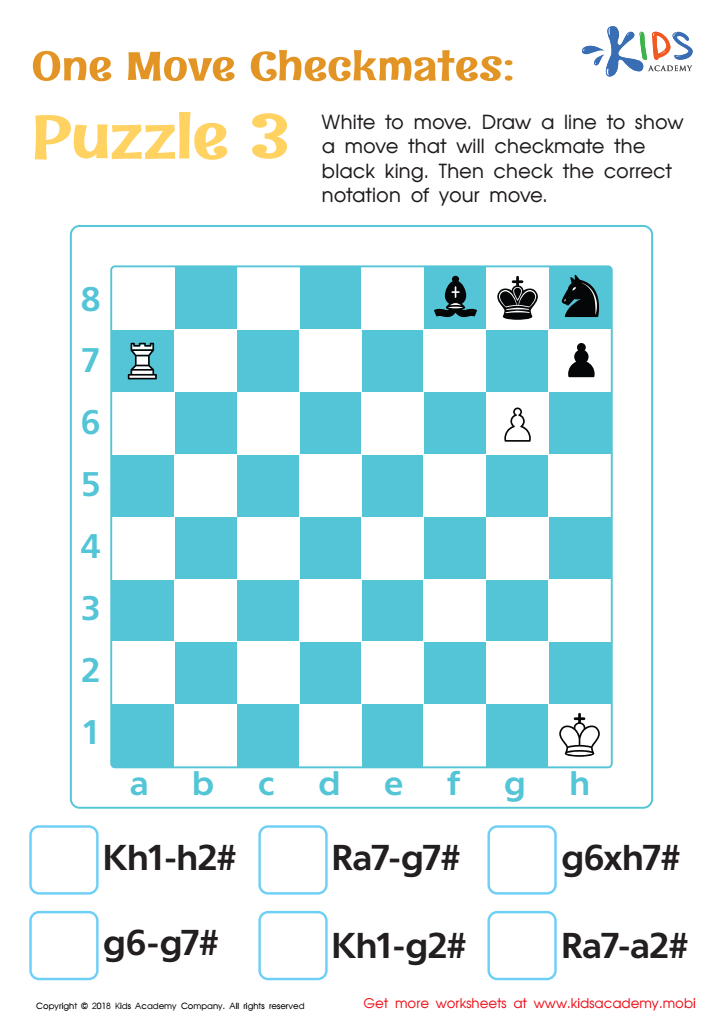
One Move Checkmates: Puzzle 3 Worksheet
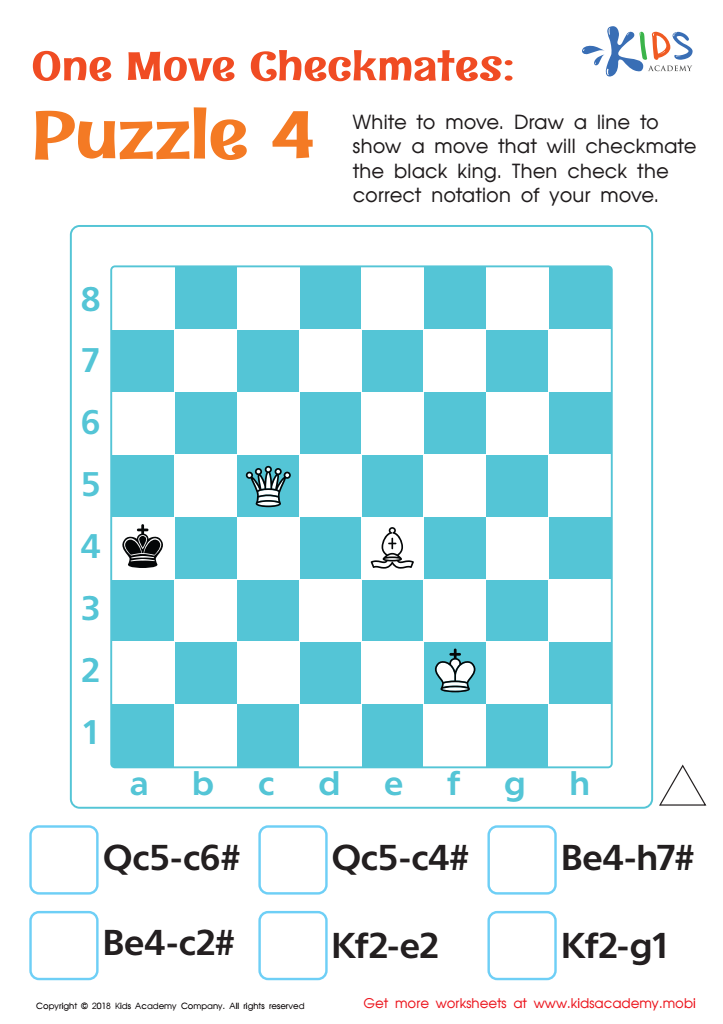
One Move Checkmates: Puzzle 4 Worksheet





Critical thinking is a vital skill that lays the foundation for future success in learning and life. Introducing critical thinking enhancement through Grade 1 chess instruction offers a unique and effective way to develop this skill from an early age. Chess inherently promotes critical thinking by requiring young children to plan, analyze, and anticipate the consequences of their moves. As players decide which moves to make, they must engage in problem-solving and strategic thinking, fostering their ability to assess situations logically and make informed decisions.
For parents and teachers, supporting chess education aligns with broader educational goals. First graders learning chess begin to practice patience, concentration, and discipline—all traits that are essential for academic achievement. Additionally, playing chess helps children improve their memory and pattern recognition skills, which are crucial for learning mathematics and reading comprehension.
Moreover, chess encourages a growth mindset, teaching children that perseverance and practicing various strategies can lead to success even if they initially struggle. When children encounter challenges across subjects in future grades, the resilience and problem-solving attitudes nurtured through chess will serve them well. Thus, by integrating chess into early education, parents and teachers can significantly enhance a child's critical thinking abilities, contributing to their overall cognitive development and academic performance.