Spatial awareness Grade 1 Chess Worksheets
3 filtered results
-
From - To
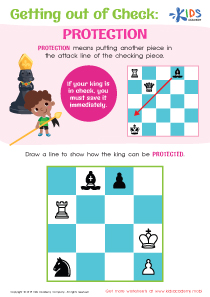
Spatial Awareness Grade 1 Chess Worksheets are designed to develop young learners’ cognitive and spatial skills through the engaging game of chess. These thoughtfully crafted worksheets guide first graders in understanding the chessboard layout, recognizing piece positions, and making strategic moves. By challenging students to visualize moves and plan ahead, these activities enhance their problem-solving abilities, strategic thinking, and spatial reasoning. Perfect for both classroom and home use, our top-notch resources make learning chess fun and accessible, fostering a love for the game while building foundational skills critical for overall academic success. Explore our collection to ignite your child's chess journey!
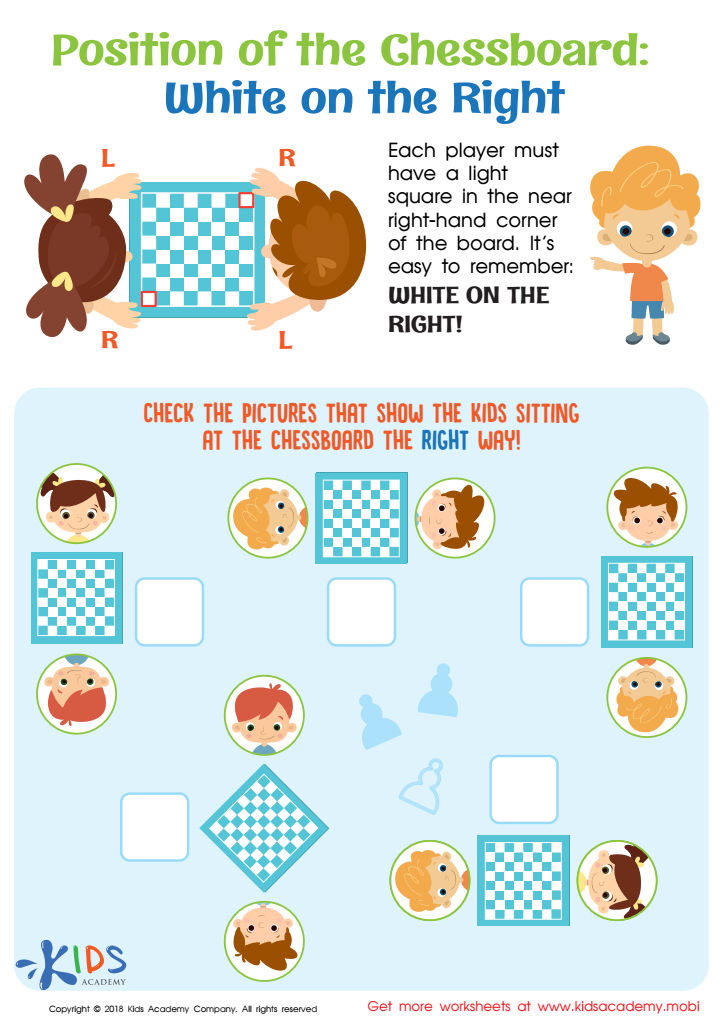
Position of the Chessboard: White on the Right Worksheet
 Assign to My Students
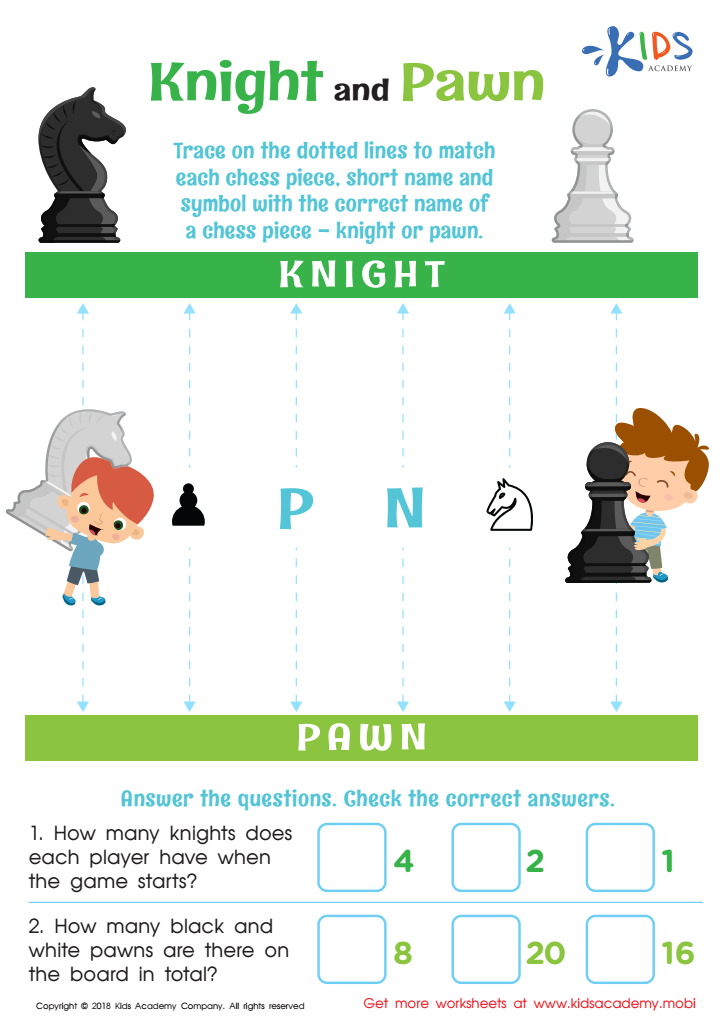
Knight and Pawn Worksheet
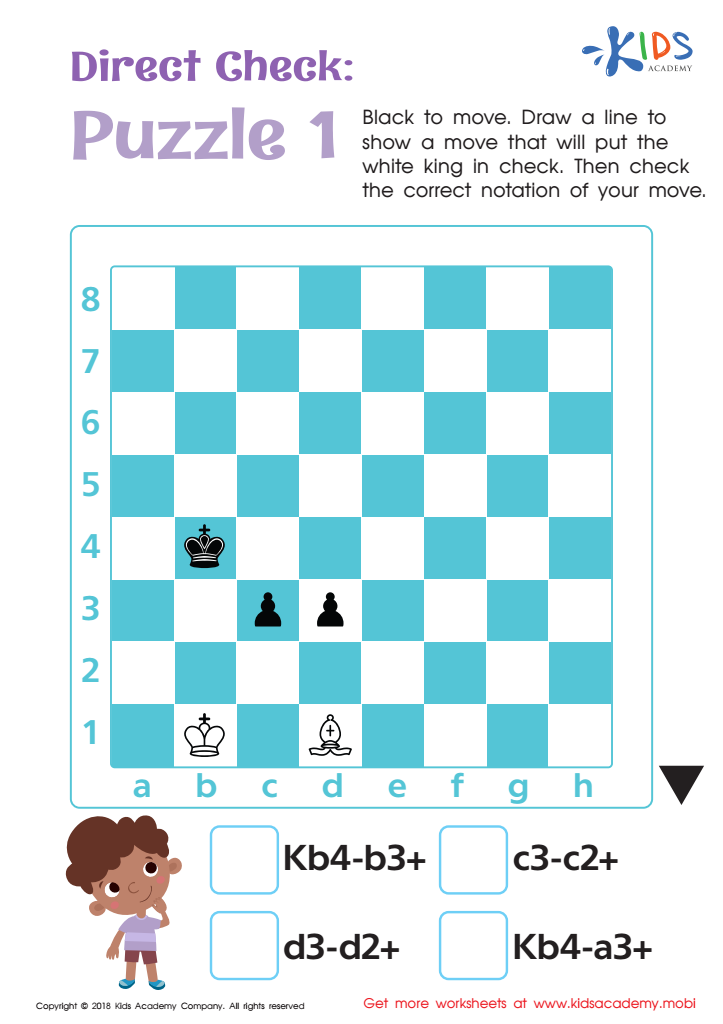
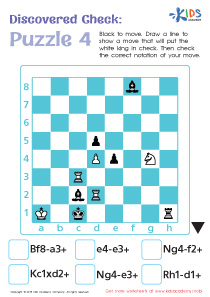
Direct Check: Puzzle 1 Worksheet







Spatial awareness in Grade 1 chess is crucial for young learners as it has a substantial impact on a child’s cognitive development and problem-solving skills. Firstly, chess inherently requires the ability to visualize spatial relationships on the 8x8 grid, fostering the child’s understanding of space and positioning which translates effectively into mathematical concepts. For example, knowing how each piece moves helps children comprehend vectors, relative positions, and geometric principles in a practical and engaging way.
Additionally, Chess improves a child’s ability to concentrate and enhances memory. Remembering the layout of the board and strategizing several moves ahead hones their focus and recall abilities. This can translate into better performance in other academic areas, such as reading and math.
Moreover, building spatial awareness through chess subtly prepares students for complex subjects like geometry in later years. It teaches them to think critically and predict outcomes, and understand directions, patterns, and transformations that are essential life skills beyond academics.
Lastly, chess promotes patience and resilience. Young children learn that practice in spatial thinking and problem-solving leads to improvement, instilling a growth mindset. In summary, nurturing spatial awareness through chess is not just about playing a game; it’s about enriching a foundational skill set that will benefit children throughout their educational journey and beyond.