Addition Practice Grade 1 Worksheets - Page 3
52 filtered results
-
From - To
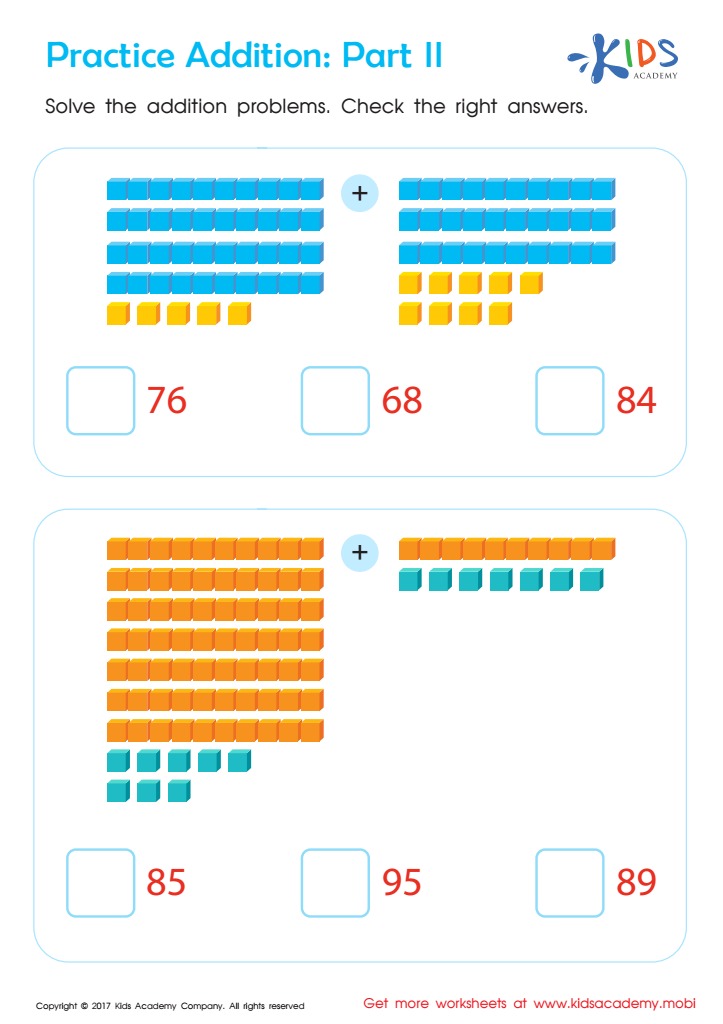
Practice Addition: Part 2 Worksheet
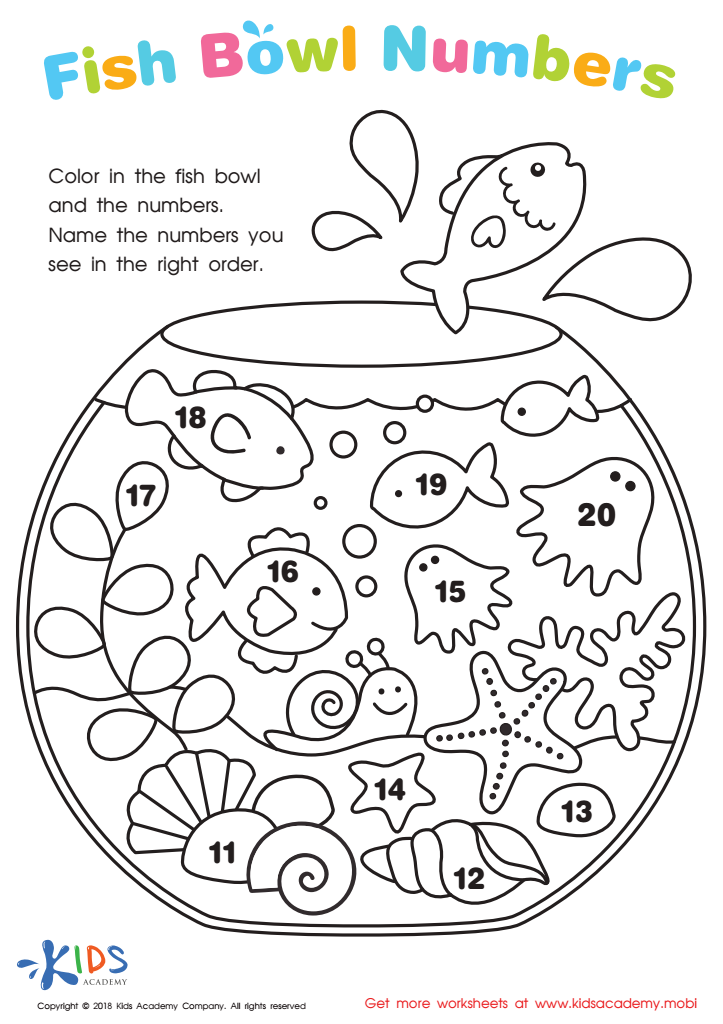
Fish Bowl Numbers Worksheet
 Assign to My Students








Addition practice in Grade 1 is crucial for building a solid mathematical foundation. At this age, students begin to develop a genuine understanding of numbers and how they relate to each other. Effective addition practice not only helps students master basic arithmetic but also enhances their problem-solving skills and logical thinking.
Parents and teachers play an essential role by engaging students in fun and interactive activities that reinforce addition concepts. When children practice addition through games, stories, or hands-on experiences, they connect mathematically with the world around them, boosting their confidence and interest in math.
Furthermore, strong addition skills are foundational for more advanced mathematical concepts that they will encounter in higher grades. Mastering addition facilitates a smoother transition to subtraction and introduces students to the principles of combining numbers and understanding quantities, key aspects of everyday life.
By emphasizing the importance of addition practice, parents and teachers can help students develop not just computational skills but also a positive attitude towards learning. This early support lays the groundwork for lifelong skills in mathematics, promoting rational decision-making and supporting academic success throughout their educational journey.