Data interpretation Grade 1 Worksheets
6 filtered results
Difficulty Level
Grade
Age
-
From - To
Subject
Activity
Standards
Enhance your first grader’s analytical skills with our engaging Data Interpretation Grade 1 Worksheets from Kids Academy! Specifically designed for young learners, these worksheets combine fun activities with educational content to help children understand basic data concepts. Students will learn to read, analyze, and interpret simple charts, graphs, and tables. Each worksheet is created to build foundational skills in data comprehension, fostering critical thinking, and decision-making abilities. Ideal for classroom and home use, our printable resources make learning data interpretation straightforward and enjoyable. Equip your first grader with essential skills for future academic success!
Favorites
With answer key
Interactive
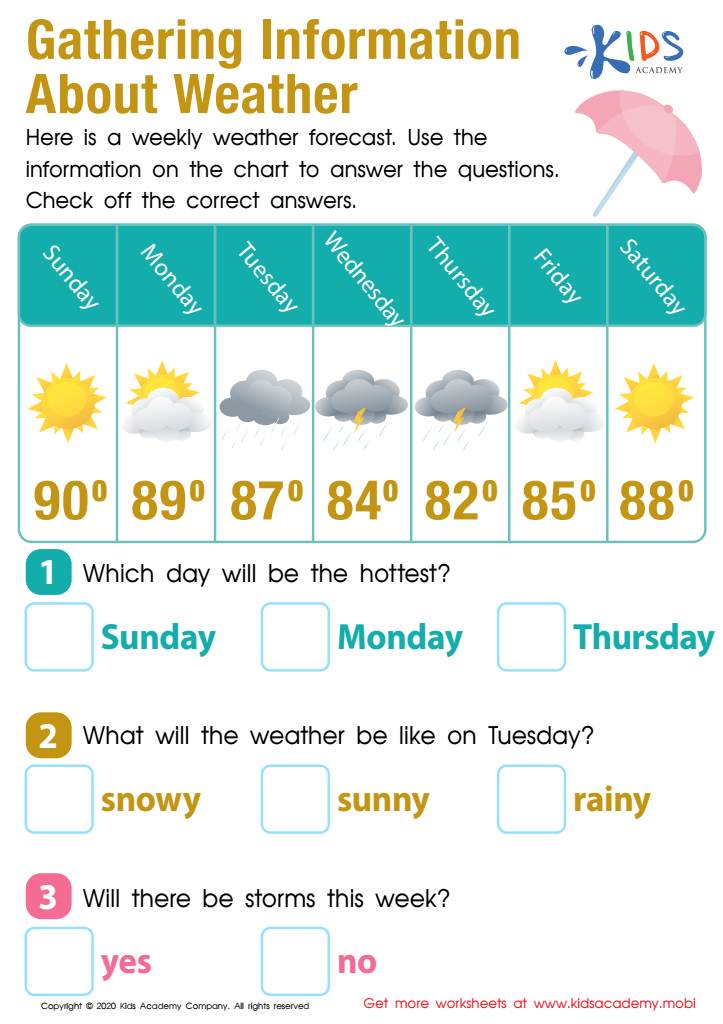
Gathering Information About the Weather Worksheet
Teach your child to interpret a weather forecast with this helpful science worksheet from Kids Academy! Guide them to analyze the data, figure out what the weather will be like on each day and answer the questions at the bottom by checking off the correct answers. This will help them understand and plan for their week!
 Assign to My Students
Gathering Information About the Weather Worksheet
Worksheet
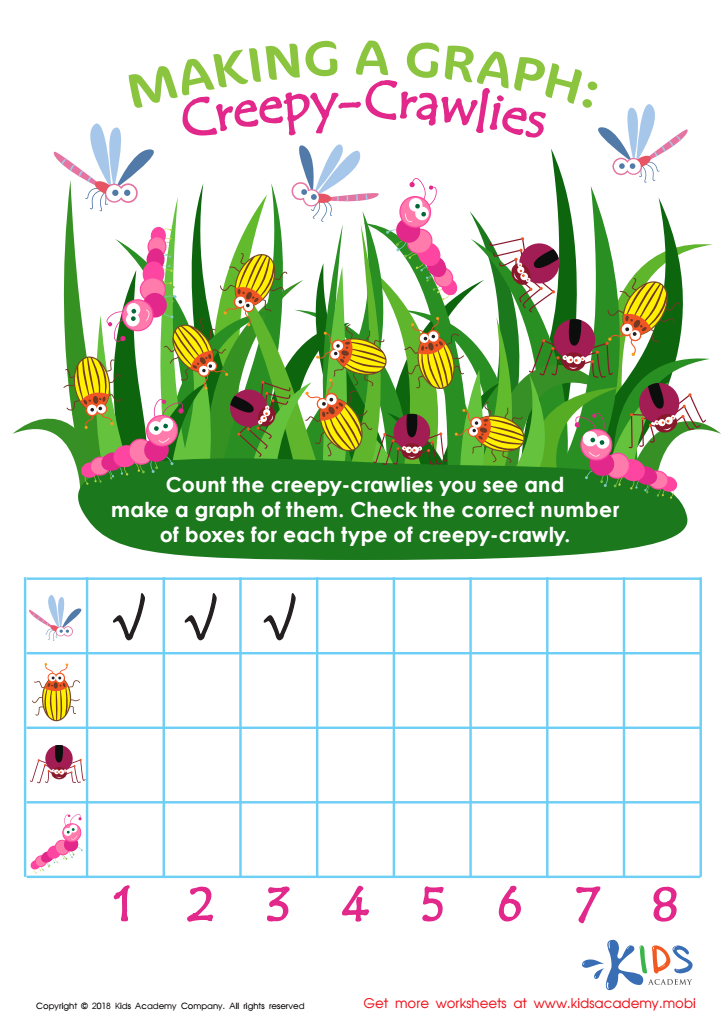
Making a Graph: Creepy Crawlies Worksheet
Let your little math whiz create a graph with this free PDF worksheet. They can count and sort the creepy-crawlies, checking off the correct number of boxes for each type. This engaging activity will help them hone their visual discrimination skills while efficiently organizing data.
Making a Graph: Creepy Crawlies Worksheet
Worksheet
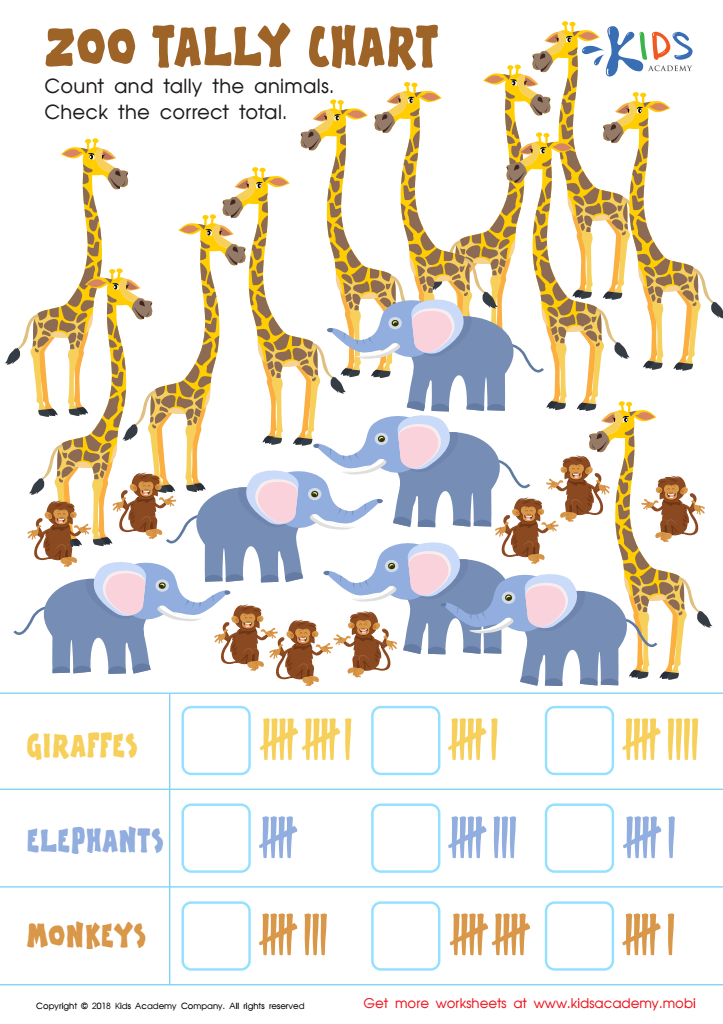
Zoo Tally Chart Worksheet
Your young mathematician will have fun counting and tallying zoo animals on this worksheet! Giraffes, elephants and monkeys - all accurately tallied at the bottom. They will assign values to each animal group to find the answer. It's math but they won't know it - it's a zoo out there!
Zoo Tally Chart Worksheet
Worksheet
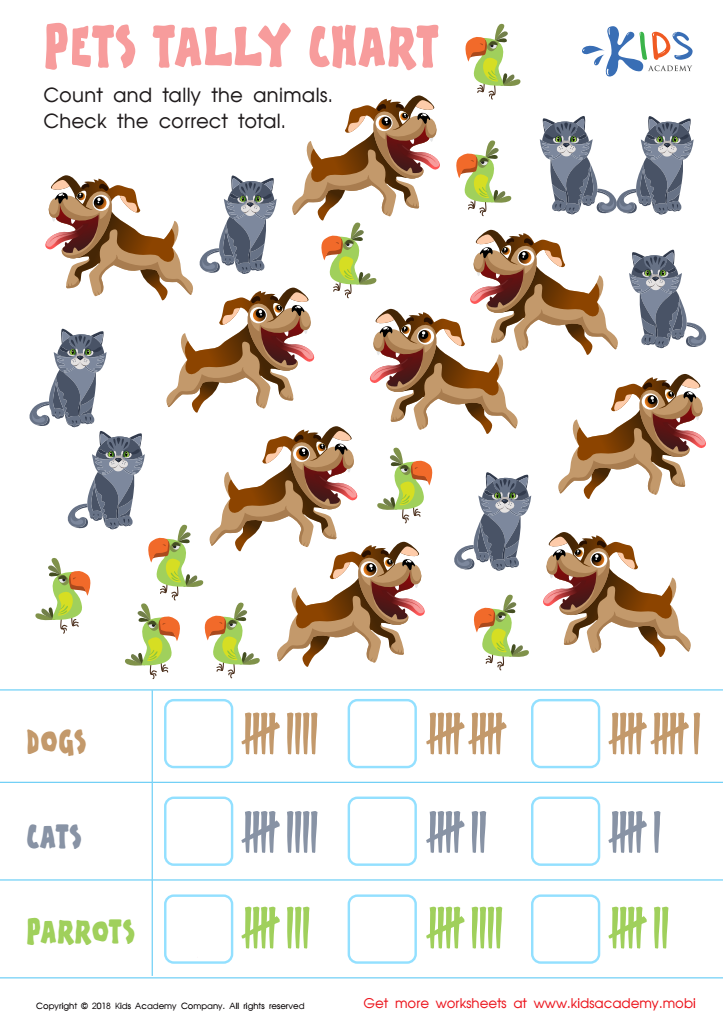
Pets Tally Chart Worksheet
Let your little mathematician count and tally the animals with this fun PDF worksheet. They'll assign value to each pet type and select the correct answer. It's a great way to practice number reasoning and learn how tallying helps keep math organized and efficient when solving equations.
Pets Tally Chart Worksheet
Worksheet
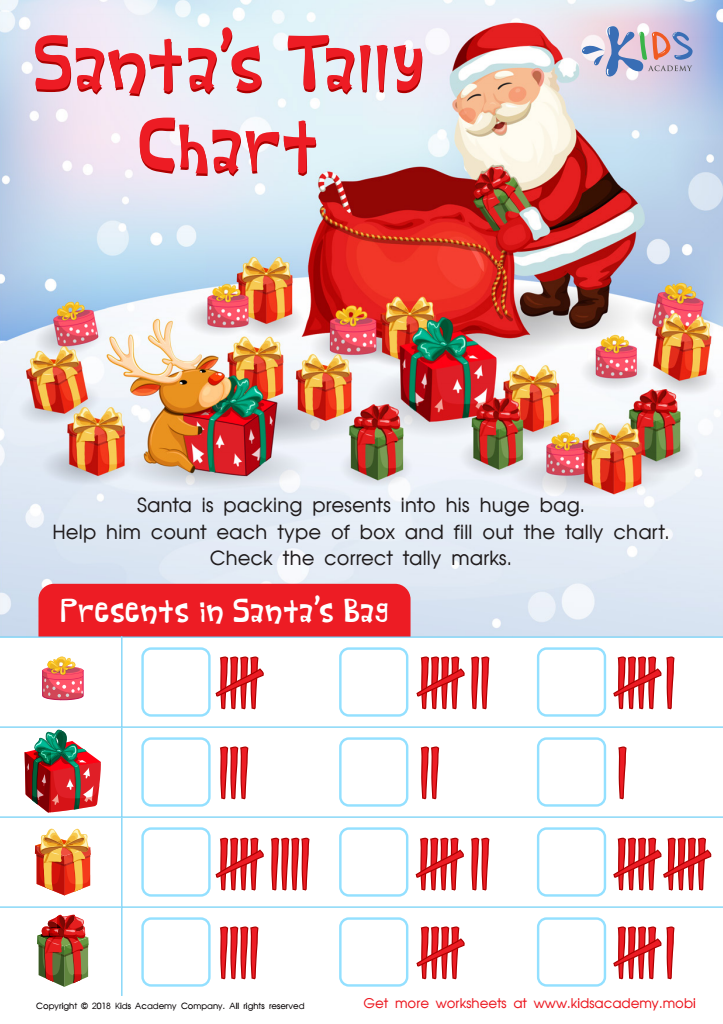
Santa Tally Chart Worksheet
Santa's got a big bag of gifts to count! Kids can help with this fun PDF worksheet, practicing visual recognition and representation skills while they sort and tally the presents. They'll also work on charting as they fill in the tally chart and send Santa off for a happy holiday. Ho, Ho, Ho!
Santa Tally Chart Worksheet
Worksheet
Join Kids Academy for Free
Who is primarily going to use this learning content?








Data interpretation is an essential skill for first graders as it lays the foundation for critical thinking and informed decision-making. For parents, caring about data interpretation means fostering their child's ability to understand and analyze information from an early age. It encourages curiosity and helps children make sense of the world around them by interpreting visual representations like charts, graphs, and tables. When parents invest time in activities that promote data interpretation, they enhance their child’s cognitive development and mathematical thinking.
For teachers, focusing on data interpretation in Grade 1 ensures a comprehensive approach to early education that aligns with curriculum standards. It helps students develop key skills, such as identifying patterns, comparing quantities, and drawing conclusions based on evidence. By integrating data interpretation into the classroom, educators can create engaging, hands-on learning experiences that make abstract concepts tangible and relatable for young learners.
Ultimately, both parents and teachers should prioritize data interpretation because it equips children with tools to approach problems logically, fosters academic success, and nurtures an appreciation for the practical application of math in everyday life. Early proficiency in this skillset creates a strong foundation for future learning, both in school and beyond.