Enhancing mental arithmetic Grade 1 Worksheets
3 filtered results
-
From - To
Enhancing mental arithmetic is crucial for first graders, forming a strong foundation for future math skills. Our Grade 1 mental arithmetic worksheets are carefully crafted to engage young learners. Each worksheet incorporates fun and interactive problems, helping kids develop essential computational proficiency. With a variety of exercises, from simple addition and subtraction to problem-solving activities, these worksheets nurture confidence and speed in arithmetic. Perfectly suited for classroom or homework, they encourage independent thinking and consistent practice. Equip your child with critical mental math skills, ensuring their academic growth is both enjoyable and substantial. Download now and make math exciting!
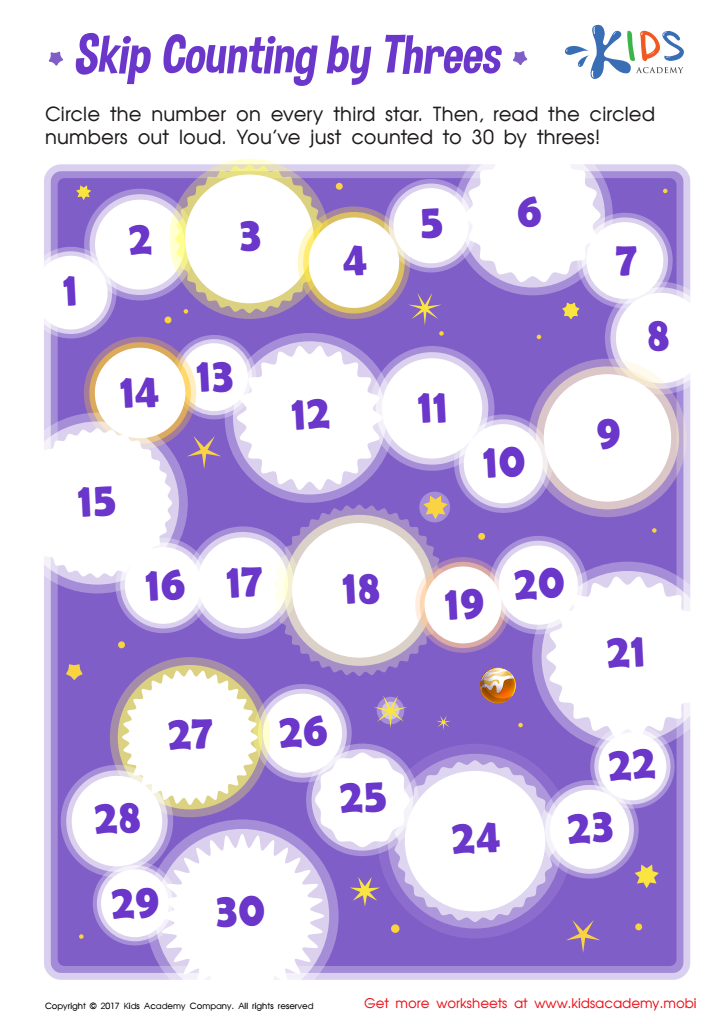
Skip Counting By Three Printable
 Assign to My Students
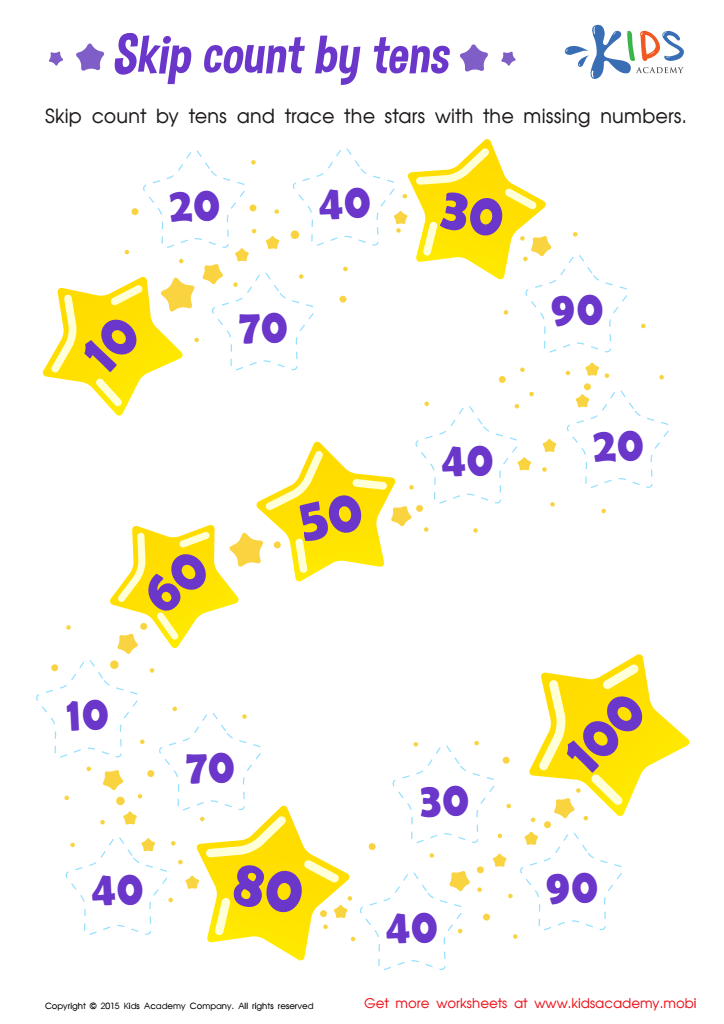
Learn dozens: Skip Count by Tens Printable

Penguin's Friendly Numbers Worksheet








Enhancing mental arithmetic in Grade 1 is crucial for several reasons. First and foremost, early mathematical skills serve as building blocks for future academic success. Introducing mental arithmetic at a young age helps children develop cognitive abilities, such as problem-solving and logical thinking, which are essential across all areas of learning.
For parents and teachers, fostering strong mental arithmetic abilities can lead to increased confidence and a positive attitude toward mathematics. By making mental math a part of daily practice, children start to see math as a fun and approachable subject, reducing anxiety and encouraging a growth mindset.
Furthermore, early proficiency in mental arithmetic helps children excel in everyday practical tasks, from counting change to measuring ingredients for a recipe, which fosters independence and critical life skills.
Teachers who focus on mental arithmetic can tailor their instruction to cater to diverse learning paces, ensuring no child is left behind. Similarly, parents can extend learning beyond the classroom by incorporating games and activities that reinforce math concepts.
In sum, investing in mental arithmetic in the early grades lays a strong foundation for academic achievement, personal growth, and practical life readiness, making it a critical focus for both parents and teachers.