History knowledge Grade 1 Worksheets
4 filtered results
Difficulty Level
Grade
Age
-
From - To
Subject
Activity
Standards
Explore our engaging History Knowledge Grade 1 Worksheets, designed to make learning about the past fun and interactive for young students! Our collection features colorful, age-appropriate activities that help first graders understand basic historical concepts, significant events, and important figures. Each worksheet is crafted to enhance critical thinking skills and promote discussions about history in an accessible way. From timelines and maps to matching games and fill-in-the-blanks, these worksheets encourage curiosity and a love for learning. Download and print these delightful resources to enrich your classroom and support your students' educational journey! Perfect for homeschooling or enhancing classroom activities.
Favorites
With answer key
Interactive
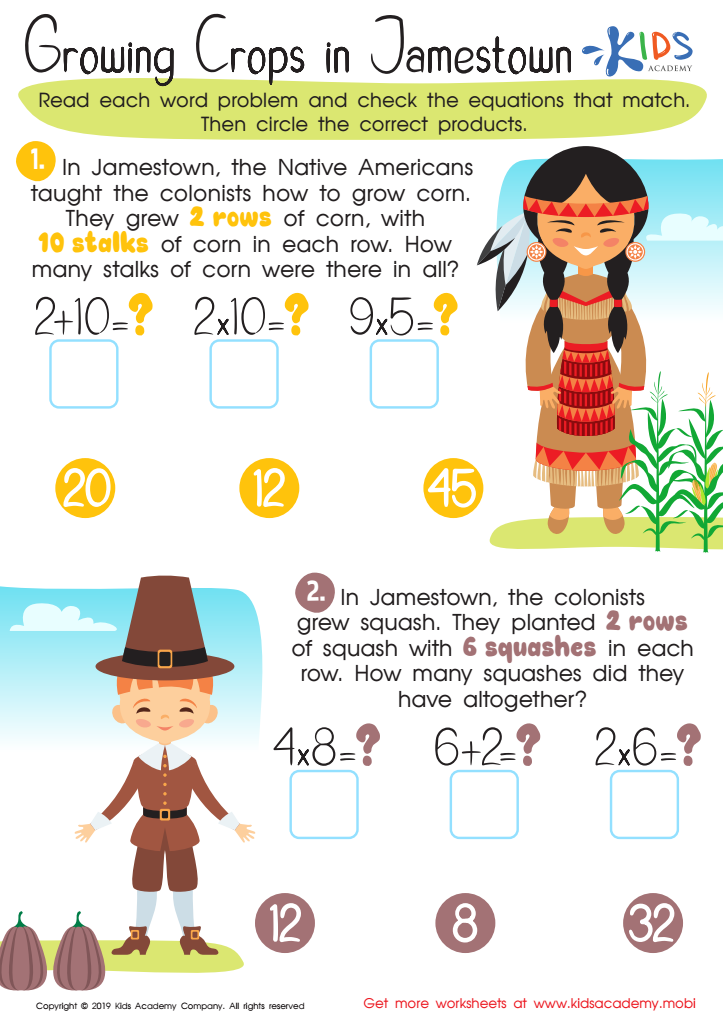
Growing Jamestown Worksheet
This exciting multiplication worksheet from Kids Academy uses American history facts as its theme. Kids learn about Native Americans helping early Americans at Jamestown, then read the word problems, match the equations and solve for the product. Finally, circle the correct answer!
 Assign to My Students
Growing Jamestown Worksheet
Worksheet
Join Kids Academy for Free
Who is primarily going to use this learning content?







History knowledge is essential for Grade 1 students as it lays a foundational understanding of their world and identity. At this early stage, children begin to develop a sense of belonging and perspective. Understanding history helps them recognize the relevance of their own background, culture, and community, fostering pride and a sense of connection.
Moreover, history teaches essential skills such as critical thinking, storytelling, and empathy. By learning about historical events, figures, and cultures, children can develop the ability to think critically about past and present influences on their lives. Engaging stories of notable people and events captivate their imaginations and help them see the world through different lenses, building empathy for others.
In addition, history education promotes important soft skills. Grade 1 students learn to ask questions, make connections, and understand cause-and-effect relationships. These skills become important as they navigate their educational journey.
Lastly, teaching history creates informed citizens who can engage in civic life. Understanding history shapes children’s attitudes and values, imparting lessons on respect, resilience, and the importance of community. Overall, fostering a knowledge of history in young learners equips them to thrive socially, emotionally, and academically.