Improving categorization skills Grade 1 Worksheets
3 filtered results
-
From - To
Enhance your first grader's categorization skills with our engaging worksheets! Designed for young learners, these printable activities help students recognize patterns and sort items into meaningful groups. Covering various themes, from animals to everyday objects, our worksheets make learning fun and interactive. As children complete these exercises, they develop critical thinking and organizational skills essential for academic success. Ideal for classroom use or at-home practice, our resourceful materials support differentiated learning for all students. Let your child explore the world of categories while building a strong foundation for future learning. Access our worksheets today and watch their confidence grow!
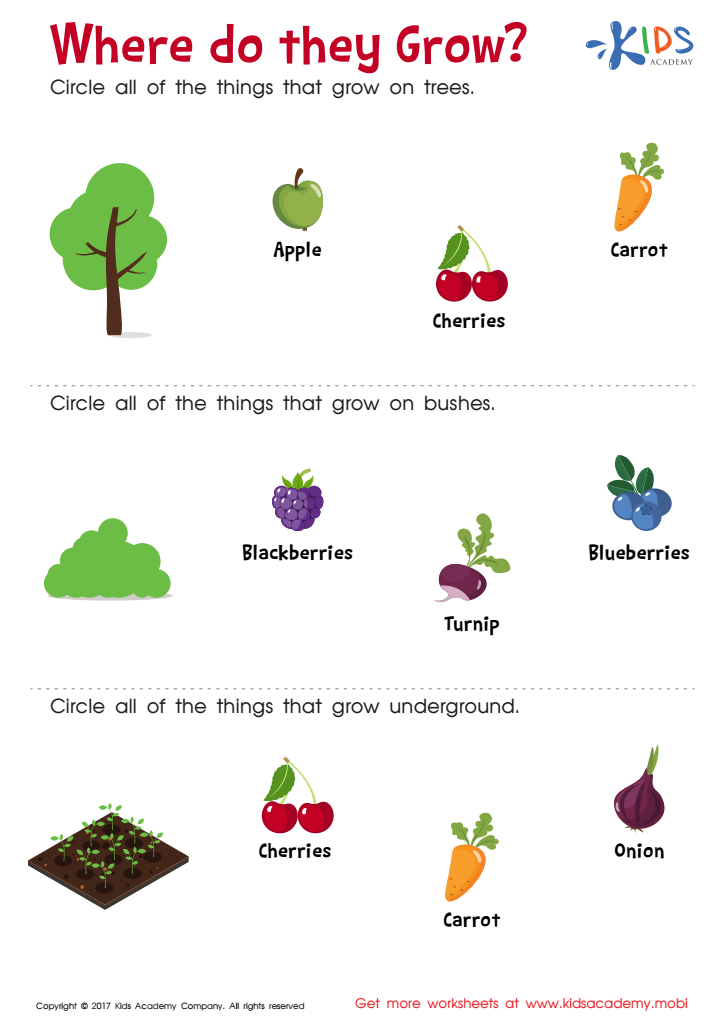
Where Do They Grow Worksheet
 Assign to My Students
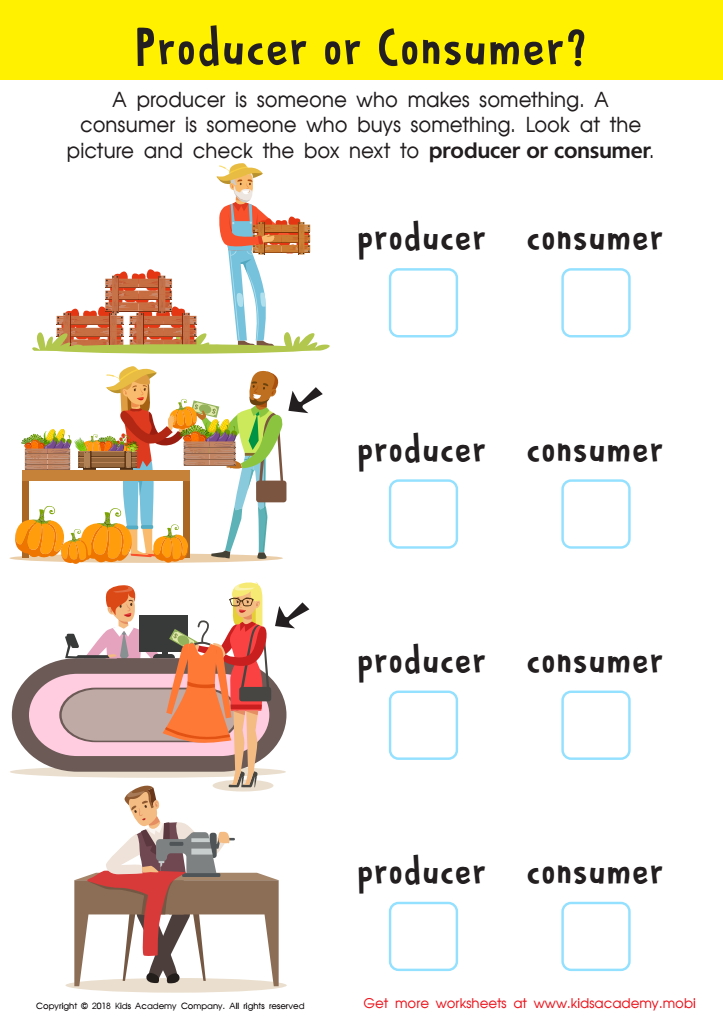
Producer or Consumer? Worksheet
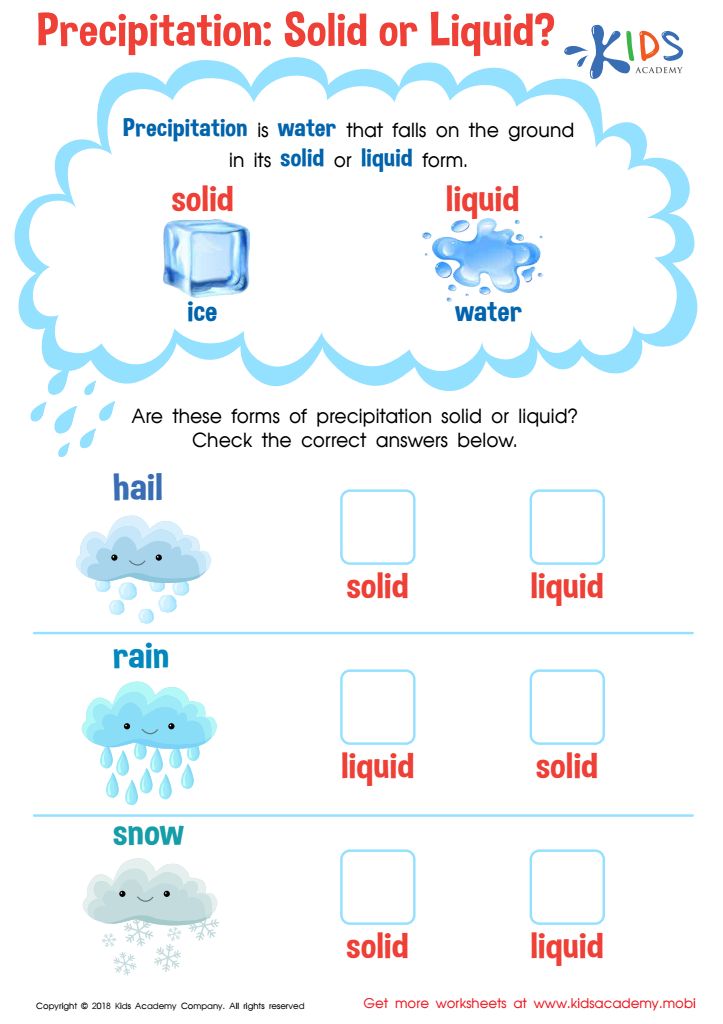
Precipitation: Solid or Liquid? Worksheet





Improving categorization skills in Grade 1 is crucial for children's cognitive and academic development. At this age, children are transitioning from preschool's play-based learning to a more structured educational environment. Categorization helps children organize their thoughts, leading to better understanding and retention of information. By grouping objects, ideas, or concepts, they learn to identify similarities and differences, which enhances critical thinking and problem-solving skills.
Moreover, categorization is foundational for subjects like math and reading. For instance, sorting animals into categories, such as mammals and reptiles, fosters comprehension in science. In language arts, recognizing the difference between nouns, verbs, and adjectives aids in vocabulary development and sentence structure.
Parents and teachers play a vital role in nurturing these skills. Engaging children in everyday activities like sorting toys, grouping food items by type, or classifying colors inspires interest and practical application. Simple games and interactive activities reinforce these concepts in a fun way, appealing to young learners. Ultimately, the benefits of improved categorization extend beyond academics; they foster organizational skills, enhance children’s ability to make connections, and support emotional development by helping them articulate their thoughts and preferences. Investing in these skills is investing in a child’s future success.