Musical instrument recognition Grade 1 Worksheets
3 filtered results
Difficulty Level
Grade
Age
-
From - To
Subject
Activity
Standards
Enhance your Grade 1 students' musical understanding with our Musical Instrument Recognition Worksheets! Designed for young learners, these engaging worksheets help kids identify and differentiate between various musical instruments. With vibrant illustrations and interactive exercises, children will practice matching instruments to their names and sounds, fostering both recognition and auditory skills. Our worksheets encourage creativity and critical thinking, making learning fun and intuitive. Perfect for classroom activities or at-home learning, these resources support foundational music education while building cognitive skills. Explore the joy of music and nurture your child’s interest with our easy-to-use Musical Instrument Recognition Worksheets today!
Favorites
With answer key
Interactive
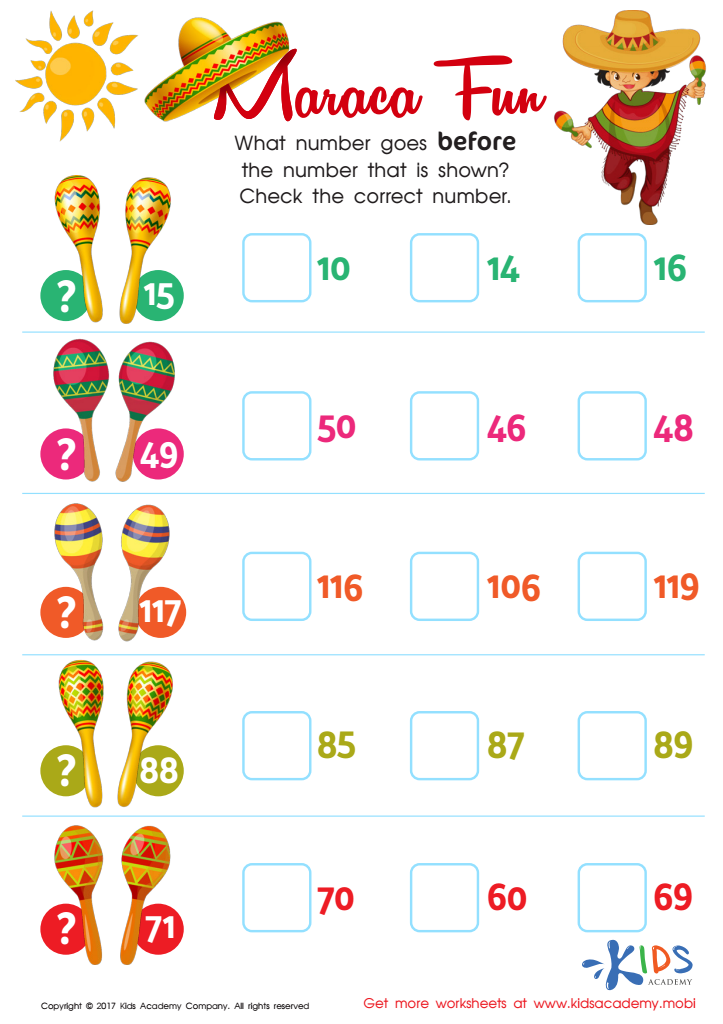
Counting: Maraca Fun Worksheet
Let your child add some Maraca fun to their math lessons by using this printable worksheet! They must figure out the numbers that come before the ones shown. Answers are provided on the other side; all your child needs to do is check the boxes with the correct numbers. Help them improve their counting and have fun along the way!
 Assign to My Students
Counting: Maraca Fun Worksheet
Worksheet
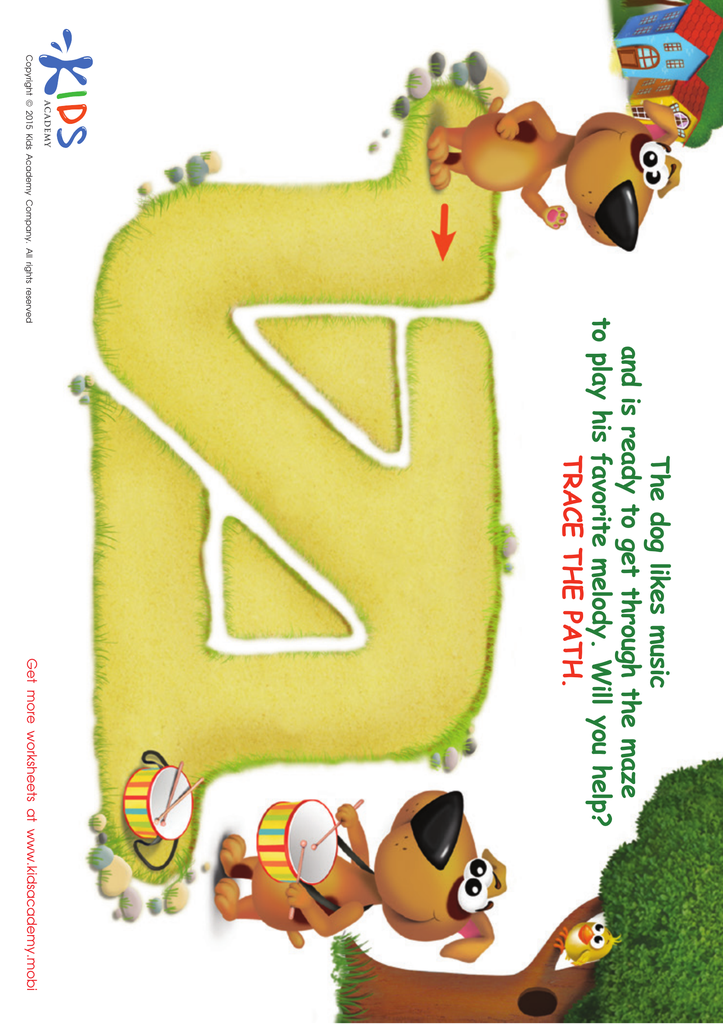
Drummer Maze Worksheet
Enjoy!
Kids Academy's new maze games are perfect for you and your little learners. Help the dog find the drum at the end of the maze! Once they reach it, you can play music together. Visit Kids Academy's website to find free printable mazes and other worksheets. Have fun!
Drummer Maze Worksheet
Worksheet
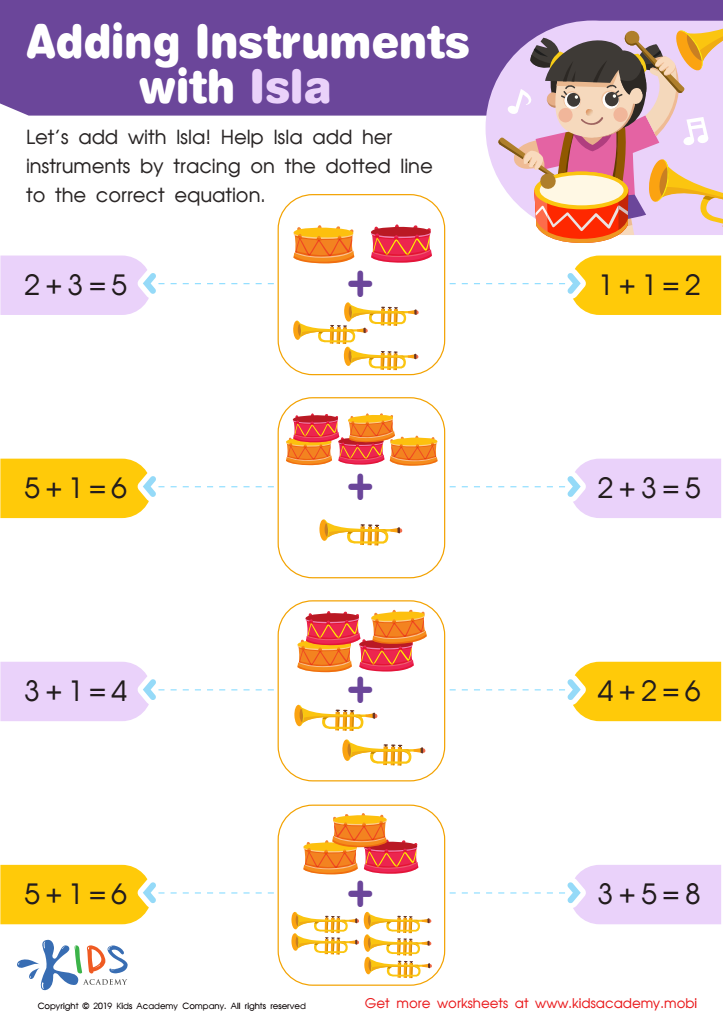
Adding Instruments with Isla Worksheet
Your kids can have fun helping Isla add her musical instruments. With colorful pics and one-to-one representation, they can pick the correct addition sentence. They can connect each pic with traceable lines and get to the right sum up to 10.
Adding Instruments with Isla Worksheet
Worksheet
Join Kids Academy for Free
Who is primarily going to use this learning content?







Musical instrument recognition in Grade 1 is vital for young learners as it fosters auditory discrimination, cognitive development, and appreciation for the arts. Familiarizing children with various instruments helps them develop critical listening skills, which are essential for language development and later academic success. Understanding the different sounds and characteristics of instruments enhances their ability to distinguish between tones and pitches—skills that are fundamental in music learning and can transfer to other academic areas.
Additionally, integrating musical instrument recognition in early education introduces children to diverse cultures and historical contexts associated with each instrument. This awareness fosters inclusivity and respect for varied musical traditions, promoting cultural literacy.
Engaging with music also provides a multi-sensory learning experience, which caters to different learning styles and can make lessons more engaging and enjoyable. This inspiration can spark creativity, supporting the development of problem-solving and critical-thinking skills.
Furthermore, recognizing instruments can be a gateway for students to explore music-making themselves, potentially influencing them to take up an instrument and experience the personal and social benefits of music, such as discipline, teamwork, and self-expression. Ultimately, supporting musical education in early grades sets a strong foundation for a lifelong appreciation of music and the arts.