Visual discrimination Grade 1 Worksheets
5 filtered results
-
From - To
Boost your child's visual processing skills with our Visual Discrimination Grade 1 Worksheets! Designed for first graders, these engaging printable activities help kids recognize differences in shapes, patterns, and objects. Through fun exercises, students enhance their attention to detail, critical thinking, and visual learning abilities. Our educational resources not only support academic success but also build a strong foundation for reading and writing skills. Perfect for classroom use or at-home practice, these worksheets make learning enjoyable and effective. Visit Kids Academy for a variety of interactive worksheets that turn learning into an exciting adventure!
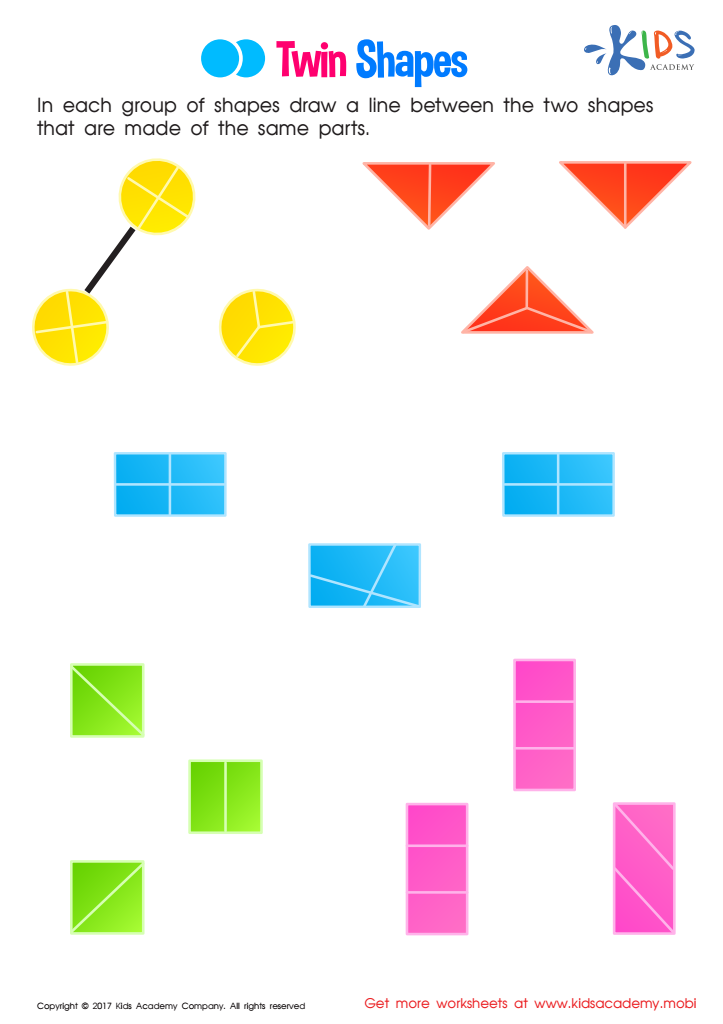
Twin Shapes Worksheet
 Assign to My Students
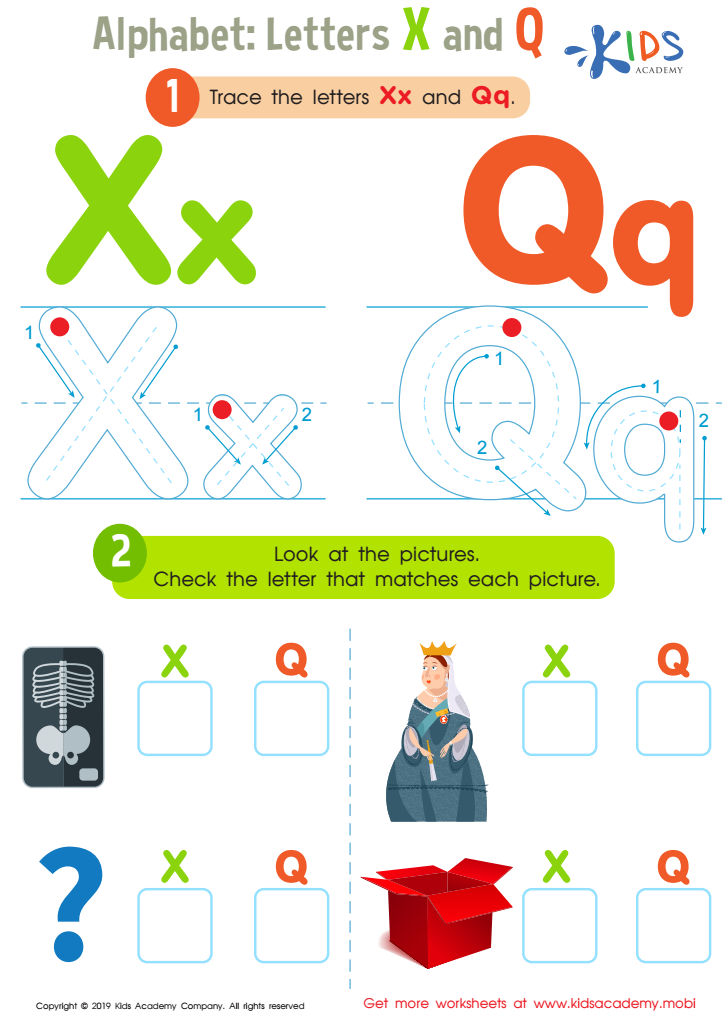
Letters X and Q Tracing Worksheet
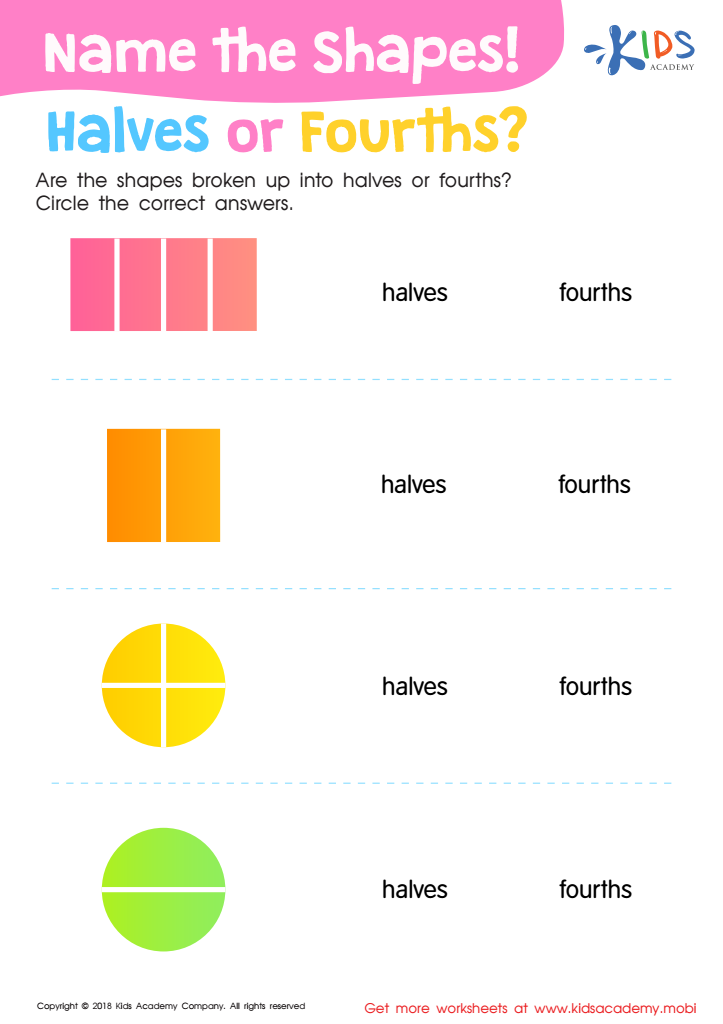
Name the Shapes Halves or Fourths? Worksheet
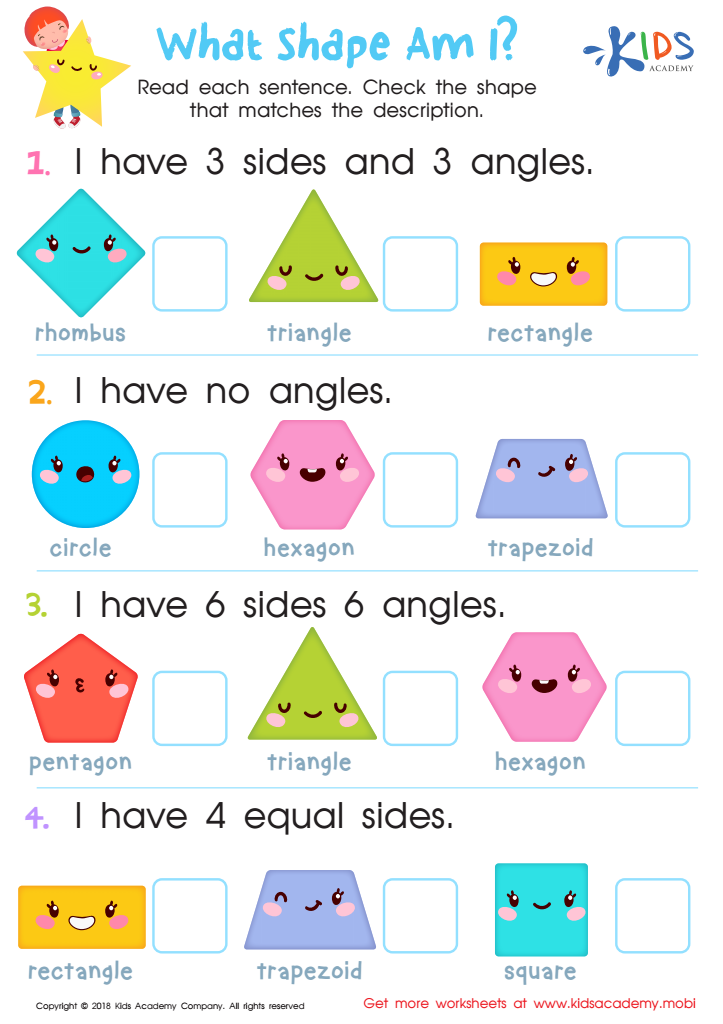
What Shape Am I? Worksheet
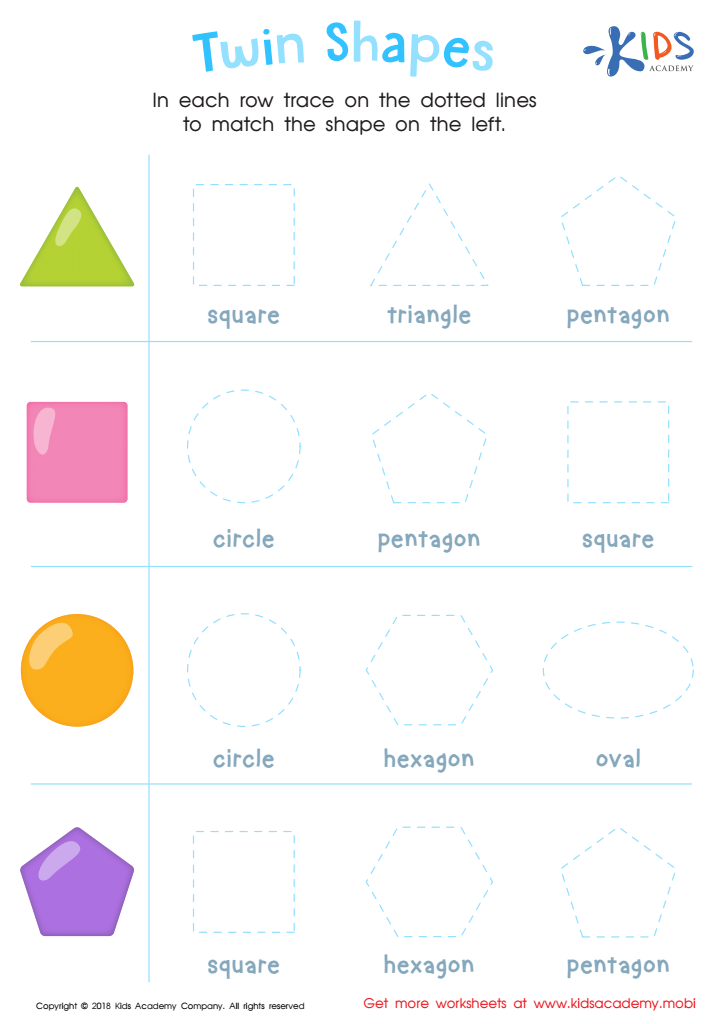
Twin Shapes Dot-to-Dot Worksheet







Visual discrimination is a fundamental skill in a child’s early learning process, especially in Grade 1. Parents and teachers should prioritize it because it directly impacts a child's ability to recognize and differentiate between shapes, letters, numbers, and symbols. Mastering visual discrimination is crucial for reading fluently, as distinguishing between similar-looking letters like 'b' and 'd' or 'p' and 'q' avoids confusion that can hinder reading progress.
Furthermore, this skill is essential for accurate mathematical understanding. Identifying the differences between numbers like 6 and 9 or symbols like '+' and 'x' lays a strong foundation for arithmetic skills. Visual discrimination also facilitates writing, enabling children to properly form letters and numbers, leading to clearer handwriting.
Beyond academics, strong visual discrimination contributes to a child's daily life skills. It can improve memory, attention to detail, and the ability to follow instructions by accurately interpreting visual information. This ability not only benefits academic performance but also boosts a child’s confidence and independence in problem-solving and comprehension tasks.
By nurturing visual discrimination from an early age, parents and teachers can ensure that children are well-equipped with the foundational skills they need to succeed both in school and in their broader daily activities.