Addition skills Grade 1 Money Worksheets
3 filtered results
-
From - To
Enhance your first grader's math proficiency with our Addition Skills Grade 1 Money Worksheets! These engaging worksheets provide a fun way for young learners to practice addition using familiar money concepts. Students will learn to count, add, and solve problems involving coins, helping to solidify their understanding of both math and money. Each worksheet is designed with vibrant visuals and interactive elements to keep children motivated and interested. Ideal for classroom or home use, our easy-to-follow worksheets are perfect for reinforcing essential skills, ensuring your child builds a strong foundation in math as they explore the exciting world of money!
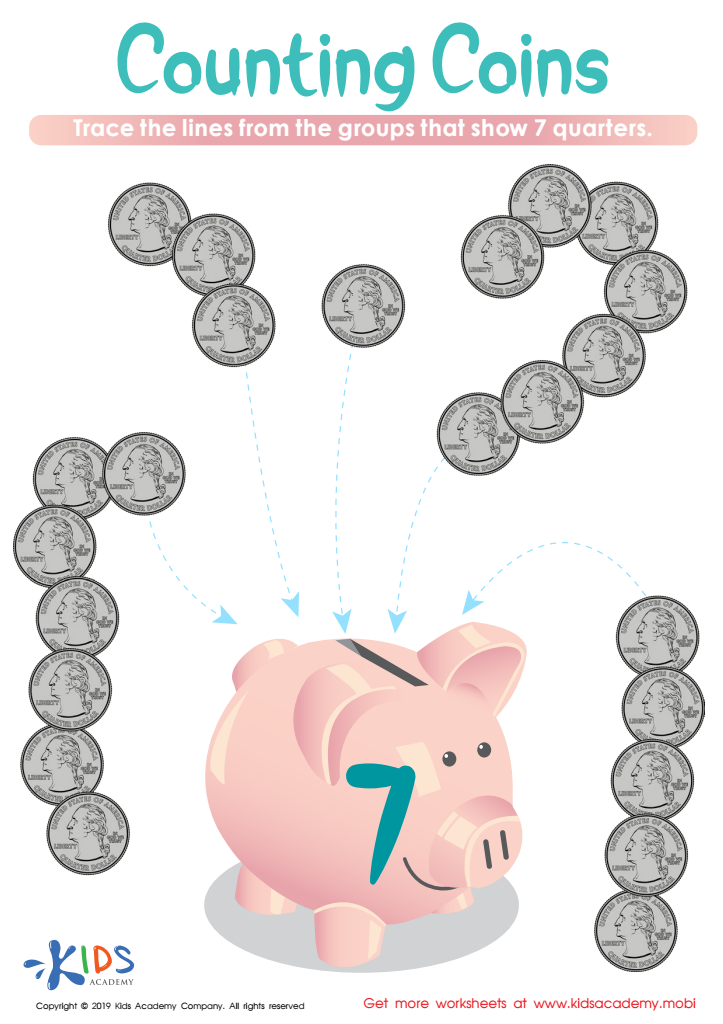
Counting Coins Worksheet
 Assign to My Students
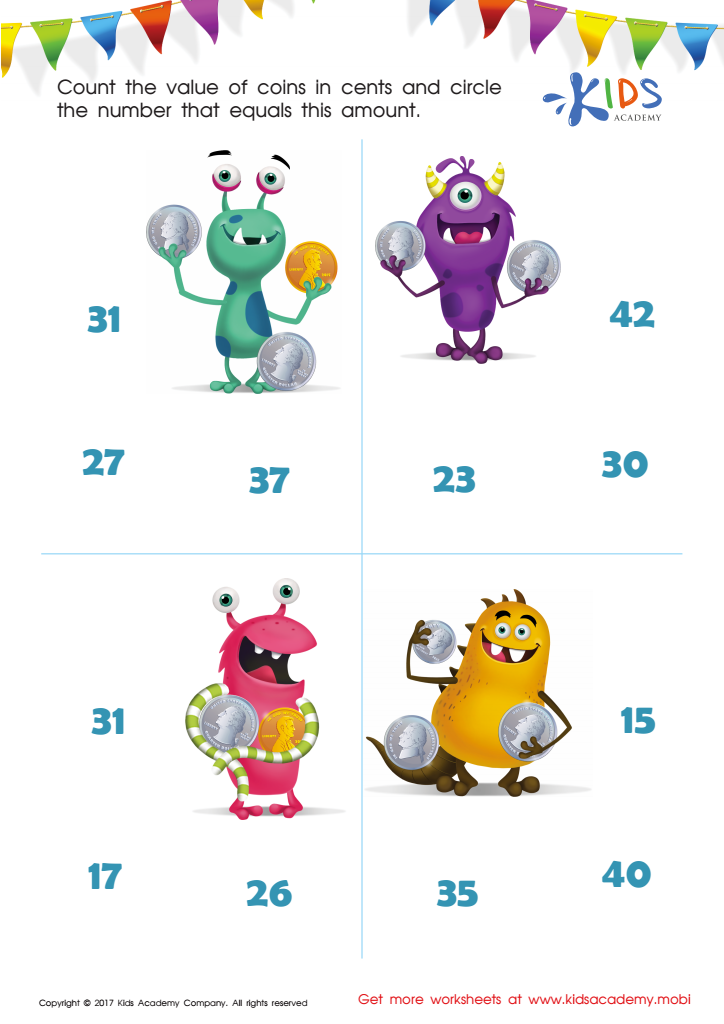
How Many Coins Money Worksheet
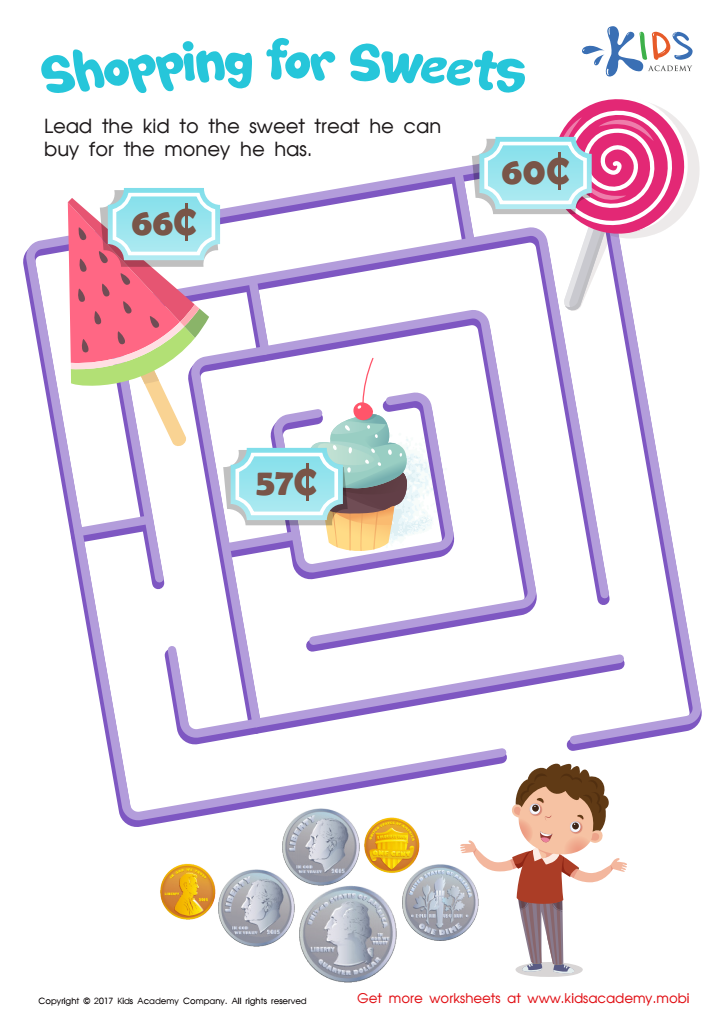
Shopping for Sweets Worksheet







Parents and teachers should prioritize addition skills related to money for Grade 1 students as it lays the foundation for essential life skills. At this developmental stage, children are curiously exploring their surroundings, and understanding money is a practical way to make math relevant and engaging. Learning to add money encourages critical thinking, problem-solving, and real-world applications.
First, mastering addition skills in the context of money helps students comprehend value, pricing, and budgeting from an early age. It introduces them to concepts like making change, saving, and spending wisely, preparing them for responsible financial decision-making later in life.
Moreover, by incorporating money into addition exercises, teachers and parents can make learning enjoyable. Manipulatives like play money can be used in games and scenarios that promote hands-on experience, fostering a love for math. This not only strengthens their addition skills but also boosts confidence in their mathematical abilities.
Lastly, students who are proficient in basic addition, particularly involving money, may find future mathematical concepts easier to grasp. By making money addition a focus in Grade 1, parents and teachers invest in a child’s overall understanding of mathematics and life skills that will serve them for a lifetime.