Financial literacy Grade 1 Money Worksheets
4 filtered results
-
From - To
Introducing our Financial Literacy Grade 1 Money Worksheets – the perfect tool to start young learners on their path to understanding money! These engaging and educational worksheets are designed to help first graders identify, count, and utilize coins and bills in real-life scenarios. Each colorful and fun activity builds foundational skills, such as money recognition, addition, and basic financial decision-making. Our expertly crafted worksheets not only meet educational standards but also inspire a love for learning about money. Empower your child with the knowledge and confidence needed for future financial success. Explore our collection and watch their financial literacy soar!
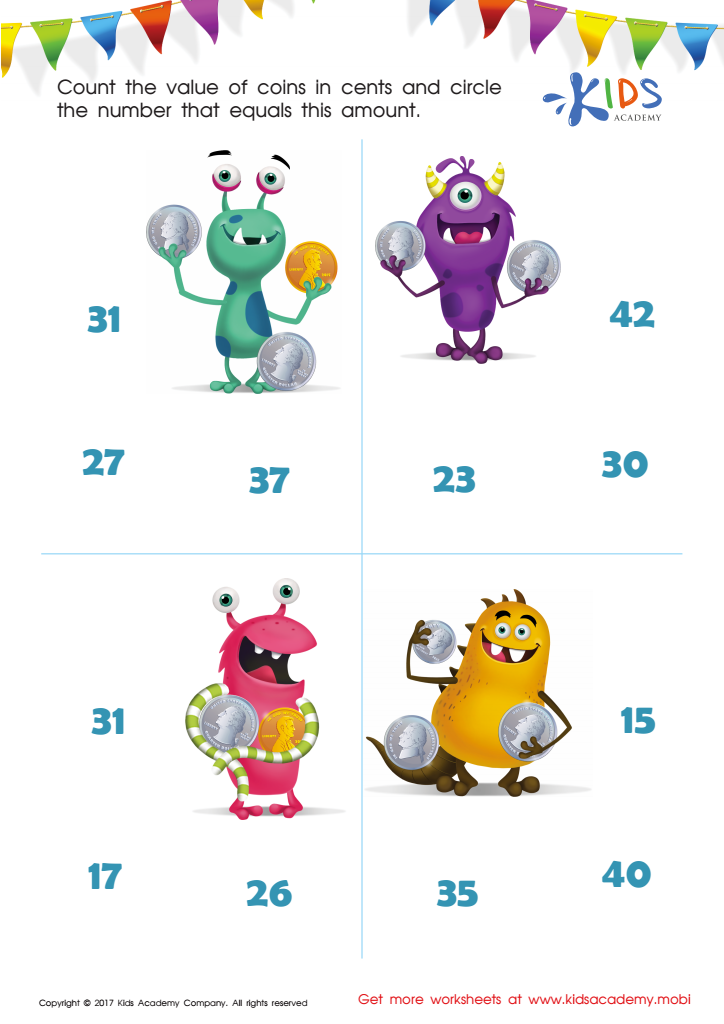
How Many Coins Money Worksheet
 Assign to My Students
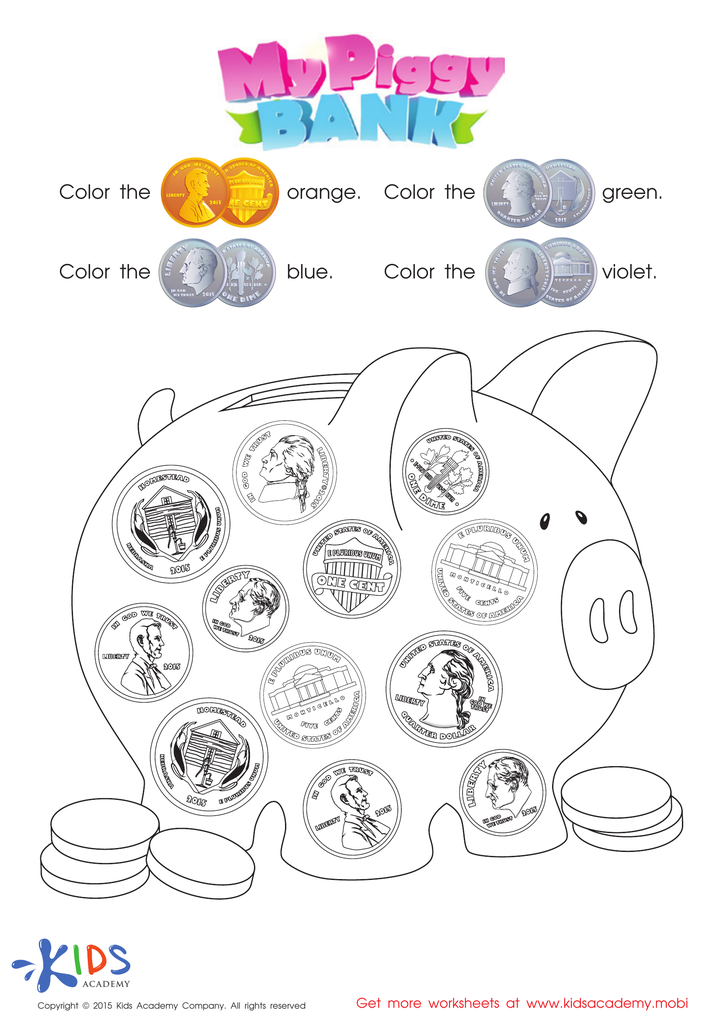
Recognizing Money Money Worksheet
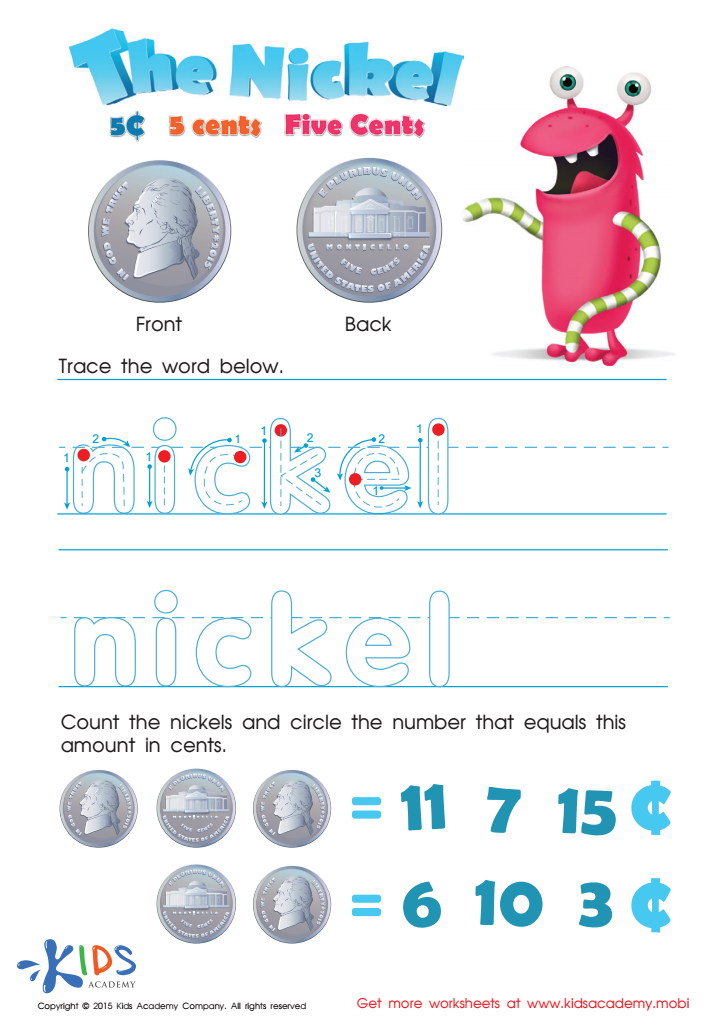
Five Cents or the Nickel Money Worksheet
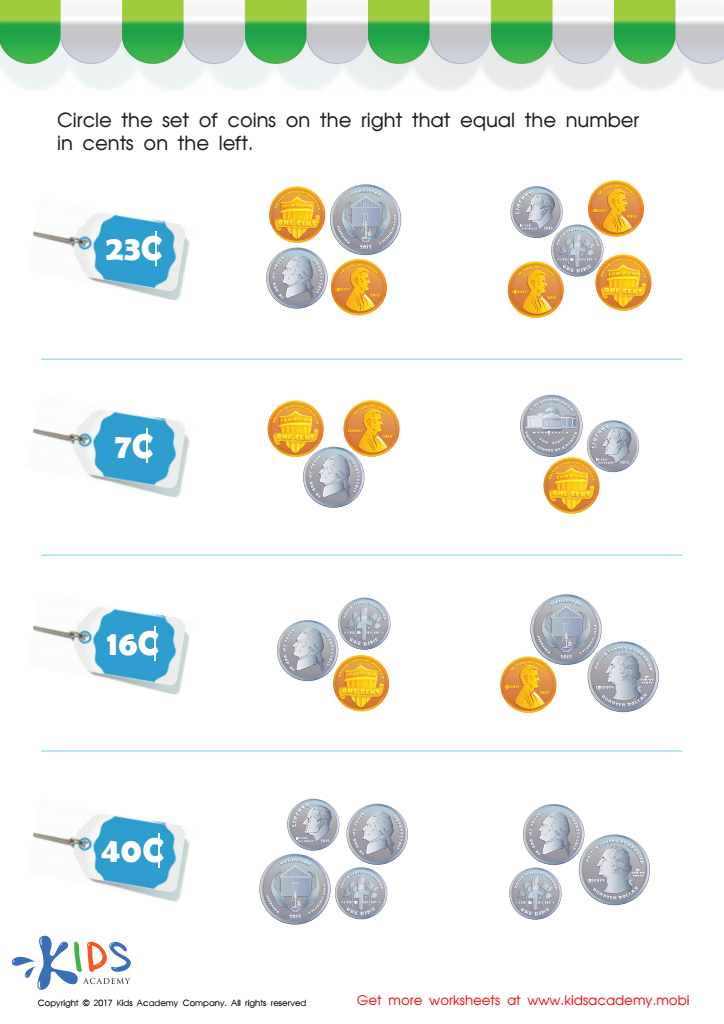
Picking the Coins You Need Money Worksheet







Financial literacy, even at the Grade 1 level, is crucial for laying the foundation of basic money management skills that children will utilize throughout their lives. By introducing concepts like money recognition, simple counting, and understanding the value of different coins and bills, parents and teachers equip children with essential skills early on. These foundational skills help them differentiate between needs and wants, making them more conscientious consumers in the future.
Learning about money in Grade 1 also helps to foster math skills in a practical context, making abstract concepts more relatable and engaging. Counting coins, making change, and even playing store can turn everyday activities into learning opportunities. This early intervention can demystify financial concepts and reduce future anxiety about money management.
Moreover, embedding financial literacy in young children builds a sense of responsibility and decision-making skills. They start understanding that resources, including money, are limited, which is critical for sound financial planning. Early exposure to these concepts sets a positive trajectory, potentially reducing the likelihood of poor financial decisions later in life.
Therefore, early financial education is not just about teaching children how to count money; it's about empowering them with the skills needed to become financially responsible adults. Parents and teachers play a pivotal role in this developmental phase, fostering an environment where financial literacy is prioritized.