Spatial awareness Grade 1 Geometry Worksheets
5 filtered results
-
From - To
Enhance first graders' understanding of Geometry with our engaging "Spatial Awareness Grade 1 Geometry Worksheets." These thoughtfully designed worksheets help young learners cultivate essential spatial awareness skills, foundational to geometry. Each activity encourages children to explore shapes, positions, and spatial relationships, unlocking their visual and cognitive abilities. Perfect for in-class or at-home learning, these worksheets promote interactive and enjoyable learning experiences, building confidence and proficiency in geometry concepts. Foster early geometric thinking with our easy-to-follow, fun, and dynamic worksheets that make mastering spatial awareness both exciting and educational. Prepare your students for future success in math with Kids Academy resources.
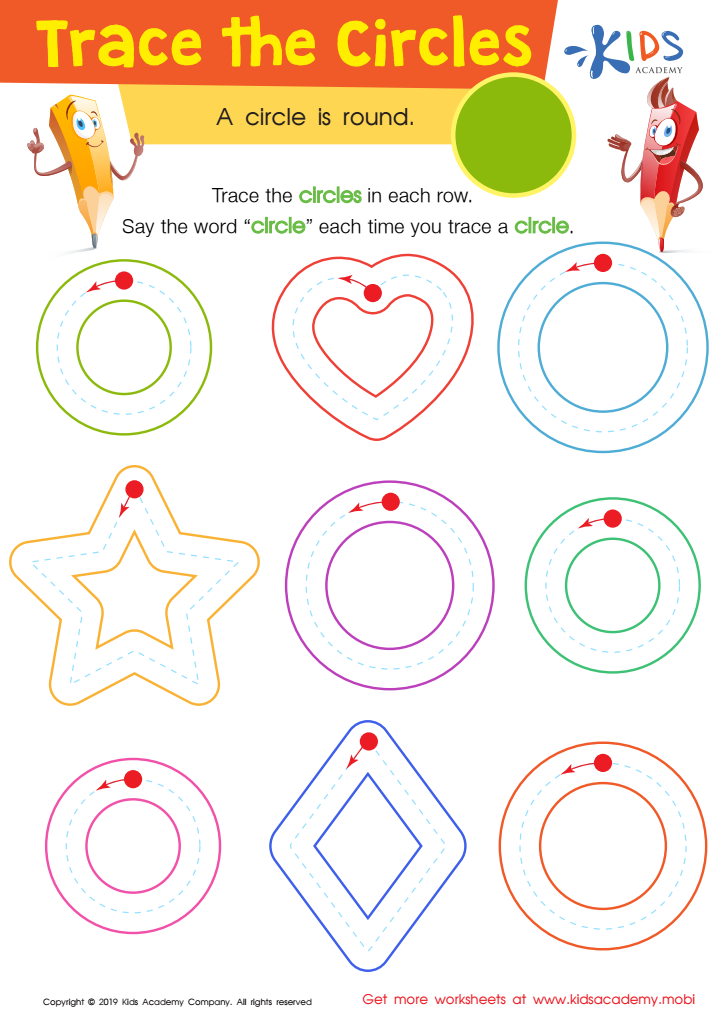
Trace The Circles Worksheet
 Assign to My Students
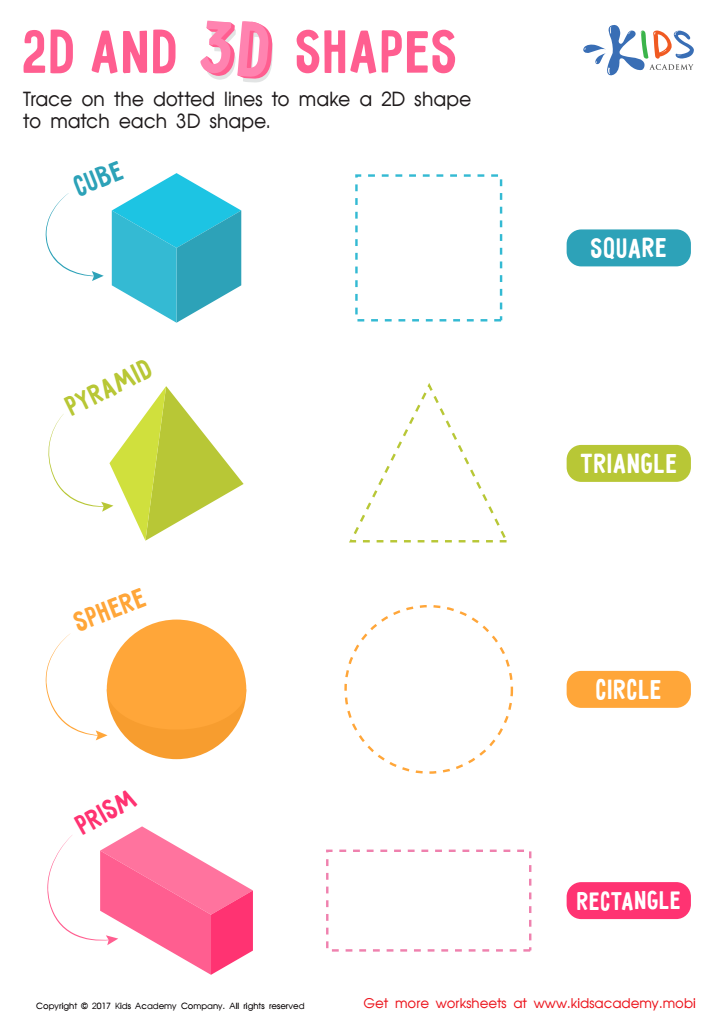
2D and 3D Shapes Worksheet
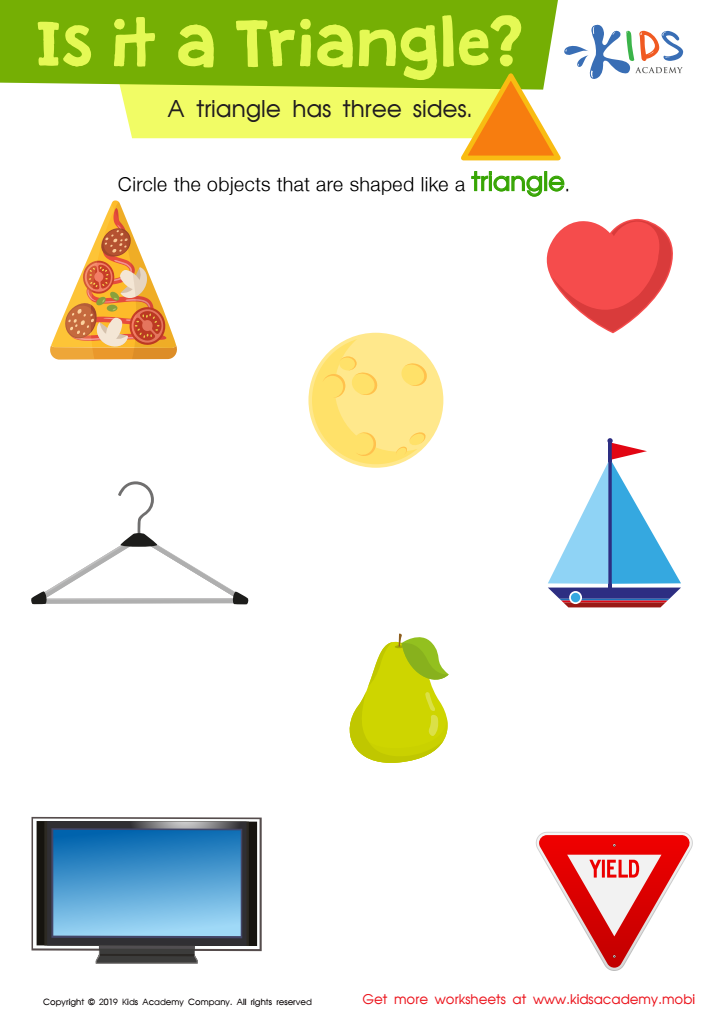
Is It a Triangle? Worksheet
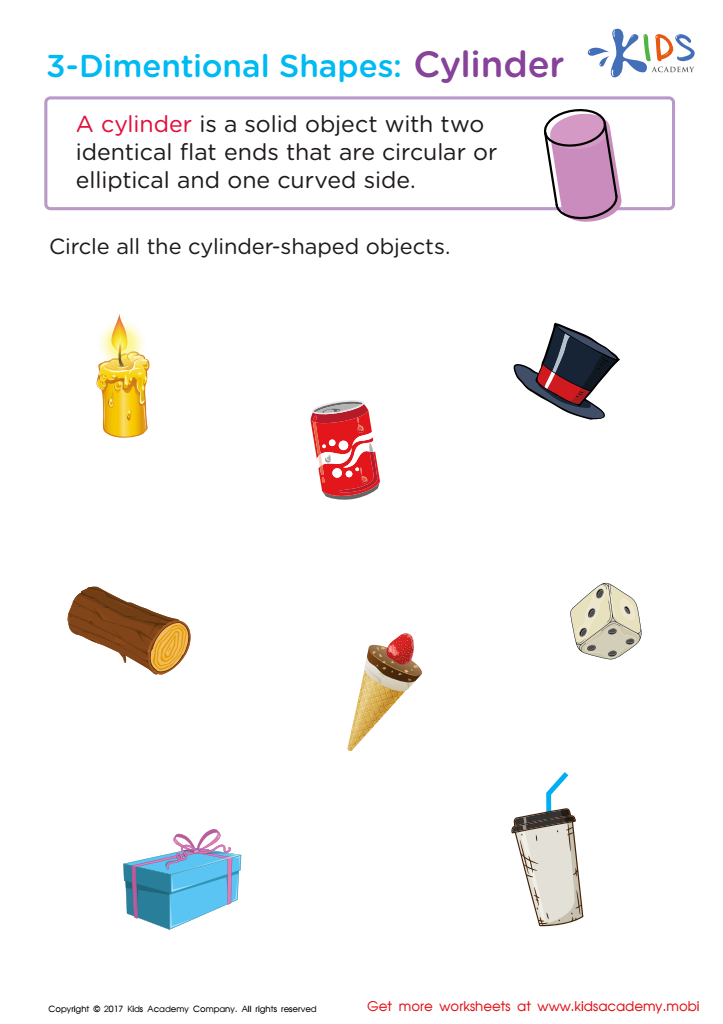
Three–Dimensional Shapes: Cylinder Worksheet
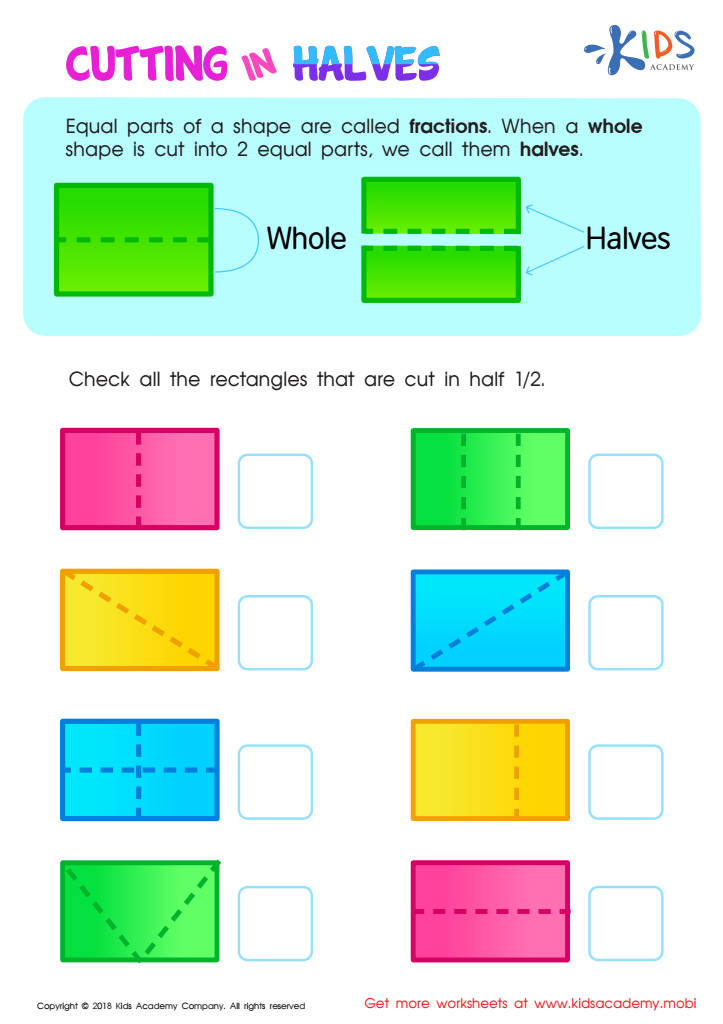
Cutting in Halves Worksheet








Spatial awareness in early grade geometry is crucial for young learners as it forms the foundation for more complex mathematical and analytical thinking. For first graders, understanding and developing spatial awareness helps them grasp how objects relate to each other within a given space. This skill is not just essential for geometry; it is fundamental across various subjects and everyday activities.
Parents and teachers should care about fostering spatial awareness because it enhances children's abilities to understand shapes, sizes, positions, directions, and relationships between objects. These skills are directly related to real-world problem-solving and navigation. For instance, recognizing patterns, interpreting graphs, and comprehending maps all require spatial understanding.
Early development in this area also supports improved cognitive functions, such as memory and concentration, which are imperative for academic success. In addition, engaging in spatial reasoning activities can boost children's creativity and imagination, contributing to stronger overall intellectual growth.
By prioritizing spatial awareness in early education, parents and teachers help children build a solid academic foundation and practical life skills. Developing these abilities early on sets students on a path to be proficient in more complex subjects such as mathematics, science, technology, and engineering in the future.