Graph interpretation Grade 1 Math Worksheets
3 filtered results
-
From - To
Enhance your first grader's math skills with our engaging Graph Interpretation worksheets! Designed specifically for Grade 1, these printable resources help young learners develop critical skills in reading and interpreting various types of graphs, including bar graphs and pictographs. Each worksheet provides fun illustrations and simple prompts that make grasping graph concepts exciting and interactive. Our worksheets encourage students to analyze data, draw conclusions, and practice essential reasoning skills. Perfect for classroom use or at-home learning, these activities promote confidence in math while building foundational knowledge for future subjects. Download your Graph Interpretation worksheets today to inspire a love for mathematics!
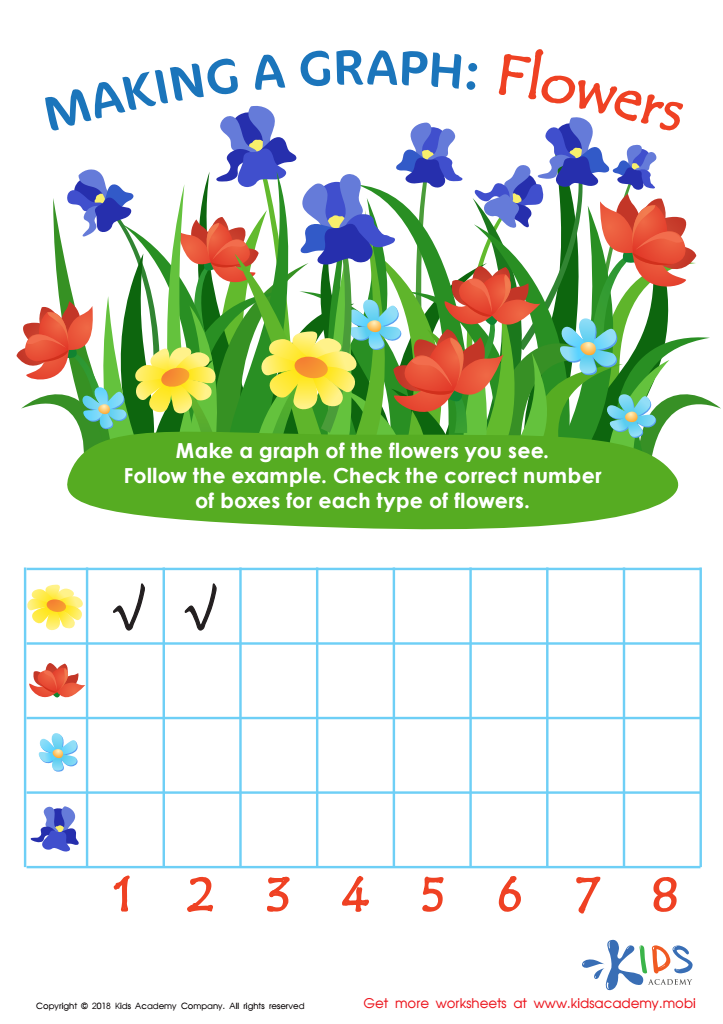
Making a Graph: Flowers Worksheet
 Assign to My Students
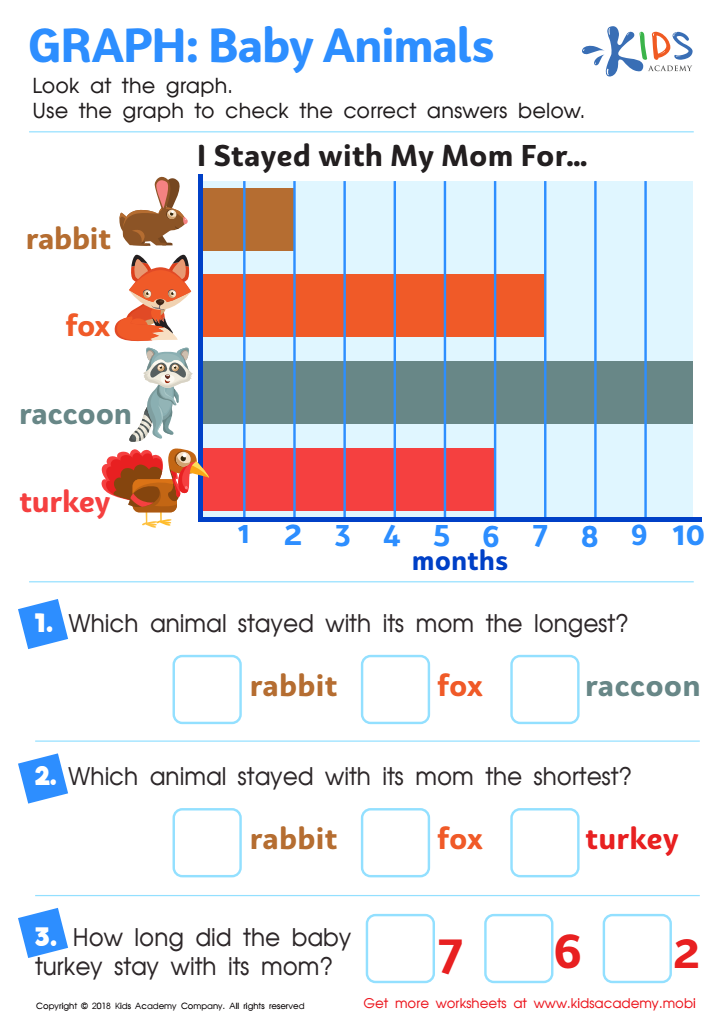
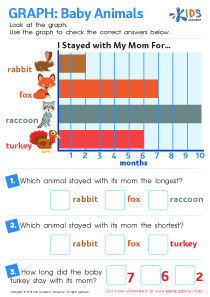
Graph: Baby Animals Worksheet
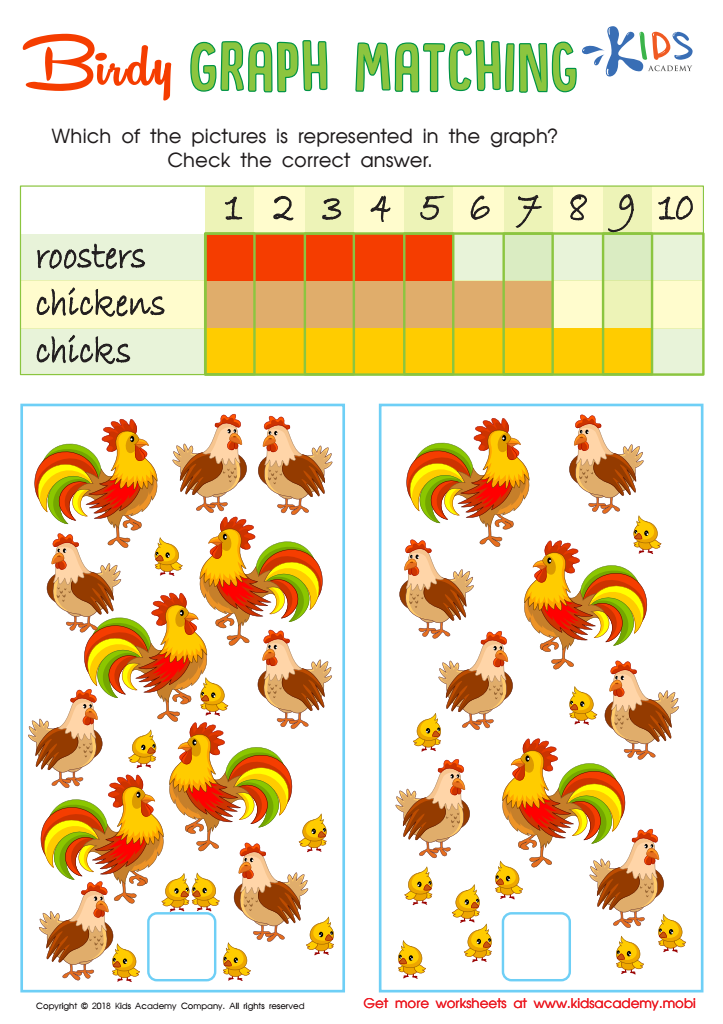
Birdy Graph Matching Worksheet







Understanding graph interpretation in Grade 1 math is crucial for both parents and teachers. Firstly, it fosters essential critical thinking skills in young learners. Through simple graphs such as bar charts or pictographs, children learn to analyze data visually, making connections between numbers and real-world scenarios. This foundational skill encourages logical reasoning and helps children develop problem-solving techniques early on.
Secondly, graph interpretation supports literacy in mathematics. As children engage with graphs, they encounter important mathematical vocabulary—terms like "most," "least," "more than," and "fewer than." This exposure is vital in building their mathematical language and comprehension skills.
Moreover, graphs often present information in a fun and engaging way, enhancing children's interest in math and promoting active participation in learning activities. It also encourages collaboration and discussion among peers, aiding social development.
Finally, proficiency in graph interpretation lays the groundwork for future math concepts. As students progress through their education, the ability to read and interpret data will be key in subjects such as science, economics, and statistics. By investing time in teaching graph interpretation, parents and teachers are equipping children with a vital skill set for lifelong learning and informed decision-making.