Reading clocks Grade 1 Math Worksheets
4 filtered results
-
From - To
Engage young minds with our "Reading Clocks Grade 1 Math Worksheets," designed to build foundational time-telling skills. Perfect for first graders, these printable worksheets feature easy-to-understand analog clocks paired with fun graphics, aiding students in learning to read hours and minutes. With clearly explained concepts and progressively challenging tasks, these resources are an excellent blend of education and entertainment. Boost your child's confidence with activities that support Common Core standards, encouraging mastery through practice. Explore our captivating worksheets and make learning to tell time an enjoyable adventure for your first grader.
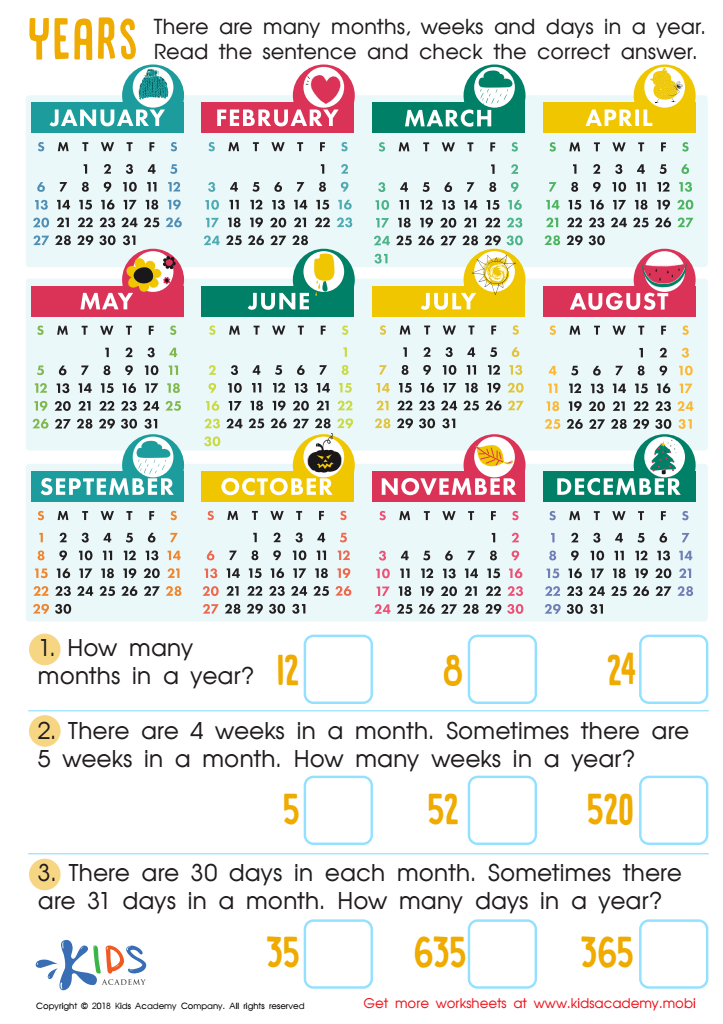
Years Worksheet
 Assign to My Students
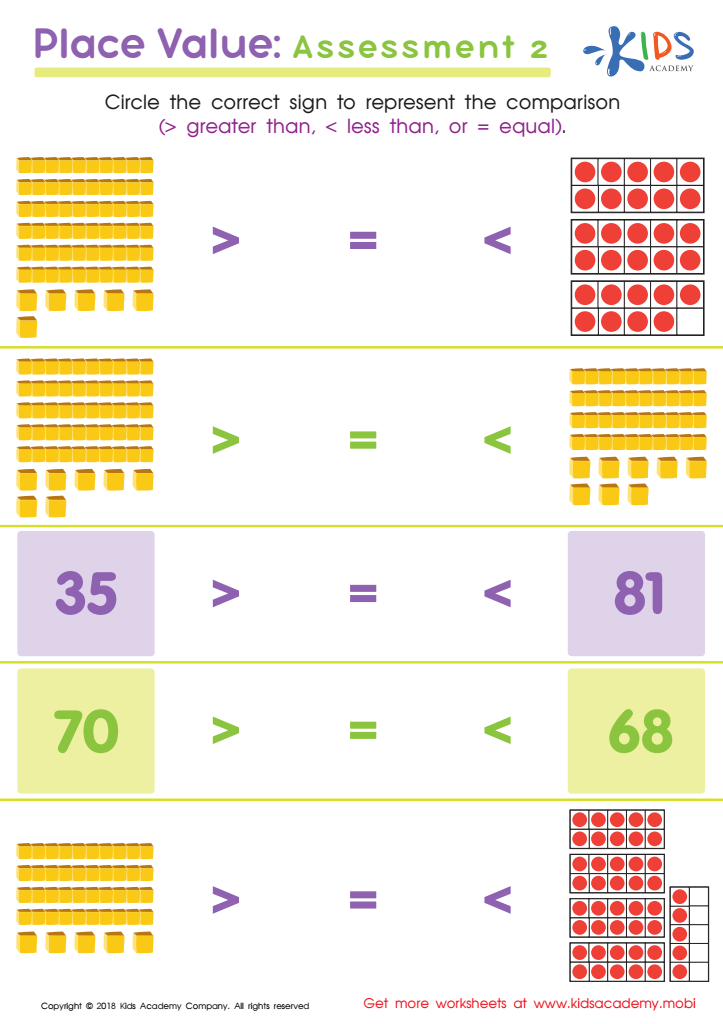
Place Value: Assessment 2 Worksheet
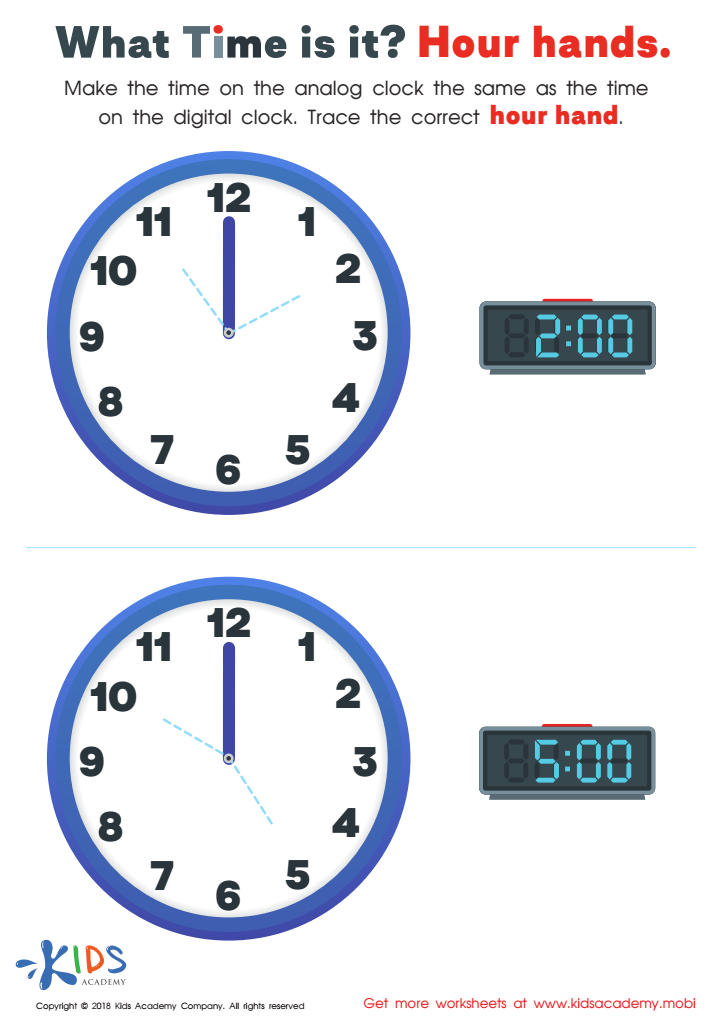
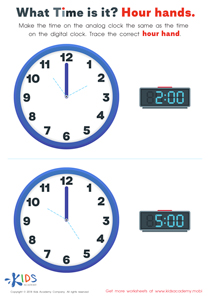
What Time Is it? Hour Hands Worksheet
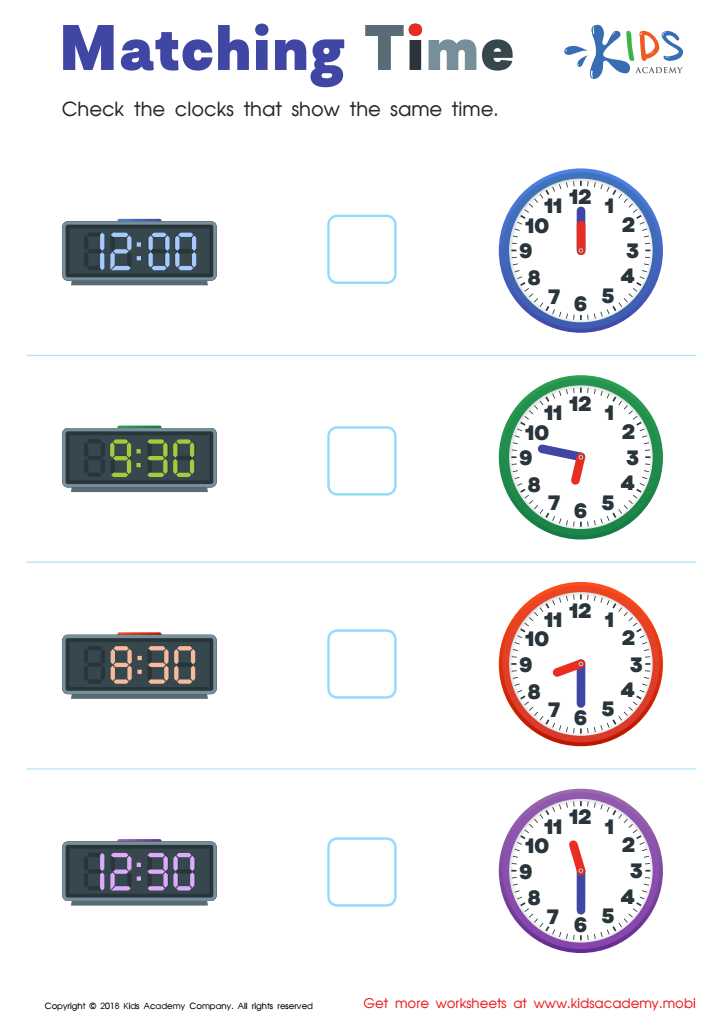
Matching Time Worksheet







Parents and teachers should prioritize teaching first graders how to read clocks because it forms a critical aspect of their mathematical and daily life skills. Allocating time to reading clocks aids in building a fundamental understanding of time management and punctuality, vital life skills that help children comprehend daily schedules. This skill then becomes foundational for planning activities, completing tasks, and organizing their day effectively.
From an educational standpoint, reading clocks integrates basic math skills like counting by fives, understanding half and quarters, and reinforcing number sense – essential mathematical concepts foundational to more complex arithmetic and problem-solving. It enhances cognitive development by requiring children to make connections between abstract numbers on the clock face and concrete concepts of time, fostering critical thinking.
Socially, knowing how to read a clock can boost a child's confidence and independence. Being able to tell time empowers students to understand and adhere to routines at school and home, promoting reliability and responsibility. It also facilitates smooth transitions between activities and helps reduce anxiety related to unsure timelines for events.
In conclusion, learning to read clocks in grade 1 underpins academic prowess, day-to-day functionality, and personal growth, emphasizing the necessity for parents and teachers to nurture this critical skill early in children's educational journeys.