Subtraction skills Grade 1 Math Worksheets
12 filtered results
Difficulty Level
Grade
Age
-
From - To
Subject
Activity
Standards
Enhance your first grader's subtraction skills with our engaging and interactive math worksheets! Designed specifically for Grade 1 learners, these worksheets provide a variety of fun and educational activities that promote understanding of subtraction concepts. From simple one-digit numbers to more complex problems, children will build their confidence and mastery through practice. Each worksheet features colorful illustrations and creative layouts to capture students' interest, making math enjoyable. Our subtraction skills worksheets are perfect for reinforcing classroom learning at home or during extra practice sessions. Download now and watch your child's subtraction abilities grow as they learn with ease!
Favorites
With answer key
Interactive
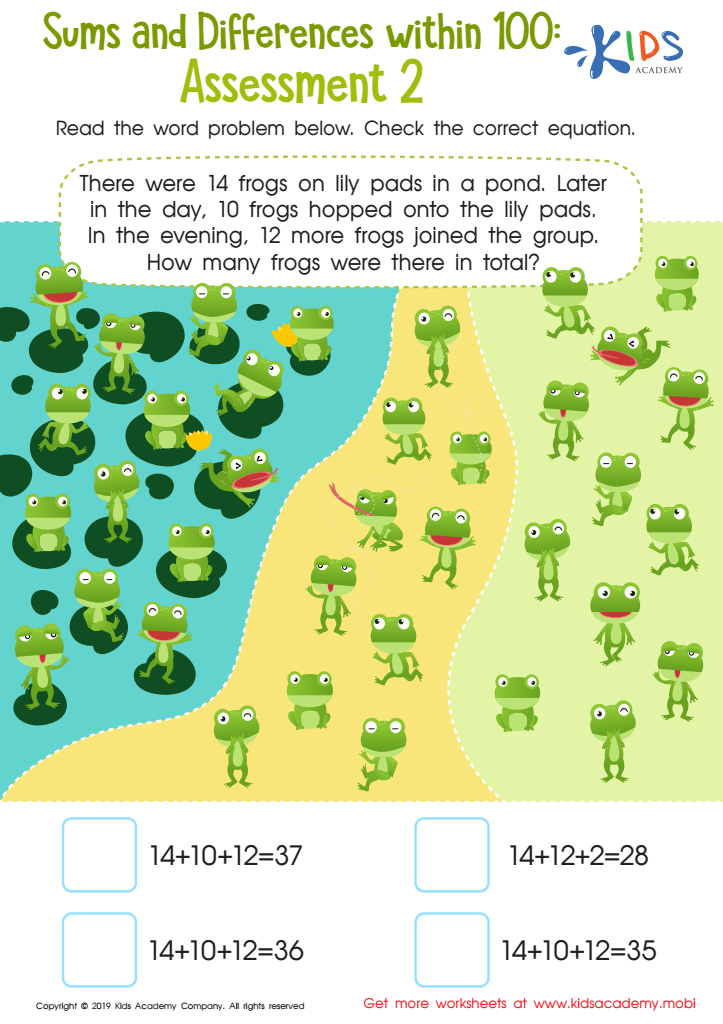
Sums and Differences Within 1 - Assessment 2 Worksheet
Help your kids practice math with these simple word problems. Read the question, discuss with them to form the equation and then check the answer. Give them a chance to sharpen their math skills!
 Assign to My Students
Sums and Differences Within 1 - Assessment 2 Worksheet
Worksheet
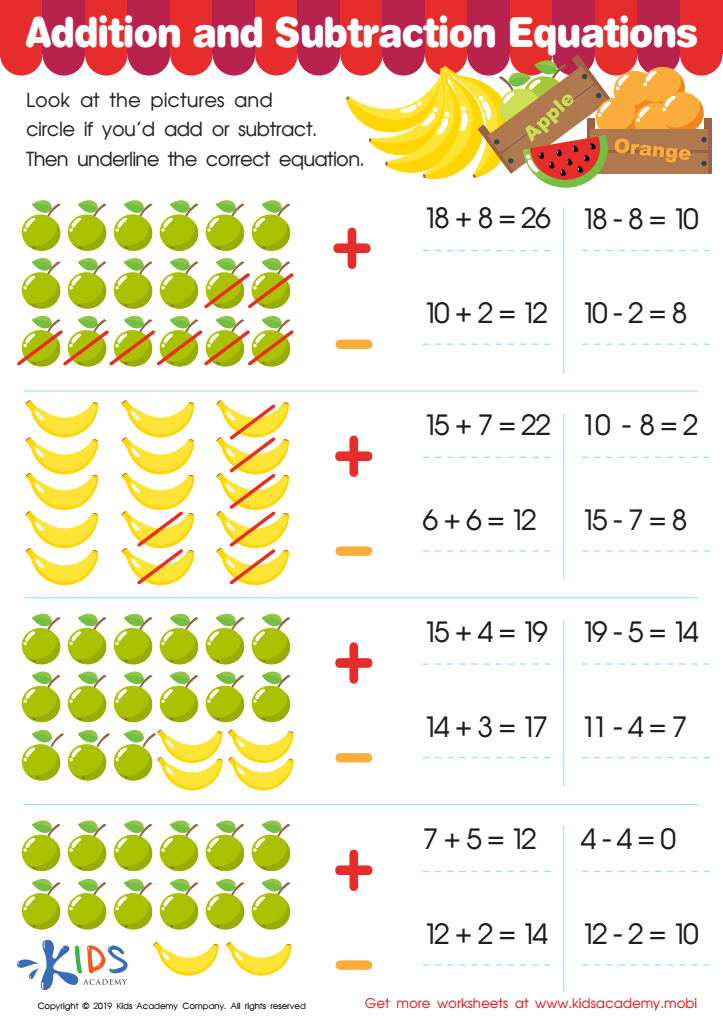
Addition and Subtraction: Equations Worksheet
This worksheet sharpens your child's visual processing, math equation solving and order of operations skills. It features colorful pictures to help them add and subtract, and traceable lines to identify the correct equation. A great way to practice these skills! (80 words)
Addition and Subtraction: Equations Worksheet
Worksheet
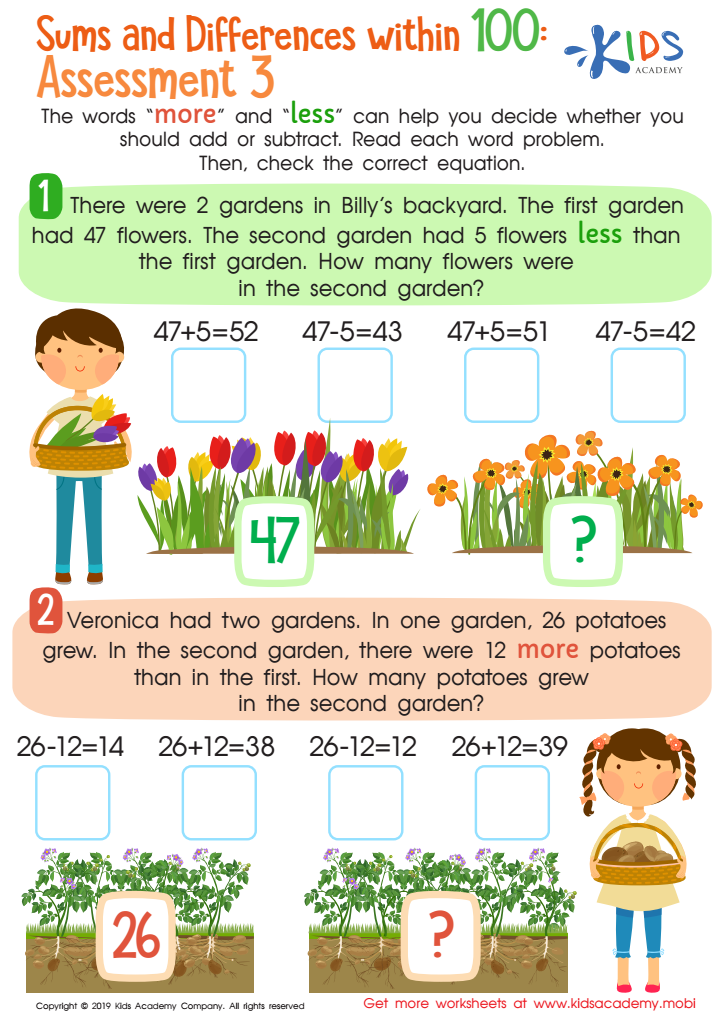
Sums and Differences Within 1 - Assessment 3 Worksheet
When we see 'more' or 'less', they usually refer to quantity. In Math, they indicate addition or subtraction. Help kids read aloud two simple word problems and figure out the correct equations for each. Check the correct equation afterwards.
Sums and Differences Within 1 - Assessment 3 Worksheet
Worksheet
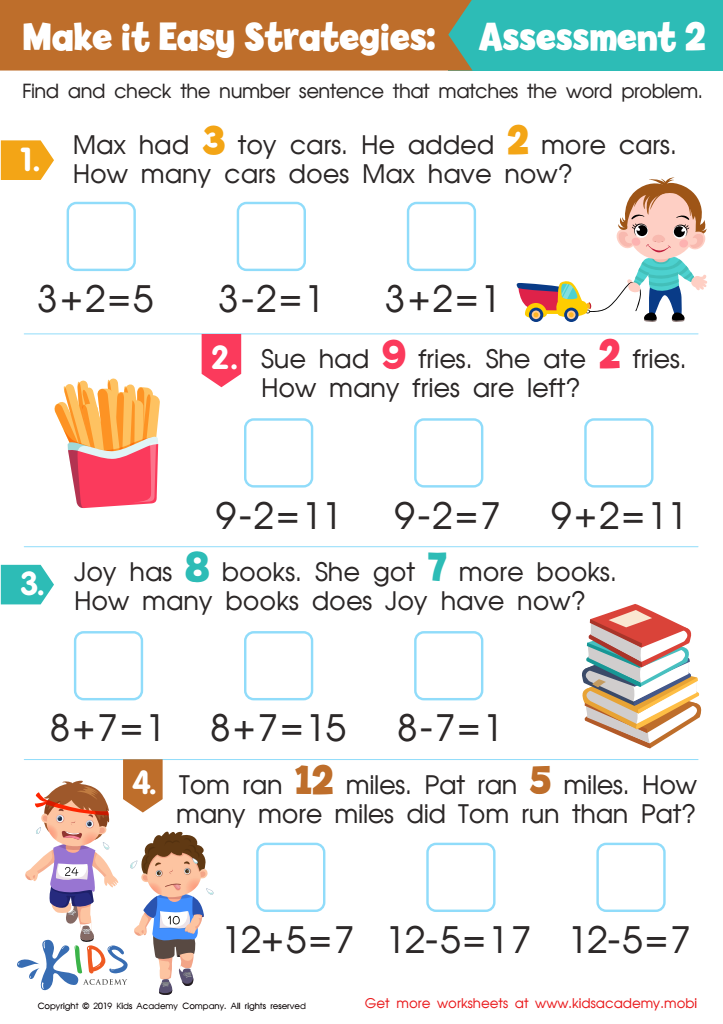
Make it Easy Strategies: Assessment 2 Worksheet
Utilize images and objects your students know to facilitate learning. Simple math problems should be a cinch for kindergartners who can count to 30. Ask them to identify the picture's subject. Then read word problems and help them find the right number sentences to match.
Make it Easy Strategies: Assessment 2 Worksheet
Worksheet
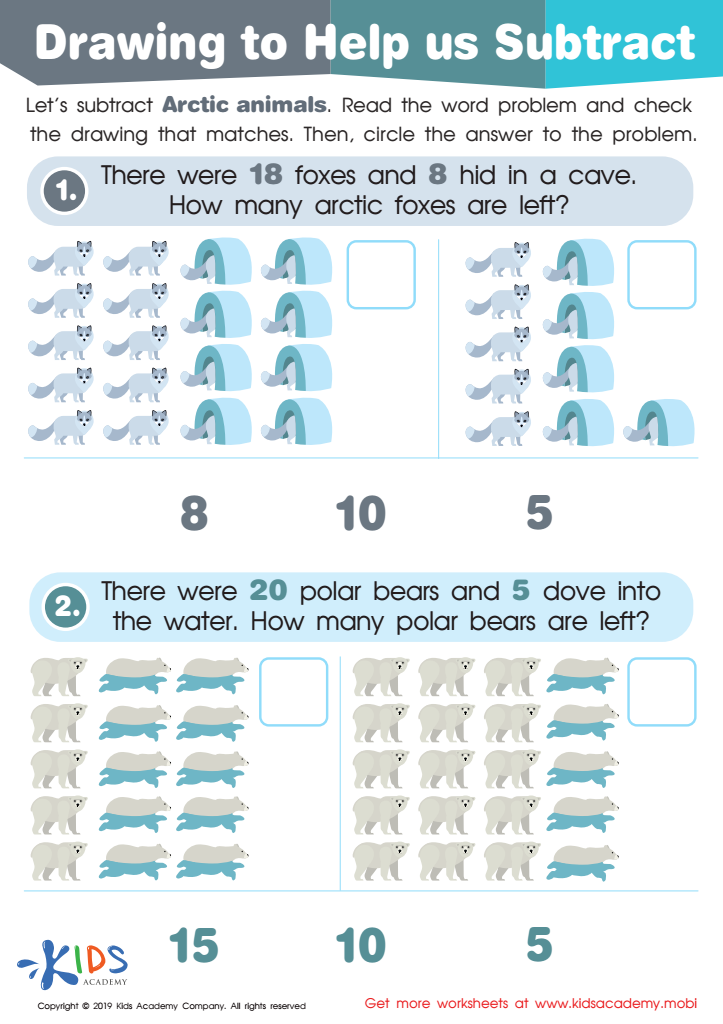
Drawing to Help Us Subtract Worksheet
Math is made fun with this free worksheet featuring Arctic animal pictures to solve basic subtraction word problems. Kids read the problem and choose the correct drawing of the animals to represent the solution. They'll have a blast with their cool animal friends while learning math!
Drawing to Help Us Subtract Worksheet
Worksheet
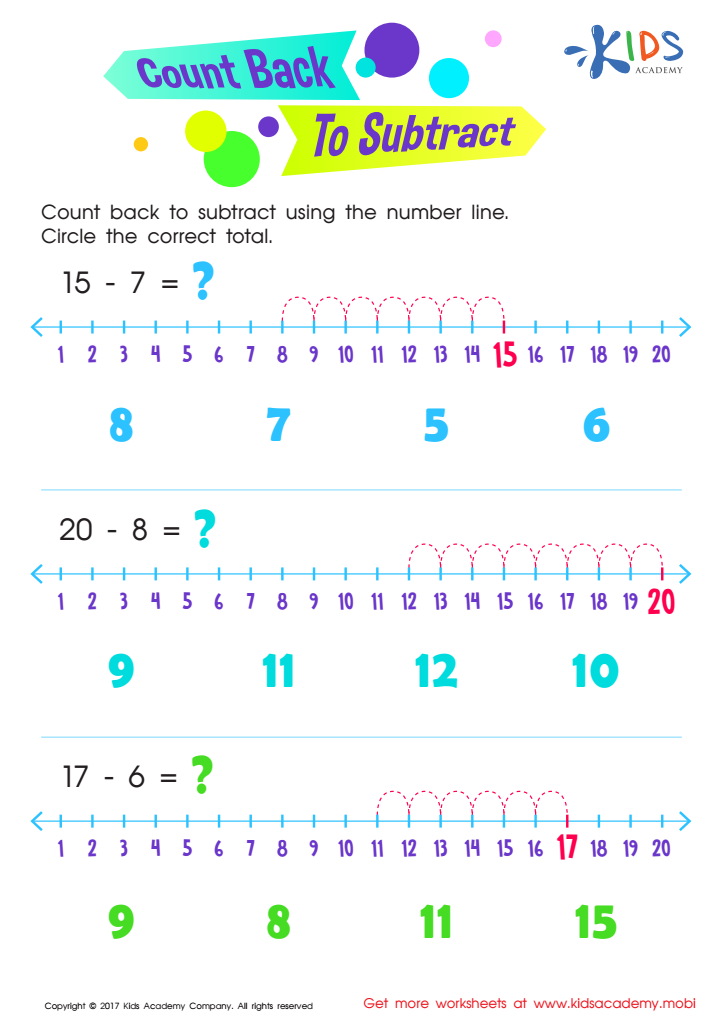
Count Back to Subtract Substraction Worksheet
With this worksheet, your child can visually see and count each number they’re subtracting.
This worksheet provides a number line to help your child master subtraction visually. Counting back on the line will give them a deeper understanding of the concept. It's a great way to teach subtraction and help children gain confidence with the subject.
Count Back to Subtract Substraction Worksheet
Worksheet
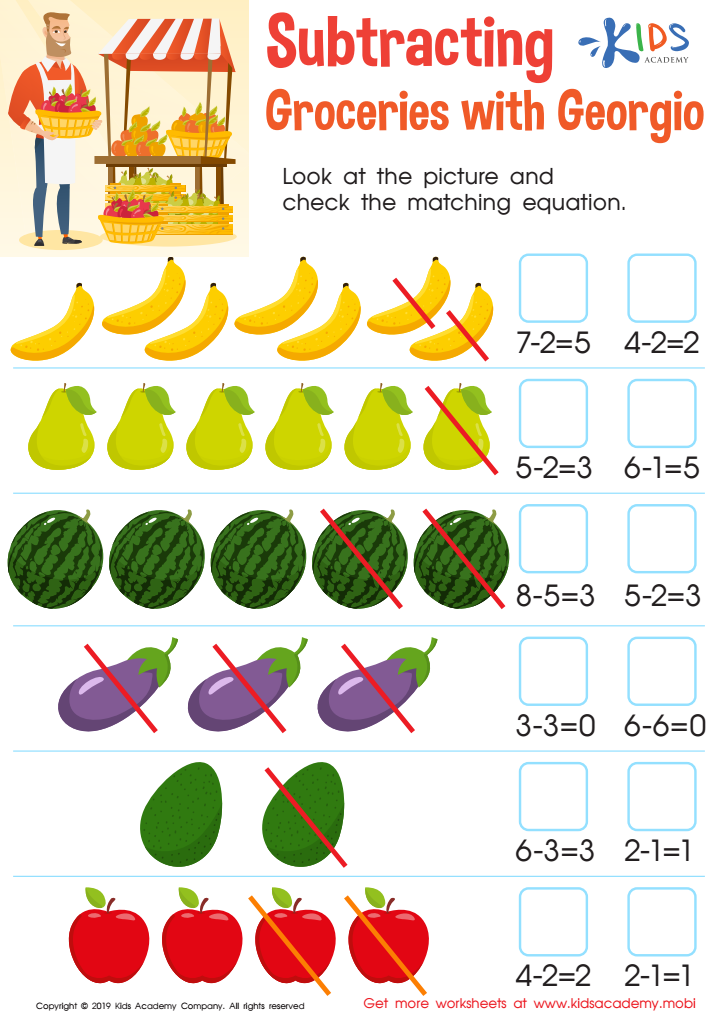
Subtracting: Groceries with Georgio Worksheet
Help Georgio in his grocery orders with this fun worksheet! Using colorful pictures and one-to-one representation, kids can intuitively choose the correct subtraction equation to match the picture. The free PDF makes it easy to practice basic subtraction equations without even realizing they're learning.
Subtracting: Groceries with Georgio Worksheet
Worksheet
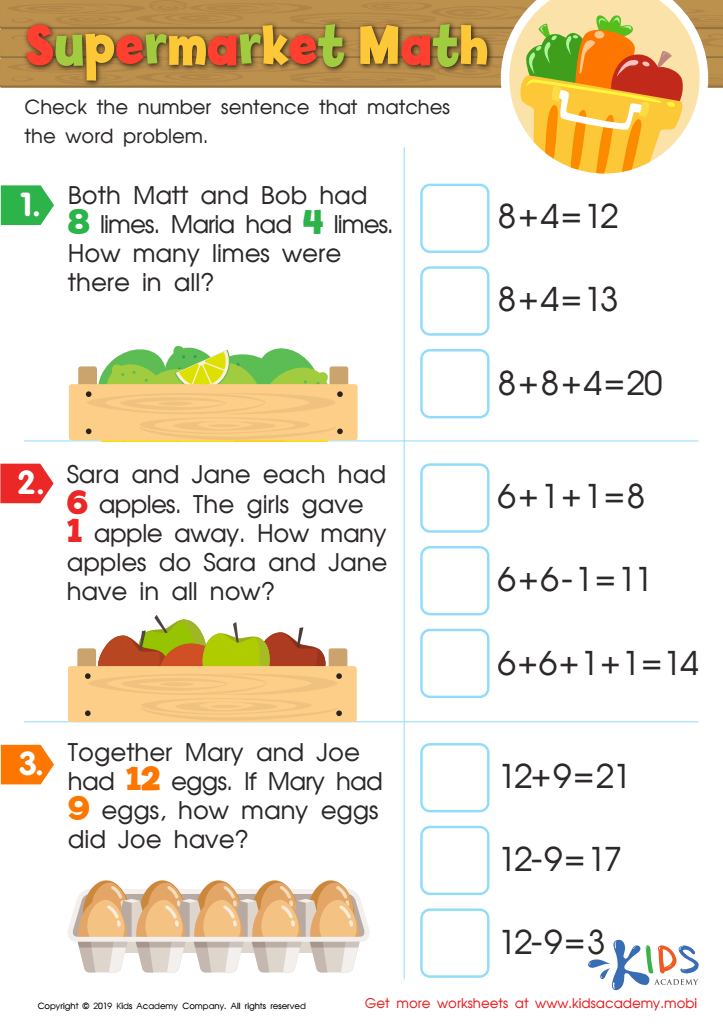
Supermarket Math Worksheet
Take your kids to the supermarket and ask what they're looking forward to buying. Help them solve the three questions in the worksheet by interpreting each one into an equation, then choose the right answer.
Supermarket Math Worksheet
Worksheet
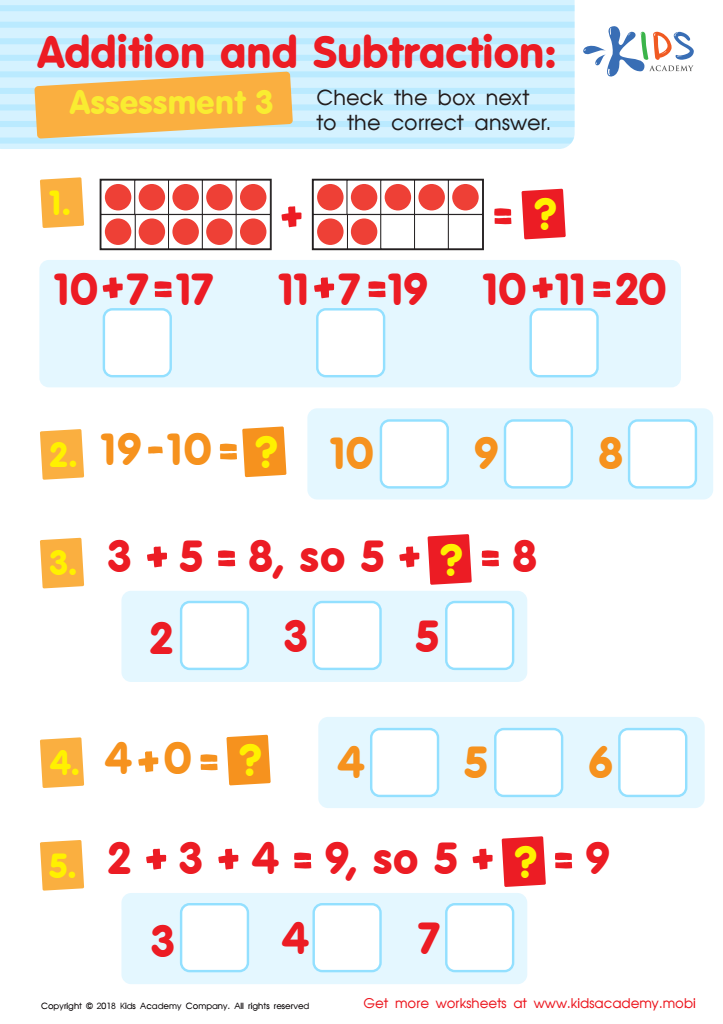
Addition and Subtraction Assessment 3 Worksheet
Help your child improve their math skills with this printable worksheet! Start with simple questions such as 1 + 1 to check their understanding. The pdf contains five equations for them to solve, with answers at the end. With practice, your child will become more confident and able to tackle the subject.
Addition and Subtraction Assessment 3 Worksheet
Worksheet
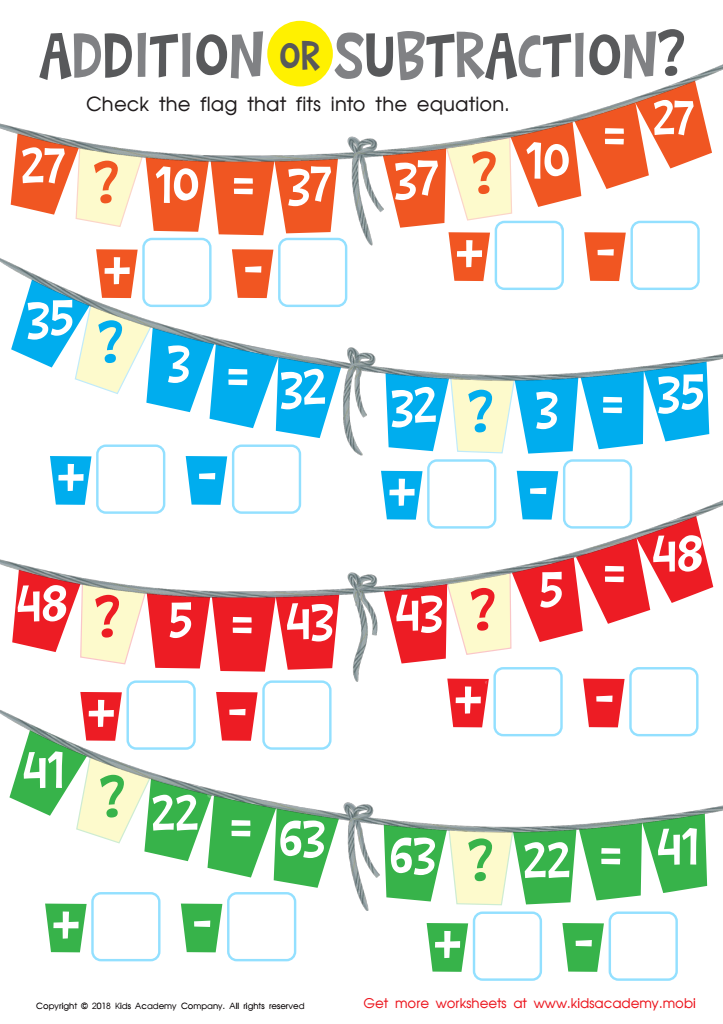
Addition or Subtraction? Worksheet
Help your math whiz's number skills advance with these colorful flag equations! With the free PDF, they'll learn to solve addition and subtraction facts by following the correct orders of operation. And the best part? They'll develop a deeper understanding of how the different operations work together within equations. Give it a try and watch their skills soar!
Addition or Subtraction? Worksheet
Worksheet
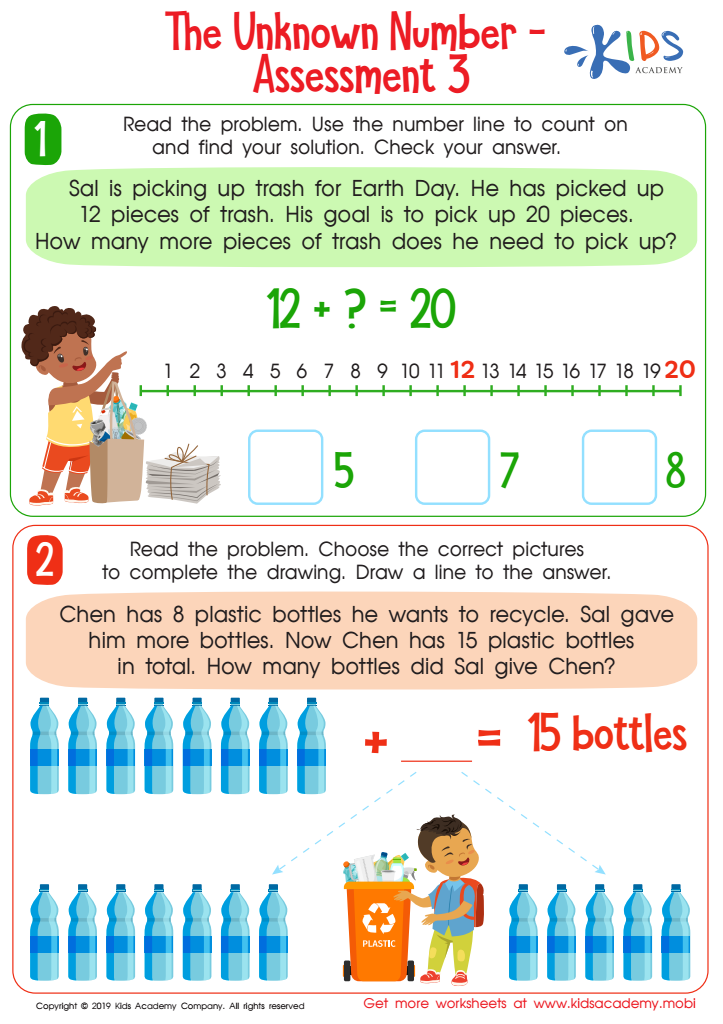
The Unknown Number - Assessment 3 Worksheet
Read the Earth Day-themed word problem aloud to your kids, pointing to the pictures as you go. Use the number line to help them count on and find the answer. Then check it together. Doing this can help them learn more about Earth Day and meet other children who are doing their part to keep it clean.
The Unknown Number - Assessment 3 Worksheet
Worksheet
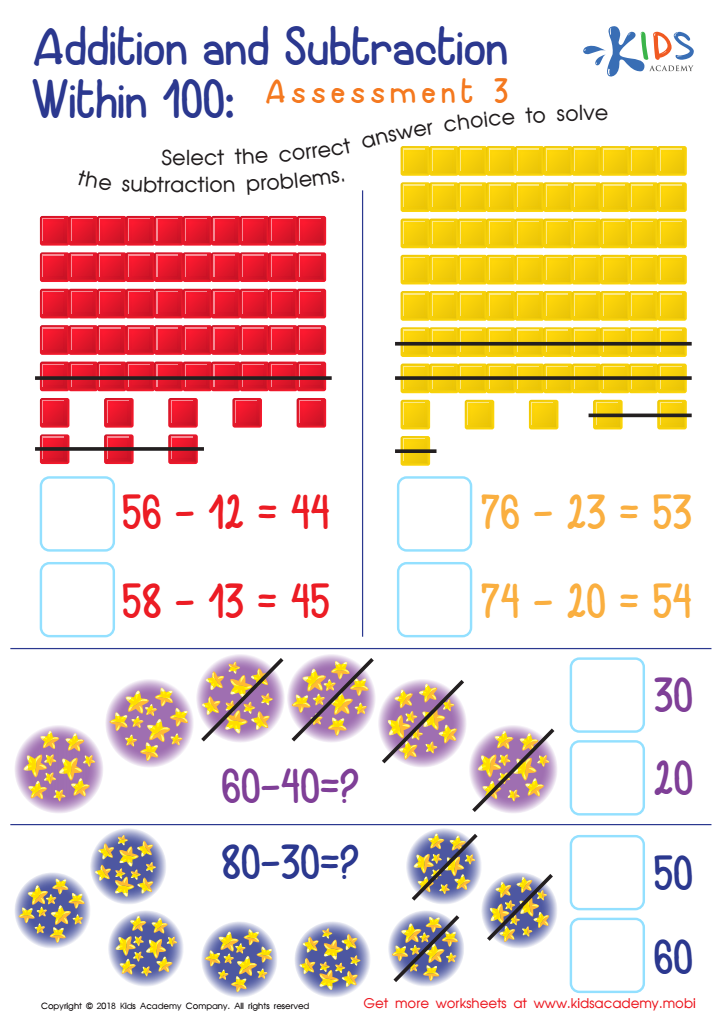
Addition and Subtraction Within 1: Assessment 3 Worksheet
Help your kids count the base ten blocks in the picture. Then, count how many have been marked off. Ask them to select the correct answer choice to solve the subtraction problems based on the blocks counted. 80 words
Addition and Subtraction Within 1: Assessment 3 Worksheet
Worksheet
Join Kids Academy for Free
Who is primarily going to use this learning content?






Subtraction skills are crucial for first graders as they lay the foundation for future mathematical concepts and everyday problem-solving. At this stage, students transition from concrete to abstract thinking, helping them understand the concept of "taking away" and how it relates to real-world situations. Strong subtraction skills enhance critical thinking, allowing children to analyze problems and devise solutions effectively.
Parents and teachers play a pivotal role in supporting these skills. By reinforcing subtraction through games, activities, and consistent practice, they help cultivate a positive attitude toward math. Children who master subtraction are more likely to build confidence, fostering a love for learning and resilience when facing challenging tasks.
Moreover, proficient subtraction skills are essential for grasping more complex math concepts, such as addition and multiplication, as well as for understanding basic financial literacy—skills that will benefit students throughout their academic journey and in their lives.
Ultimately, fostering strong subtraction skills ensures that children are well-prepared for their educational journey, promoting independence and problem-solving abilities that extend beyond the classroom and into everyday life. Engaging parents and teachers in this process is key to creating a supportive learning environment that champions mathematical development.