Improve reading comprehension Grade 1 Reading Worksheets
3 filtered results
-
From - To
Enhance your child's reading skills with our Grade 1 Reading Worksheets designed to improve reading comprehension. These engaging, interactive worksheets offer a variety of activities, including reading passages, answer questions, and word matching exercises. Tailored to meet the needs of first graders, our resources focus on key comprehension strategies that help children understand texts better while building vocabulary. Each worksheet encourages critical thinking and boosts confidence in young readers. Easy to print and integrate into your teaching routine, these materials are perfect for classroom use or home practice. Kickstart your journey to reading success today!
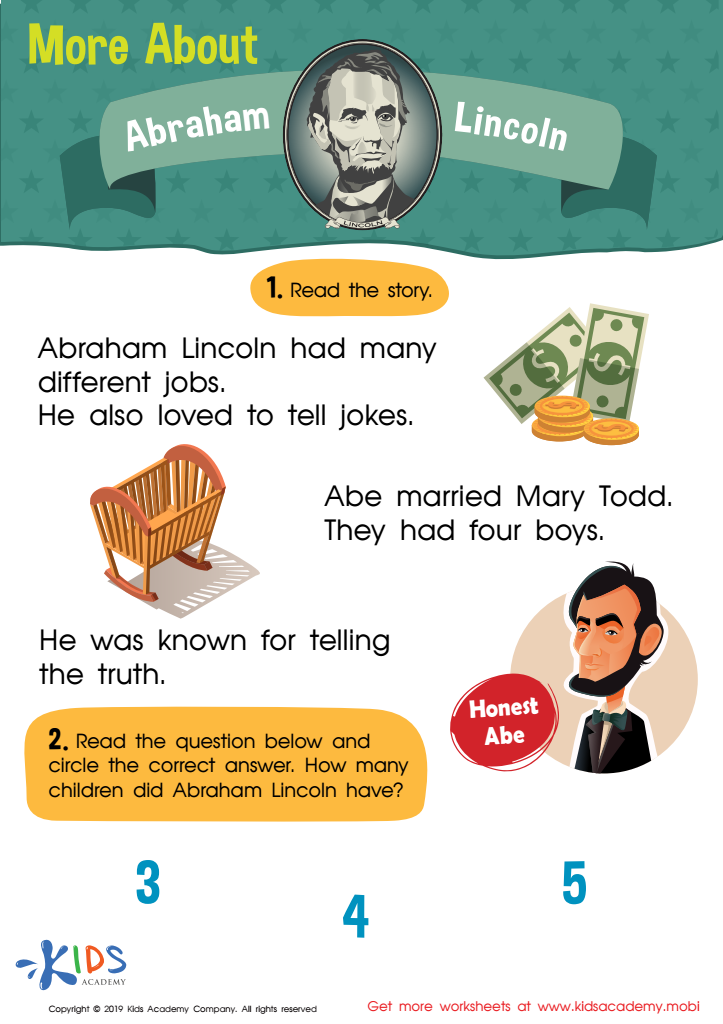
More About Abraham Lincoln Worksheet
 Assign to My Students
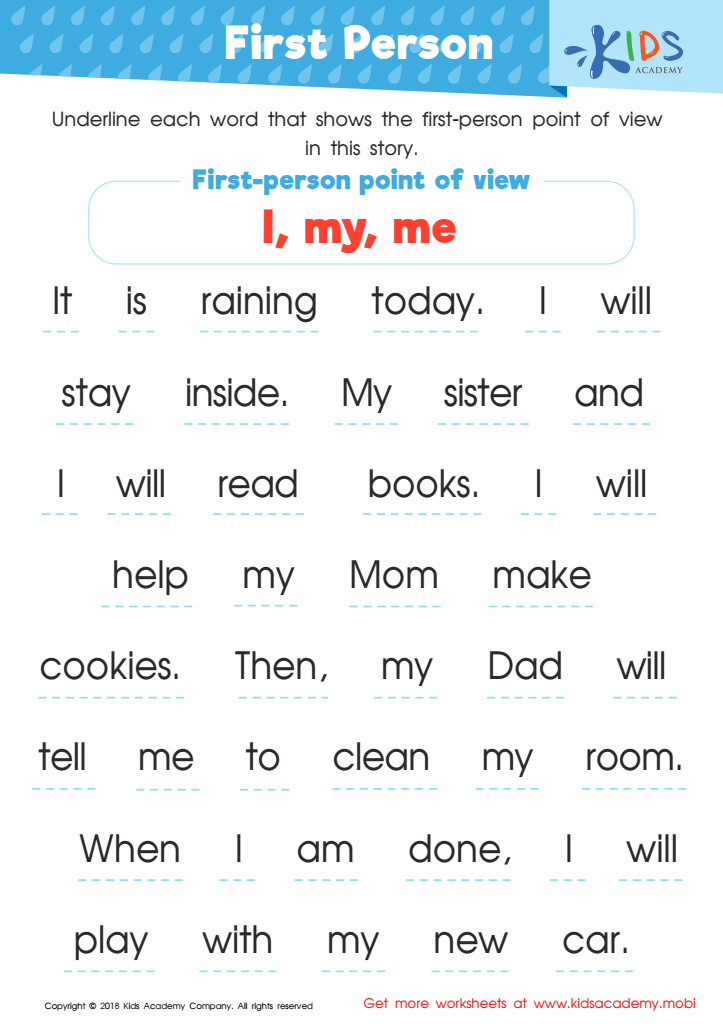
First Person Worksheet





Improving reading comprehension in grade 1 is crucial for the development of young learners, and parents and teachers should actively engage in this process for several reasons. First, grade 1 is a pivotal stage in literacy development; students transition from learning to read to reading to learn. Proficient reading comprehension lays the foundation for success in all subjects, as it impacts a child’s ability to understand instructions, complete assignments, and engage with educational material.
Moreover, strong reading skills foster confidence and foster a love for reading, which is essential for lifelong learning. When children comprehend what they read, they are more likely to participate in discussions, ask questions, and express their thoughts, thus enhancing their critical thinking and communication skills.
Additionally, reading comprehension can support social and emotional development by allowing children to connect with characters and scenarios, helping them to understand diverse perspectives and develop empathy. Teachers and parents can collaborate to create enriching environments and experiences that promote engagement with texts, be it through shared reading, storytelling, or age-appropriate discussions about books. This collaborative effort is essential to empower children in their educational journey, ensuring they develop the skills needed for future success.