Capitalization rules Grade 1 Writing Worksheets
3 filtered results
-
From - To
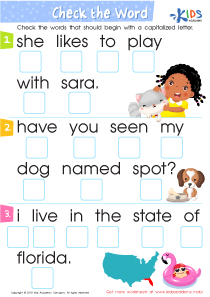
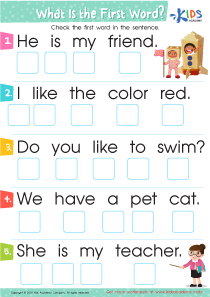
Enhance your first grader's writing skills with our "Capitalization Rules Grade 1 Writing Worksheets." These engaging and interactive worksheets are designed to help young learners understand and apply fundamental capitalization rules in their writing. Students will explore when to capitalize the first word of a sentence, proper nouns, and the word "I," through fun exercises that promote practice and reinforcement. Perfect for classroom or at-home learning, our worksheets cater to various learning styles, making capitalization easy and enjoyable. Boost your child’s confidence in writing and ensure they master the basics with our thoughtfully crafted resources. Start their writing journey today!
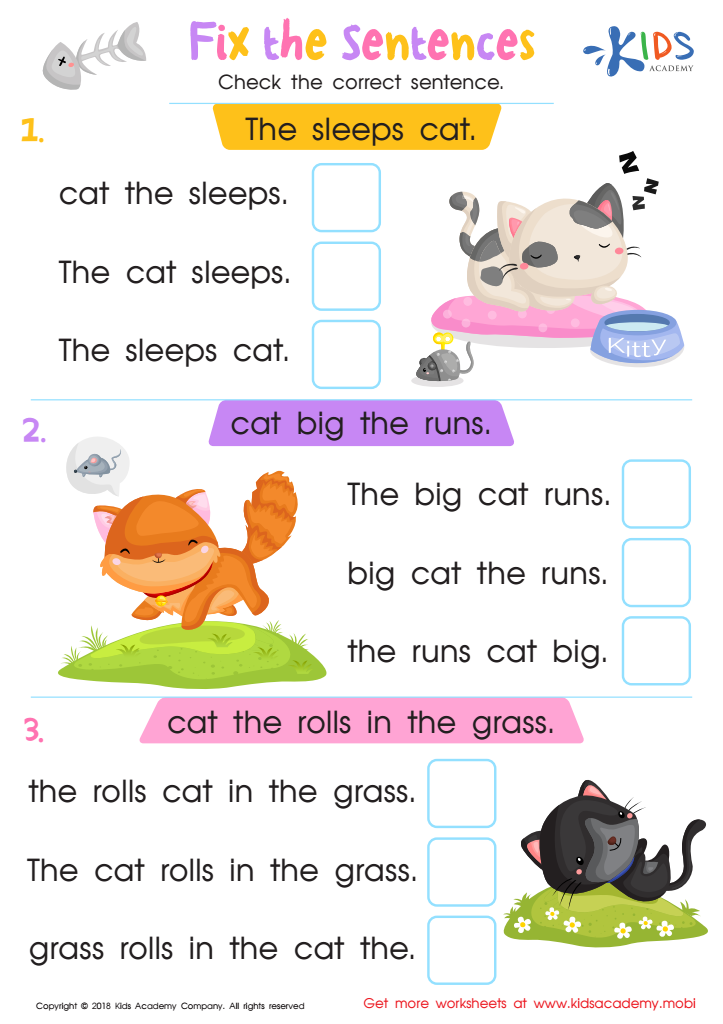
Fix the Sentences Worksheet
 Assign to My Students
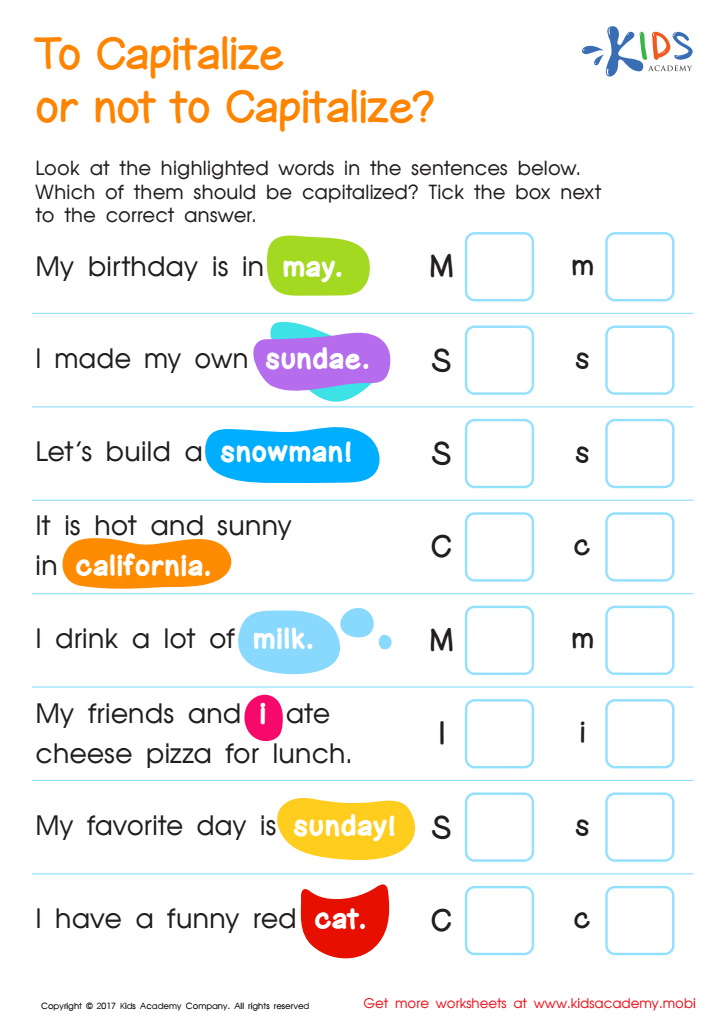
Capitalization: To Capitalize or Not? Printable
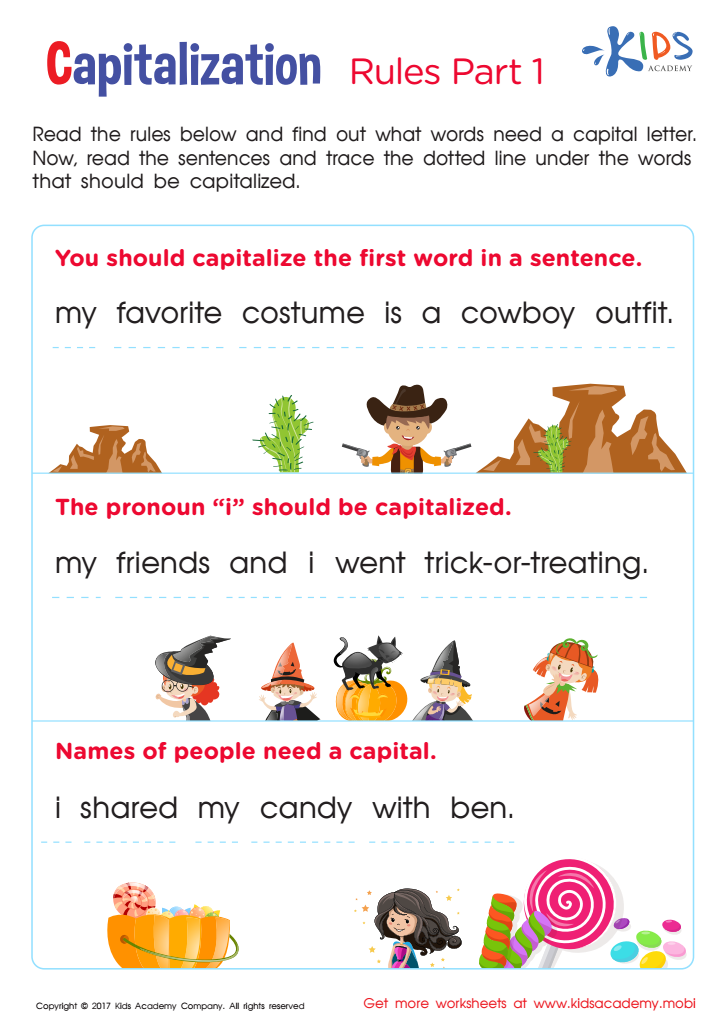
Capitalization Rules: Part 1 Worksheet








Capitalization rules are fundamental for Grade 1 writing and significantly impact a child's literacy development. Understanding when and how to use capital letters helps children convey meanings clearly. For example, capitalizing the first letter of a sentence signals its beginning, while proper nouns, like names of people or places, require capital letters to indicate their importance. This distinction makes writing clearer and more professional, reinforcing comprehension for both the writer and the reader.
Moreover, mastering capitalization fosters a sense of pride and ownership in a child’s writing. When students learn to use capitalization correctly, they feel more confident in their work, enhancing their motivation to express themselves. As they progress to more complex writings, such as stories or research reports, having a strong grasp of capitalization will make their writing more effective and coherent.
Furthermore, consistency in learning provides children with the skills they need across various contexts, including reading and communicating. By reinforcing capitalization rules at home and in the classroom, parents and teachers lay the foundation for effective communication, encouraging lifelong learning habits and creating strong connections between spoken and written language. This support shapes proficient, confident writers ready for future academic challenges.