Vocabulary development Grade 1 Writing Worksheets
4 filtered results
Difficulty Level
Grade
Age
-
From - To
Subject
Activity
Standards
Enhance your first grader's vocabulary with our engaging vocabulary development writing worksheets! Designed specifically for Grade 1, these printable resources introduce children to a variety of words through fun activities that promote understanding and usage. Each worksheet encourages creativity while reinforcing essential literacy skills. Your students will practice word recognition, learn synonyms, and explore simple sentence structures. By incorporating these worksheets into your teaching, you’ll empower young learners to express themselves confidently through writing. Perfect for classroom use or at-home practice, our vocabulary development worksheets support early childhood education and help build a strong foundation for future reading and writing success!
Favorites
With answer key
Interactive
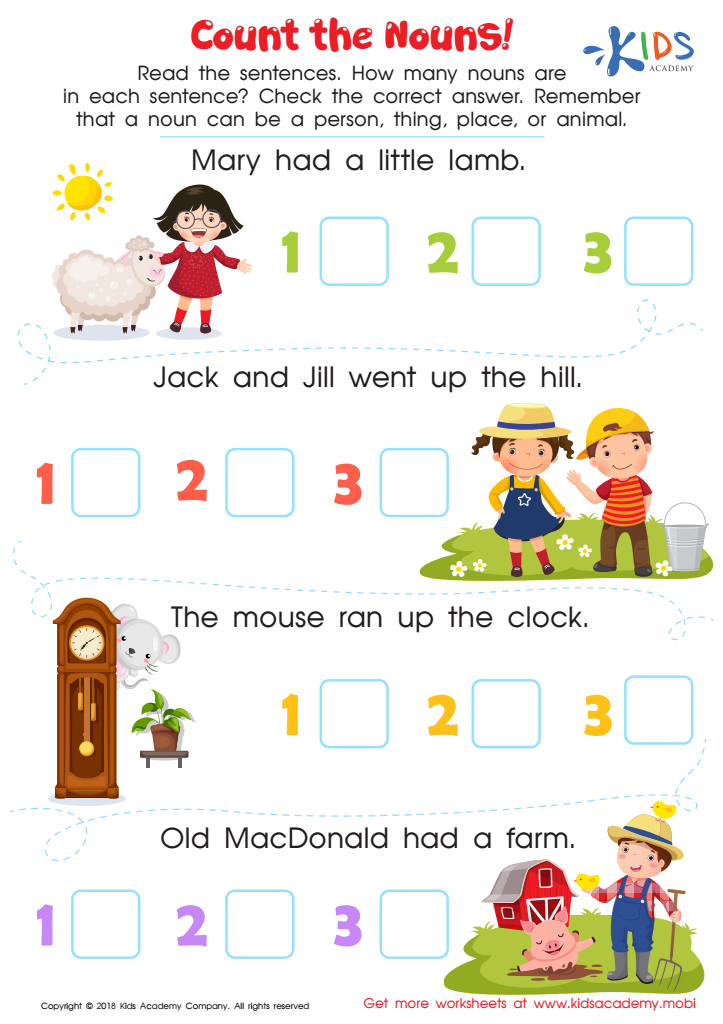
Count the Nouns Worksheet
Read the sentences with your children and ask them to find the nouns. Explain that nouns are names of people, animals, places or things. Point out the boxes with the answers to check.
 Assign to My Students
Count the Nouns Worksheet
Worksheet
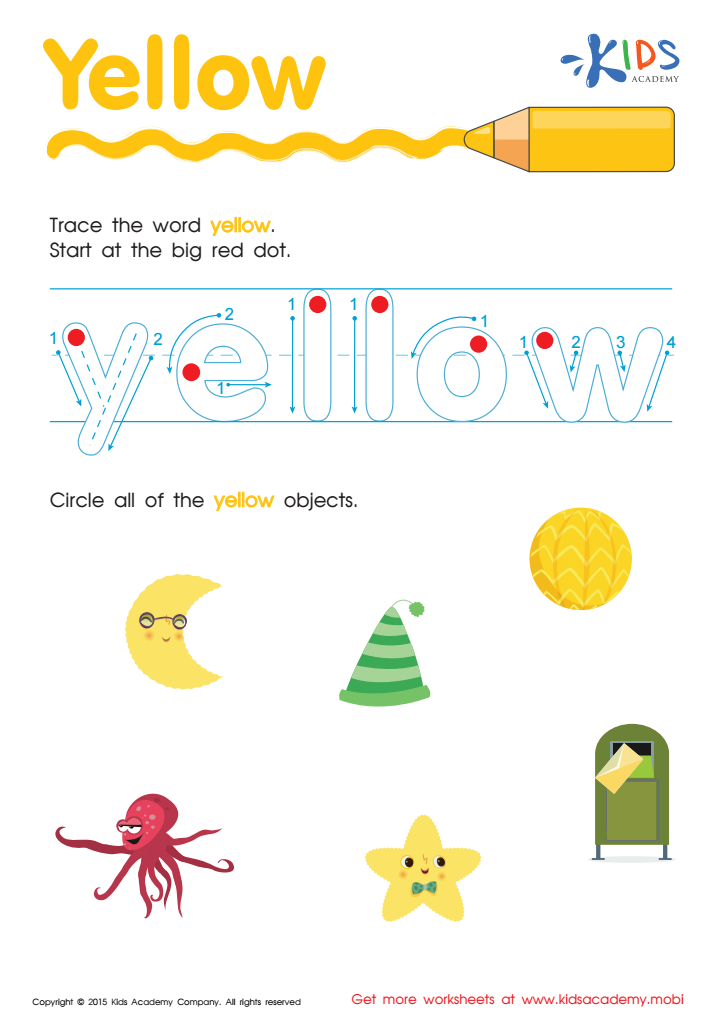
Yellow Tracing Color Words Worksheet
Tracing is a great way to start learning handwriting! Our printable worksheet helps your kindergartener practice and master the basics. They'll trace lines and fill in the word "yellow" with bright colors, sure to captivate and inspire them for more practice. Check out here for more tracing of color words.
Yellow Tracing Color Words Worksheet
Worksheet
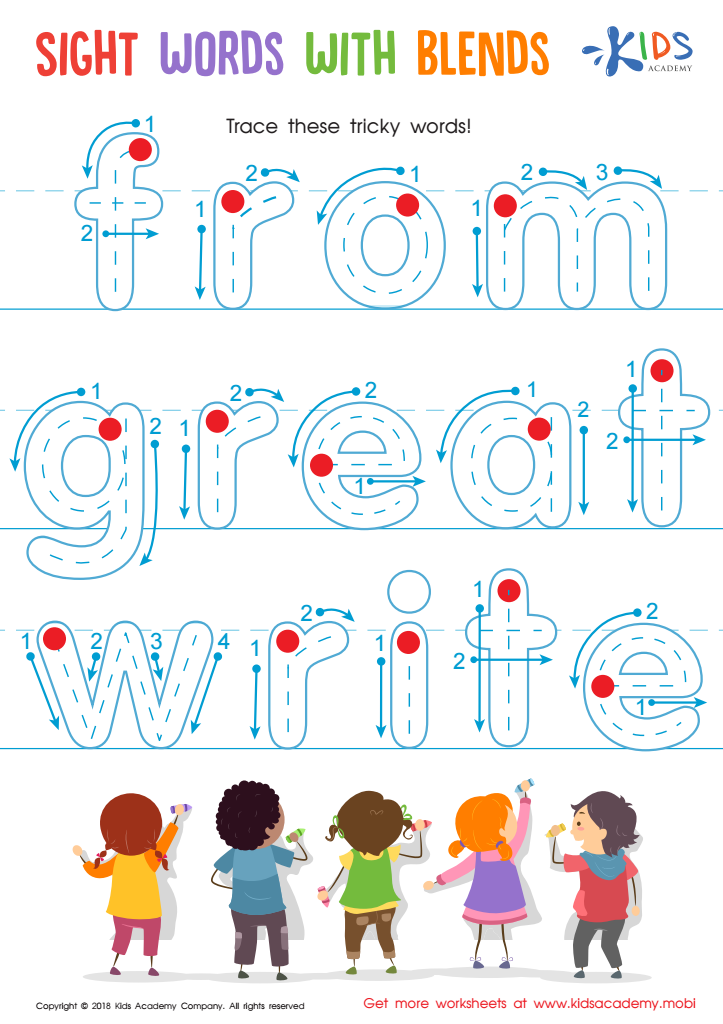
Sight Words with Blends Worksheet
This free PDF lets your children trace and write sight words with tricky blends. The guide numbers help them start from the top, building fine motor skills and enhancing sight word vocab. It's a great way to give your kids a solid foundation for reading!
Sight Words with Blends Worksheet
Worksheet
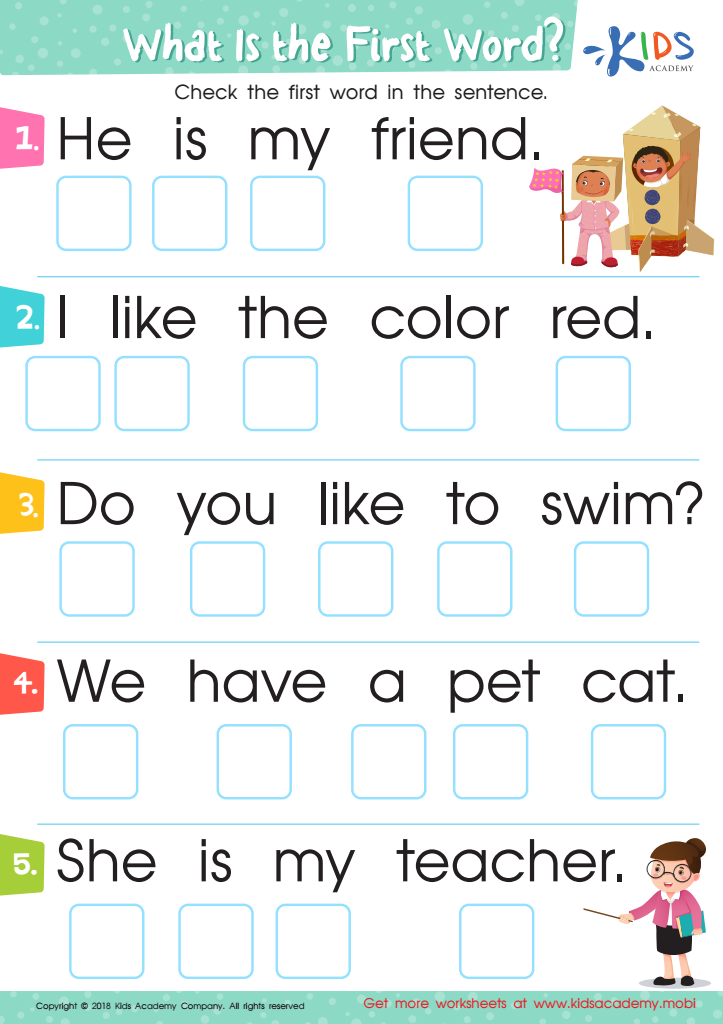
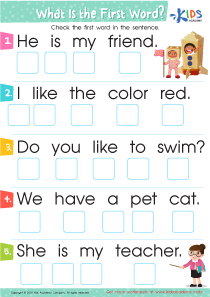
What is the First Word? Worksheet
Help your students test their sentence-reading skills with this printout! After teaching the alphabet, have them identify and write the first word in each sentence. With this exercise, they'll gain reading proficiency and be better prepared to write their own sentences.
What is the First Word? Worksheet
Worksheet
Join Kids Academy for Free
Who is primarily going to use this learning content?








Vocabulary development in Grade 1 writing is crucial for various reasons, making it a priority for both parents and teachers. At this early stage, children start to build the foundation for effective communication. A robust vocabulary enables them to express their thoughts clearly, understand instructions, and engage in discussions, fostering confidence in their abilities.
The importance of vocabulary development extends beyond better written work. It plays a significant role in overall literacy skills. A strong vocabulary enhances reading comprehension; children who understand more words can connect ideas better and derive meaning from texts. This understanding impacts their academic performance across various subjects, as reading is a integral skill.
Additionally, vocabulary enrichment contributes to cognitive development. It encourages critical thinking, allowing children to explore concepts more profoundly and articulate emotions and ideas effectively. Engaging in vocabulary-building activities can be enjoyable—through storytelling, games, and interactive exercises—thereby promoting a love for learning.
By actively participating in vocabulary development, parents and teachers set children up for success in writing and beyond, equipping them with essential tools for lifelong learning and communication. Supporting vocabulary growth nurtures intellectual curiosity, critical thinking, and the ability to interact thoughtfully with the world around them.