Basic subtraction skills Extra Challenge Worksheets for Ages 3-4
3 filtered results
-
From - To
Elevate your child's math skills with our Basic Subtraction Skills Extra Challenge Worksheets designed specifically for ages 3-4! These engaging worksheets provide young learners with the opportunity to practice essential subtraction concepts in a fun, interactive way. Each page features colorful illustrations and age-appropriate activities that encourage critical thinking and problem-solving. By navigating through playful scenarios, children will enhance their understanding of numbers as they subtract and compare quantities. Perfect for home, preschool, or early kindergarten settings, our worksheets aim to build a solid foundation in math while fostering a love for learning. Download your set today and watch your little ones thrive!
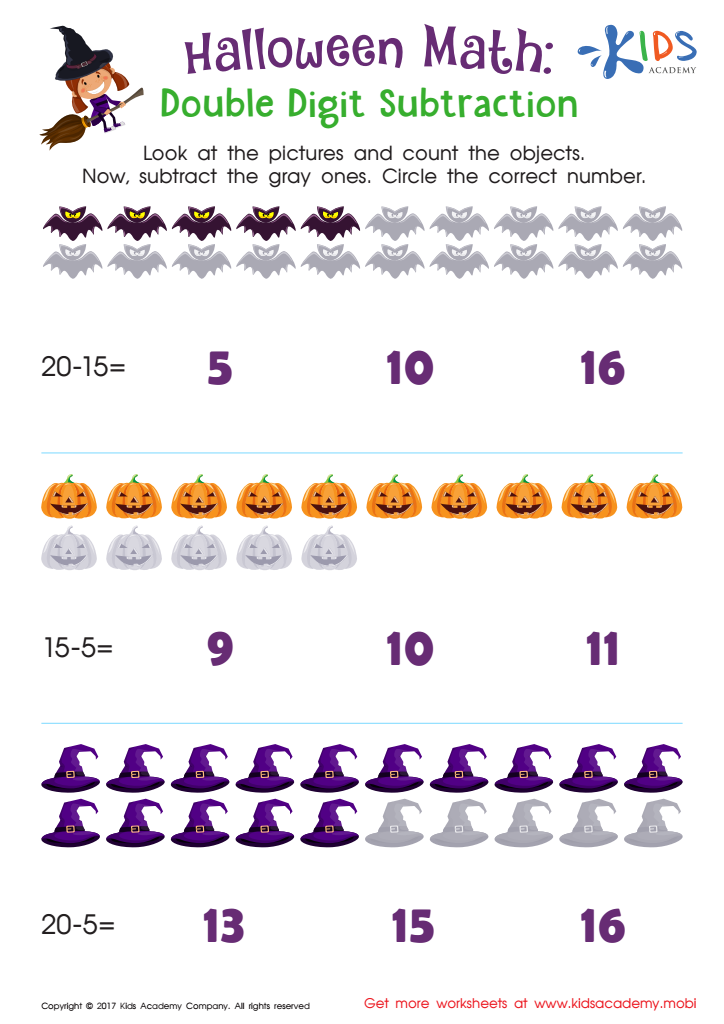
Halloween Math Subtraction Worksheet
 Assign to My Students
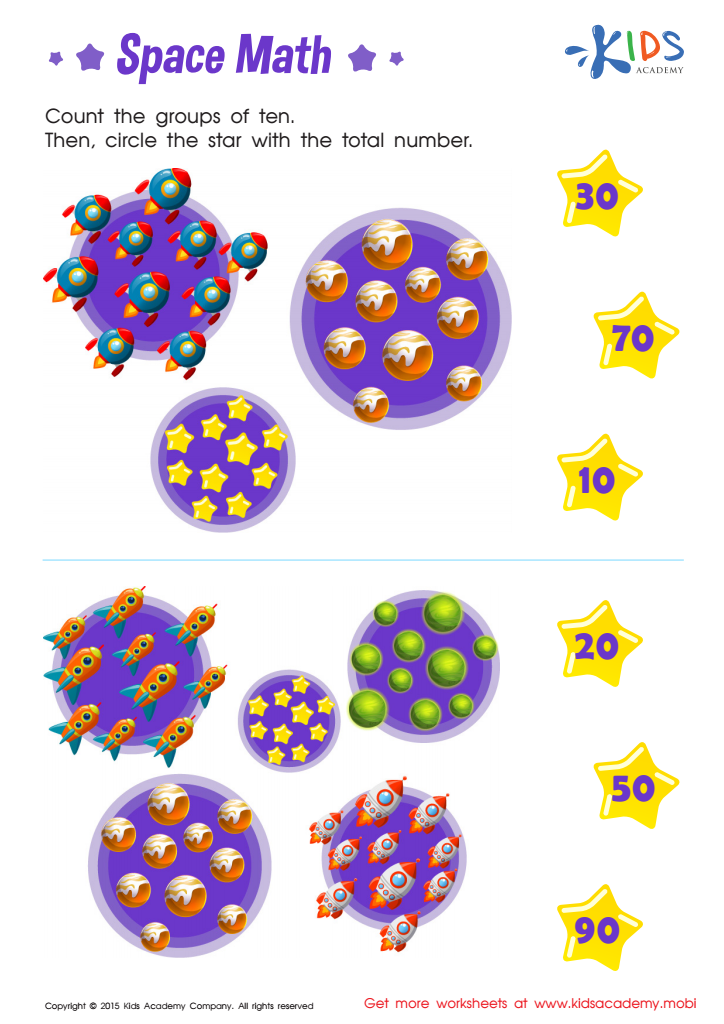
Learn dozens: Space math Worksheet
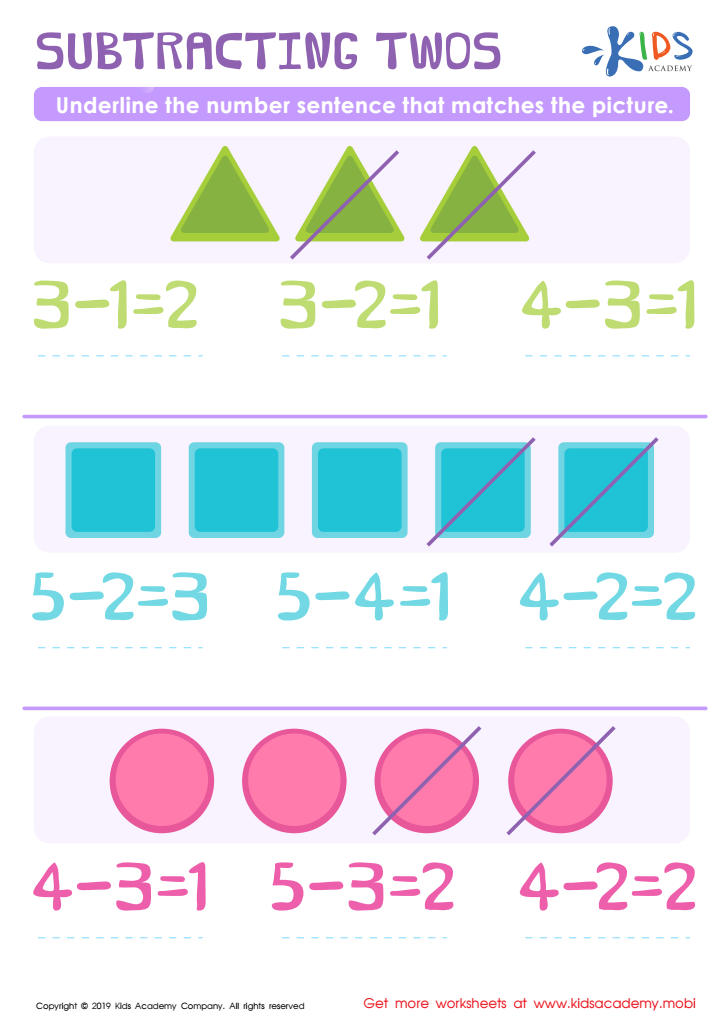
Subtracting Twos Worksheet







Parents and teachers play a crucial role in fostering early mathematics skills, and basic subtraction skills, even for ages 3-4, lay the foundation for a child's future success in math. Mastering early subtraction contributes to critical thinking and problem-solving abilities. These skills help children learn how to take away from a quantity, which is a key concept as they understand how numbers work in relationships.
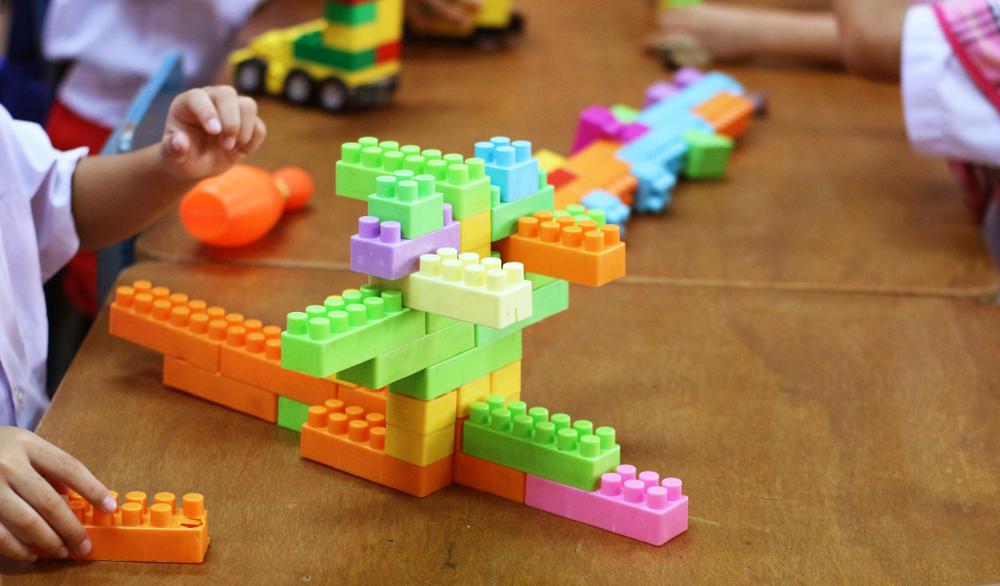
At this age, engaging children in fun and interactive ways to learn subtraction—like using toys for counting or turning it into a game—can significantly enhance their understanding. Moreover, children develop early number sense, allowing them to grasp more complex mathematical ideas later on.
Basic subtraction also supports not just numerical skills but emotional and social development. Learning to "take away" helps children grasp sharing, loss, and the idea of fairness in their interactions with peers. For these reasons, focusing on basic subtraction skills at early ages is essential. Encouraging curiosity and building a strong mathematical foundation through playful activities makes learning enjoyable and prepares children lifelong learning in any academic area. Thus, caregivers can foster a child's confidence and excitement towards exploring math and numbers.








