Comparing lengths Extra Challenge Worksheets for Ages 3-4
3 filtered results
-
From - To
Welcome to our Comparing Lengths Extra Challenge Worksheets for Ages 3-4! Designed to spark curiosity and enhance critical thinking, these engaging worksheets are perfect for young learners eager to explore measurement concepts. Children will enjoy various activities that encourage them to compare and identify lengths of different objects, fostering essential problem-solving skills. With colorful visuals and simple instructions, our materials make learning fun and interactive. Ideal for home or preschool settings, these worksheets will help your child gain confidence in understanding and comparing lengths while enhancing their fine motor skills. Bring excitement to learning with our thoughtful and challenging resources!
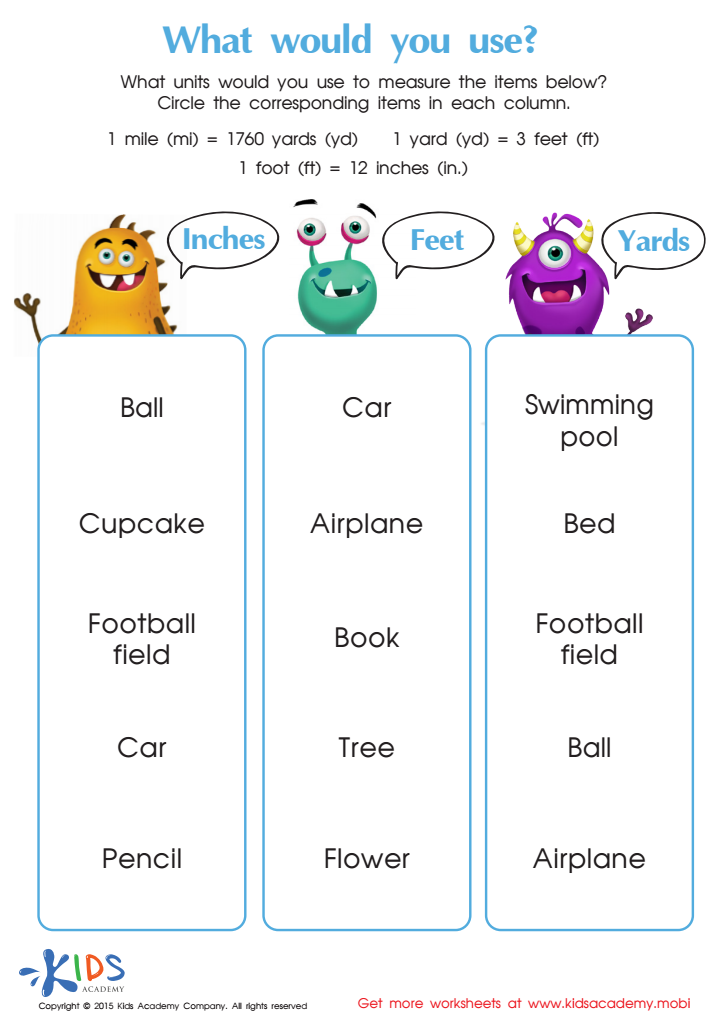
Learning about measuring objects in inches, feet and yards Worksheet
 Assign to My Students
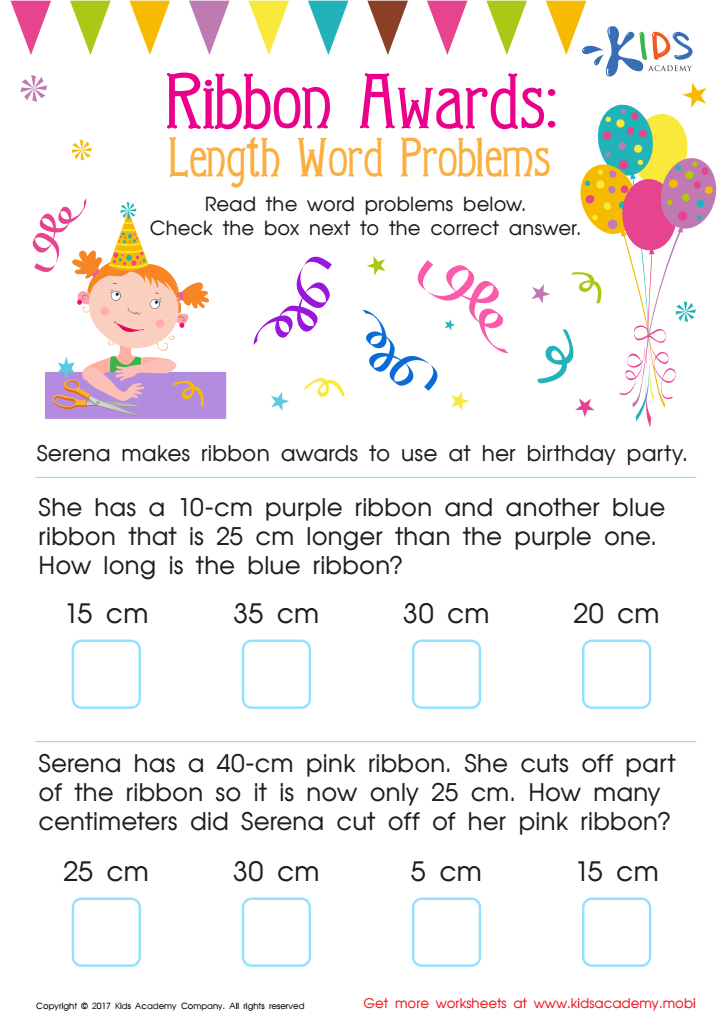
Length Word Problems Worksheet
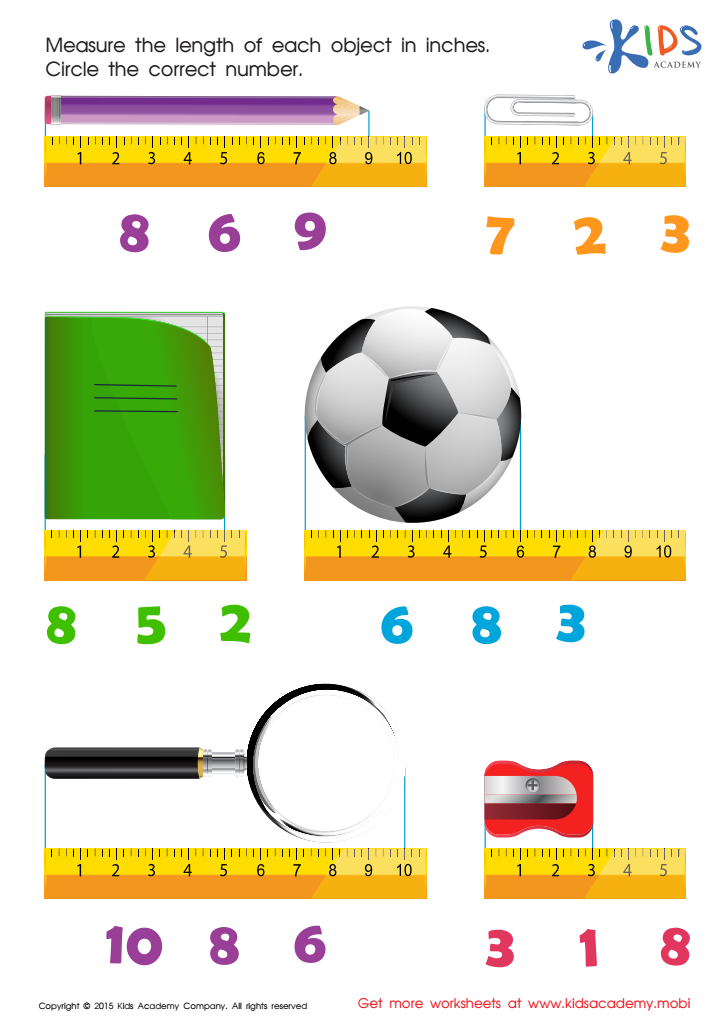
Learning measuring objects in inches Worksheet






Comparing lengths is a crucial foundational skill for children ages 3-4, making it important for parents and teachers to engage in this activity. At this age, children are naturally curious about the world around them, and exploring lengths offers an opportunity to pique their interest in measurement and math concepts.
Firstly, comparing lengths helps children develop critical thinking and problem-solving skills. When they assess which object is longer or shorter, they begin to learn how to make observations and reason logically. This cognitive development lays the groundwork for more complex mathematical understanding later on.
Moreover, comparing lengths strengthens language skills. As children describe their observations using comparative terms like "taller," "shorter," or "longer," they enhance their vocabulary and communication abilities. This linguistic development is integral in fostering confident self-expression.
Additionally, engaging in hands-on activities, such as using varied objects to compare lengths, appeals to young children’s kinesthetic learning style. This tactile approach makes learning more enjoyable and memorable, effectively fostering a positive attitude toward math.
Overall, investing time in comparing lengths as a fun extra challenge not only enhances mathematical skills but also contributes to comprehensive learning and personal growth, making it a vital focus for parents and teachers alike.








