Math problem-solving Extra Challenge Worksheets for Ages 3-4
3 filtered results
-
From - To
Discover our engaging Math Problem-Solving Extra Challenge Worksheets designed specifically for ages 3-4! These interactive worksheets provide an exciting way for young learners to enhance their critical thinking and numeracy skills through fun challenges. Tailored to meet the developmental needs of preschoolers, these activities encourage children to solve puzzles, recognize patterns, and develop a strong foundational understanding of mathematical concepts. Each worksheet is crafted to spark curiosity and promote a love for learning. Perfect for at-home practice or classroom use, our math problem-solving challenges will support your child’s growth while making learning enjoyable. Download now and start the adventure in math!
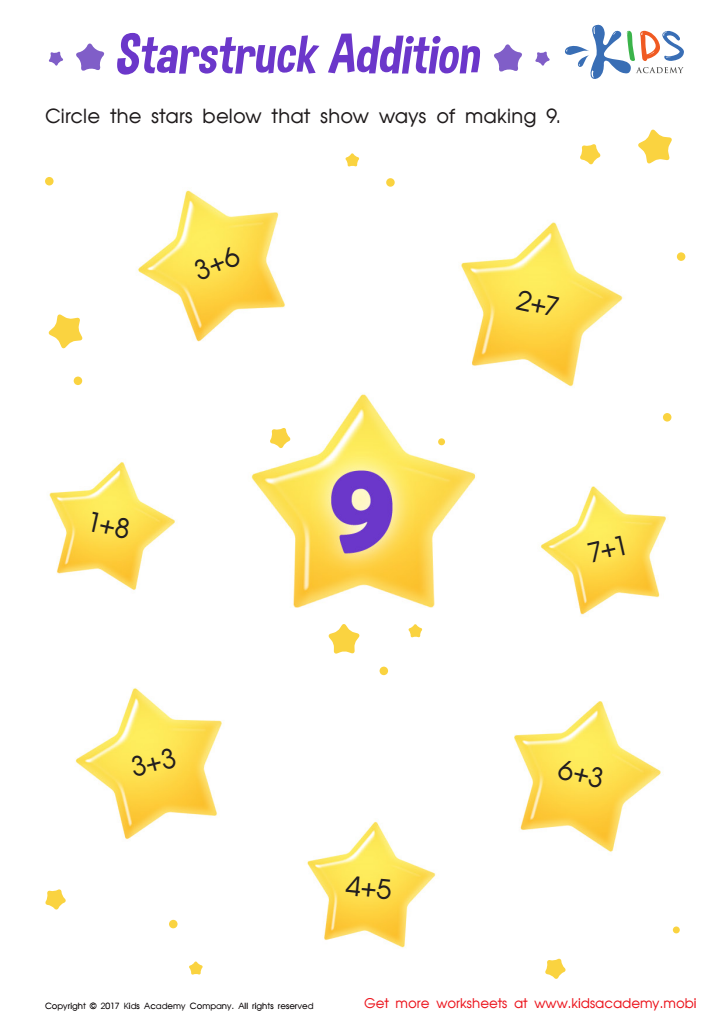
Starstruck Addition Printable
 Assign to My Students
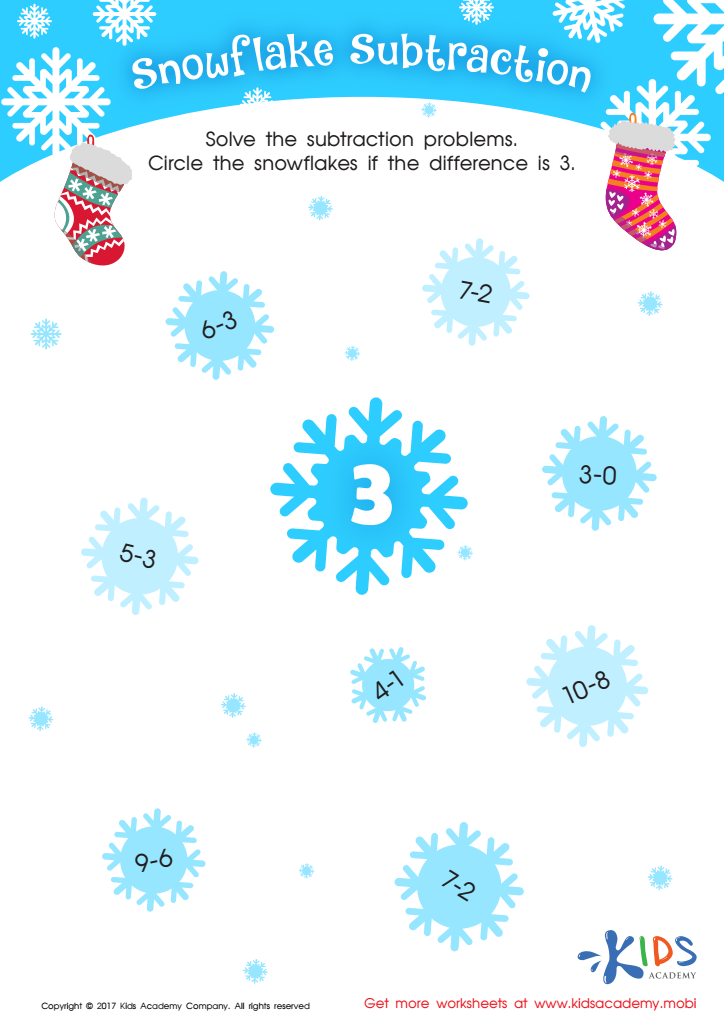
Snowflake Subtraction Worksheet
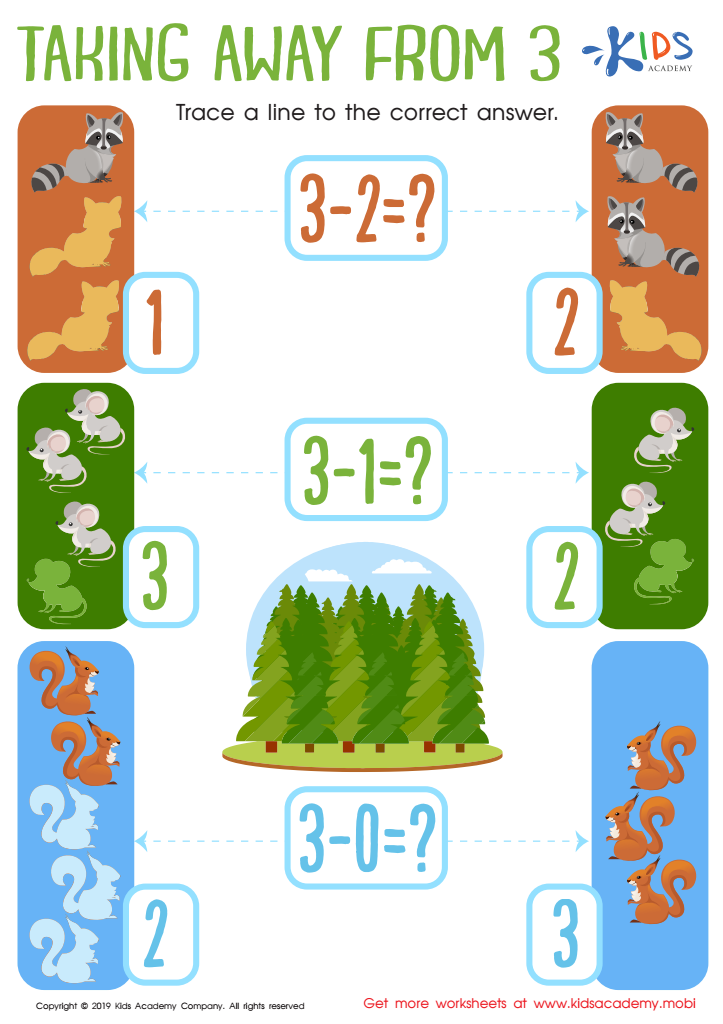
Taking Away From 3 Worksheet








Math problem-solving skills are crucial for children, especially those aged 3-4, as they lay the foundation for future learning and cognitive development. Engaging in math challenges at this age not only fosters a child’s numerical understanding but enhances critical thinking, creativity, and persistence.
Parents and teachers should recognize that early exposure to math problem-solving can significantly impact a child's confidence and attitudes towards learning. At these young ages, children are naturally curious and capable of grasping basic concepts, such as counting, sorting, and simple patterns. Introducing extra challenges in a fun and interactive way cultivates a positive learning environment where they can learn at their own pace.
Moreover, participating in math challenges encourages collaboration and communication skills; children learn to ask questions, express their thought processes, and acquire new vocabulary related to math. It also helps develop fine motor skills through hands-on activities like arranging objects or manipulating shapes.
Ultimately, fostering a love for math early on sets the stage for success in more complex mathematical concepts in schooling. Therefore, incorporating math problem-solving challenges into daily activities can play a vital role in children's overall development, making it an essential focus for parents and educators alike.








