Time reading skills Extra Challenge Worksheets for Ages 3-4
3 filtered results
-
From - To
Enhance your little one's time reading skills with our Extra Challenge Worksheets designed for ages 3-4. These specially crafted printables make learning time both fun and effective. Build foundational skills as children engage with clocks, number recognition, and fine motor activities tailored to their development stage. Each worksheet is thoughtfully designed to progressively challenge young learners while ensuring they enjoy the learning process. Perfect for parents and educators alike, our resources provide a solid introduction to time-telling. Foster confidence and precision in reading both analog and digital clocks. Boost their learning journey with our engaging, skill-boosting worksheets today!
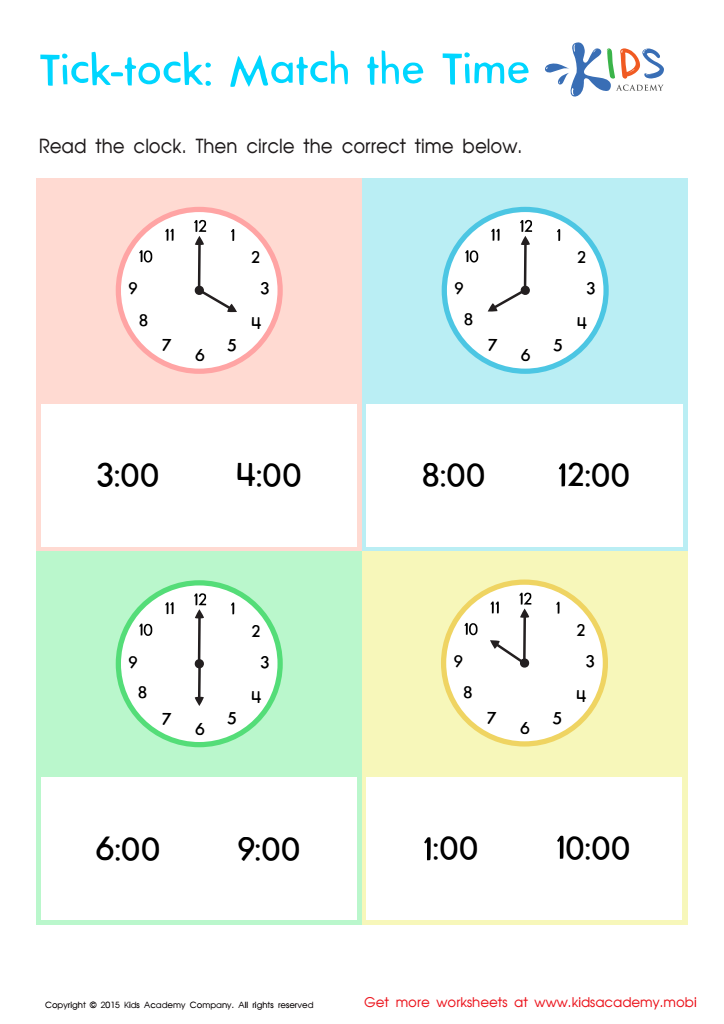
Telling The Time Worksheet: Part 4
 Assign to My Students
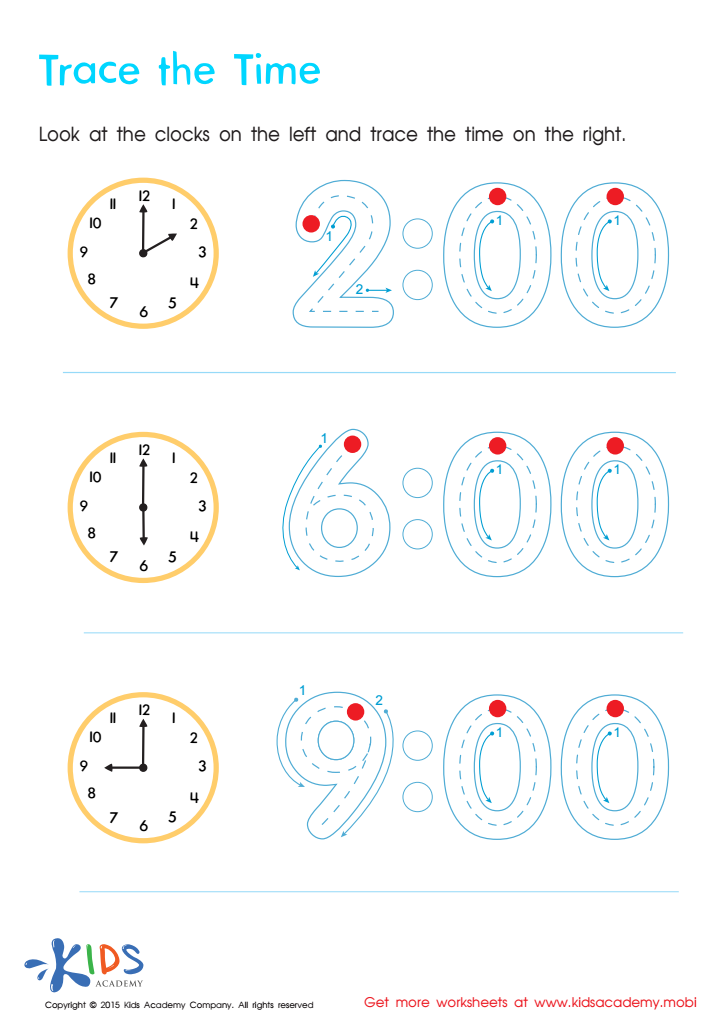
Telling The Time Worksheet: Part 2
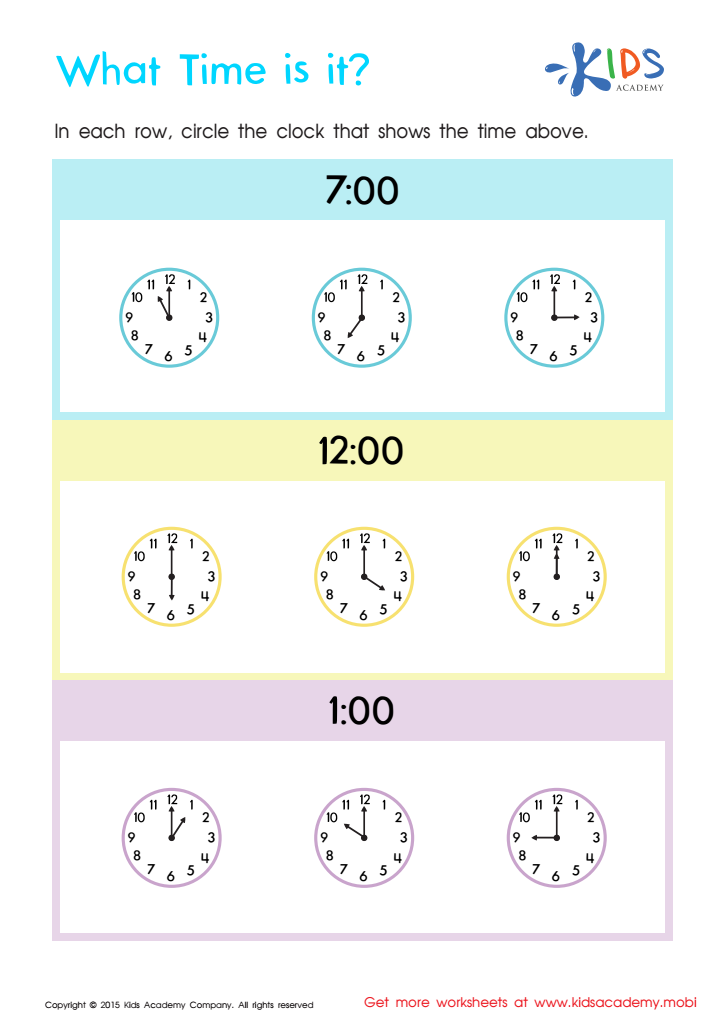
Telling The Time Worksheet: Part 3








Developing reading skills in children ages 3-4 is crucial because this period is foundational for cognitive and language development. Activities like "Time Reading Skills Extra Challenge" can play a significant role in enhancing these essential skills early on. During these formative years, children's brains are exceptionally receptive to learning new languages, sounds, and words. By incorporating focused reading activities, both parents and teachers can foster a love for books that significantly benefits their children in the long run.
One reason to care about early reading skills is that they lay the groundwork for future academic success. Children who start recognizing letters, sounds, and simple words early are better prepared for kindergarten and elementary school, where these basic skills are built upon. Additionally, early reading practice improves attention spans and cultivates patience, as children engage with stories, following along from beginning to end.
Moreover, activities like the "Extra Challenge" offer innumerable developmental benefits. They stimulate critical thinking and comprehension skills, as children start to make sense of the narrative, recognize patterns, and predict outcomes. For parents and teachers, these sessions also provide excellent bonding moments, making learning a shared, enjoyable, and interactive experience. Therefore, investing time and effort into developing strong reading skills in young children is undoubtedly a worthwhile endeavor.








