Understanding plurals Extra Challenge Worksheets for Ages 3-4
3 filtered results
-
From - To
Welcome to our "Understanding Plurals Extra Challenge Worksheets" for ages 3-4! These engaging worksheets are designed to help young learners refine their understanding of singular and plural concepts in a fun, accessible way. Packed with colorful visuals and varied activities, children will match pictures to words, transform singular nouns to their plural forms, and apply their newfound knowledge in context. Ideal for boosting vocabulary and language skills, these worksheets encourage independent thinking and learning. Perfect for preschool educators and parents looking to enhance their child's early literacy skills, our extra challenges make mastering plurals enjoyable and effective! Start learning today!
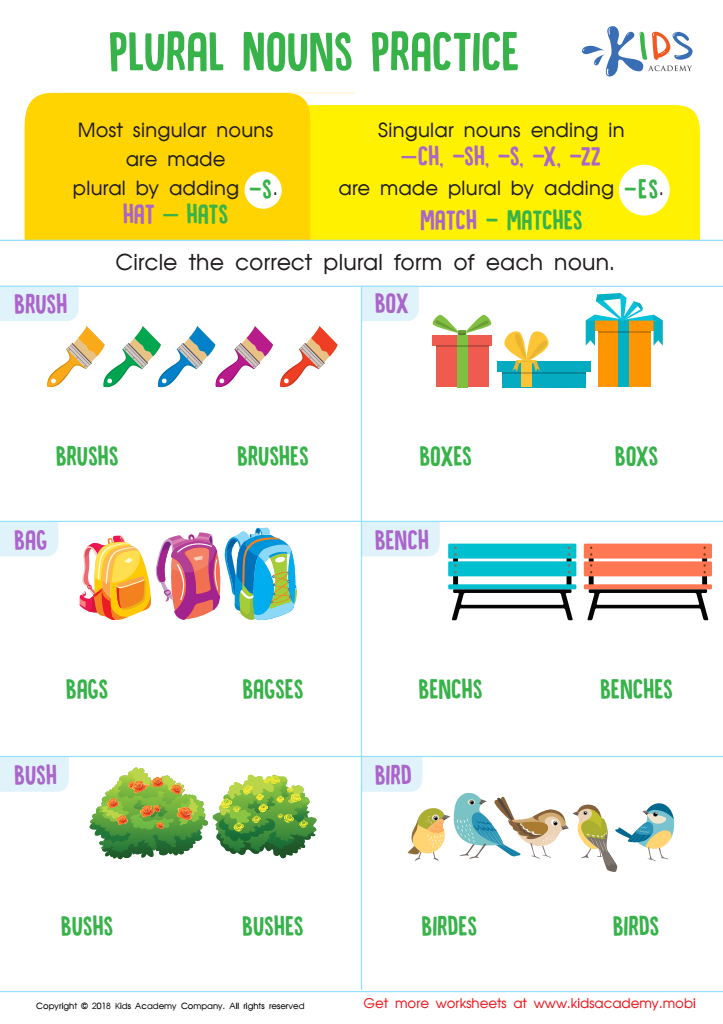
Plural Nouns Practice Worksheet
 Assign to My Students
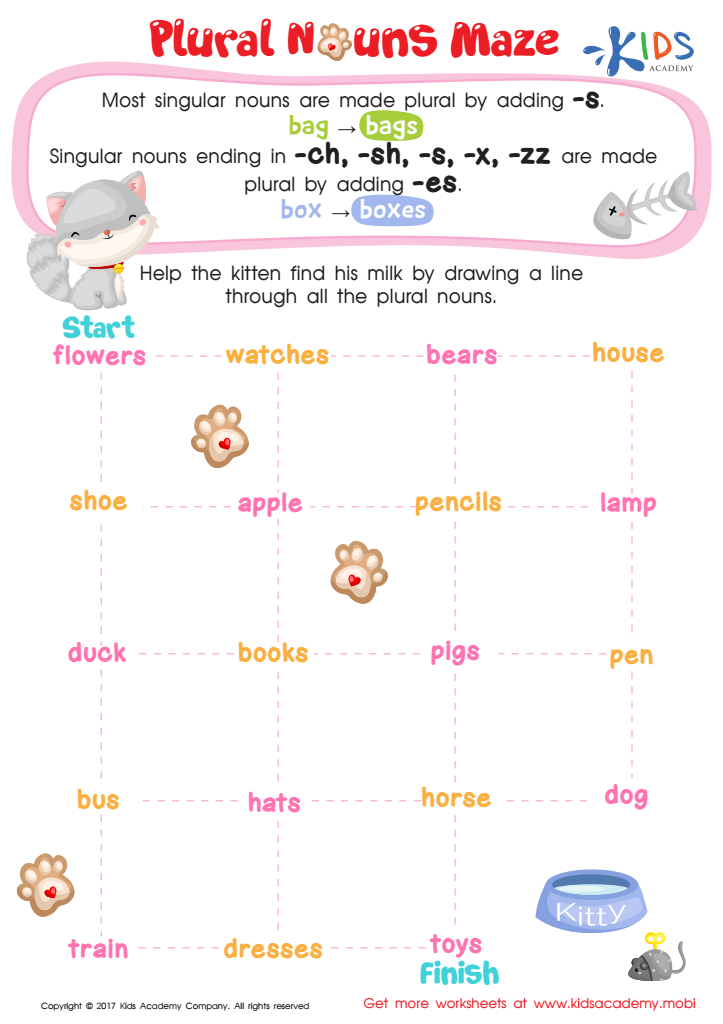
Plural Nouns Maze Worksheet
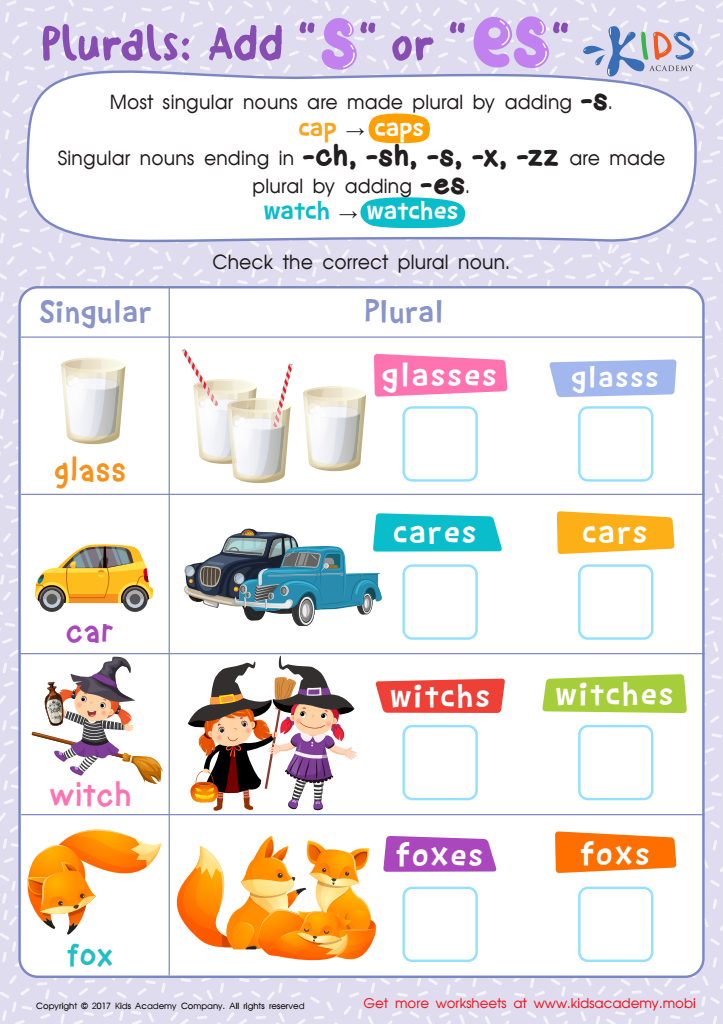
Plurals: "–es" or "–es"? Worksheet








Understanding plurals is essential for children aged 3-4 as it lays the groundwork for their linguistic development and communication skills. At this stage, children begin to express themselves with increasing complexity. Learning about plurals helps them comprehend that some nouns refer to one item while others describe multiple items, enhancing their ability to articulate thoughts clearly.
Moreover, mastering plurals is crucial for early literacy. When children understand that “cat” becomes “cats,” they improve their reading and writing proficiency, as they can identify patterns in words. This skill also fosters effective listening and comprehension, which are vital for following instructions and engaging in conversations.
Parents and teachers play a pivotal role in this learning process. By incorporating fun and interactive activities—like counting toys, reading books with plural words, or singing songs that highlight plurals—they can stimulate a child’s interest and make learning enjoyable. Emphasizing plurals during everyday situations cultivates curiosity and provides context, enabling children to easily grasp the concept.
Overall, understanding plurals is a foundational skill that supports language development, promotes effective communication, and enhances overall cognitive growth, making it a worthwhile focus for parents and educators alike.








