Understanding currency Extra Challenge Money Worksheets for Ages 3-4
3 filtered results
Difficulty Level
Grade
Age
-
From - To
Subject
Activity
Standards
Nurture financial literacy in your preschoolers with our "Understanding Currency Extra Challenge Money Worksheets for Ages 3-4" available on Kids Academy. Perfectly crafted for young learners, these engaging worksheets aim to familiarize children with basic money concepts. Through fun, hands-on activities, kids will learn to identify different coins and understand their values. This resource not only enhances counting skills but also lays the foundation for future financial understanding. Prepare your little ones for the real world by making learning about money interactive and enjoyable. Ideal for both classroom and at-home practice, setting the stage for confident money management.
Favorites
With answer key
Interactive
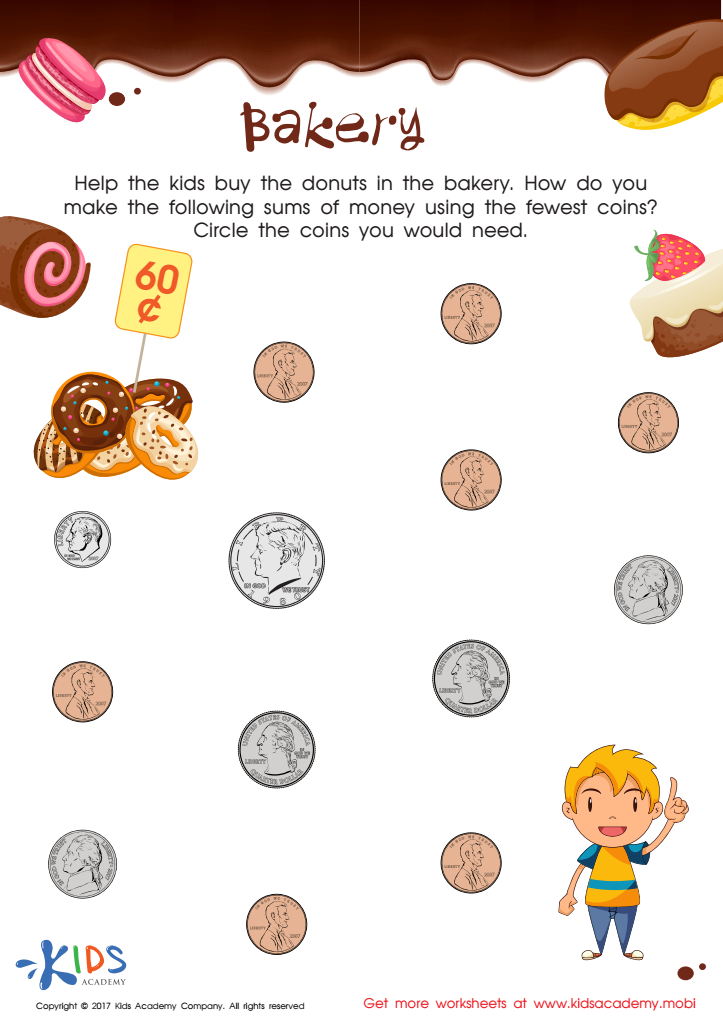
Counting Coins Worksheet
It will challenge them to spend a given amount using the least coins possible. Perfect for 2nd grade.
Help your child learn to count coins with this fun bakery-themed worksheet. It's perfect for 2nd graders and will challenge them to use the least coins possible to spend a set amount. Develop a valuable life skill and have fun while doing it!
 Assign to My Students
Counting Coins Worksheet
Worksheet
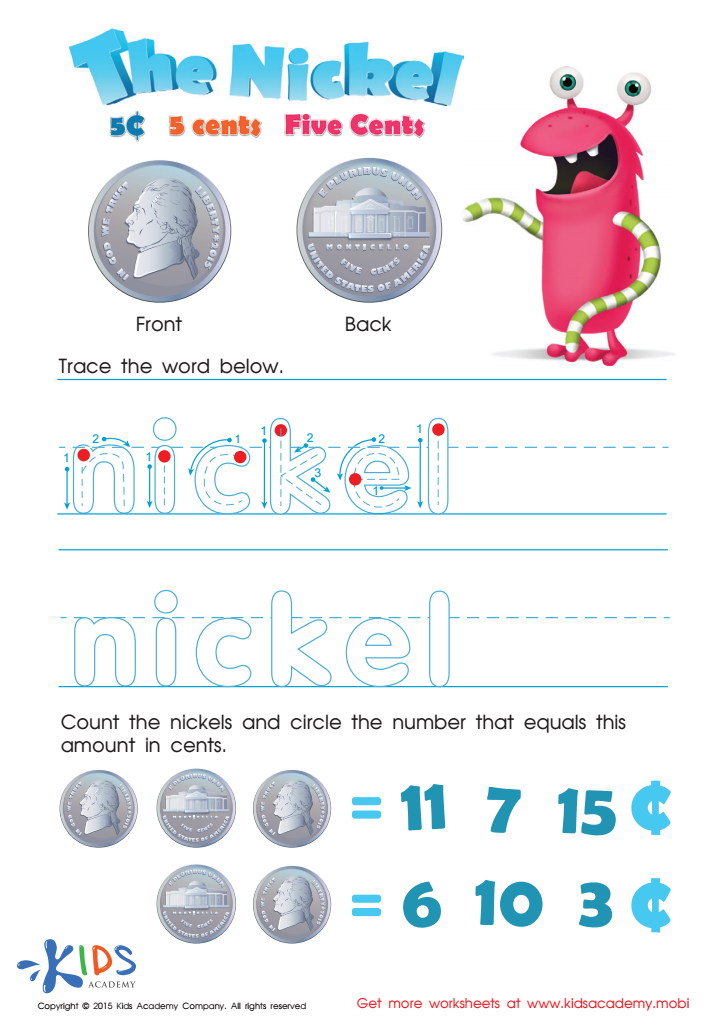
Five Cents or the Nickel Money Worksheet
Counting money games help kids make learning money fun and easy. Next up: the 5 cent coin, or nickel. Look at both sides and remember them. Then, trace the word "nickel" to help you remember. Finally, count the nickels and work out amounts in cents. Let's do this! Kids Academy helps make money learning easy and fun!
Five Cents or the Nickel Money Worksheet
Worksheet
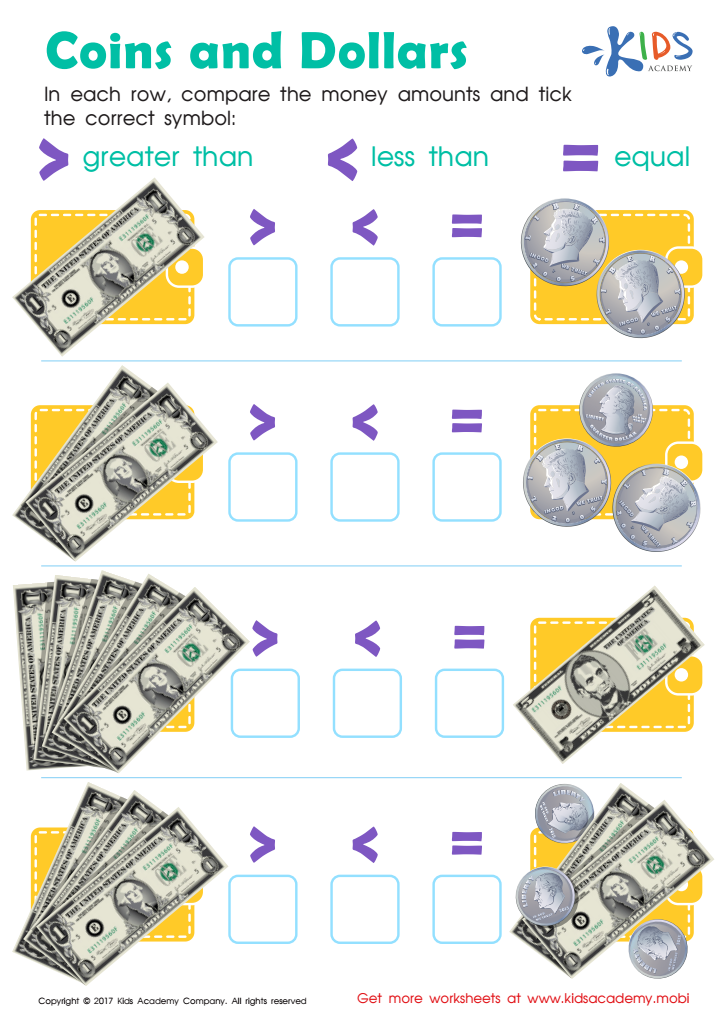
Money: Coins Dollars Printable
Motivate your kid to learn and practise essential math skills, like 'greater than' and 'less than', by introducing the importance of money! The money worksheet "Coins and Dollars" will give them a hands-on experience of counting coins and dollars, making math symbols more memorable.
Money: Coins Dollars Printable
Worksheet
Join Kids Academy for Free
Who is primarily going to use this learning content?








Understanding currency at an early age helps children develop essential financial skills that they will use throughout their lives. Introducing money concepts to children aged 3-4, through activities like an Extra Challenge, fosters critical cognitive development in areas such as counting, recognition of different denominations, and basic math.
Providing engaging and age-appropriate money-related challenges assists in building a solid foundation for future financial literacy. Children will be better equipped to understand the value of money, savings, and spending. This comprehension encourages responsible financial behavior and smart decision-making later in life.
For parents, the early introduction helps strengthen their child's numerical reasoning and problem-solving skills, directly benefiting their academic skills outside of money management. It stimulates their young minds, making them more perceptive and analytical in daily activities.
Teachers also benefit as they lay the groundwork for more complex mathematical concepts to be introduced progressively as the students grow. Educators will observe increased engagement and focus during lessons that include practical, real-life applications. Finally, making learning about money fun and interactive at a young age stirs curiosity and confidence, fostering a positive attitude toward learning in general and ensuring that young learners have an advantageous start.