Addition skills Extra Challenge Math Worksheets for Ages 3-4
9 filtered results
Difficulty Level
Grade
Age
-
From - To
Subject
Activity
Standards
Boost your 3-4-year-olds' math journey with our "Addition Skills Extra Challenge Math Worksheets." Designed to enhance young learners' counting and addition abilities, these engaging exercises make math not just a subject, but an adventure—igniting curiosity and building confidence. Each worksheet features fun visuals and relatable themes, providing a variety of challenges catered to early learners. Ideal for both classroom and home use, these worksheets are perfect for children ready to move beyond basic sums to more complex addition tasks. Prepare your child to excel while making math an enjoyable part of their everyday learning experience.
Favorites
With answer key
Interactive
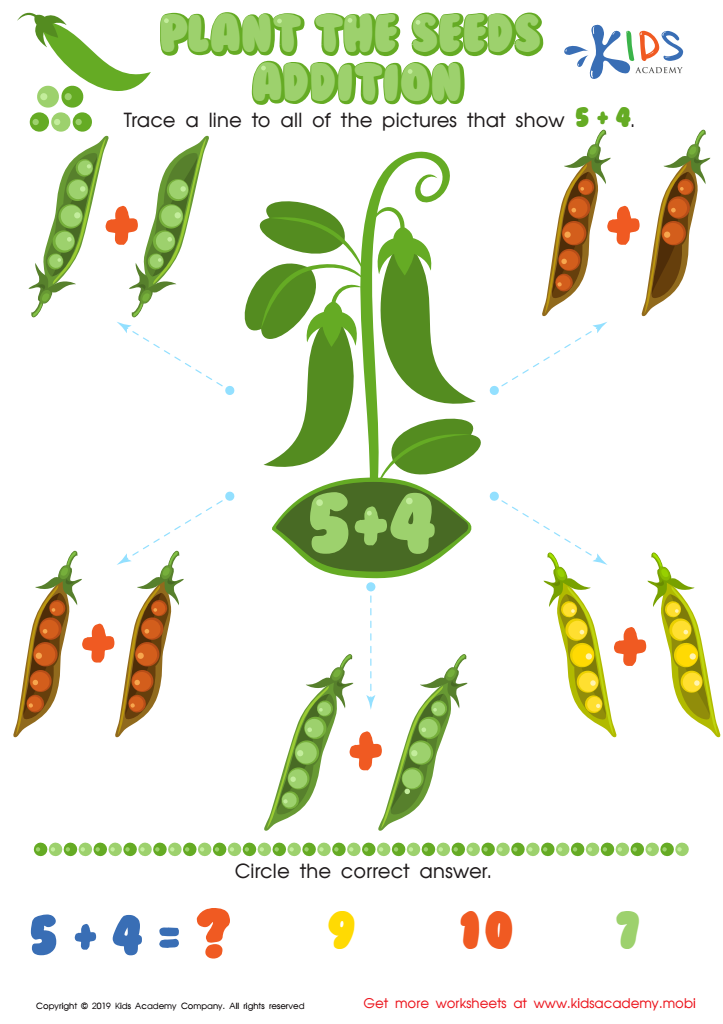
Plant the Seeds Addition Worksheet
This worksheet combines math and learning about plants. Ask kids to name their favorite plants and which ones they see the most. Have them trace a line to all pictures in the middle which show the equation 5+4. Enjoy the beauty of plants while introducing math skills!
 Assign to My Students
Plant the Seeds Addition Worksheet
Worksheet
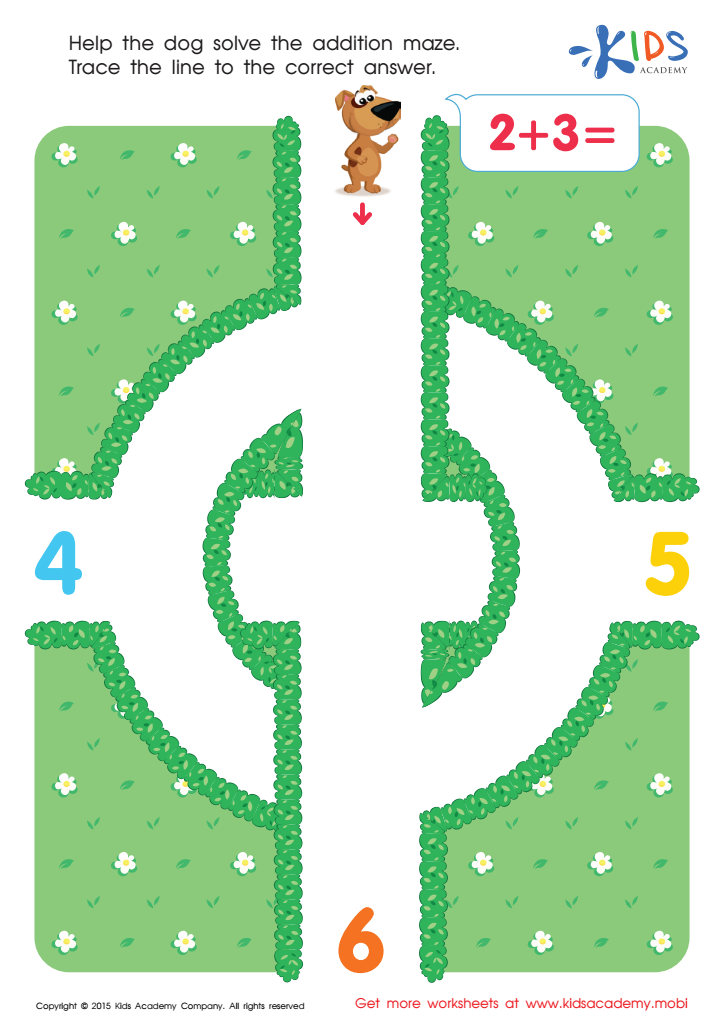
Two And Three Addition Worksheet
Give your children the task and let them find the path to the right answer while they make their way through the maze, and don't forget to let them trace the path.
Two And Three Addition Worksheet
Worksheet
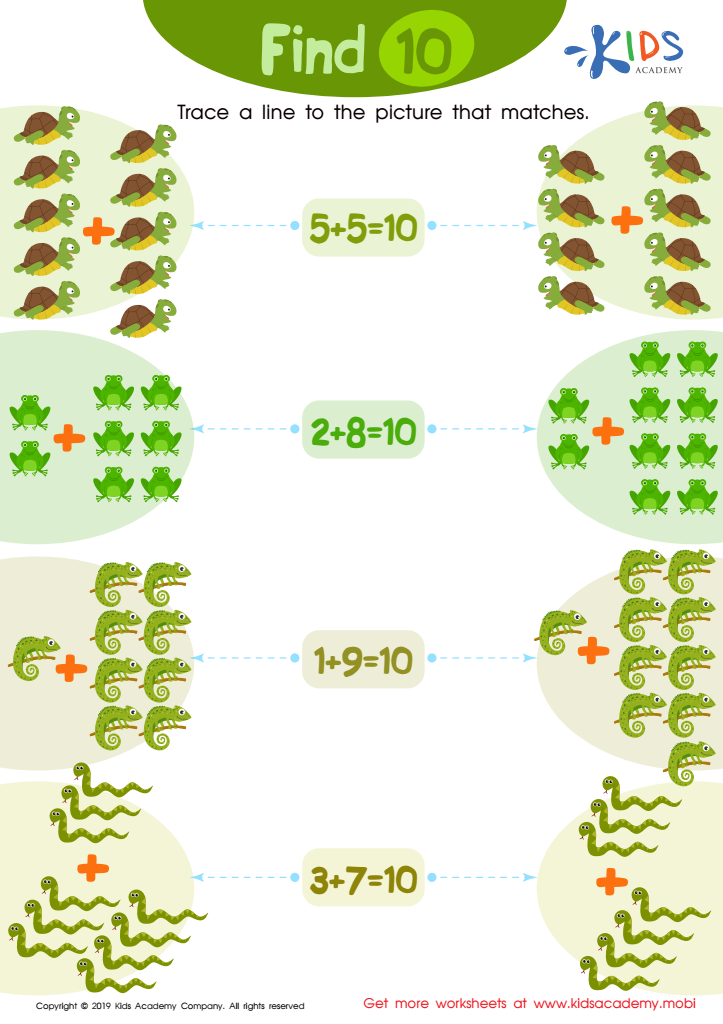
Find 10 Worksheet
Counting can be tricky, but your kids can master it with regular practice. Here's a fun activity to help: count the animals, then trace a line to the pictures that matches. With these tips, math will be an easy walk in the park.
Find 10 Worksheet
Worksheet
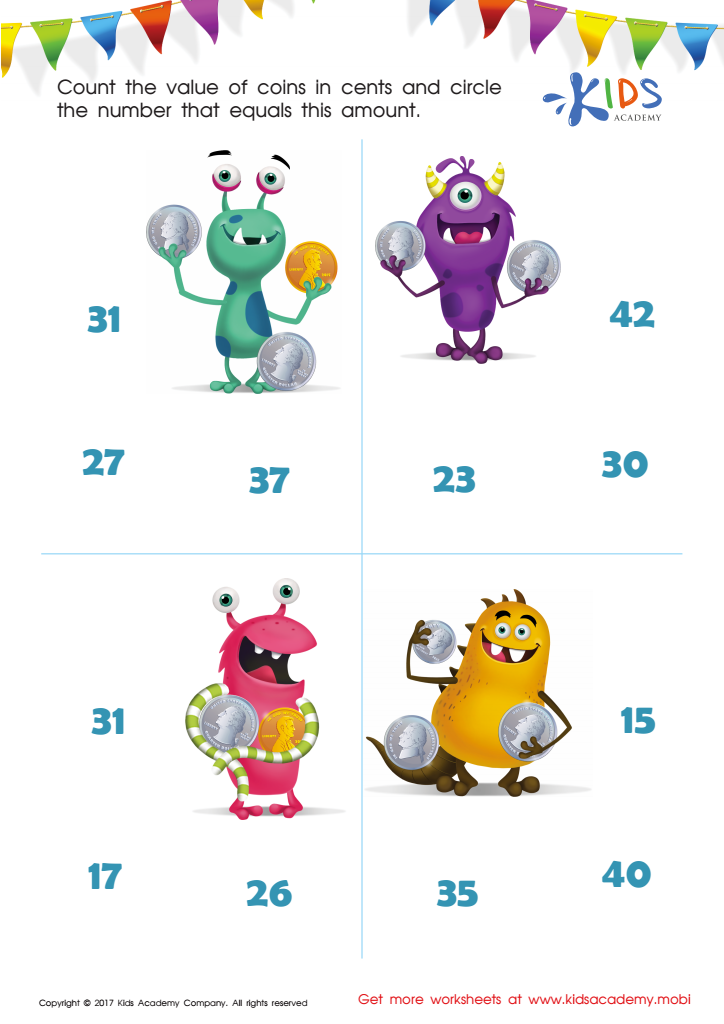
How Many Coins Money Worksheet
Have fun while counting coins: look at the monsters and count the coins in their hands. Challenge your little learners to count and write down the number of coins each one has. Enjoy the time together!
How Many Coins Money Worksheet
Worksheet
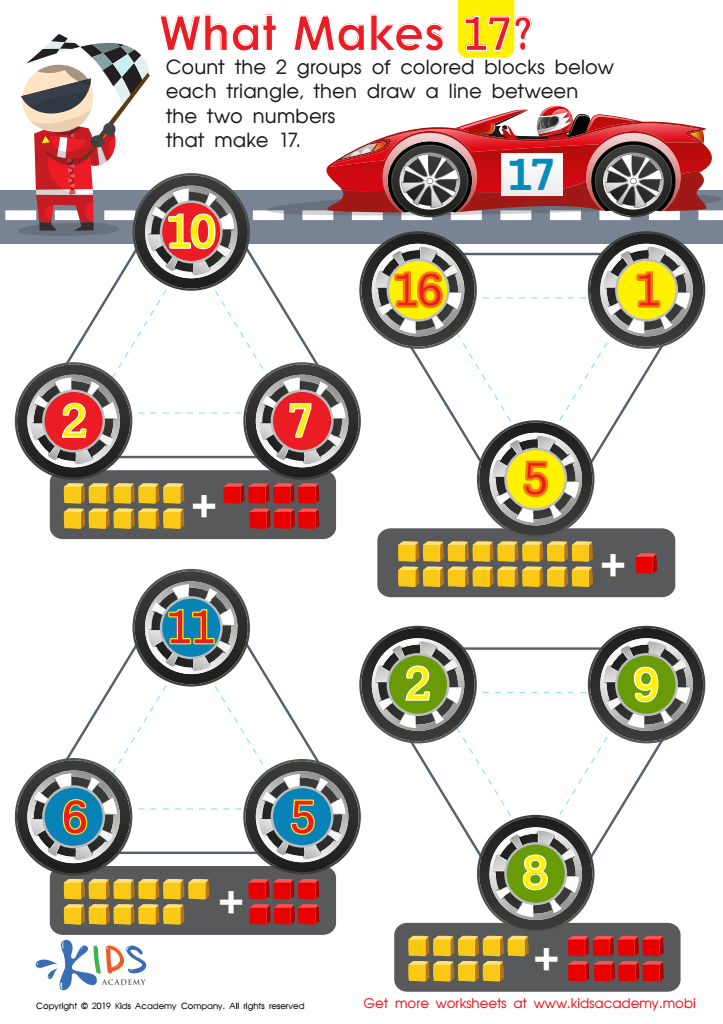
What Makes 17 Worksheet
Practice makes perfect! Let your kindergartners explore addition using this worksheet. Count the blocks in each triangle to reach the same total of 17, and draw a line between the two numbers. Once they get the hang of it, nothing will be too difficult!
What Makes 17 Worksheet
Worksheet
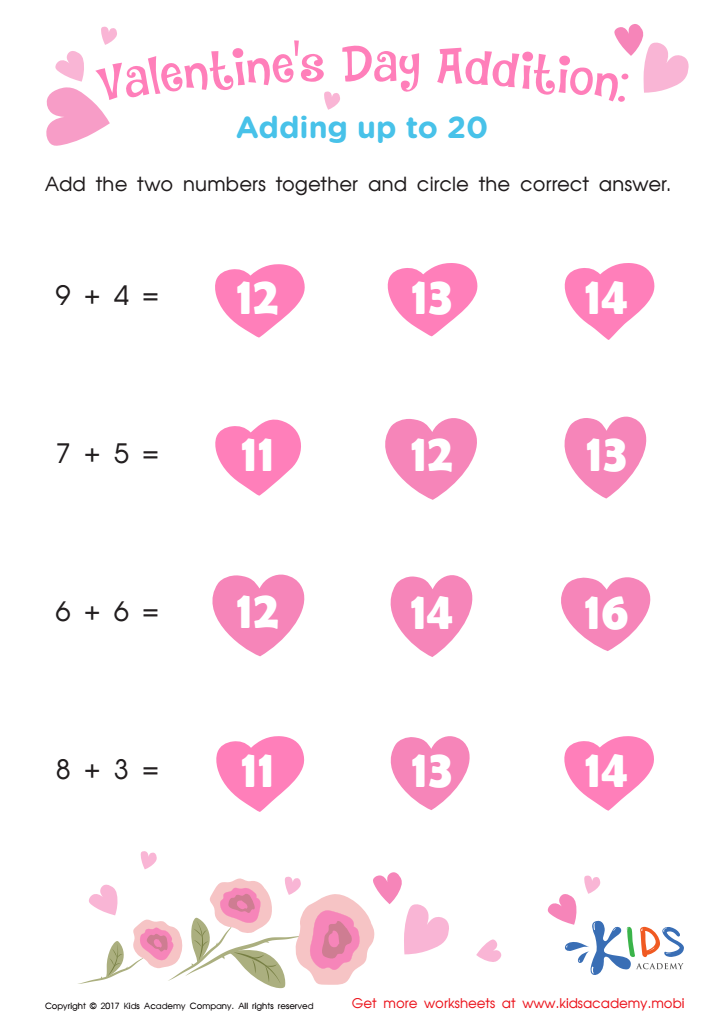
Valentine's Day Addition Worksheet
This Valentine's Day themed worksheet is a fun way for your child to practice adding single digits up to 20! Hearts feature to help your child increase their math skills and have fun at the same time.
Valentine's Day Addition Worksheet
Worksheet
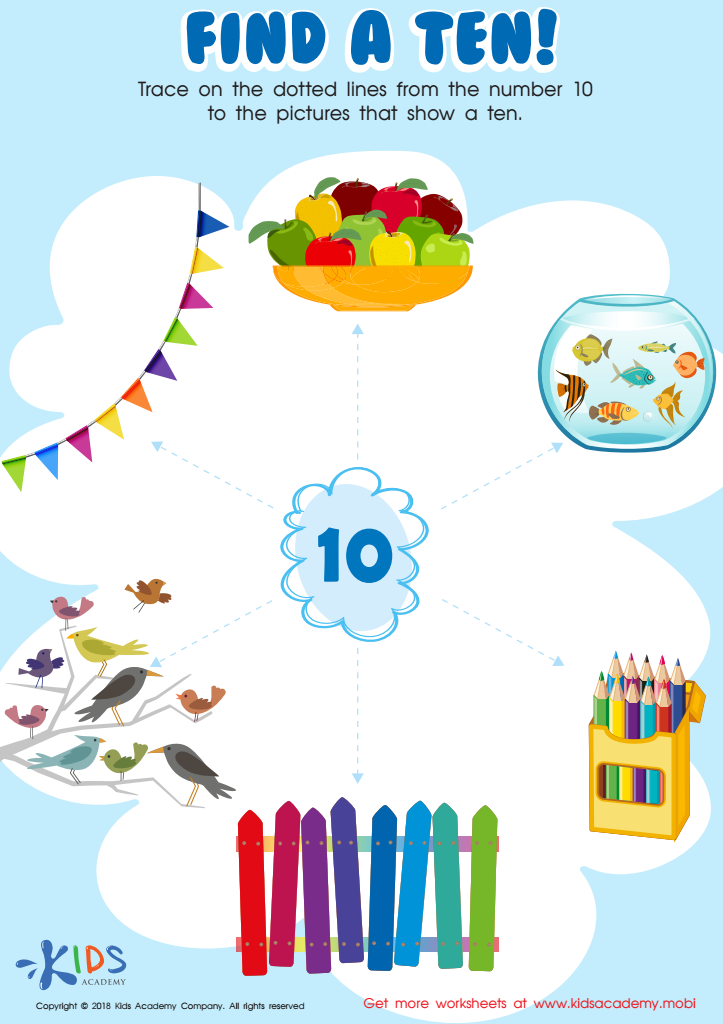
Kindergarten Math Worksheet: Find a Ten
Help your child learn to count to 10 joyfully with this kindergarten math worksheet: Find a Ten! It's full of vivid images to make counting easier. Just count the items in each picture and trace the dotted lines for the correct answer.
Kindergarten Math Worksheet: Find a Ten
Worksheet
Make 10 on Your Plate! Worksheet
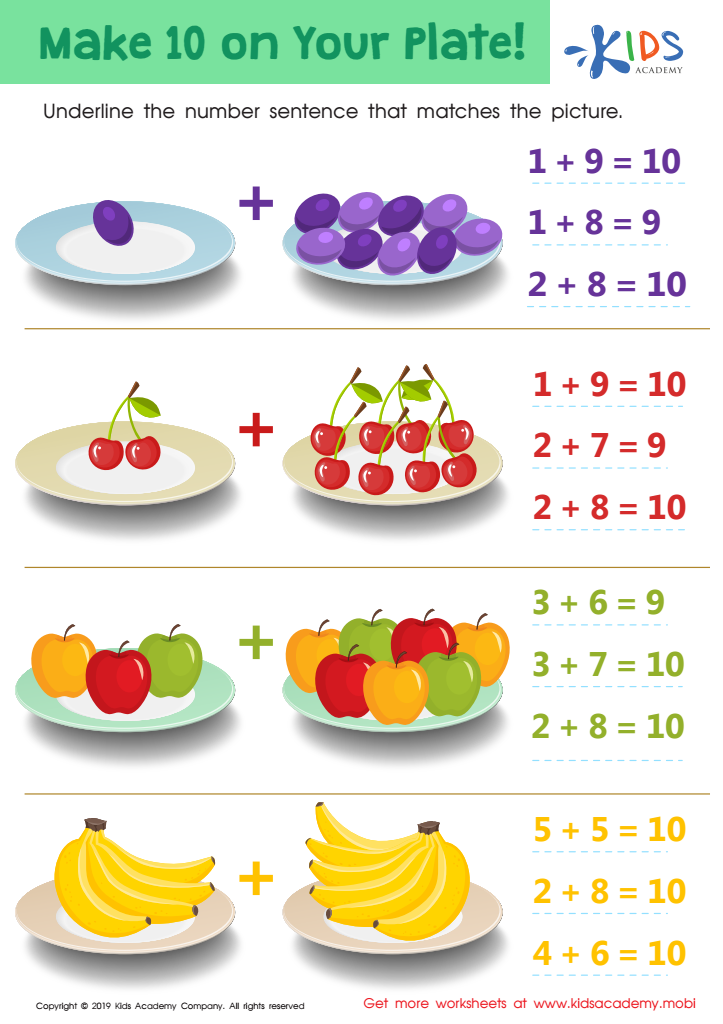
Get your students interested in this exercise by asking them to identify the fruits in the picture. Then, carefully count all the groups of fruit and add them up. Help preschoolers underline the number sentence that matches the picture. Engage their taste buds in a fun way with four different equations!
Make 10 on Your Plate! Worksheet
Worksheet
Shopping for Sweets Worksheet
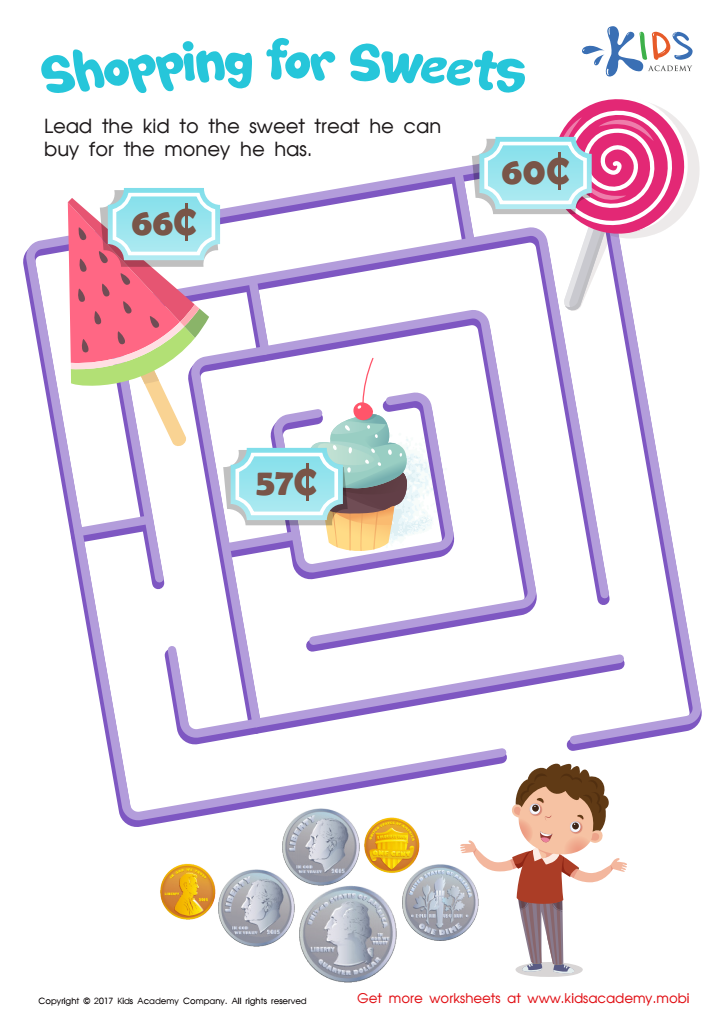
Help your child hone their math and money skills with Shopping for Sweets! They'll count coins, work their way through a maze, and find the amount of money. Fun and educational - perfect for kids!
Shopping for Sweets Worksheet
Worksheet
Join Kids Academy for Free
Who is primarily going to use this learning content?








Addition skills are a fundamental aspect of early childhood development, and extra challenges in this area can be particularly beneficial for children aged 3-4. During these formative years, a child's brain is incredibly receptive to learning new concepts, making it an ideal time to introduce basic math skills, including addition.
At ages 3-4, children begin to develop a sense of numbers and counting, which are the building blocks for addition. Engaging in extra challenges related to addition helps to solidify these fundamental concepts, enhancing a child's numerical literacy. These activities not only foster a strong mathematical foundation but also cultivate critical thinking and problem-solving skills that are essential for more advanced math topics later on.
Moreover, providing extra addition challenges promotes a positive attitude towards math by making it interactive and fun. When children enjoy solving addition problems, they are more likely to retain information and develop a lifelong interest in mathematics.
Parents and teachers should also consider the emotional and social benefits. Completing extra challenges successfully boosts children's confidence and encourages perseverance. When children work on these tasks in a group setting, it also enhances their collaboration and communication skills.
In summary, addition skills extra challenges are crucial for young learners as they lay the groundwork for future academic success, foster a love for learning, and build essential life skills.