
Financial literacy Extra Challenge Math Worksheets for Ages 3-4
3 filtered results
Difficulty Level
Grade
Age
-
From - To
Subject
Activity
Standards
Introducing our "Financial Literacy Extra Challenge Math Worksheets for Ages 3-4"! Designed to nurture early financial understanding, these engaging worksheets introduce foundational math skills through fun, interactive activities. Kids embark on exciting challenges involving counting, sorting, and basic addition, all within relatable financial contexts, such as saving, spending, and sharing. Our resources foster not only math proficiency but also essential life skills that prepare toddlers for future financial literacy. Ideal for both home and classroom use, these worksheets make learning enjoyable while laying the groundwork for responsible financial habits. Start your child's financial journey today and watch their confidence soar!
Favorites
With answer key
Interactive
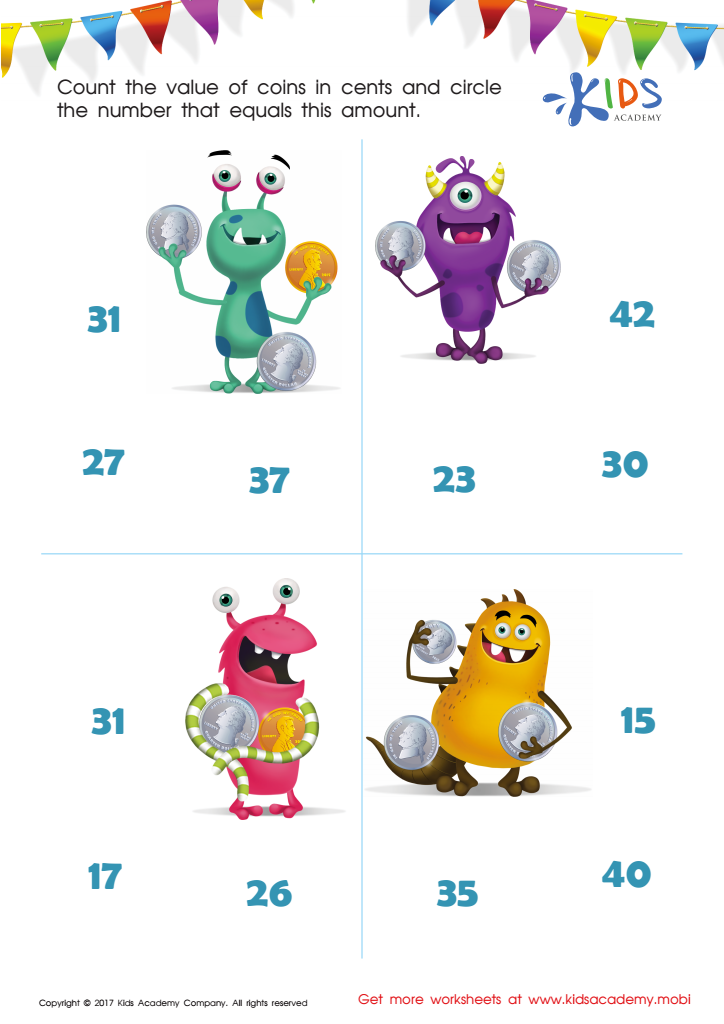
How Many Coins Money Worksheet
Have fun while counting coins: look at the monsters and count the coins in their hands. Challenge your little learners to count and write down the number of coins each one has. Enjoy the time together!
 Assign to My Students
How Many Coins Money Worksheet
Worksheet
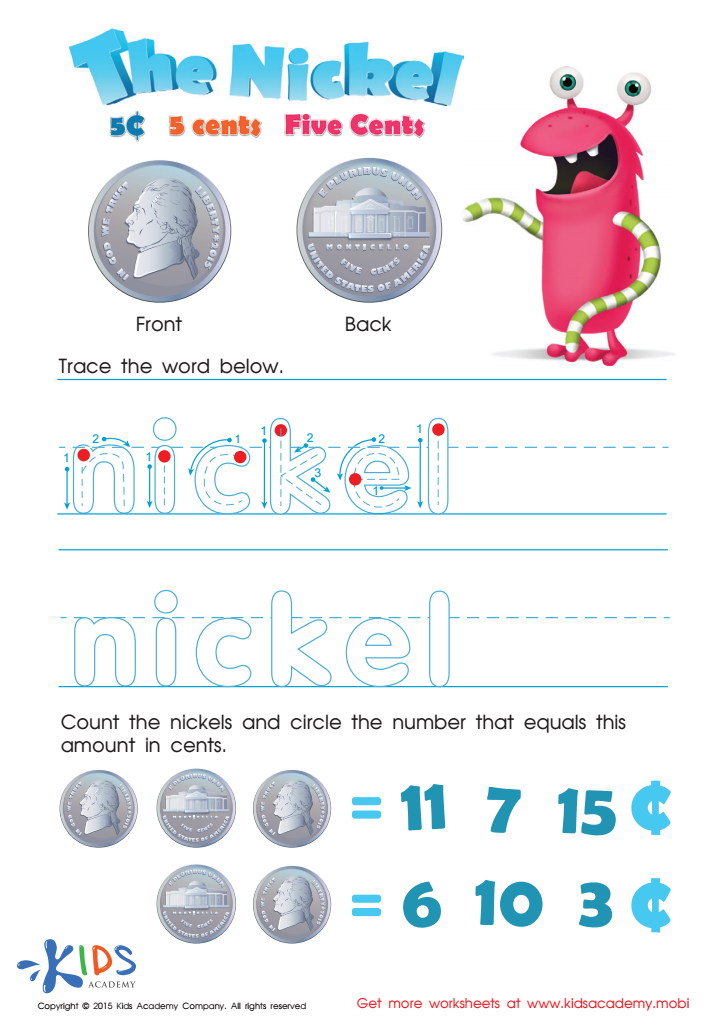
Five Cents or the Nickel Money Worksheet
Counting money games help kids make learning money fun and easy. Next up: the 5 cent coin, or nickel. Look at both sides and remember them. Then, trace the word "nickel" to help you remember. Finally, count the nickels and work out amounts in cents. Let's do this! Kids Academy helps make money learning easy and fun!
Five Cents or the Nickel Money Worksheet
Worksheet
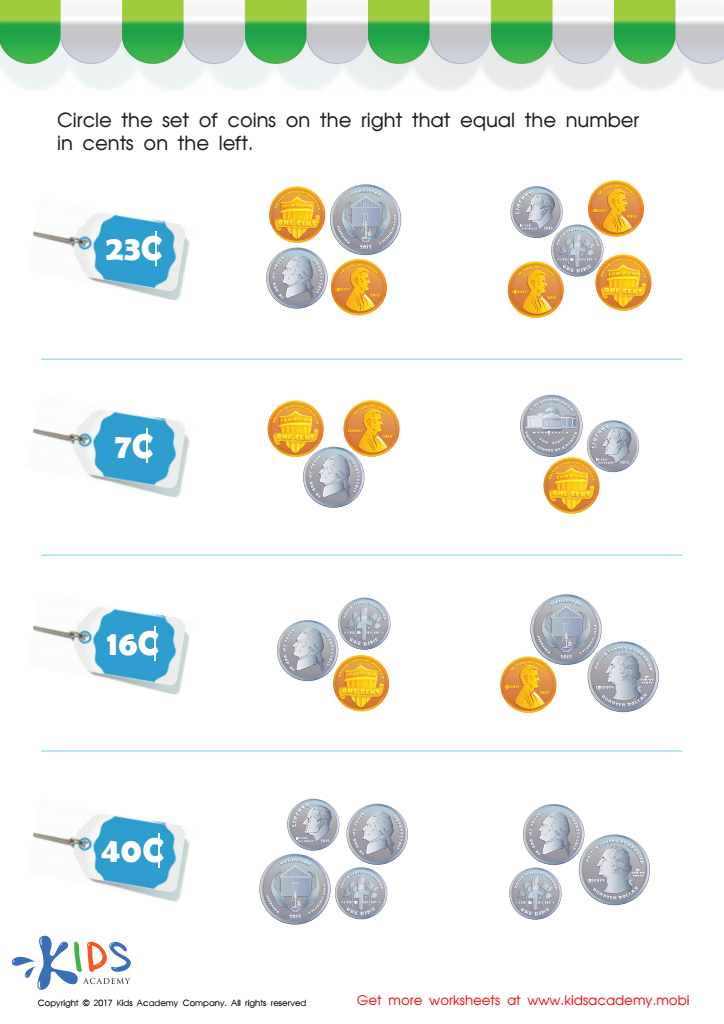
Picking the Coins You Need Money Worksheet
Let's learn to count money with Parents and Kids Academy! Investigate a real shop together: buy a globe, pencils, books, and a school bag using coins. Then, circle the coins you'll need. Visit our website for more free and fun money games for kids!
Picking the Coins You Need Money Worksheet
Worksheet
Join Kids Academy for Free
Who is primarily going to use this learning content?








Financial literacy is an essential life skill that can set the foundation for responsible money management from a young age. Introducing concepts of financial literacy through Extra Challenge Math for Ages 3-4 engages young minds in a playful manner, fostering critical thinking and problem-solving skills. At this age, children are naturally curious, and incorporating math challenges related to money—such as counting coins, recognizing values, and simple transactions—can make learning both fun and relatable.
Parents and teachers should care because early exposure to financial concepts helps children develop a positive mindset towards money management. It prepares them to make informed choices as they grow, leading to better financial habits in adulthood. The skills learned through math challenges not only improve numeracy but also enhance cognitive abilities, encouraging children to explore, question, and analyze.
Moreover, instilling financial literacy at a young age promotes conscientious behavior, cultivating a generation that values saving, budgeting, and goal-setting. By supporting programs focused on financial literacy within math curriculum, adults can empower children to become financially savvy individuals capable of navigating their economic futures successfully. Investing in financial education now means equipping future adults with the tools they need for lifelong financial health.








