Pattern recognition Extra Challenge Math Worksheets for Ages 3-4
5 filtered results
-
From - To
Unlock your child's potential with our Pattern Recognition Extra Challenge Math Worksheets for Ages 3-4. These engaging and thoughtfully designed worksheets provide an extra level of challenge to stimulate young minds and enhance cognitive development. Perfect for young learners ready to advance their pattern recognition skills, our worksheets use vibrant illustrations and a variety of patterns to keep learning fun and interactive. Tailored for preschoolers, this resource not only builds math skills but also improves critical thinking and attention to detail. Discover a world of challenging fun with our expertly crafted pattern recognition worksheets!
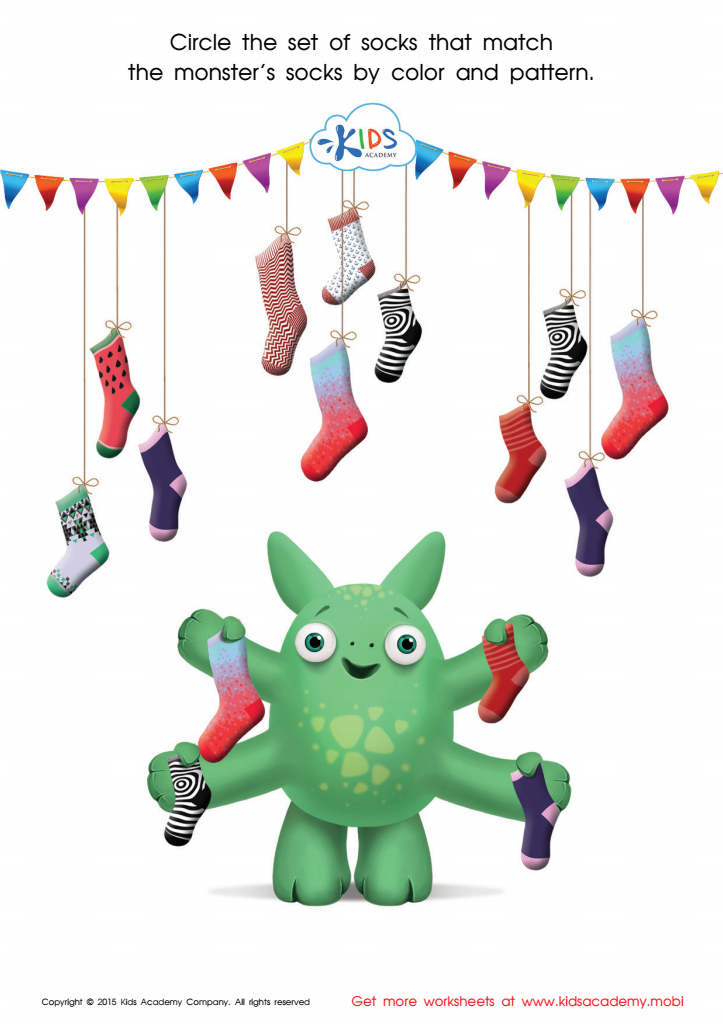
Sort the Monster's Socks Worksheet
 Assign to My Students
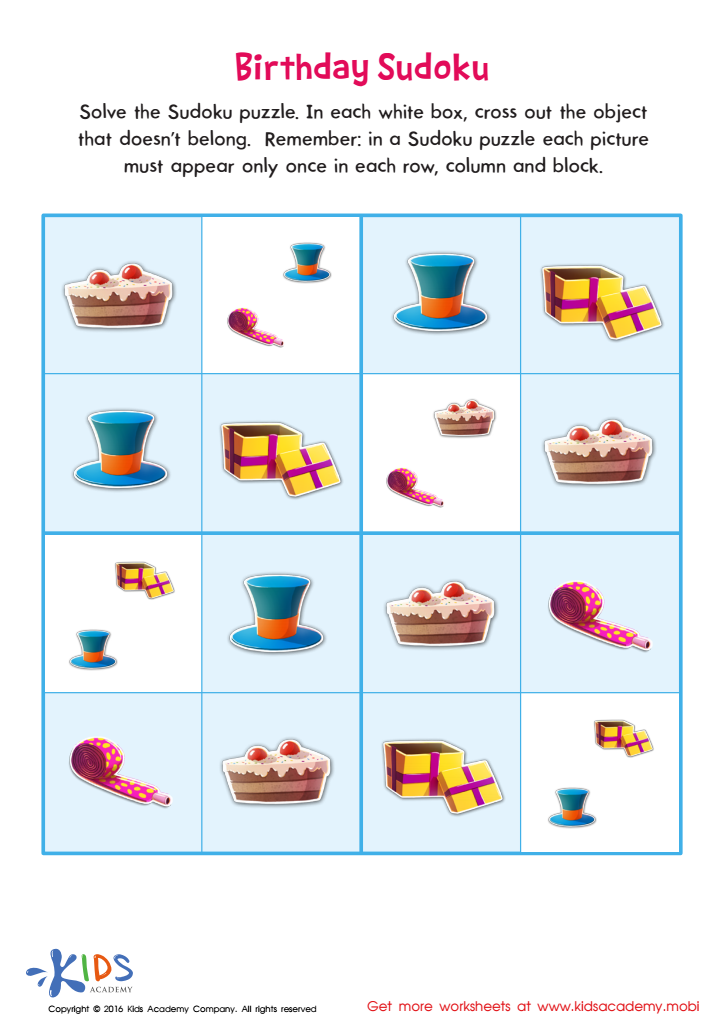
Birthday Sudoku Sorting Worksheet
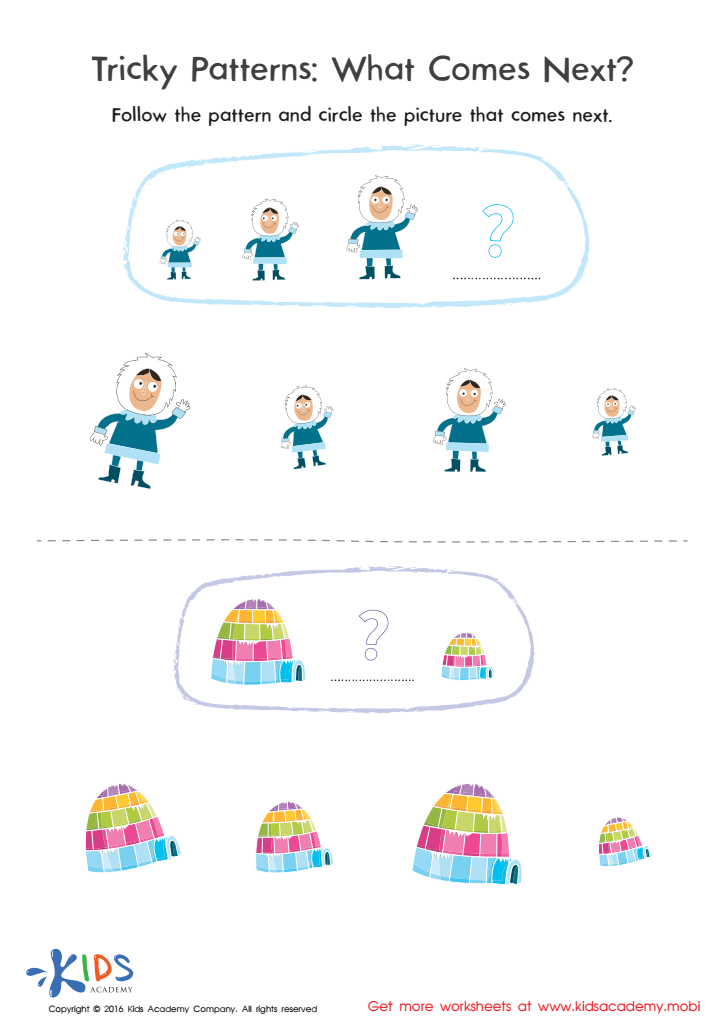
Tricky Patterns Size Worksheet
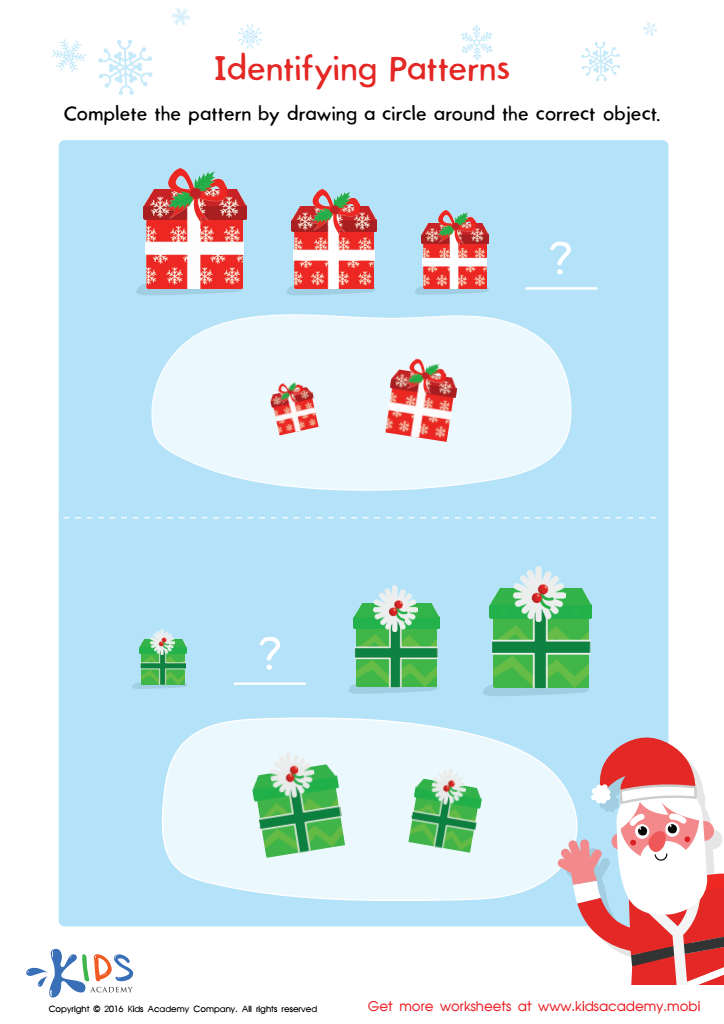
Identifying Patterns Worksheet
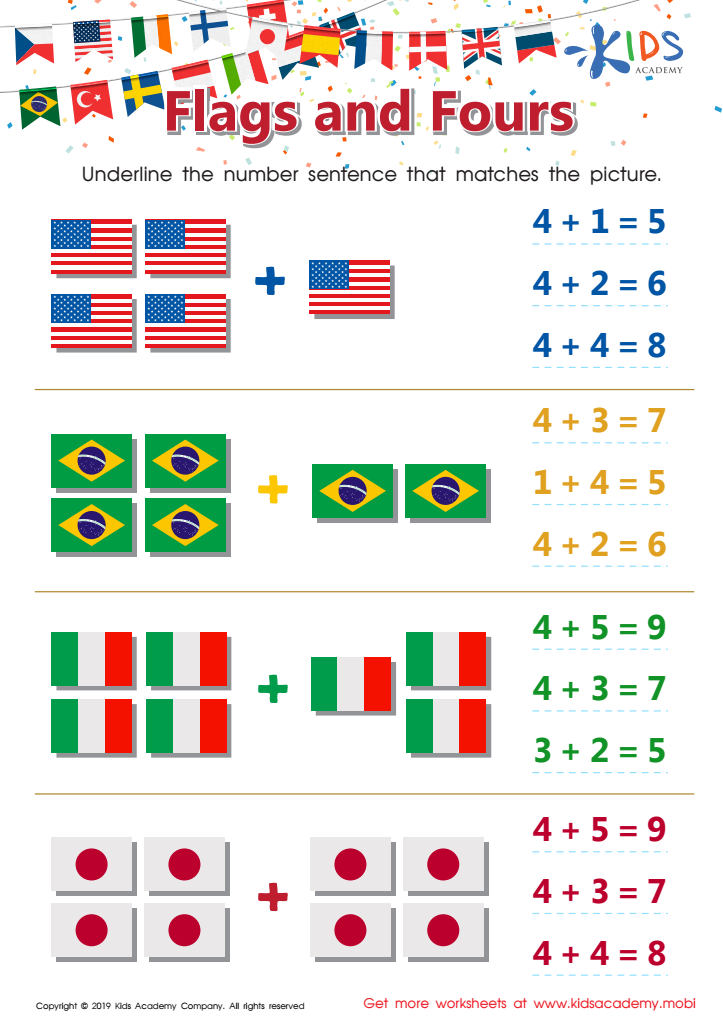
Flags and Fours Worksheet







Pattern recognition is a key foundational skill for young children that significantly impacts their cognitive development and future academic success. Engaging 3- and 4-year-olds in extra challenge math activities around patterns is crucial for several reasons.
Firstly, recognizing patterns helps develop critical thinking and problem-solving skills. When young children identify and predict patterns, they learn to observe relationships and make logical connections, which are essential intellectual skills.
Secondly, early exposure to pattern recognition enhances their early math skills by familiarizing children with sequencing, counting, and the concept of order—all fundamental principles in mathematics. As they identify repeating patterns in activities like sorting shapes or colors, they begin to internalize important mathematical concepts in a fun and engaging way.
Additionally, these activities boost their language skills. Describing and talking about patterns encourage the use of comparative language and vocabulary development, facilitating better communication skills.
Emotionally, successful problem-solving builds self-esteem and confidence in their intellectual abilities. This sense of accomplishment motivates them to tackle more complex tasks, fostering a love for learning.
Ultimately, pattern recognition challenges provide an early academic advantage, nurturing an environment where essential cognitive, language, and social skills develop harmoniously. It lays a strong, versatile foundation for more advanced concepts across various subjects in future educational pursuits.








