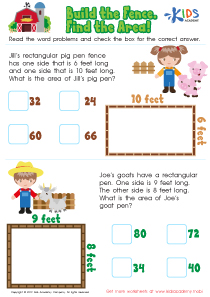
Pattern recognition Extra Challenge Matching Worksheets for Ages 3-4
3 filtered results
-
From - To
Unlock your child's potential with our Pattern Recognition Extra Challenge Matching Worksheets, tailored specifically for ages 3-4. Designed to enhance young learners' cognitive abilities, these worksheets provide engaging activities that promote critical thinking and problem-solving skills. With vibrant graphics and fun themes, children will enjoy identifying and matching patterns, helping them develop essential foundational skills. These worksheets offer an extra challenge to keep curious minds stimulated, making learning enjoyable and effective. Give your preschooler a head start in math and logical reasoning with our expertly crafted pattern recognition exercises. Explore now and watch your child’s confidence soar!
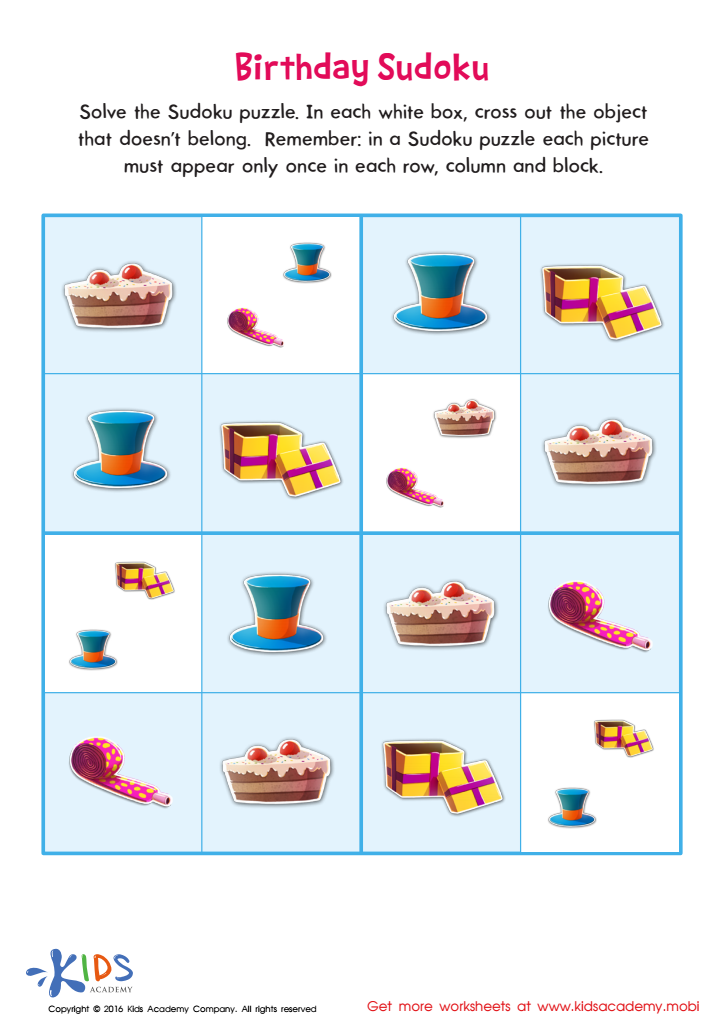
Birthday Sudoku Sorting Worksheet
 Assign to My Students
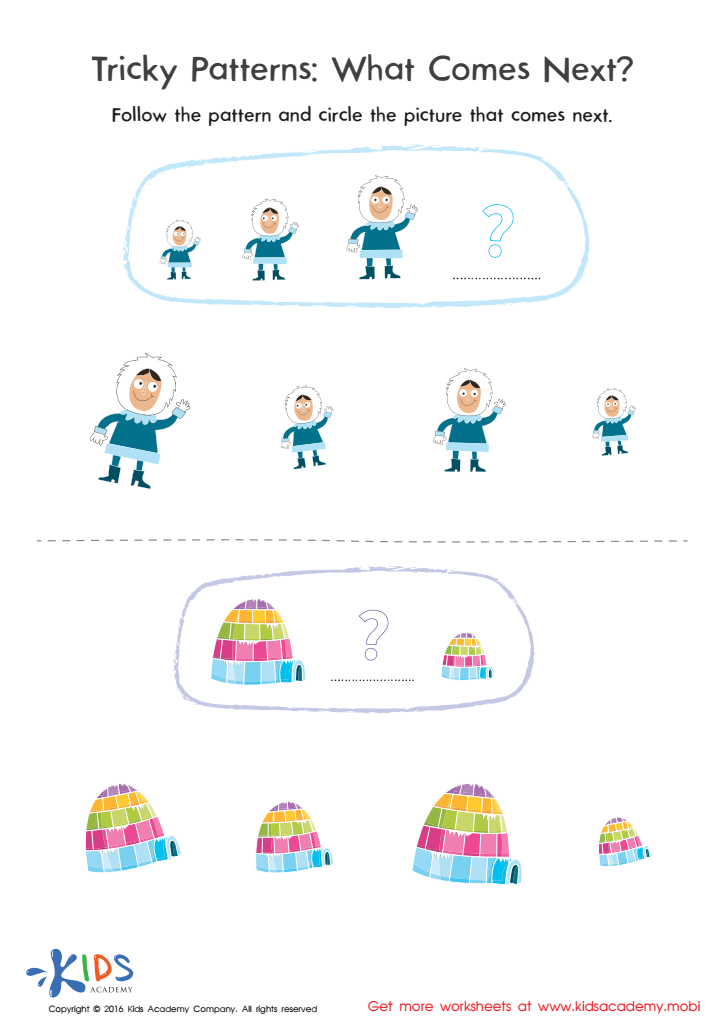
Tricky Patterns Size Worksheet
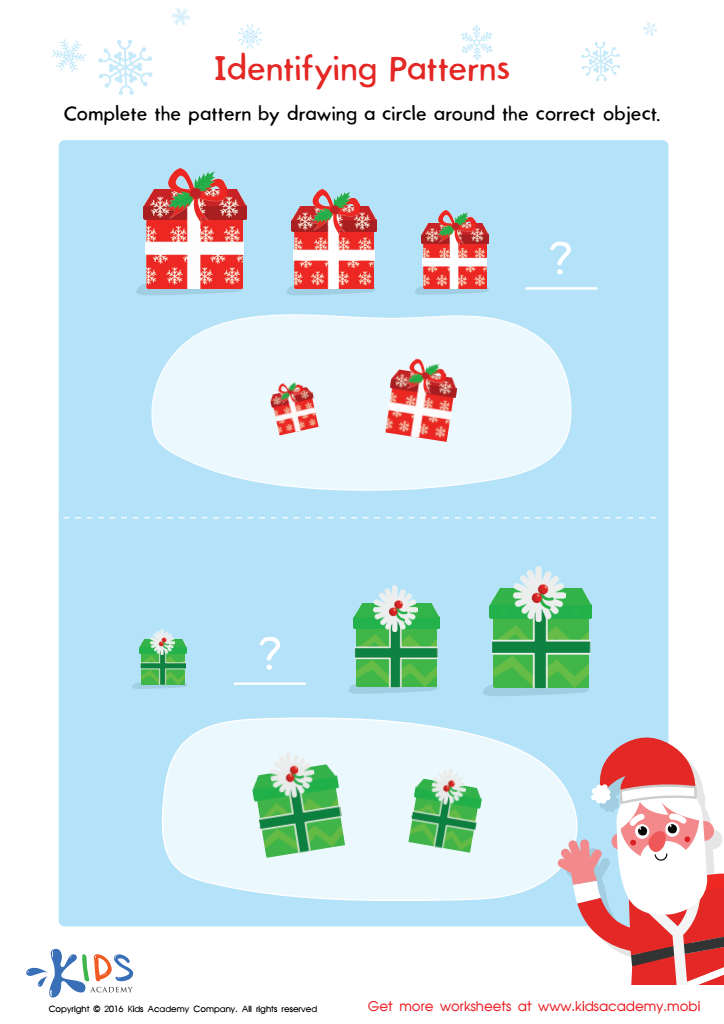
Identifying Patterns Worksheet








Pattern recognition extra challenges for children aged 3-4 are crucial for their cognitive development and futuristic learning successes. During these formative years, developing pattern recognition skills lay the groundwork for essential academic and problem-solving abilities. Recognizing and predicting patterns enhance a child's memory, sequencing skills, and logical thinking, forming a solid foundation for mathematics, reading, and science in later years.
For parents and teachers, these activities are more than simple games; they represent significant educational tools. Participation in pattern recognition exercises enables young learners to identify relationships and make connections within the world around them, fostering curiosity and a love for learning. When parents and teachers actively engage in these exercises with children, it creates invaluable bonding moments that also encourage cooperative learning behavior.
Furthermore, early involvement in such activities nurtures attention to detail and improves concentration and fine motor skills, crucial for writing, drawing, and daily tasks. Patterns often incorporate repeating sounds or visuals, boosting both the auditory and visual processing skills necessary for effective communication.
Thus, integrating pattern recognition extra challenges into early learning facilitates comprehensive development, helping children to thrive in their intellectual, emotional, and social aspects, effectively setting the stage for academic success and confident life-long learners.