Alphabet Recognition Extra Challenge ABC Order Worksheets for Ages 3-5
3 filtered results
-
From - To
Enhance your child's alphabet recognition skills with our "Alphabet Recognition Extra Challenge ABC Order Worksheets" designed for ages 3-5! These engaging worksheets are tailored to make learning fun while increasing their familiarity with letter order. Each activity promotes fine motor skills and letter recognition, helping little learners gain confidence in their abilities. With colorful illustrations and interactive exercises, these worksheets invite kids to explore the alphabet in a captivating way. Perfect for both classroom use and at-home learning, these worksheets provide an excellent resource for developing early literacy skills. Start your child’s alphabet journey today and watch them thrive!
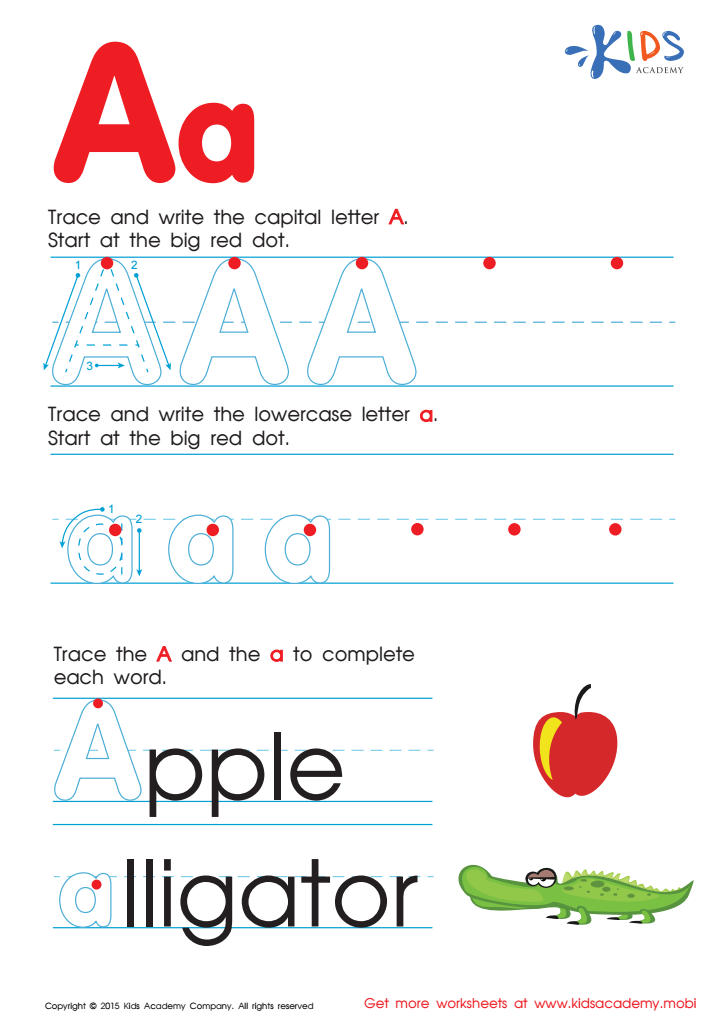
Letter A Tracing Page
 Assign to My Students



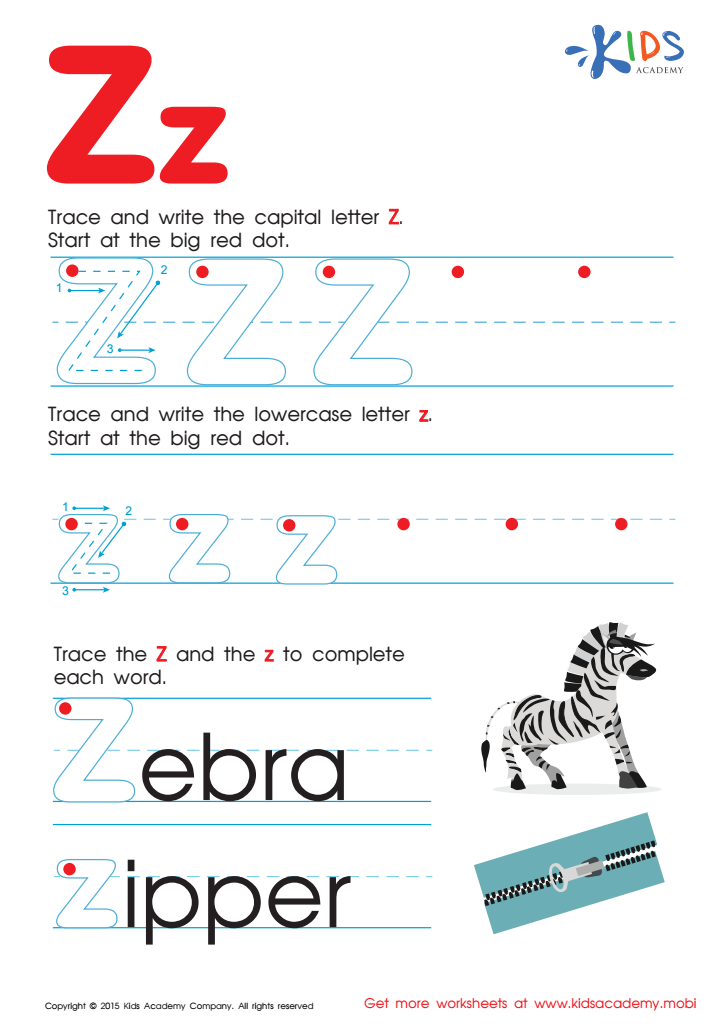
Letter Z Tracing Page
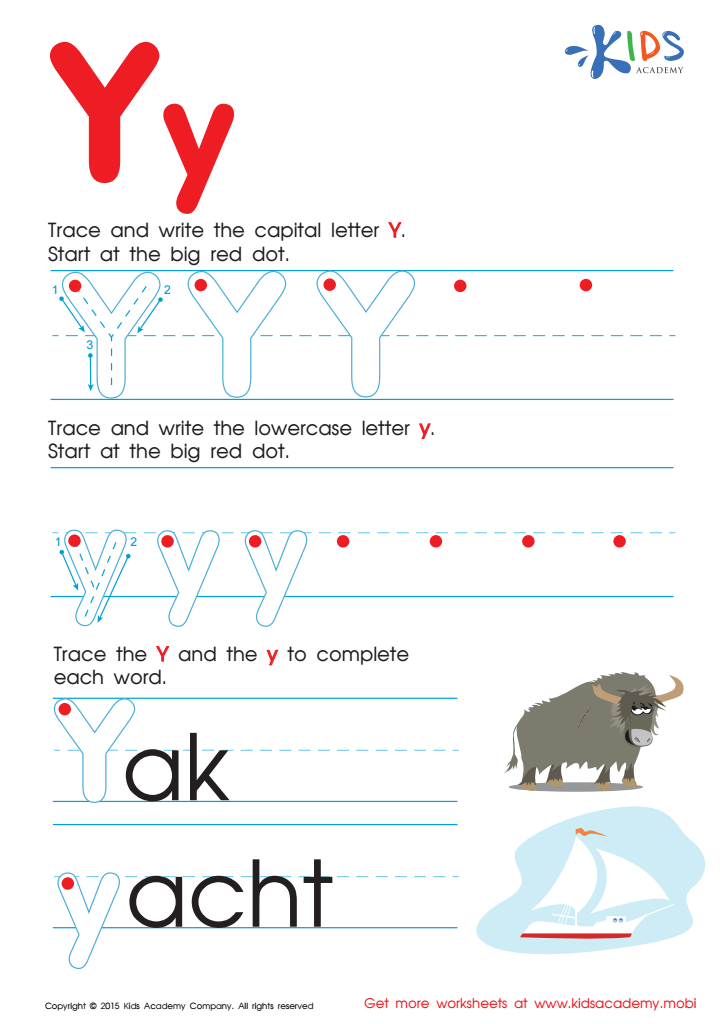
Letter Y Tracing Page







Alphabet Recognition Extra Challenge ABC Order is a vital activity for parents and teachers working with children aged 3-5 because it lays the groundwork for literacy skills essential for future academic success. Recognizing letters and their correct order is fundamental to reading and writing development. By engaging young learners in playing with the alphabet through fun and interactive activities, educators can promote cognitive development, enhance memory, and improve children’s overall language skills.
The extra challenge component encourages deeper engagement, stimulating critical thinking as children learn to identify and sequence letters correctly. This is crucial in fostering a strong sense of alphabet awareness, leading to improved reading fluency and vocabulary development down the line.
Moreover, involving parents in these activities helps strengthen the home-school connection. It creates opportunities for meaningful learning experiences outside of the classroom, fostering a love for literacy and creating a lifelong learning attitude. Involvement in such interactive challenges nurtures self-confidence and boosts motivation in children, making learning an enjoyable pursuit. In short, Alphabet Recognition Extra Challenge ABC Order serves as a fun yet impactful tool for cultivating essential pre-reading skills, fostering communication, and igniting the imagination of young learners.








