Math problem-solving Extra Challenge Worksheets for Ages 3-5
3 filtered results
-
From - To
Unleash your child's mathematical potential with our engaging and fun Math Problem-Solving Extra Challenge Worksheets for Ages 3-5. Designed to promote critical thinking and problem-solving skills, these carefully crafted worksheets blend playful illustrations with challenging math concepts perfect for young learners. Each worksheet is aligned with early childhood math standards to ensure a solid foundation in numeracy. Your kids will enjoy solving puzzles, recognizing patterns, and mastering basic addition and subtraction. Make learning math exciting and productive by downloading these free resourceful worksheets, perfect for both parents and educators aiming to inspire a love for math from an early age.
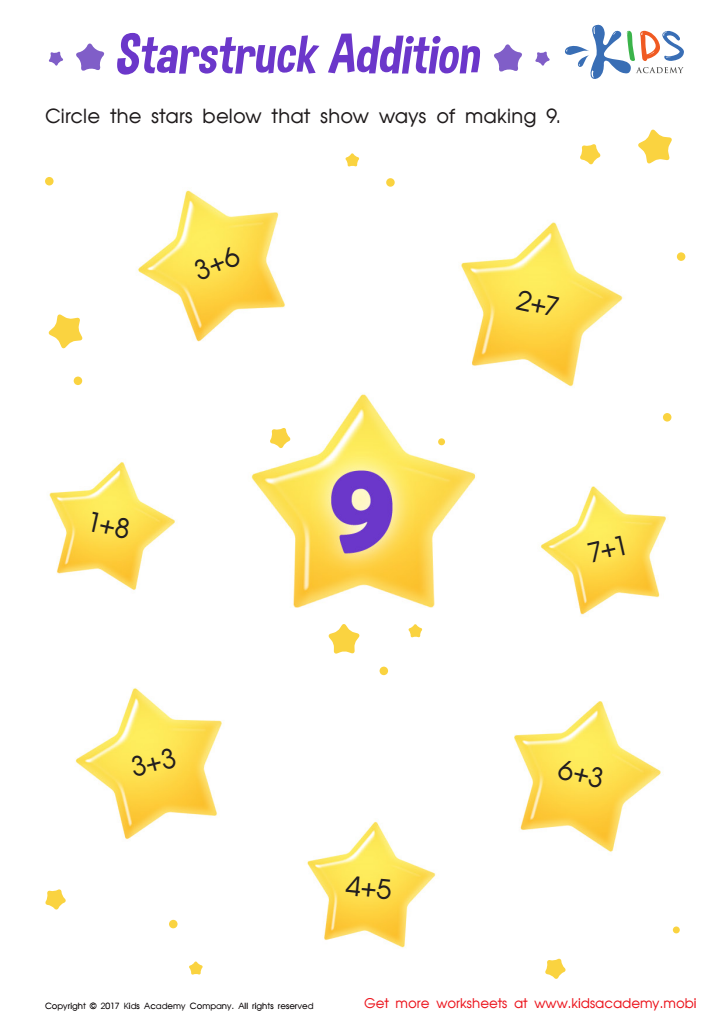
Starstruck Addition Printable
 Assign to My Students
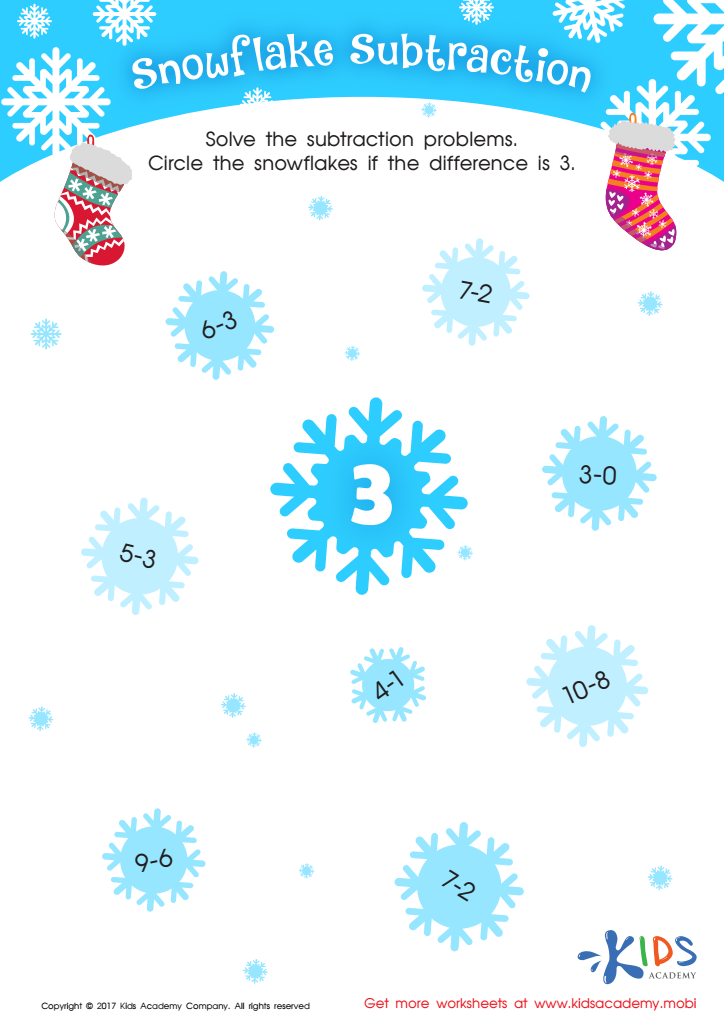
Snowflake Subtraction Worksheet
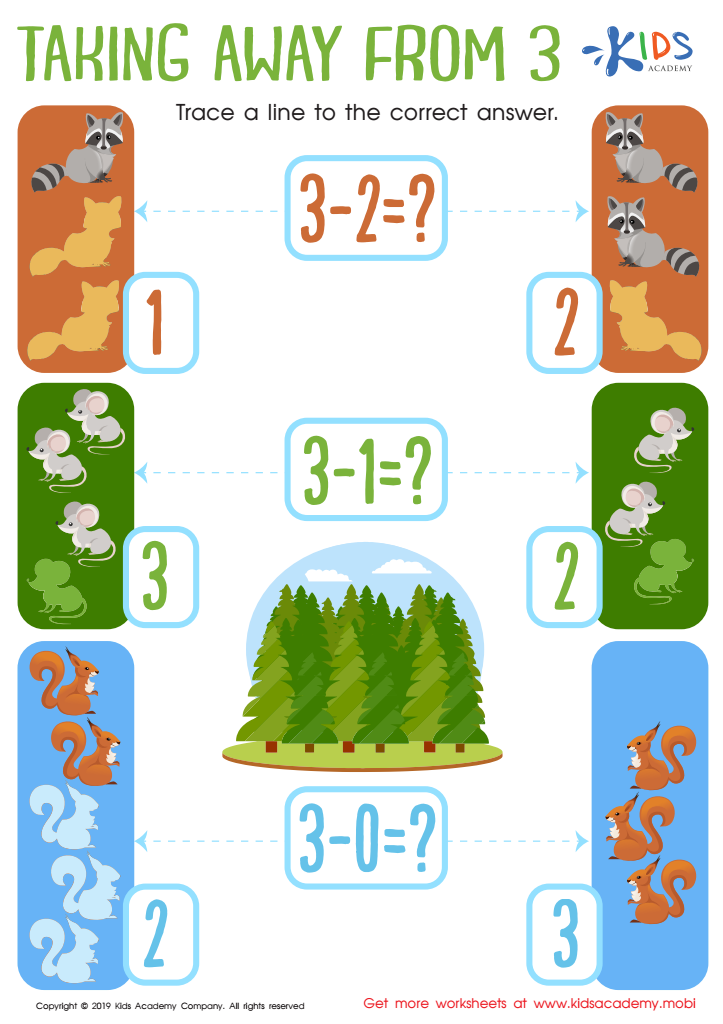
Taking Away From 3 Worksheet






.jpg)

Introducing math problem-solving Extra Challenges to children aged 3-5 is crucial for their cognitive and academic development. At this formative stage, young brains are highly receptive to learning, and engaging them in math activities helps to develop critical thinking and problem-solving skills early on. These challenges lay the foundation for a positive attitude towards mathematics, promoting curiosity and perseverance in tackling problems.
Math problem-solving is not just about numbers; it enhances logical reasoning and helps children understand and interact with the world around them. It improves their ability to think in sequence, recognize patterns, and make connections, which are essential skills across all areas of learning. Moreover, grasping basic concepts like counting, addition, and shapes builds confidence and competence, reducing anxiety related to math in later years.
For parents and teachers, fostering this love and understanding of math through extra challenges translates to long-term academic benefits. It provides children with a head start, ensuring they are not merely memorizing facts but are able to apply reasoning to different contexts. Further, these activities often involve interactive and playful components, making learning enjoyable and fostering a lifelong love of learning. In summary, math challenges for young children set the stage for future academic success and personal growth.








