Story sequencing Extra Challenge Worksheets for Ages 3-5
3 filtered results
-
From - To
Unlock your child's creativity and critical thinking with our Story Sequencing Extra Challenge Worksheets for Ages 3-5! Designed to enhance narrative skills, these engaging worksheets encourage young learners to arrange story elements in the correct order, fostering comprehension and imaginative reasoning. Each worksheet features vibrant illustrations and age-appropriate prompts, making learning fun and interactive. Ideal for preschoolers, the activities provide a perfect balance of simplicity and challenge, helping children grasp story structure while developing fine motor skills. Let your little ones embark on a storytelling adventure that nurtures their love for reading and boosts their cognitive development. Get started today!
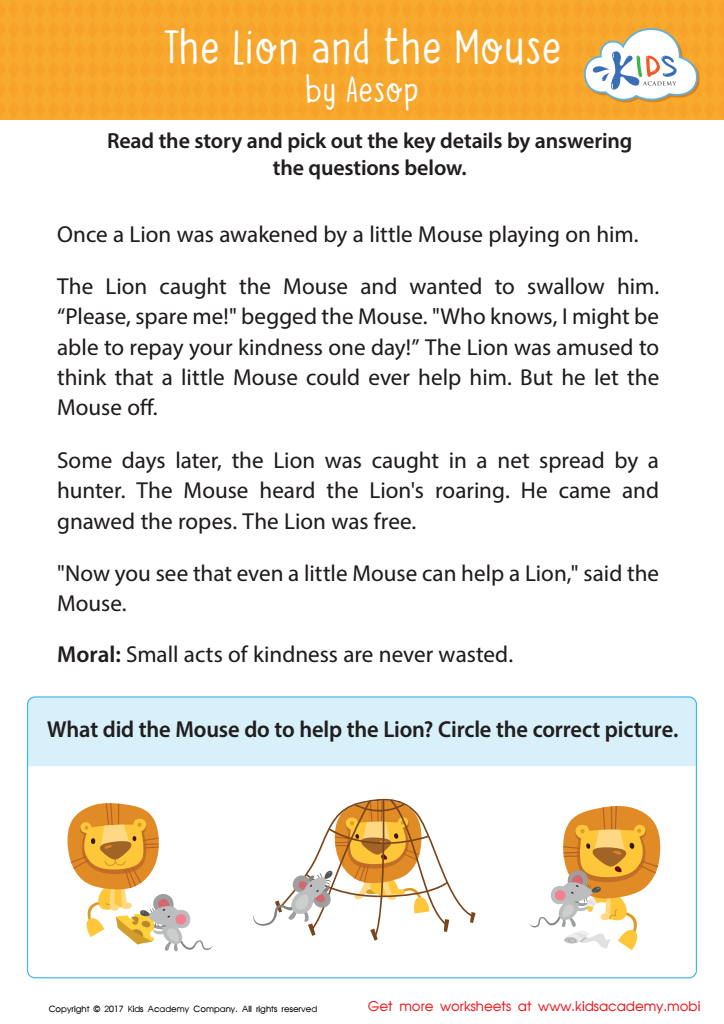
The Lion and The Mouse Sequencing Worksheet
 Assign to My Students
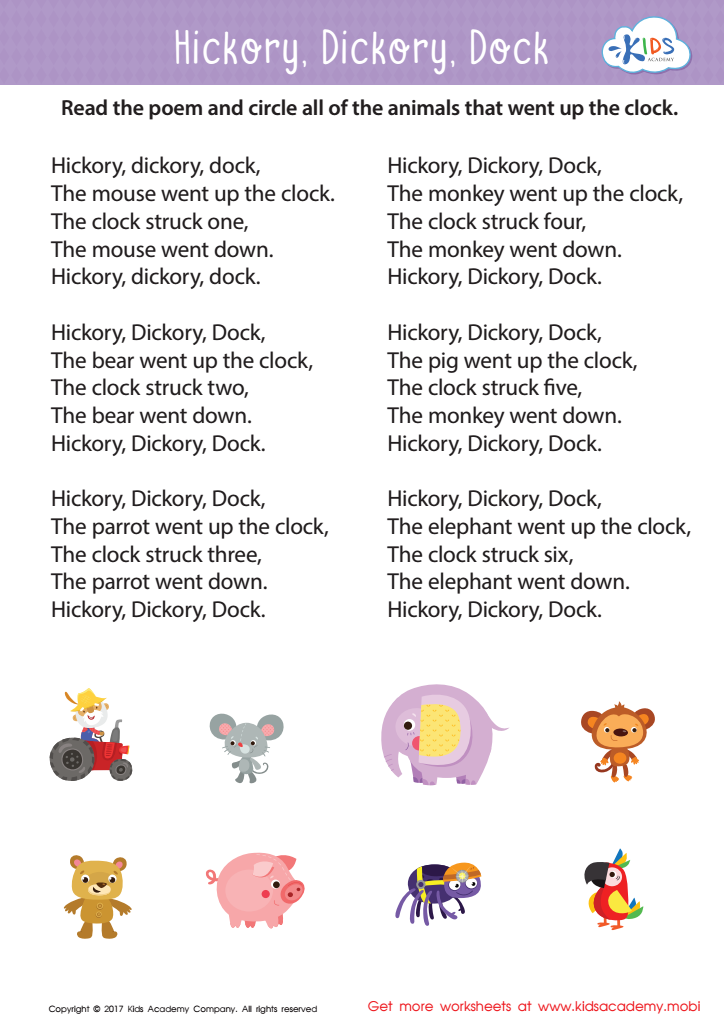
Hickory Dickory Dock Sequencing Worksheet
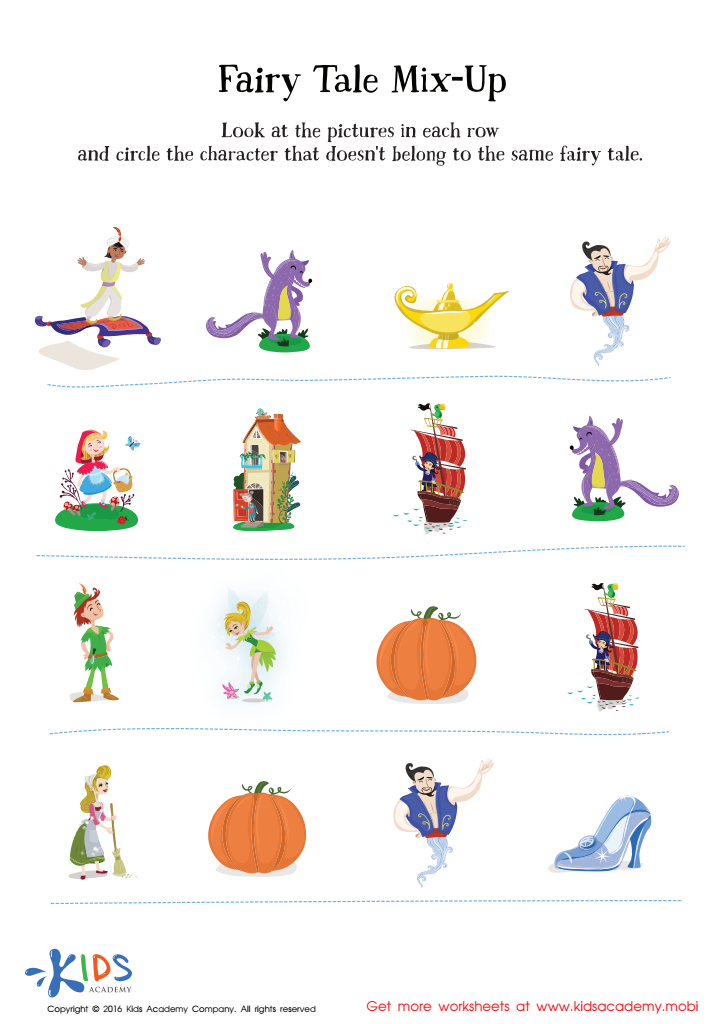
Fairy Tale Worksheet: Story Mix Up



.jpg)




Story sequencing is an essential skill for young children, particularly those aged 3-5, as it lays the foundation for narrative understanding and critical thinking. Parents and teachers should care about incorporating story sequencing activities into early education for several reasons.
Firstly, story sequencing enhances cognitive development by encouraging children to organize events logically, fostering their ability to comprehend and create narratives. This skill boosts their language proficiency, helping them articulate thoughts more clearly.
Secondly, engaging with story sequencing helps develop a child’s memory and attention span. As they recount and order events from a story, they practice recalling details—a crucial aspect of effective learning.
Moreover, story sequencing fosters creativity and imagination. Children learn to envision and predict outcomes, which sparks curiosity and encourages them to think beyond the text.
Lastly, it cultivates social-emotional skills, as discussing stories promotes empathy and understanding of different perspectives and experiences.
In summary, prioritizing story sequencing offers a multifaceted approach to early learning, fostering essential literacy skills, cognitive growth, creativity, and emotional intelligence. By integrating these activities at home or in the classroom, adults can significantly enhance the developmental journey of young learners.








