Math problem-solving Extra Challenge Math Worksheets for Ages 3-5
3 filtered results
-
From - To
Discover our "Extra Challenge Math Worksheets" for ages 3-5, designed to boost early problem-solving skills in a fun and engaging way. These thoughtfully crafted worksheets feature colorful illustrations and age-appropriate challenges that encourage critical thinking and foster a love for math. Ideal for preschoolers, the activities promote counting, pattern recognition, comparison, and basic addition and subtraction concepts. Our worksheets not only make learning math enjoyable but also help develop essential cognitive skills. Empower your little learners with these extra challenges and watch them gain confidence as they tackle math problems with enthusiasm! Perfect for home or classroom use!
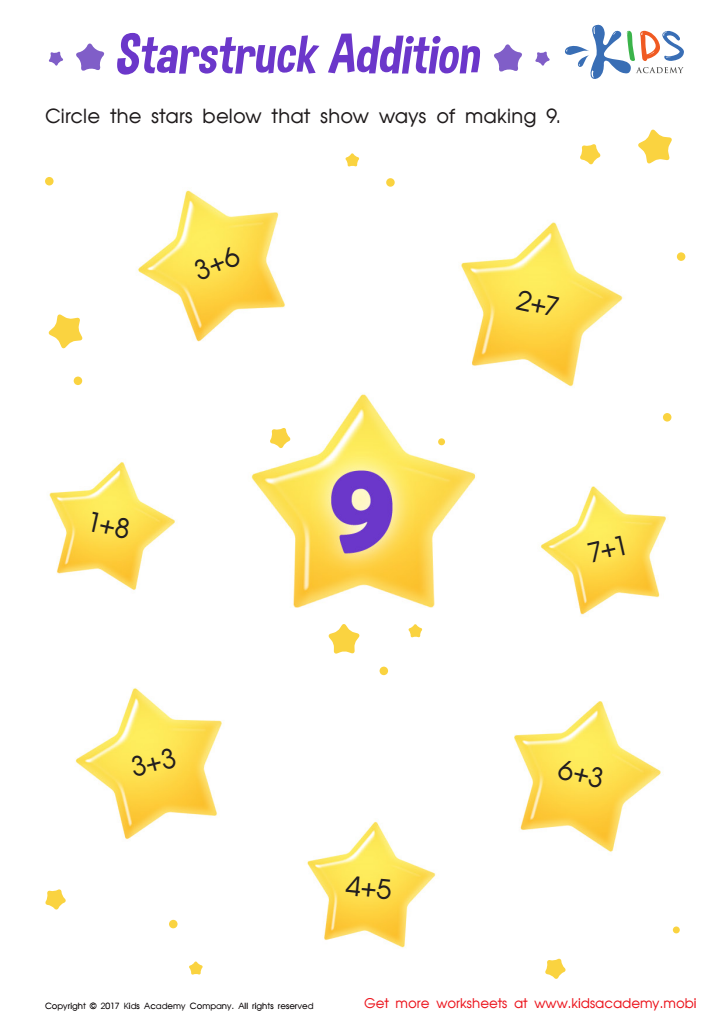
Starstruck Addition Printable
 Assign to My Students
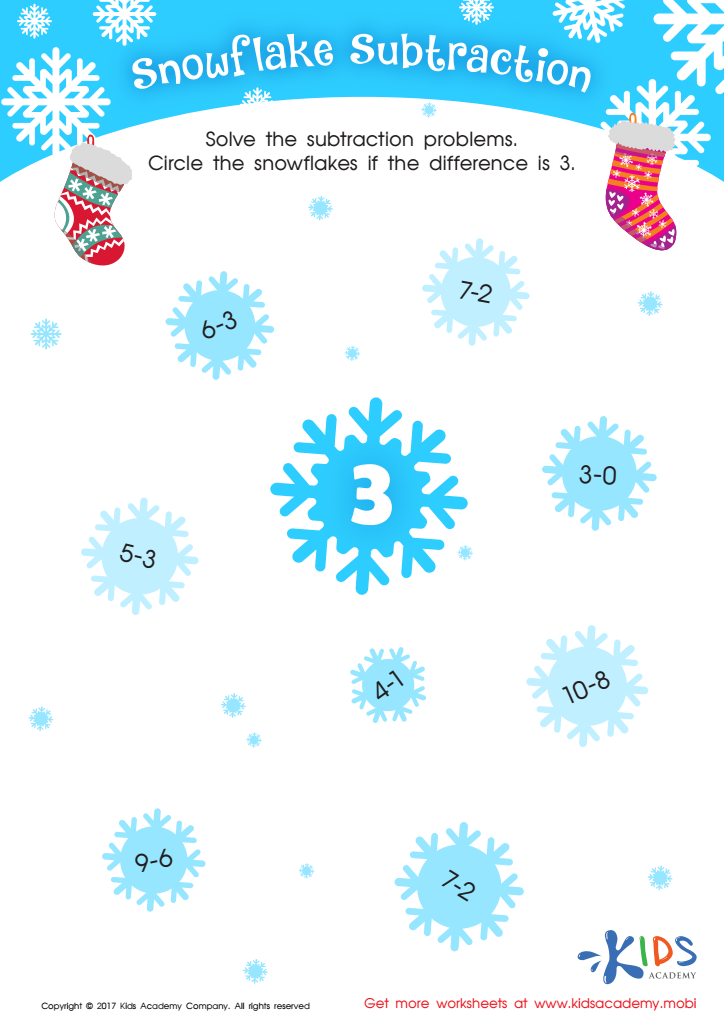
Snowflake Subtraction Worksheet
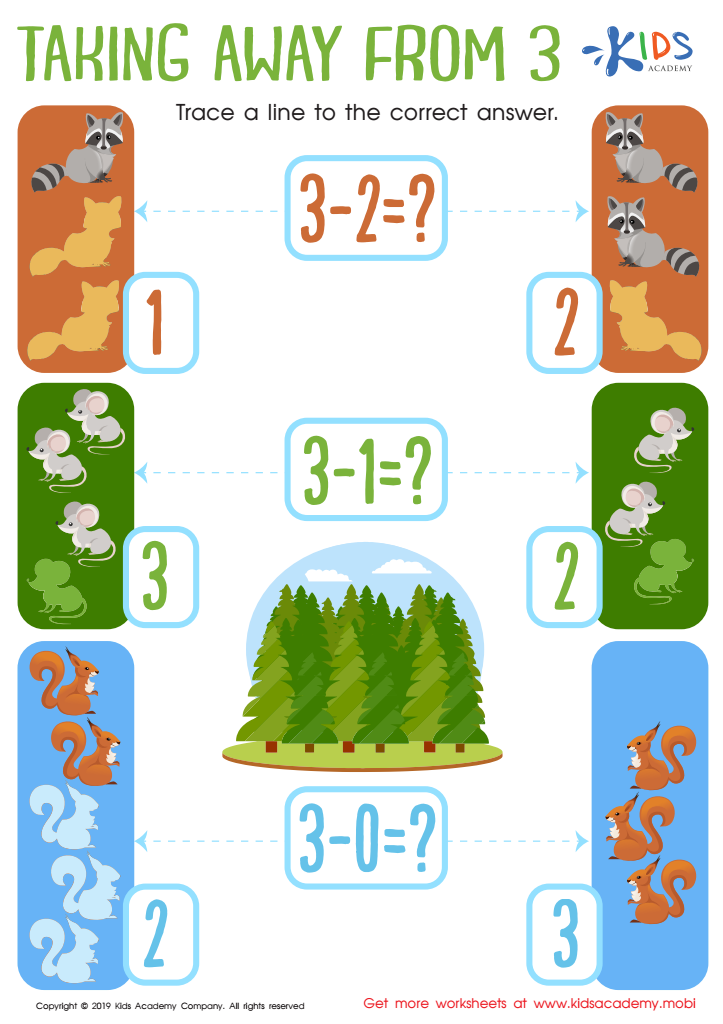
Taking Away From 3 Worksheet








Parents and teachers should care about Math problem-solving Extra Challenge Math for Ages 3-5 because it lays the foundational skills necessary for future academic success. At this young age, children are naturally curious and eager to explore concepts through play and hands-on activities. Engaging them in early math problem-solving fosters critical thinking, enhances cognitive development, and builds a positive attitude toward learning.
The skills learned during these formative years, such as pattern recognition, spatial awareness, and basic arithmetic, are essential for more advanced mathematical concepts. Furthermore, early exposure to problem-solving encourages perseverance and adaptability, as children learn to approach challenges creatively and collaboratively.
In addition, developing strong mathematical skills contributes to better performance in subjects across the curriculum, improving overall educational outcomes. Parents and teachers create a supportive learning environment by providing Extra Challenge Math activities, promoting a love for mathematics while boosting confidence in young learners.
Lastly, instilling a strong mathematical foundation not only prepares children for academic success but also equips them with valuable life skills. Ultimately, fostering early math problem-solving enriches children's learning experiences and sets them up for a bright future.