Shape identification Extra Challenge Math Worksheets for Ages 3-5
3 filtered results
Difficulty Level
Grade
Age
-
From - To
Subject
Activity
Standards
Introduce an exciting way to boost shape recognition skills with our "Shape Identification Extra Challenge Math Worksheets for Ages 3-5." Perfect for preschoolers and kindergarteners, these worksheets take learning to the next level by offering fun and engaging activities that develop critical thinking and fine motor skills. Kids will love identifying and working with various shapes through interactive exercises designed to challenge their minds. Our expertly crafted worksheets support early math skills while making learning enjoyable. Enhance your child’s educational journey and prepare them for future math success with our comprehensive shape identification challenges. Explore today!
Favorites
With answer key
Interactive
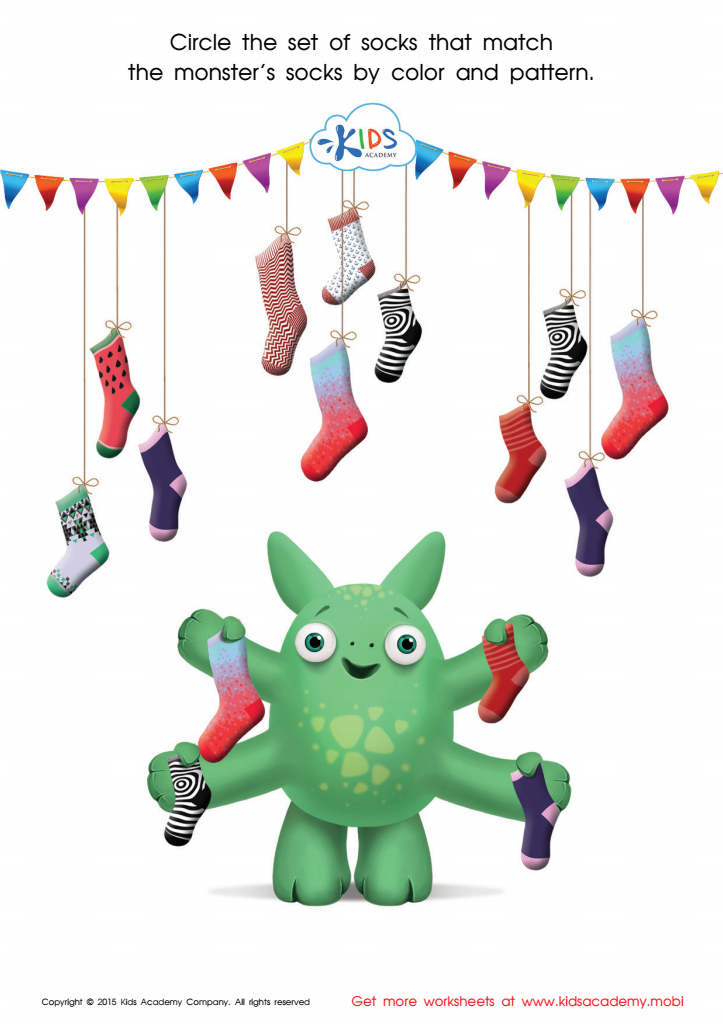
Sort the Monster's Socks Worksheet
Let your little one challenge herself and practice with matching Monster socks. She must be very attentive to match the same socks and draw a line connecting them!
 Assign to My Students
Sort the Monster's Socks Worksheet
Worksheet
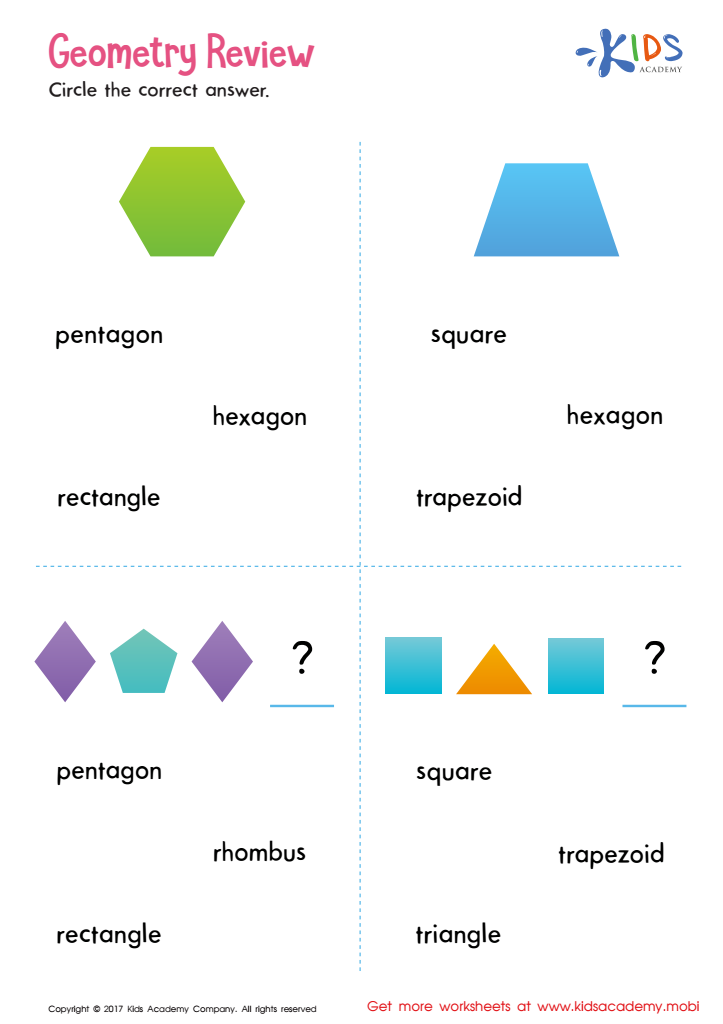
Geometry Review Printable
Repetition is key to success; give your child the practice they need with this geometry worksheet.
Geometry Review Printable
Worksheet
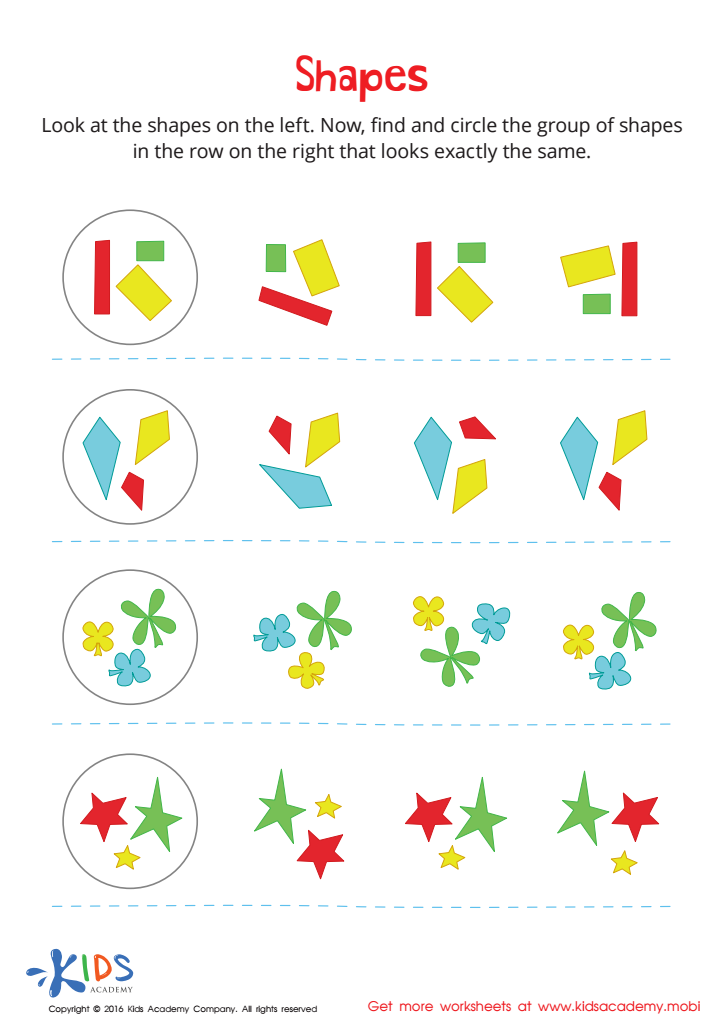
Shapes Worksheet
This fun worksheet will challenge your child to recognize tricky patterns, sort through similar ones, and create strategies to get the right answer. It'll also help them to strengthen problem-solving skills and build confidence. With more challenging tasks, your child will be ready to tackle higher level math and sequencing skills.
Shapes Worksheet
Worksheet
Join Kids Academy for Free
Who is primarily going to use this learning content?




Shape identification Extra Challenge Math for ages 3-5 is crucial in early childhood education for several important reasons. Firstly, it lays the foundational skills for understanding geometry, which is an essential aspect of math education. Recognizing and differentiating shapes help young children develop their spatial awareness, a critical factor for problem-solving and logical thinking.
Moreover, engaging children in shape identification tasks enhances their cognitive development. It promotes pattern recognition and categorization skills, which are vital for many academic subjects beyond math, including reading and science. Handling different shapes also hones fine motor skills as children trace, draw, and manipulate shapes.
In addition to cognitive benefits, there’s significant linguistic development. Learning shape names and attributes enriches a child’s vocabulary and language comprehension. Describing shapes with terms like "sides" and "corners" helps them articulate observations and enhances their communication and comparative skills.
Socially and emotionally, shape identification exercises foster patience, attention to detail, and perseverance, since children must focus and sometimes troubleshoot when identifying complex or unfamiliar shapes. For parents and teachers, integrating shape identification Extra Challenge Math in activities ensures holistic early childhood development, sets the stage for academic success, and nurtures a lifelong love of learning.