Logical Reasoning Extra Challenge Matching Worksheets for Ages 3-5
3 filtered results
Difficulty Level
Grade
Age
-
From - To
Subject
Activity
Standards
Explore our "Logical Reasoning Extra Challenge Matching Worksheets for Ages 3-5" designed to nurture young minds with engaging activities. These great worksheets encourage critical thinking, enhance problem-solving skills, and provide a solid foundation in logical reasoning for your preschooler. On Kids Academy, our expertly crafted printable materials offer age-appropriate puzzles and matching exercises that captivate children's attention while making learning fun. Whether you’re a parent or teacher, these challenge activities are perfect for boosting cognitive development and preparing little learners for future academic success. Elevate learning time and watch your child's confidence soar with every completed worksheet.
Favorites
With answer key
Interactive
 Assign to My Students
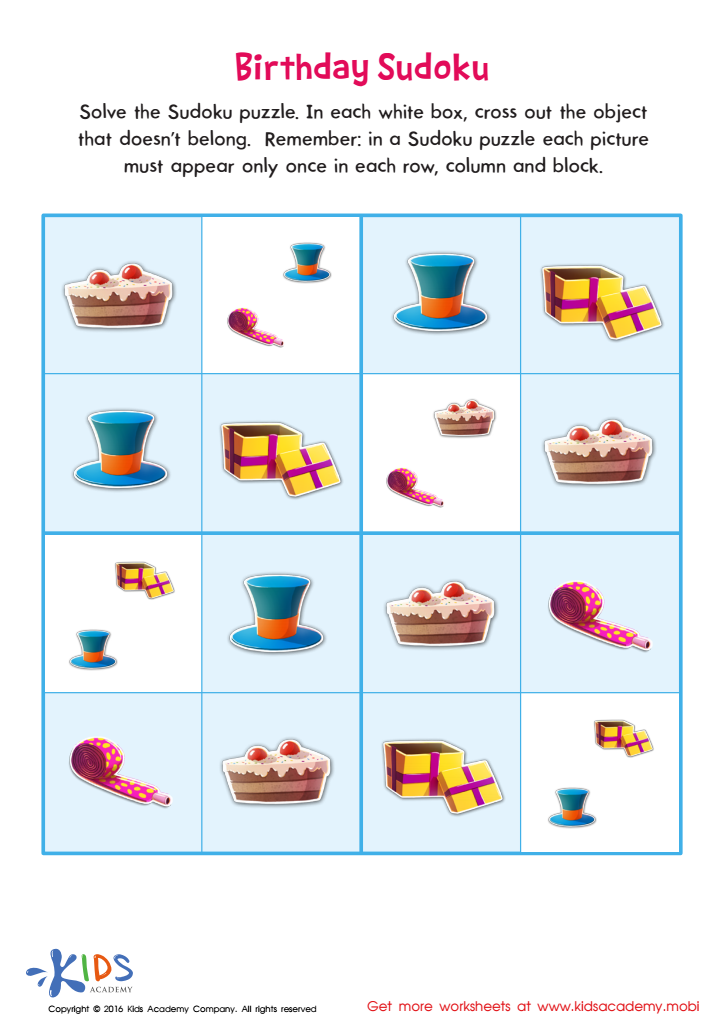
Birthday Sudoku Sorting Worksheet
With this Sudoku printable, your child will have fun and strengthen their problem-solving skills.
Birthday Sudoku Sorting Worksheet
Worksheet
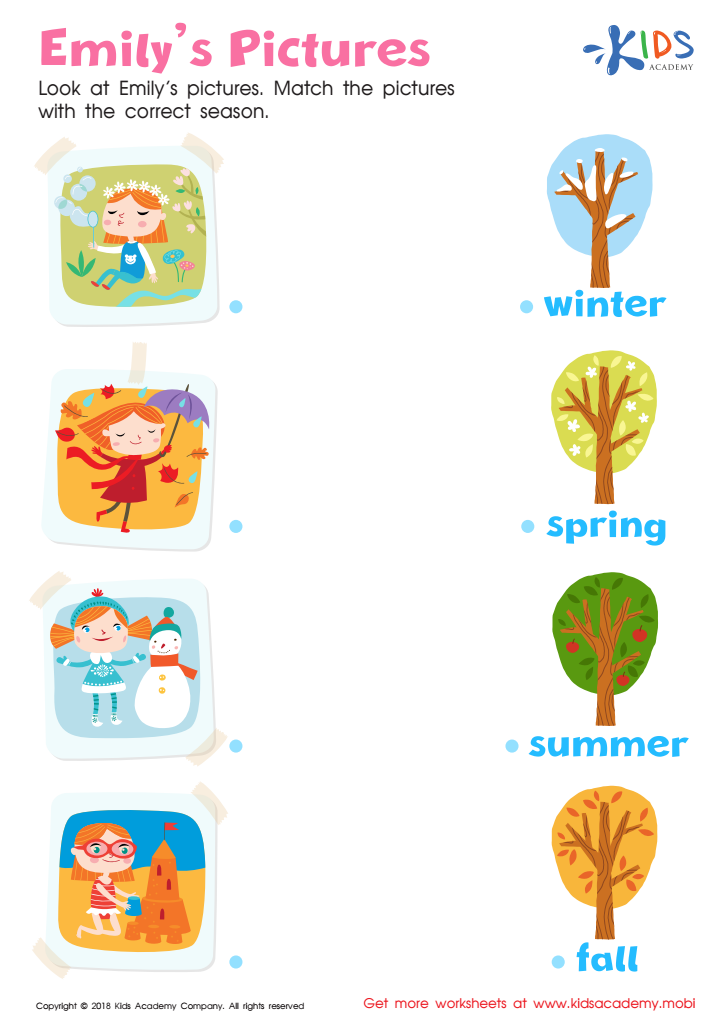
Emily's Pictures Worksheet
Look at the pictures of Emily on the left. Ask your child what she's doing in each one. Then, match the activities to the seasons on the right. Help your kids identify the correct season for each activity. Shorten to 80 words: Look at the pictures of Emily on the left. Ask your child what she's doing in each one, then match the activities to the seasons on the right. Help your kids find the correct season for each activity.
Emily's Pictures Worksheet
Worksheet
Join Kids Academy for Free
Who is primarily going to use this learning content?








Logical reasoning is a fundamental building block of cognitive development. Engaging children ages 3-5 in extra challenge matching activities can significantly boost their early cognitive skills and prepare them for more complex reasoning tasks later in life.
Matching activities can enhance a child’s visual and spatial awareness by requiring them to observe, compare, and relate different objects or shapes. This observational skill is crucial for tasks in mathematics and reading, where distinguishing differences and similarities forms the basis of learning. Moreover, logical reasoning helps young children develop problem-solving skills—when they try to find pairs or sets of objects that match, they are exercising their ability to think critically about relationships and sequences.
Beyond academics, these activities also nurture patience and attention to detail, promoting persistence when solutions are not immediately obvious. The socio-emotional aspect is equally significant; working on these challenges in a group setting can foster collaborative learning and improve communication skills.
Thus, incorporating logical reasoning matching activities can provide a fun, engaging way for children to develop important cognitive, social, and emotional skills. As parents or teachers, prioritizing this kind of early education lays a strong foundation, making transitions to later stages of education smoother and more effective.