Basic counting skills Extra Challenge Worksheets for Ages 3-6
4 filtered results
-
From - To
Enhance your child's counting abilities with our "Basic Counting Skills Extra Challenge Worksheets" designed specifically for ages 3-6. These engaging and interactive worksheets provide a fun way for young learners to practice essential counting concepts through exciting activities. The challenges are tailored to enhance number recognition, one-to-one correspondence, and basic arithmetic skills in a playful manner. Ideal for parents and educators, these worksheets foster a love for numbers while promoting cognitive development. Access a variety of colorful and stimulating exercises that cater to different learning styles, ensuring that your little ones are well-prepared for their mathematical journey ahead!
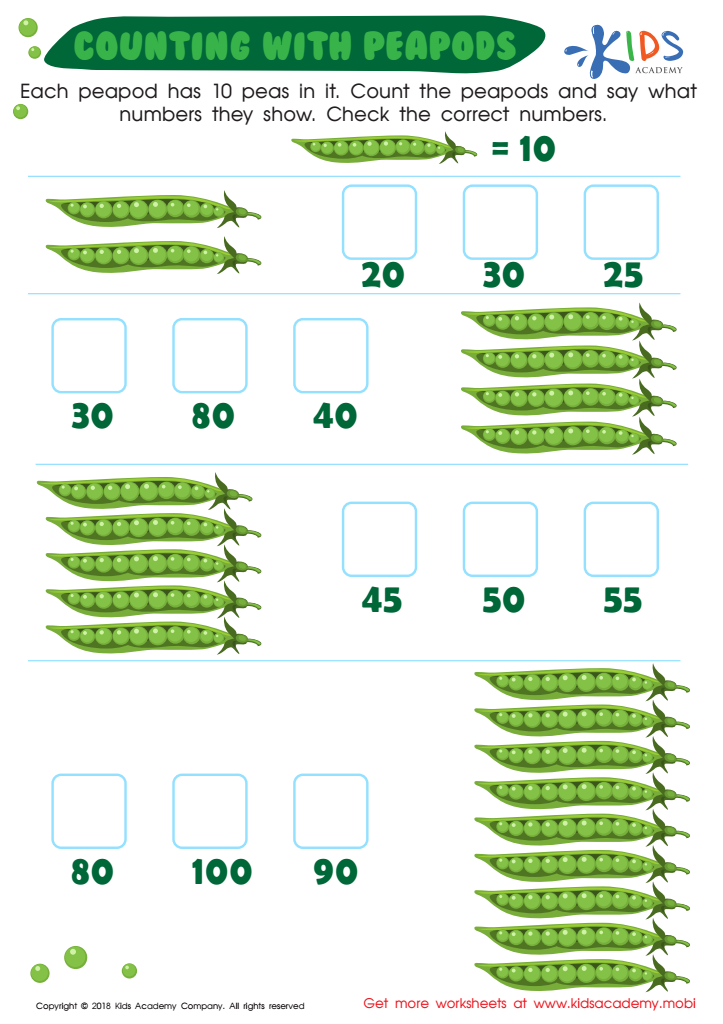
Number Worksheet: Counting With Peapods
 Assign to My Students
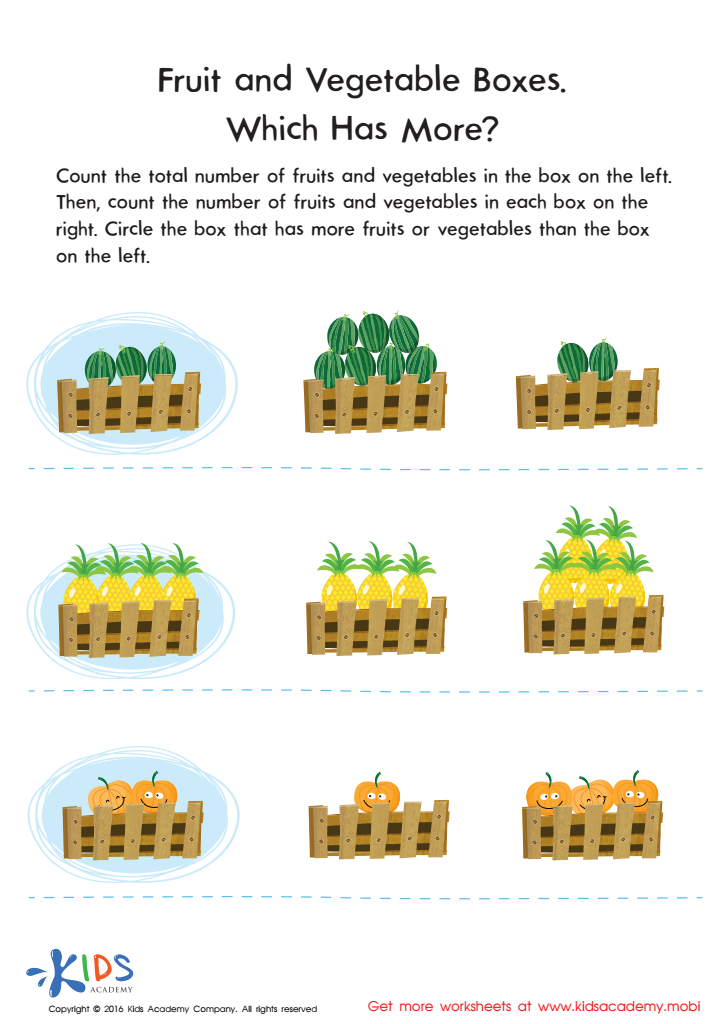
Which Has More? Size Worksheet
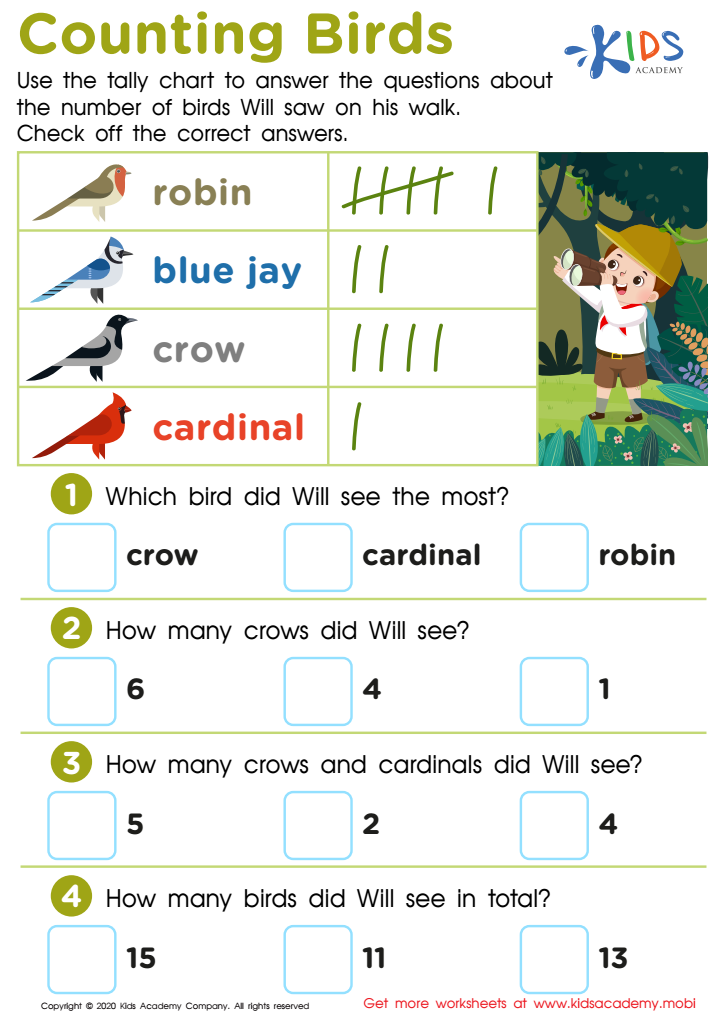
Counting Birds Worksheet
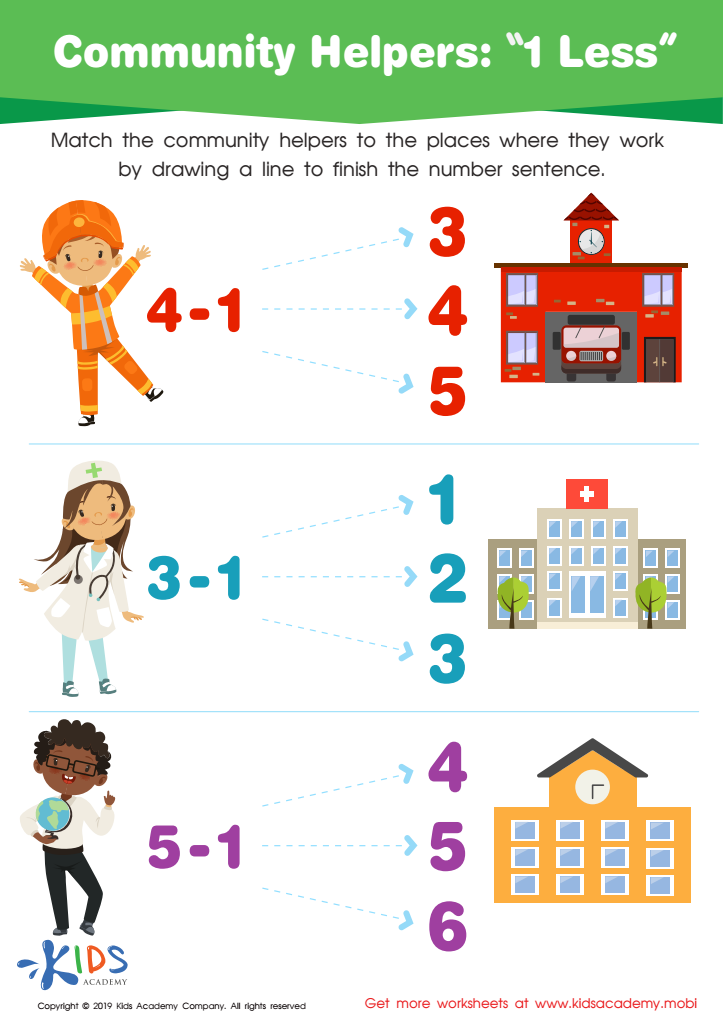
Community Helpers: 1 less Worksheet








Basic counting skills are foundational for young children's development and serve as the first step toward more complex mathematical concepts. For children aged 3-6, acquiring these skills enhances not only their mathematical understanding but also their cognitive, social, and emotional growth. Parents and teachers should care about fostering these skills because counting forms the basis of many daily activities, from sharing snacks to organizing toys.
Early exposure to counting reinforces number recognition and promotes logical thinking. Moreover, engaging in counting activities can improve fine motor skills through hands-on tasks like sorting and grouping objects. As children count, they develop important language skills, boosting their vocabulary and communication abilities.
Furthermore, counting serves as a gateway to understanding patterns, quantities, and critical problem-solving techniques. These skills encourage curiosity and foster a love for learning at an early age. Most importantly, when counting becomes a playful activity rather than a chore, it nurtures children's confidence, reducing anxiety around math and developing a positive attitude toward education.
In creating a supportive and stimulating environment for counting practice, parents and teachers can lay the groundwork for future academic success while nurturing well-rounded, inquisitive individuals.








