Decision making skills Extra Challenge Worksheets for Ages 3-6
3 filtered results
-
From - To
Nurture your child's critical thinking with our "Decision Making Skills Extra Challenge Worksheets" designed for ages 3-6. These engaging worksheets from Kids Academy offer a variety of fun activities that encourage young learners to analyze situations, weigh options, and make informed choices. Perfect for preschool and early elementary students, each printable worksheet is crafted to develop essential decision-making skills through interactive and creative tasks. By incorporating these resources into your child's daily routine, you'll empower them to become confident and independent thinkers from an early age. Give your little one the tools to succeed with Kids Academy!
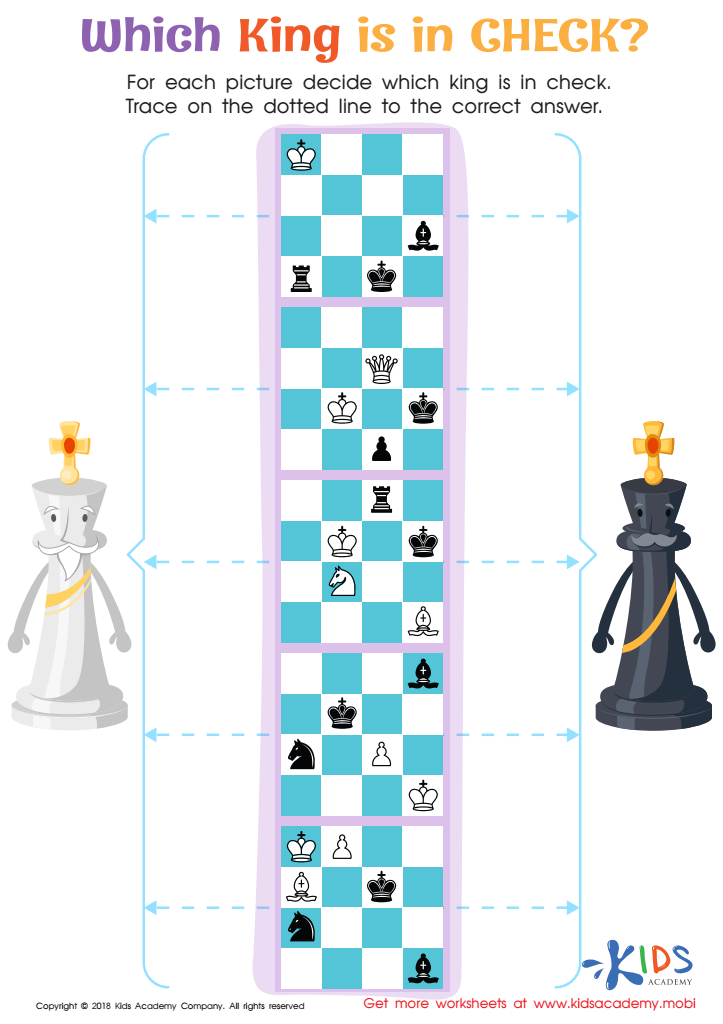
Which King is in Check? Worksheet
 Assign to My Students
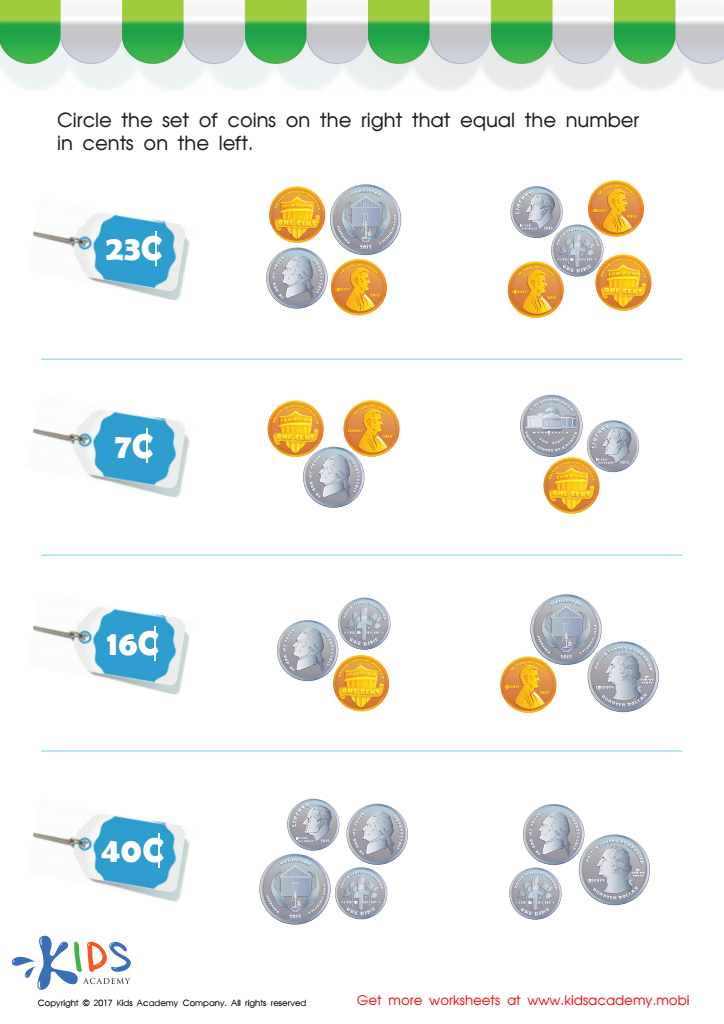
Picking the Coins You Need Money Worksheet
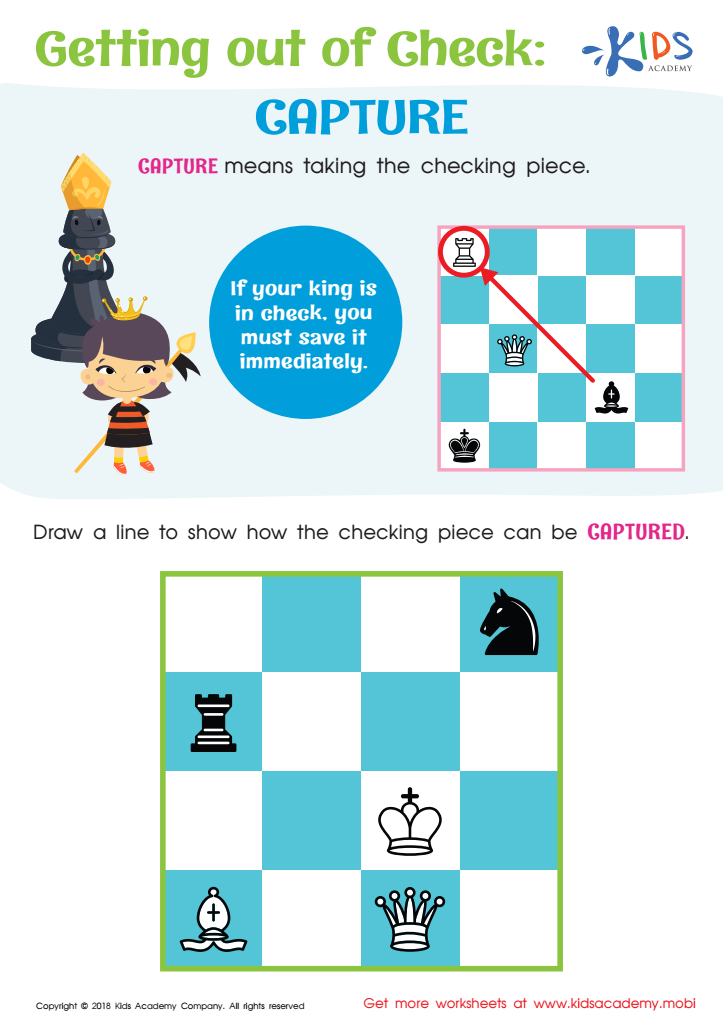
Getting out of Check: Capture


.jpg)



Decision-making skills are crucial for young learners aged 3-6 because these foundational years shape a child’s cognitive, social, and emotional development. By introducing decision-making challenges early on, parents and teachers help children build confidence and critical thinking skills.
At this stage, children are naturally curious and learning to express independence. Engaging in carefully designed decision-making activities encourages them to evaluate options and understand cause and effect. This process promotes problem-solving abilities and improves their capability to handle similar situations in the future.
Additionally, by empowering children to make choices, whether it's picking out their clothes or deciding what game to play, they learn to take responsibility for their actions. This nurtures a sense of autonomy and boosts self-esteem, essential traits for their academic and personal growth.
Socially, decisions regarding sharing toys or taking turns introduce essential lessons in empathy, cooperation, and conflict resolution. These skills are crucial for forming healthy relationships throughout their lives.
Lastly, early exposure to decision-making challenges fosters a growth mindset. Children learn that making mistakes is part of learning, which reduces anxiety over taking risks and enhances resilience. In summary, prioritizing decision-making skills for young children sets a robust foundation for a lifetime of competent, confident, and considerate individuals.








