Improving reading comprehension Extra Challenge Worksheets for Ages 3-6
3 filtered results
-
From - To
Enhance your child's reading skills with our "Improving Reading Comprehension Extra Challenge Worksheets" designed for ages 3-6. These engaging worksheets are perfect for young learners looking to build their understanding and love for reading. Each activity is crafted to encourage critical thinking and enhance vocabulary, making learning both fun and effective. Our extra challenge worksheets promote independent learning while reinforcing essential comprehension strategies. With colorful illustrations and age-appropriate texts, kids will enjoy exploring stories while developing their ability to recall details, interpret meanings, and answer questions. Set the stage for lifelong literacy skills with these dynamic reading comprehension resources!
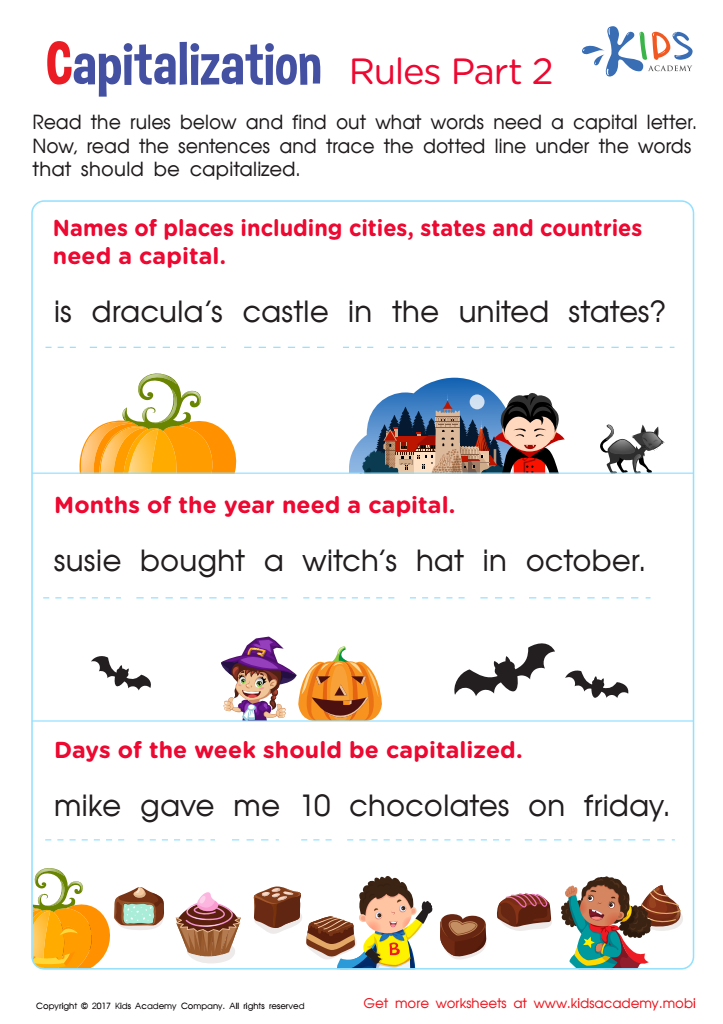
Capitalization Rules: Part 2 Worksheet
 Assign to My Students
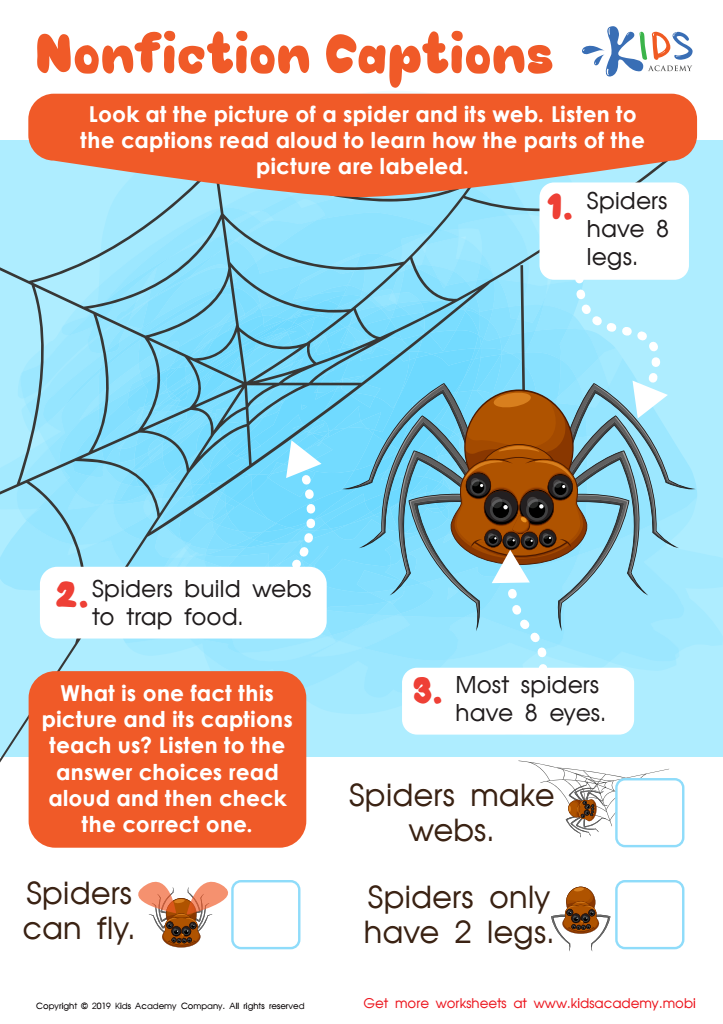
Nonfiction Captions Worksheet
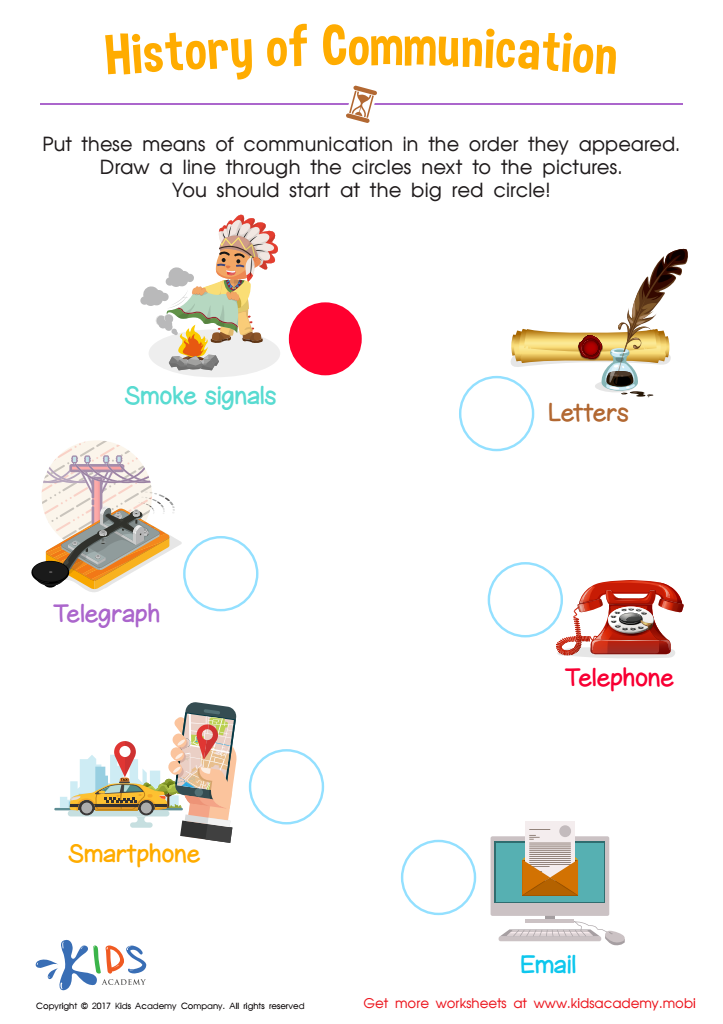
History of Communication Worksheet








Improving reading comprehension in young children, particularly those aged 3-6, is vital for their overall academic success and lifelong learning. During these formative years, children are building essential cognitive skills. Enhanced reading comprehension allows them to make connections, understand narratives, and develop critical thinking abilities.
For parents and teachers, fostering strong reading skills during this period lays a foundation for future academic achievement. Comprehension goes beyond just decoding words; it involves interacting with text, predicting outcomes, and drawing inferences. Engaging children in activities that promote these skills helps cultivate a love for reading, encouraging them to explore new ideas and perspectives.
Additionally, children with strong reading comprehension skills are more likely to become effective communicators. As they articulate their thoughts and ideas, they gain confidence critical for their social and emotional development.
Moreover, early investment in reading skills can help mitigate the risk of later academic challenges. Equipping children with the tools they need to understand and engage with stories prepares them for more complex texts they'll encounter as they grow, making reading a source of knowledge and enjoyment. Ultimately, parents and teachers play a crucial role in guiding this developmental journey, making it imperative to prioritize reading comprehension.








