
Recognizing shapes Extra Challenge Worksheets for Ages 3-6
3 filtered results
Difficulty Level
Grade
Age
-
From - To
Subject
Activity
Standards
Introducing our "Recognizing Shapes Extra Challenge Worksheets" designed for ages 3-6! These engaging worksheets go beyond basic shapes, offering more challenging activities to develop early geometry and critical thinking skills. Perfect for preschool to kindergarten, these worksheets encourage young learners to identify, compare, and categorize various shapes through fun and interactive exercises. Each page is crafted to captivate children's attention, making learning both enjoyable and educational. Ideal for parents and teachers, our worksheets provide a solid foundation in shape recognition, preparing kids for more advanced math concepts. Boost your child's cognitive skills with our expertly designed shape challenges!
Favorites
With answer key
Interactive
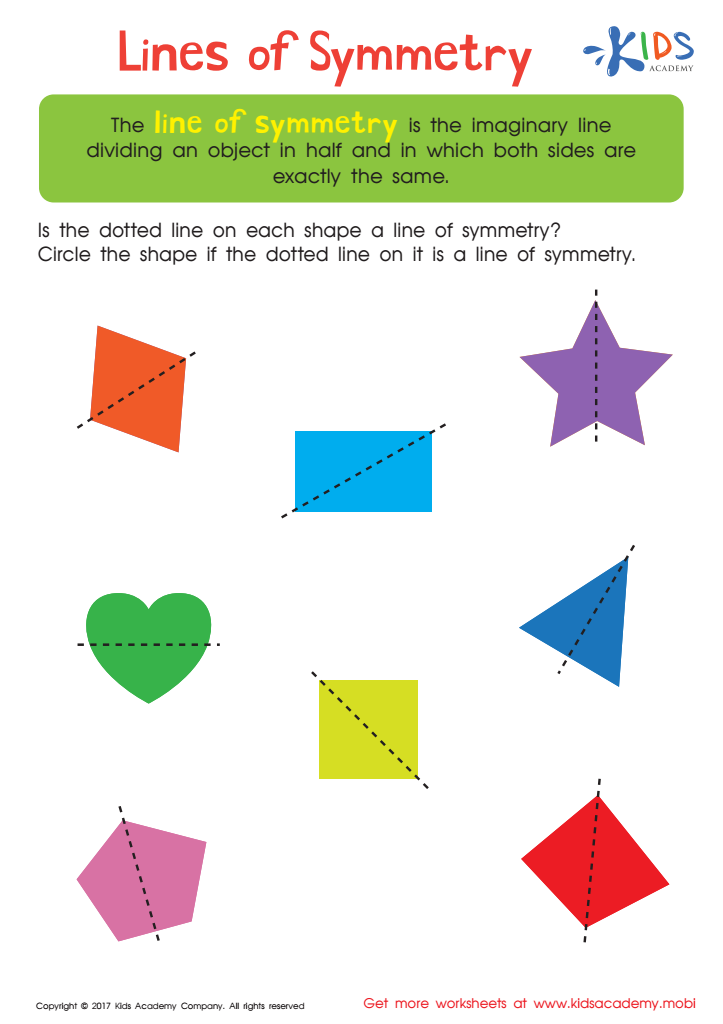
Lines of Symmetry Printable
Symmetry is a key math concept that kids must learn to develop their geometry skills. This fun worksheet helps build this skill, by encouraging kids to recognize symmetrical shapes and find equal parts.
 Assign to My Students
Lines of Symmetry Printable
Worksheet
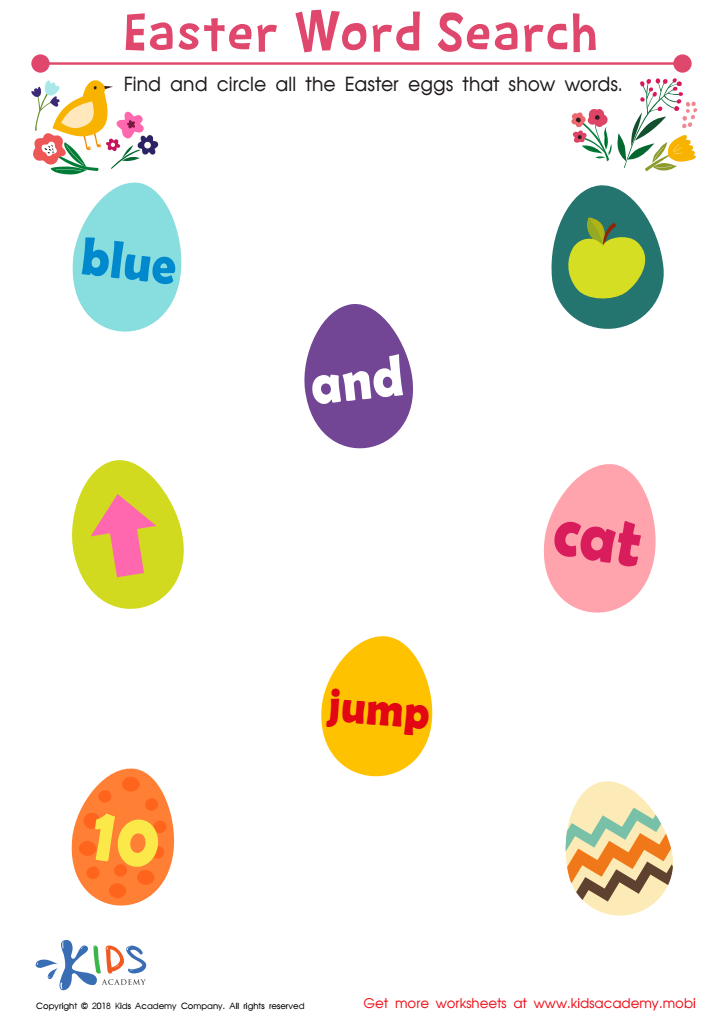
Easter Word Search Worksheet
Kids love Easter - food, picnics, games - and the egg hunt! Does your family celebrate Easter? Get your kids to find some of the Easter egg words in this word search. Ask them to read each word and circle the eggs. It's a fun way to celebrate the holiday!
Easter Word Search Worksheet
Worksheet
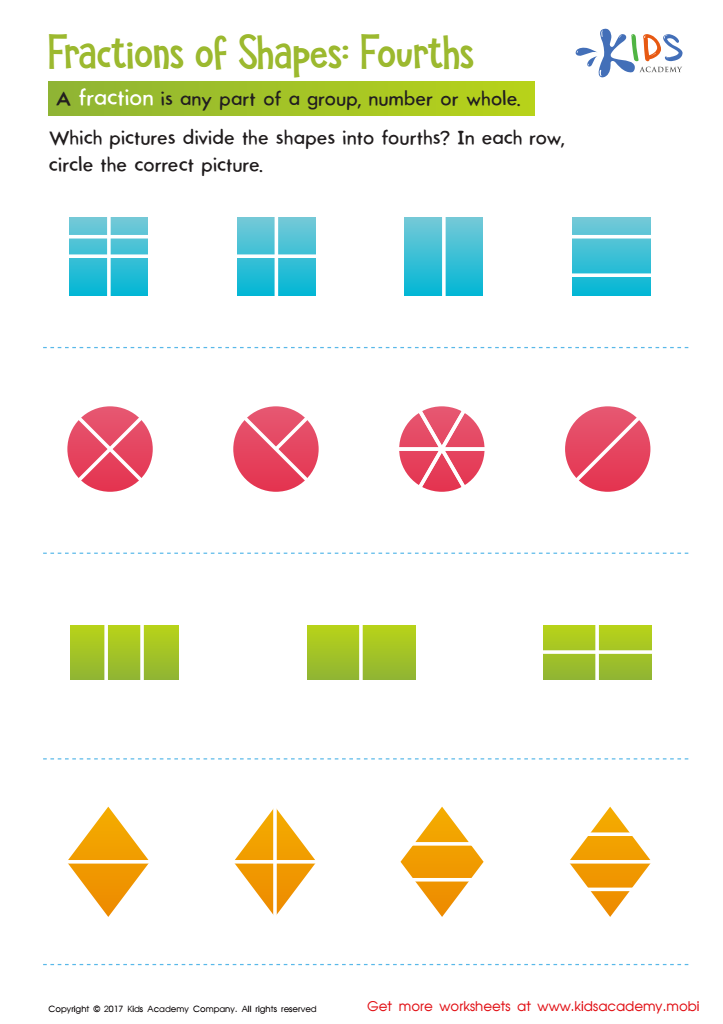
Fractions of Shapes Worksheet
It will also show them how fractions are represented in everyday shapes.
Fractions of Shapes Worksheet
Worksheet
Join Kids Academy for Free
Who is primarily going to use this learning content?







Recognizing shapes is a crucial milestone for children aged 3-6, as it lays the foundation for more advanced mathematical concepts. When parents and teachers emphasize shape recognition, they support cognitive development and spatial awareness, essential skills for problem-solving and critical thinking. By identifying shapes, children enhance their ability to compare, categorize, and understand the world around them.
Shape recognition also plays a significant role in other aspects of learning. It aids in literacy, as many letters and numbers have distinct shapes that children must identify and differentiate. Early familiarity with shapes can improve fine motor skills through activities like drawing or manipulating objects, which are crucial for writing.
Moreover, fostering an interest in shapes through extra challenges fosters a sense of accomplishment and curiosity. Children who engage in shape-related activities often exhibit better concentration, attention to detail, and a broader vocabulary as they describe and discuss different shapes. This early engagement nurtures a growth mindset, encouraging a positive attitude towards learning and exploration.
In essence, investing time in recognizing shapes prepares children for more complex activities, builds foundational academic skills, and helps them become confident learners. It’s an essential step in their educational journey that offers multi-faceted benefits extending beyond the classroom.








