Understanding plurals Extra Challenge Worksheets for Ages 3-6
3 filtered results
-
From - To
Welcome to our "Understanding Plurals Extra Challenge Worksheets" for ages 3-6! These engaging worksheets are designed to help young learners grasp the concept of plurals in a fun and interactive way. Through a variety of exciting exercises, children will explore how to transform singular nouns into their plural forms. Our carefully crafted activities encourage critical thinking and creativity, reinforcing essential language skills. By providing extra challenges, these worksheets cater to different learning paces, ensuring every child gains confidence in their understanding of plurals. Perfect for classroom use or at-home learning, these resources make mastering the plural concept an enjoyable adventure!
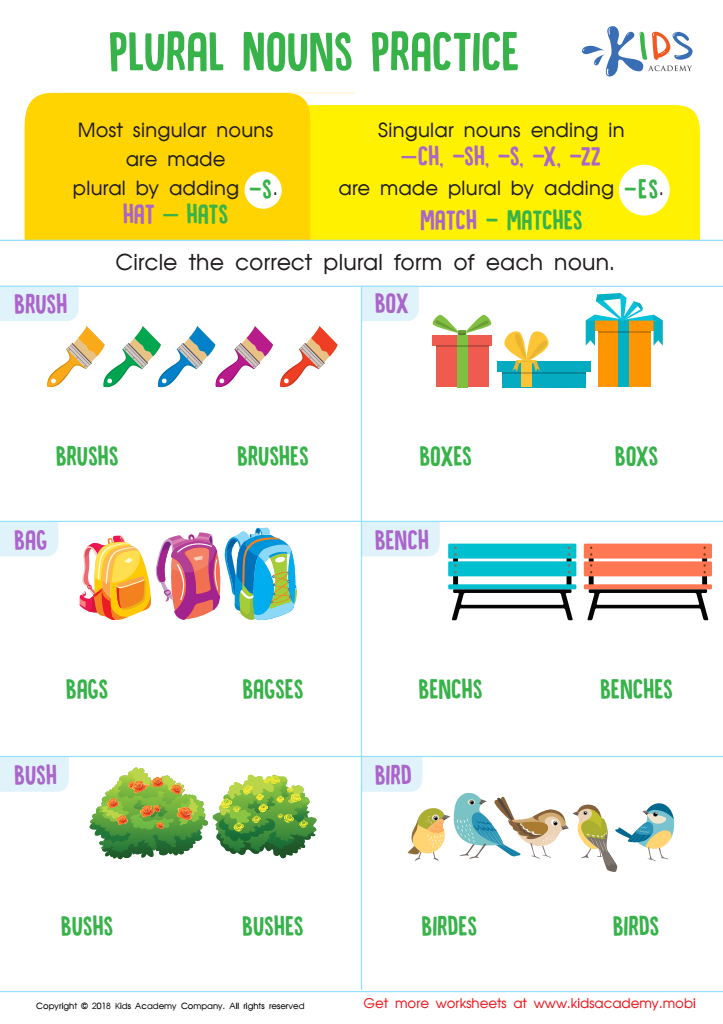
Plural Nouns Practice Worksheet
 Assign to My Students
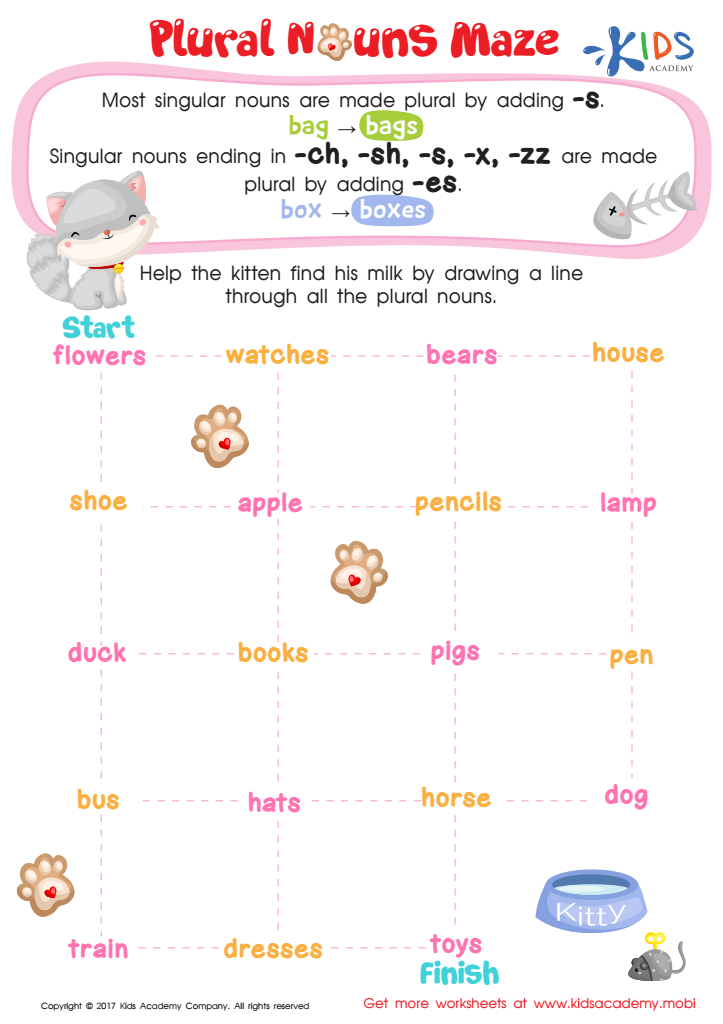
Plural Nouns Maze Worksheet
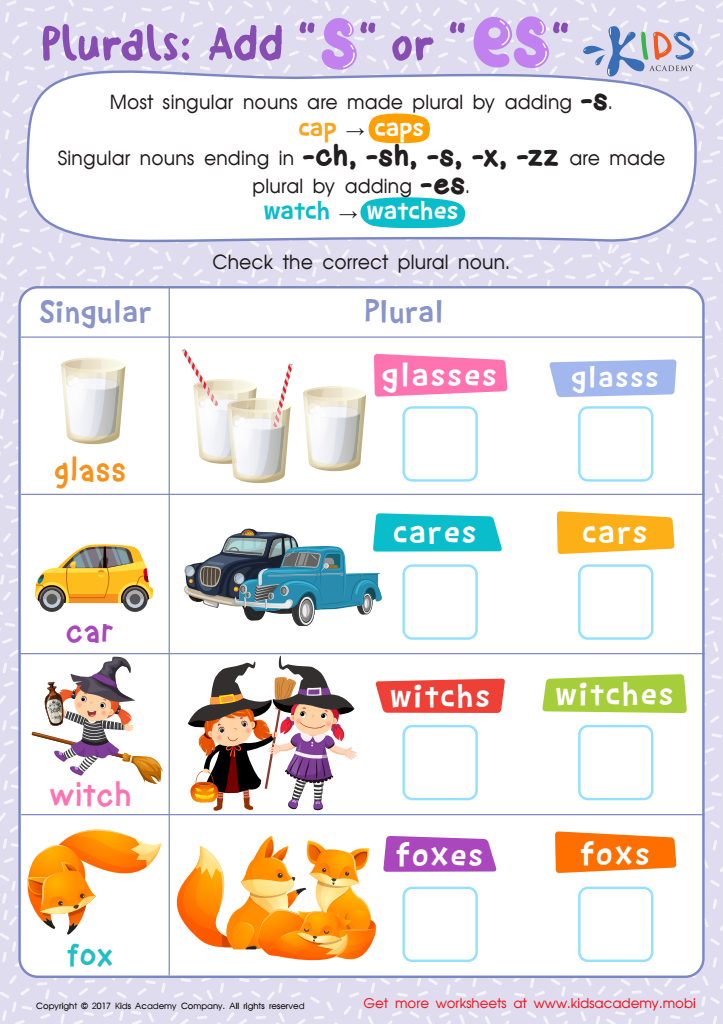
Plurals: "–es" or "–es"? Worksheet








Understanding plurals is a fundamental concept in early language development that plays a crucial role in a child's communication skills. For children aged 3-6, grasping the idea of singular and plural forms enhances their vocabulary and helps them make sense of the world around them. When children learn to differentiate between one item and multiple items, they become better equipped to express their thoughts clearly, fostering more effective communication.
Parents and teachers should prioritize teaching plurals as it lays the groundwork for grammar and language comprehension that children will build upon in later years. Early exposure to plural forms enriches language experiences, allowing children to describe their environment accurately. For example, when a child says "one bird" and "two birds," they practice counting and categorizing objects, enhancing cognitive skills.
Furthermore, mastering plurals helps boost a child's confidence in speaking and writing, encouraging them to share stories and ideas with peers and adults. Engaging in playful activities, such as singing songs or playing games focused on plurals, makes learning enjoyable and memorable, setting a positive foundation for a lifelong love of language. Ultimately, investing time in understanding plurals supports children's overall literacy development and communication abilities.








