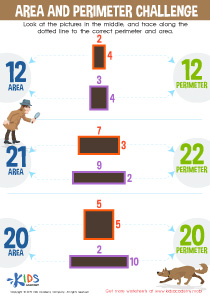
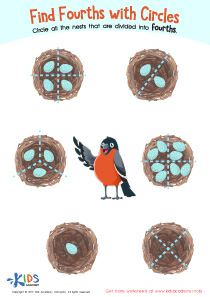
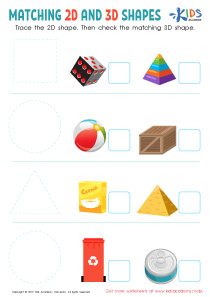
Shape Recognition Extra Challenge 2D Shapes Worksheets for Ages 3-6
6 filtered results
-
From - To
Enhance your child’s learning with our "Shape Recognition Extra Challenge 2D Shapes Worksheets for Ages 3-6." Created to bolster early math and cognitive skills, these worksheets provide engaging, hands-on activities that make learning fun. Children will identify, trace, match, and color various 2D shapes, ensuring they become confident in shape recognition. Designed for ages 3-6, these printable worksheets cater to different skill levels and offer a perfect blend of challenge and enjoyment. By incorporating vibrant illustrations and interactive tasks, we aim to transform learning into an exciting adventure, laying a strong foundation for future mathematical concepts. Get started today!
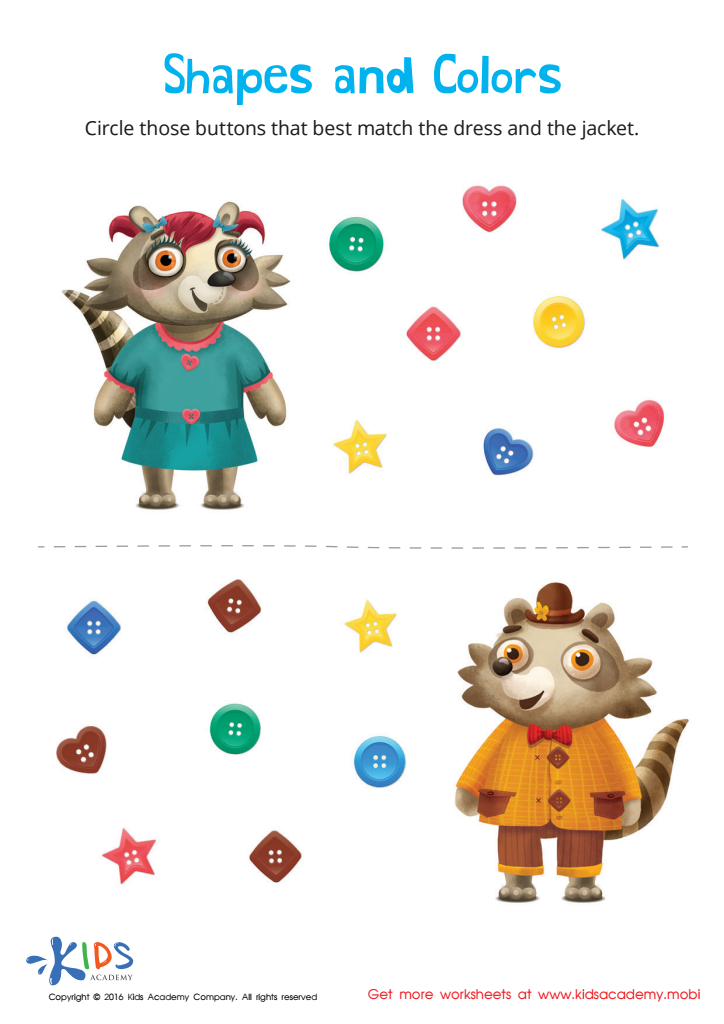
Matching: Shapes and Colors Worksheet
 Assign to My Students





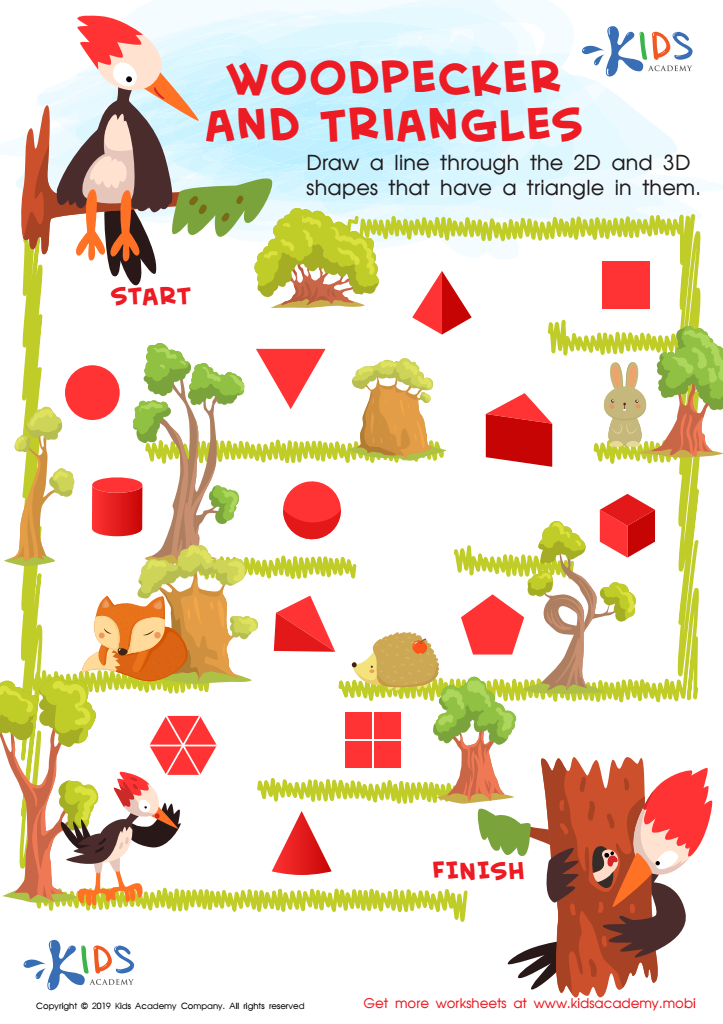
Woodpecker and Triangles Worksheet
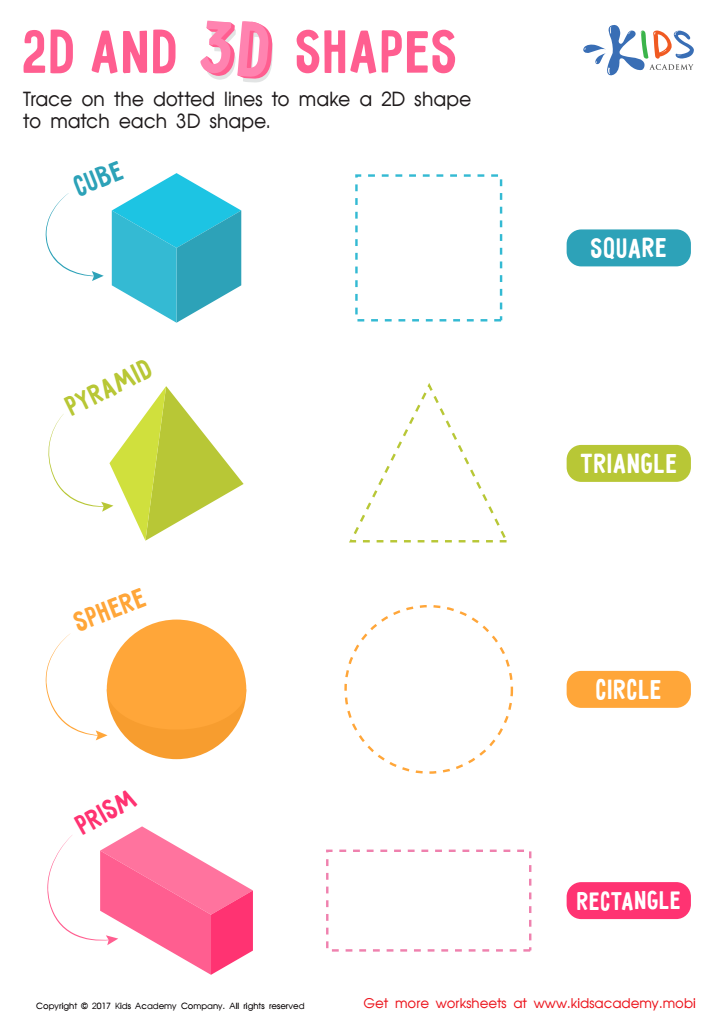
2D and 3D Shapes Worksheet
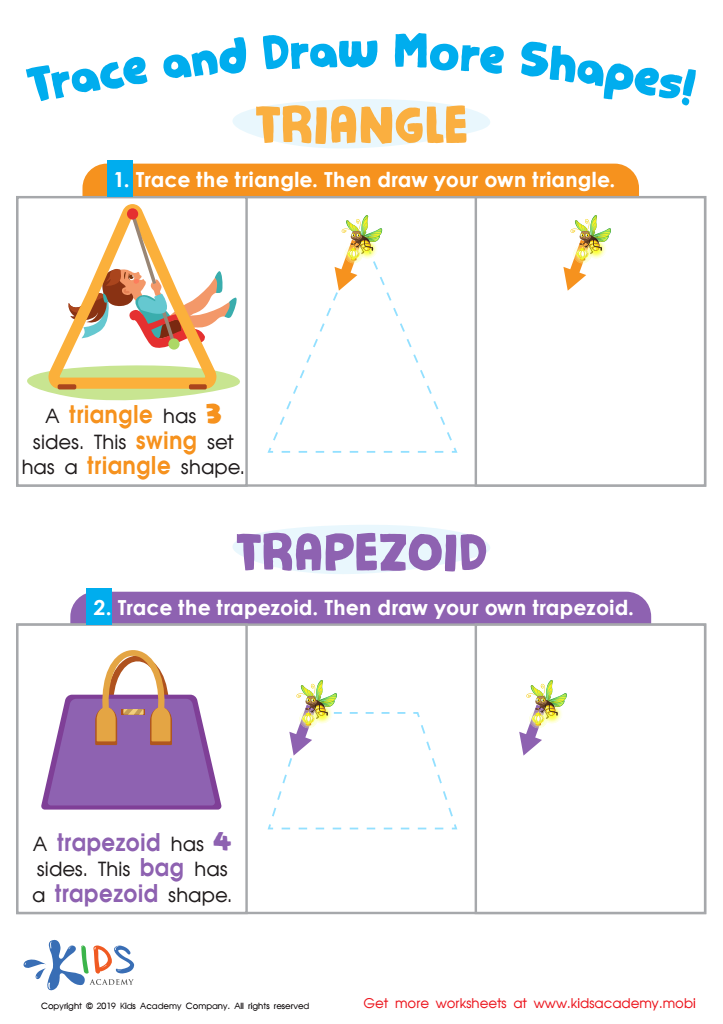
Trace and Draw More Shapes Worksheet
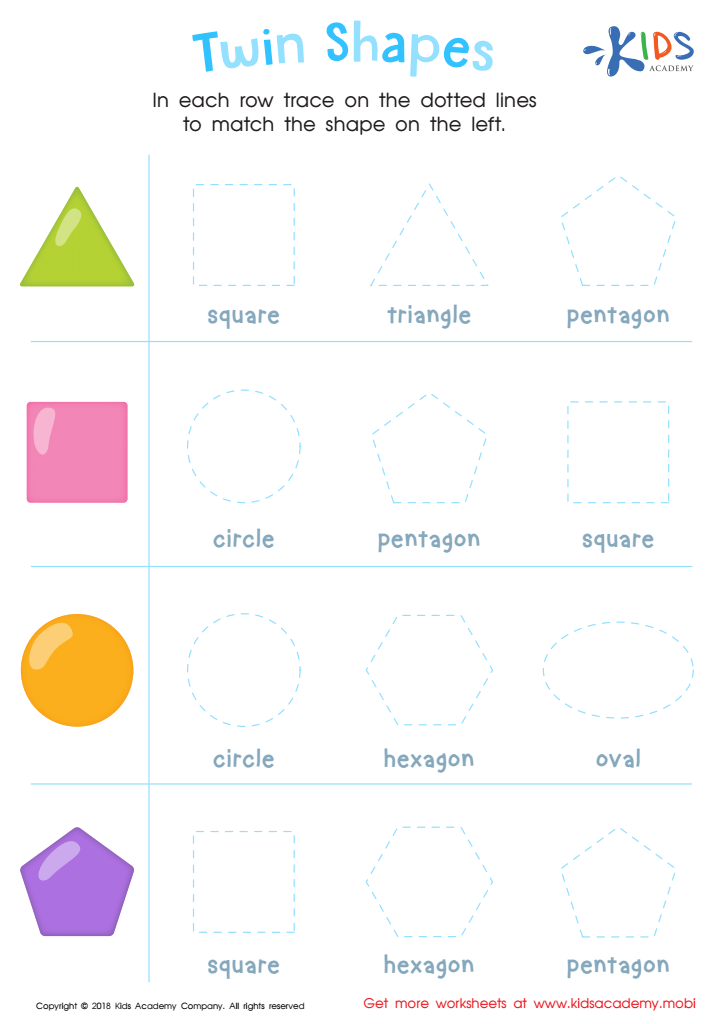
Twin Shapes Dot-to-Dot Worksheet
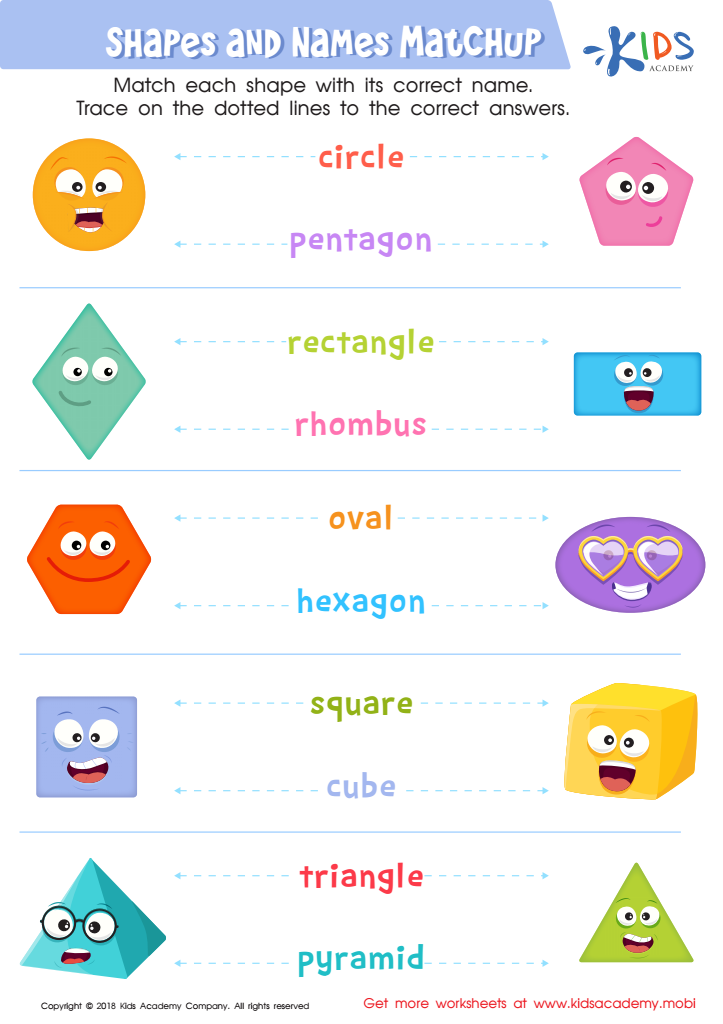
Shapes and Names Matchup Worksheet








Parents and teachers should recognize the importance of introducing shape recognition challenges to young children, especially those aged 3-6, for several cogent reasons. Firstly, shape recognition is a foundational skill in early childhood education which significantly contributes to cognitive development. Learning to identify and name shapes helps children boost their memory, spatial awareness, and categorization abilities. These skills are crucial as they extend beyond simply knowing shapes; they lay the groundwork for understanding more complex mathematical concepts.
Secondly, shape recognition nurtures language development. By describing shapes and their attributes, children broaden their vocabulary and language skills. Terms like “triangle,” “circle,” and “rectangle” expand their descriptive language toolkit which will aid in more nuanced conversations in the future.
Moreover, shape identification activities support fine motor skill development. Manipulating and drawing shapes can refine hand-eye coordination essential for writing and other tasks involving precision.
Finally, engaging children in shape recognition exercises makes learning interactive and fun, thereby fostering a love for education from an early age. Teachers and parents investing time in these activities will see a positive impact on their child’s enthusiasm and confidence in learning both in and out of the classroom. In summary, shape recognition not only increases cognitive abilities but also augments language development, motor skills, and fosters a positive learning experience.