Fine Motor Skills Extra Challenge Geometry Worksheets for Ages 3-6
4 filtered results
Difficulty Level
Grade
Age
-
From - To
Subject
Activity
Standards
Explore our engaging Fine Motor Skills Extra Challenge Geometry Worksheets, designed specifically for children aged 3-6! These interactive worksheets combine essential geometric concepts with fun fine motor tasks to enhance your child's dexterity and coordination. Young learners will love tracing shapes, cutting along lines, and completing coloring tasks that promote concentration and skill development. Our vibrant, easy-to-follow activities not only support foundational math skills but also encourage creativity and hands-on learning. Perfect for both home and classroom use, these worksheets will provide hours of enjoyable practice, ensuring your little one develops both their geometric understanding and fine motor abilities in a playful manner!
Favorites
With answer key
Interactive
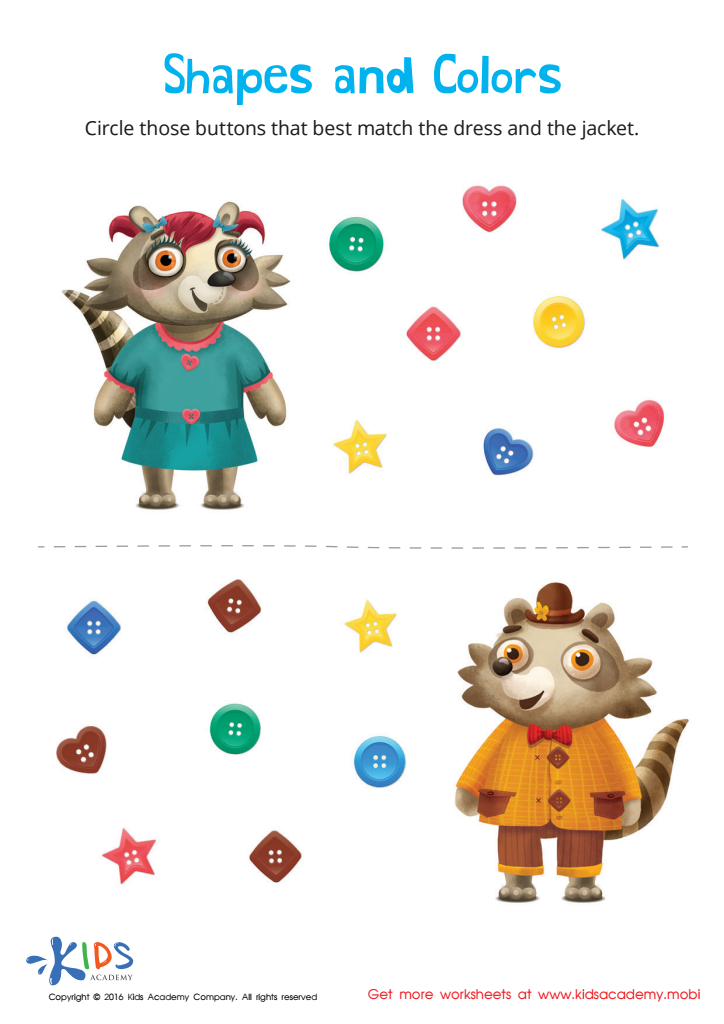
Matching: Shapes and Colors Worksheet
Help Mr. and Mrs. Raccoon find the right buttons to match their shirts! Kids will identify shapes and colors and learn to match them correctly.
 Assign to My Students
Matching: Shapes and Colors Worksheet
Worksheet











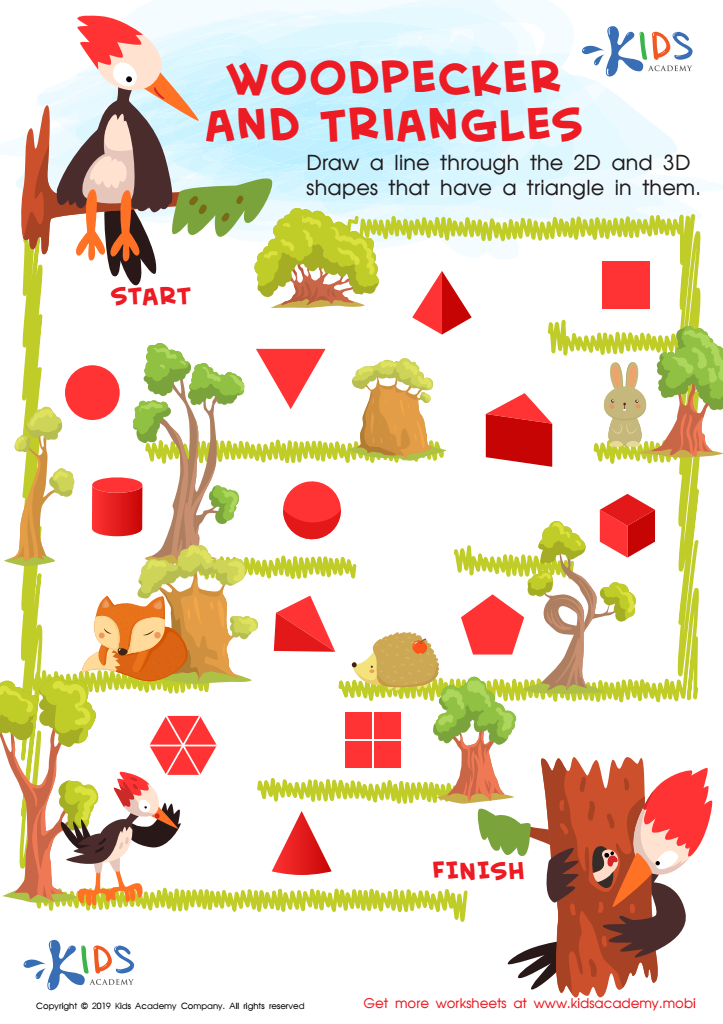
Woodpecker and Triangles Worksheet
Woodpeckers peck wood, and this printout helps kids learn about triangles. Ask your kindergartners to draw a triangle, then draw a line through the shapes that have a triangle in them to help the woodpecker get out of the maze.
Woodpecker and Triangles Worksheet
Worksheet
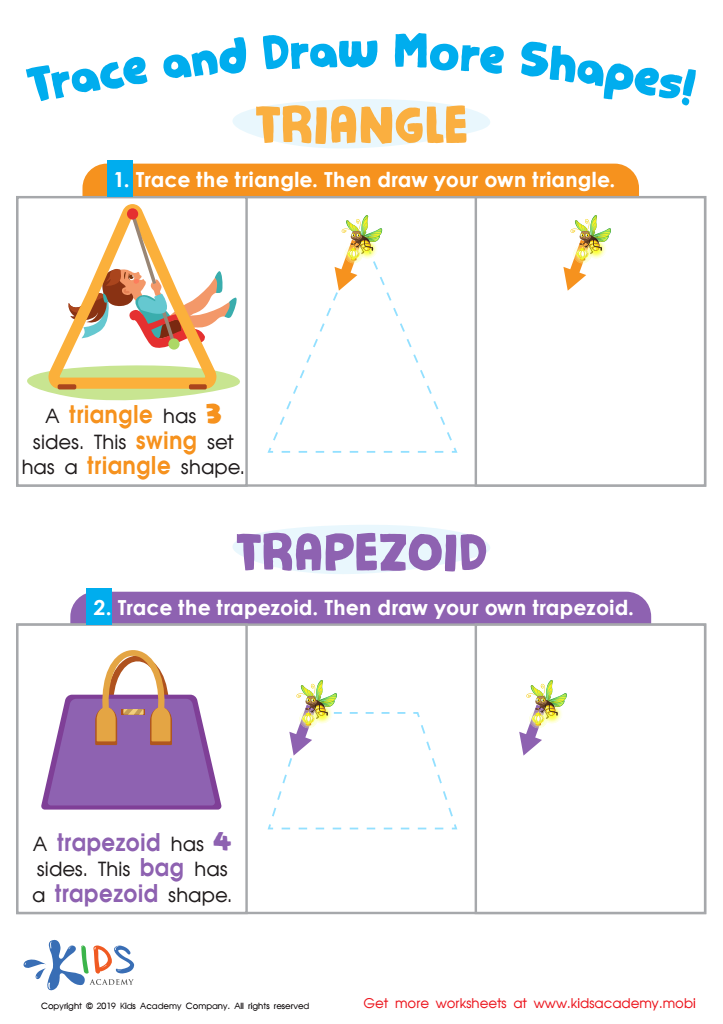
Trace and Draw More Shapes Worksheet
Help your kids with more learning! Look at images in the worksheet, read facts about the shapes, then help your kids trace and draw. This reinforces that learning is never done; use this simple worksheet to help your kids with school homework and more!
Trace and Draw More Shapes Worksheet
Worksheet
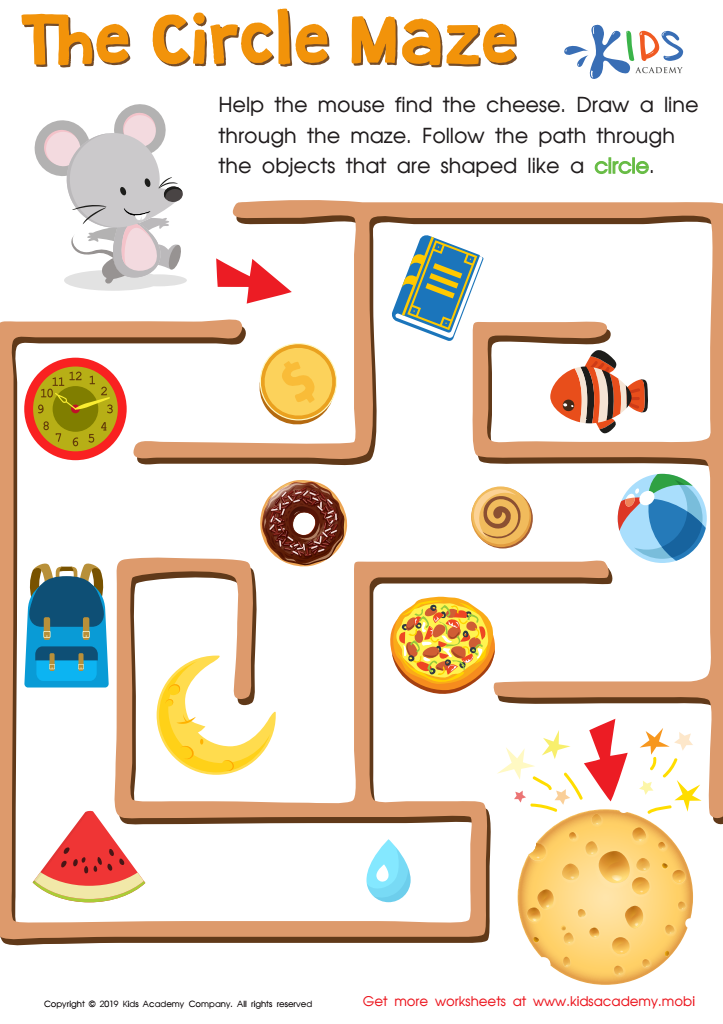
The Circle Maze Worksheet
Kids can have fun learning shapes with this maze worksheet. They can help the mouse find its cheese by tracing the path of a circle through the maze. This printable is great for classroom learning or as an activity at home.
The Circle Maze Worksheet
Worksheet
Join Kids Academy for Free
Who is primarily going to use this learning content?








Fine motor skills are crucial for young children's overall development, particularly in their ability to manipulate objects, which is foundational for many everyday tasks. Engaging children in Fine Motor Skills Extra Challenge Geometry for Ages 3-6 not only enhances their dexterity but also introduces them to basic geometric concepts, integrating multiple areas of learning. As children manipulate shapes, they develop hand-eye coordination, strengthen their grip, and improve precision—all vital for activities such as writing, drawing, and self-care tasks like buttoning clothing.
Incorporating geometry into fine motor activities stimulates cognitive development as children learn to recognize, classify, and construct different shapes, fostering problem-solving skills and spatial awareness. By using tools like building blocks, puzzles, or clay modeling, children also gain a tactile sense of their environment, promoting creativity and imagination.
For parents and teachers, supporting fine motor skill development through geometry challenges sets a strong foundation for later academic success and everyday independence. When children grasp these concepts early, it cultivates confidence and a love for learning, encouraging them to explore more complex ideas in the future. Prioritizing these activities is essential for holistic development and preparing young learners for future challenges.