Problem-Solving Skills Extra Challenge Social Studies Worksheets for Ages 3-6
3 filtered results
Difficulty Level
Grade
Age
-
From - To
Subject
Activity
Standards
Enhance your child's problem-solving skills with our Extra Challenge Social Studies worksheets designed for ages 3-6. These engaging, printable activities encourage young learners to think critically and creatively as they navigate real-world scenarios. Focusing on key concepts in social studies, these worksheets promote essential reasoning and analytical skills while reinforcing fundamental concepts like community, cooperation, and cultural awareness. Ideal for parents and educators looking to supplement learning at home or in the classroom, our worksheets offer a fun and interactive way to empower children to tackle challenges. Build confidence and encourage curiosity with these thoughtfully designed exercises today!
Favorites
With answer key
Interactive
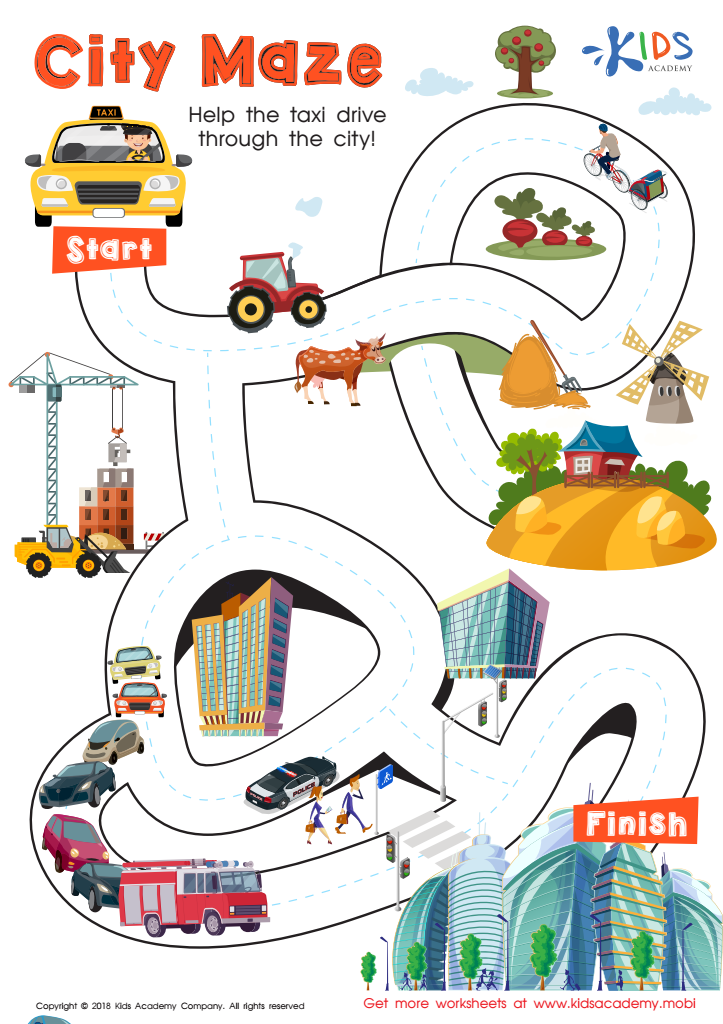
City Maze Worksheet
Kids love mazes! This free PDF city maze worksheet is sure to be a hit. Help your friend the taxi driver get through the maze, following traceable lines through different communities to the big city. It's a fun and challenging way to practice fine motor skills and succeed!
 Assign to My Students
City Maze Worksheet
Worksheet
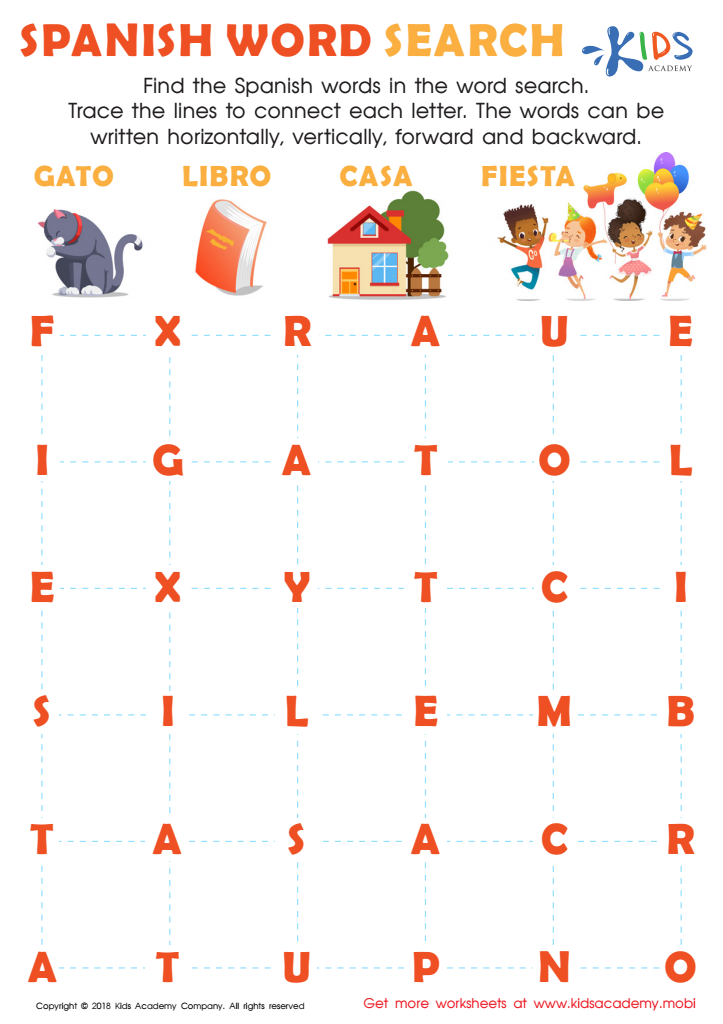
Spanish Word Search Worksheet
This free worksheet encourages students to learn Spanish words while developing visual, fine motor, and hand-eye coordination skills. Through colorful pictures and traceable lines, the task of finding words such as gato, libro, casa, and fiesta is disguised as a fun and engaging way to explore new cultures.
Spanish Word Search Worksheet
Worksheet
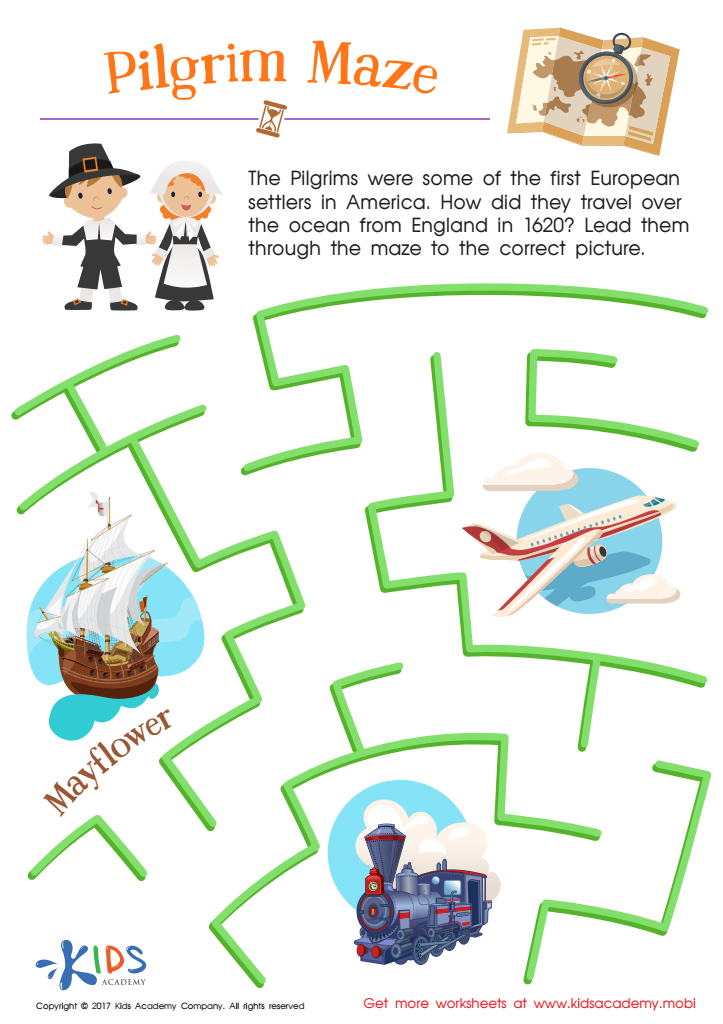
Pilgrim Maze Worksheet
This worksheet is perfect for teaching kids about an important moment in American History! Your child will have a blast solving the maze to recall that the Mayflower brought the pilgrims to the New World in 1620. It reinforces American history facts and develops visual motor and problem solving skills. It also uses modern pictures to make kids think about the right answer. Get this challenging pilgrim printable maze or a full collection of history worksheets for your little learner!
Pilgrim Maze Worksheet
Worksheet
Join Kids Academy for Free
Who is primarily going to use this learning content?








Problem-solving skills are essential for early developmental stages, especially in social studies for ages 3-6. During this period, children begin to understand their surroundings, make sense of relationships, and develop their identity within a social context. Engaging in problem-solving activities enhances critical thinking and decision-making, allowing young learners to approach challenges creatively and collaboratively.
For parents and teachers, encouraging these skills nurtures independence and boosts confidence in young children, equipping them to handle diverse situations as they grow. Problem-solving activities in social studies often involve real-world scenarios, helping children understand their roles as active members of their communities.
Moreover, these experiences foster empathy and cooperation, as children learn the importance of considering different perspectives and working with others to find solutions. At an early age, they can grasp the consequences of choices they make, instilling a sense of responsibility and awareness.
By incorporating problem-solving strategies in social studies, parents and teachers help cultivate well-rounded individuals who can navigate social complexities. This foundational skill not only enriches their academic development but also prepares them for future interpersonal interactions and challenges throughout their lives. Therefore, both parents and teachers should prioritize these learning opportunities in early childhood education.