
Emotional identification Extra Challenge Worksheets for Ages 3-7
3 filtered results
Difficulty Level
Grade
Age
-
From - To
Subject
Activity
Standards
Discover our "Emotional Identification Extra Challenge Worksheets for Ages 3-7," designed to enhance young children's emotional awareness and expression. These engaging worksheets include fun activities that challenge kids to identify and understand various emotions, fostering empathy and communication skills. Perfect for parents and educators, these resources encourage thoughtful discussions about feelings while promoting critical thinking and problem-solving abilities. With colorful illustrations and relatable scenarios, children will enjoy learning about emotions in a supportive environment. Ideal for at-home learning or classroom activities, our worksheets provide a valuable tool for nurturing emotional intelligence in early childhood development. Explore the joy of understanding emotions today!
Favorites
With answer key
Interactive
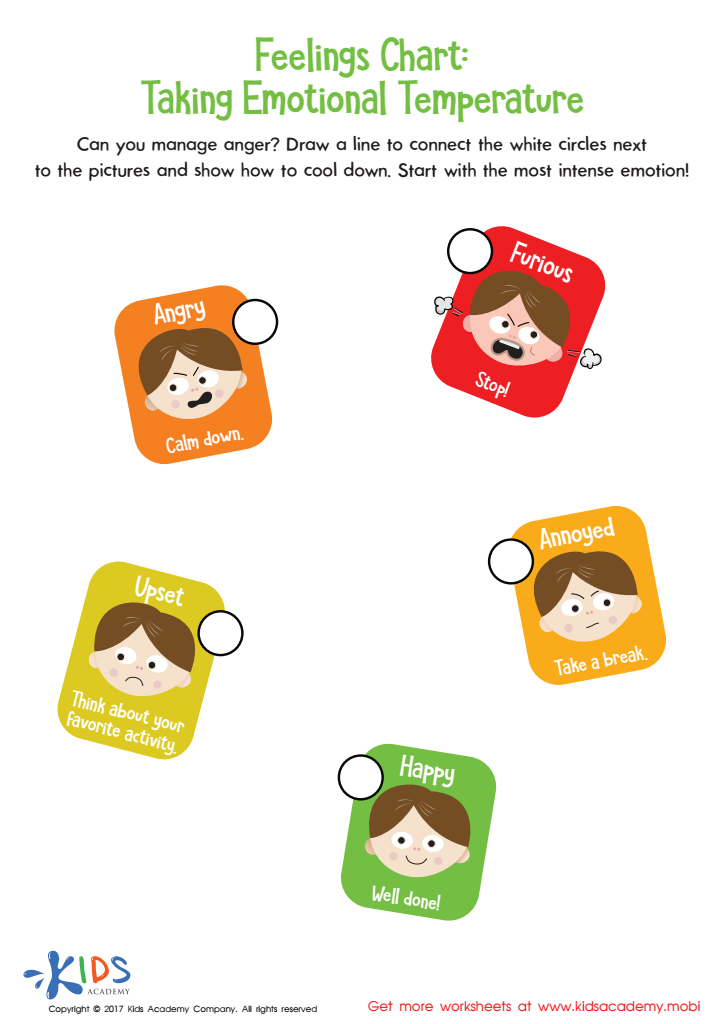
Feelings Chart Worksheet
Anger can be tricky to manage, so help your child learn techniques for coping. Use this feelings chart worksheet which leads them through identifying the most intense face and connecting the dots to help them calm down.
 Assign to My Students
Feelings Chart Worksheet
Worksheet
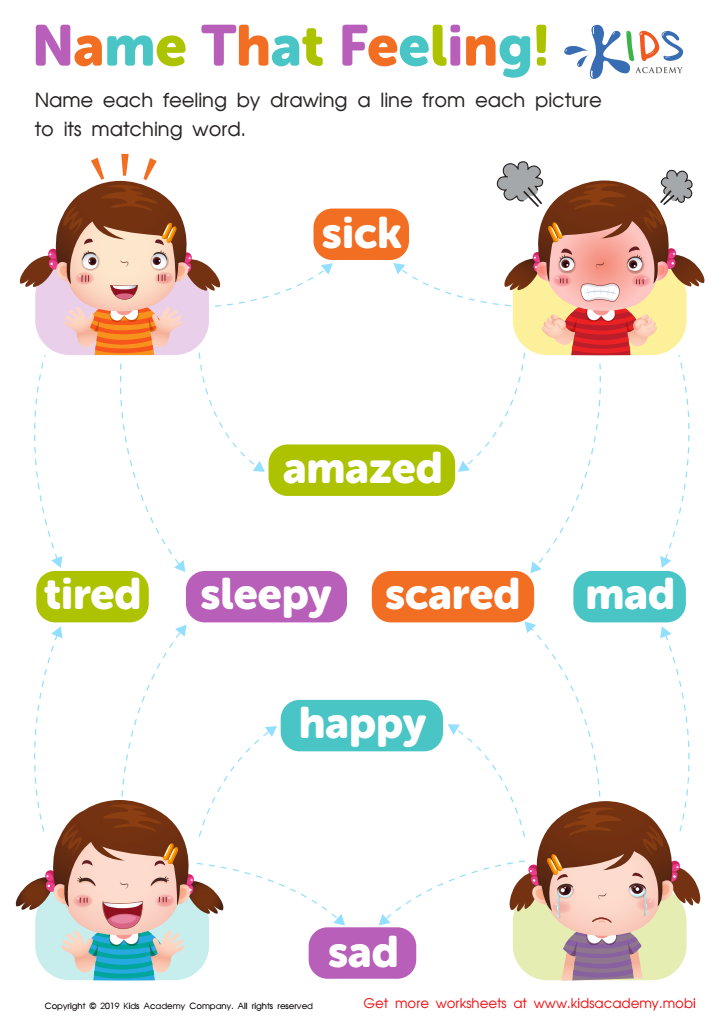
Name that Feeling Worksheet
Fostering your child's emotional intelligence is essential for their development. This worksheet helps them associate feelings with words, improving their social skills and fine motor coordination. They'll trace pictures and words to learn the feeling vocabulary.
Name that Feeling Worksheet
Worksheet
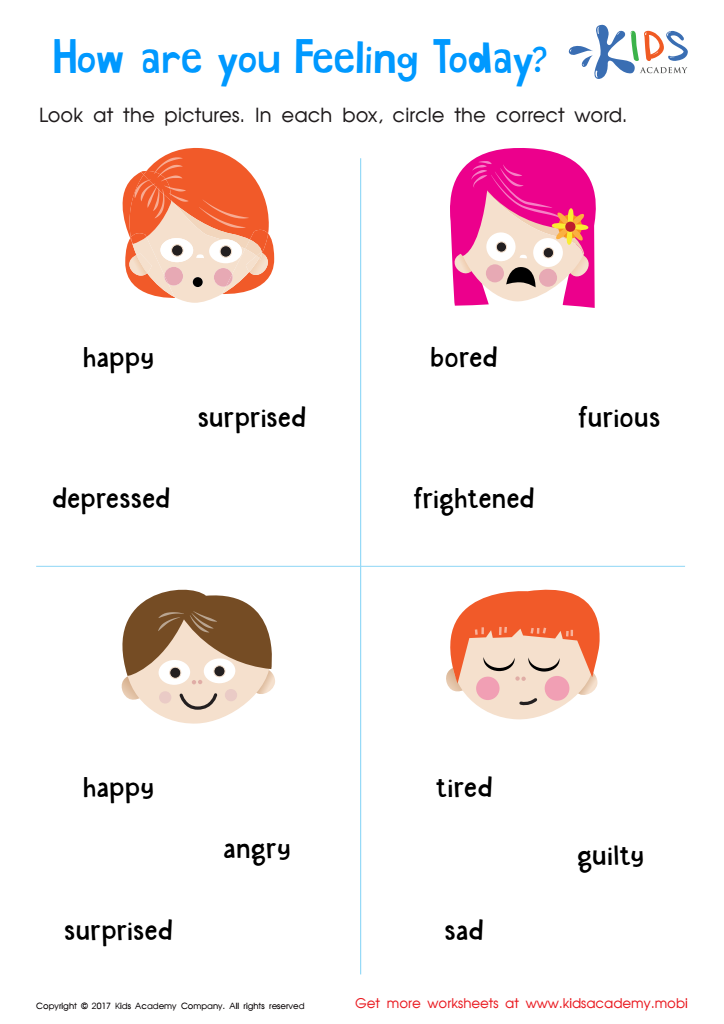
Understanding Feelings Worksheet
It helps them learn to empathize with others and regulate their own emotions. Try it today!
Develop your child's understanding of empathy and emotional regulation with this worksheet! It is a great way to help them acquire important life skills beyond academic knowledge. Print it and start using it to take their social and emotional skills to the next level. Try it now!
Understanding Feelings Worksheet
Worksheet
Join Kids Academy for Free
Who is primarily going to use this learning content?








Emotional identification is crucial for children aged 3-7, as it lays the foundation for healthy social and emotional development. During these formative years, children begin to recognize and understand their own feelings and those of others, which is essential for building empathy and social skills.
Parents and teachers should prioritize emotional identification as it helps children regulate their emotions, leading to improved behavior and reduced anxiety. When children can identify their feelings, they are better equipped to express themselves verbally rather than relying on physical outbursts. This ability fosters effective communication and lays the groundwork for conflict resolution.
Moreover, engaging children in activities that enhance emotional identification, such as role-play and storytelling, makes learning fun and interactive. This promotes a positive classroom or home environment where children feel safe to share their feelings, encouraging openness and trust.
By nurturing emotional identification, parents and teachers not only contribute to children’s well-being but also prepare them for future challenges. Children who understand emotions become resilient, adapt better in social settings, and develop strong interpersonal relationships. Ultimately, investing in emotional education enriches a child’s overall growth, benefiting families and communities alike.








